Spanish Peanuts — health benefits and uses
A compact, oil-rich peanut long used for roasting and candy-making.
The Short Answer
Spanish peanuts are highly nutritious, providing 7.5 grams of protein and 2.8 grams of fiber per ounce. They are particularly notable for their red skins, which contain antioxidant phenolic acids and resveratrol that may support heart health and cellular
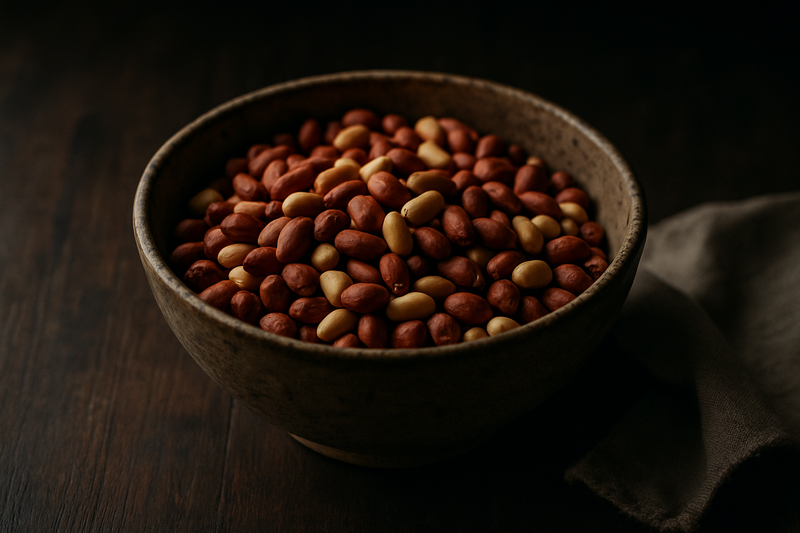
Spanish Peanuts · Photograph
Discover the Spanish peanuts health benefits backed by research — from heart and blood sugar support to antioxidant-rich red skins. Learn nutrition facts, safe daily amounts, allergy risks, and how to enjoy them on a whole-food plant-based diet.
Key Nutrients
% Daily Value based on 2,000 cal diet
Key active compounds
- m-Coumaric acid and related phenolic acids — Antioxidant compounds concentrated in peanut skins; human data from a youth study link these to slower telomere (the protective caps on DNA strands) shortening over six months.
- Resveratrol — A polyphenol also found in grape skins; present in small amounts in peanuts and their skins, and associated with anti-inflammatory effects in lab and animal studies.
- Phytosterols — Plant compounds structurally similar to cholesterol that can partially block cholesterol absorption in the gut, potentially supporting healthier LDL levels.
- Tocopherols (vitamin E compounds) — Fat-soluble antioxidants naturally present in peanut oils that help protect the fats themselves from going rancid, and contribute to the body's antioxidant defenses.
- Arginine — An amino acid (a building block of protein) that the body uses to produce nitric oxide, a molecule that helps blood vessels relax and maintain healthy blood pressure.
- Oleic acid — The primary monounsaturated fat in peanuts, also the main fat in olive oil, associated with heart-health benefits in numerous dietary studies.
Are Spanish peanuts good for you? What the research shows
Heart and circulation
The strongest human evidence for peanuts sits in cardiovascular (heart and blood vessel) health. Large observational studies — the kind that follow thousands of people over many years — consistently find that people who eat nuts or peanuts regularly have lower rates of coronary heart disease compared with people who eat few or none. Intervention studies, where participants are actually fed a set amount of peanuts daily, show measurable improvements in blood lipids: lower LDL (often called "bad") cholesterol, maintained or slightly improved HDL ("good") cholesterol, and reduced markers of inflammation.
Most of this research uses peanuts broadly, not Spanish peanuts specifically, but the macronutrient and fatty acid profile of Spanish peanuts is very similar. The likely drivers are the monounsaturated and polyunsaturated fats, arginine (which supports blood vessel relaxation), magnesium (which supports blood pressure regulation), phytosterols, and the antioxidant compounds in the skins. Eating Spanish peanuts roasted with skins on may deliver this full package in a way blanched peanuts do not.
Digestive health and microbiome
Spanish peanuts provide roughly 2.8 g of dietary fiber per ounce — a modest but meaningful contribution toward the 25–38 g daily target most adults fall short of. Fiber supports bowel regularity, helps you feel full longer, and serves as food for beneficial gut bacteria (the microbiome).
Preliminary human data using mixed nuts and peanut products suggest that regular consumption may increase the abundance of beneficial gut bacteria and boost short-chain fatty acid production — compounds that feed the gut lining and have downstream anti-inflammatory effects. This evidence is still early-stage for peanuts specifically, and Spanish peanuts are not a high-fiber food compared with beans or lentils, but they can be a useful part of a fiber-rich, plant-forward eating pattern.
Blood sugar and metabolism
Spanish peanuts have a low glycemic load — meaning they cause only a small, gradual rise in blood sugar rather than a spike. Human feeding studies have shown that adding peanuts or peanut butter to meals can blunt the blood sugar rise from the rest of the meal, particularly when they replace refined carbohydrates. The combination of protein, healthy fats, and fiber all contribute to this effect by slowing digestion and improving insulin sensitivity.
For people managing type 2 diabetes or prediabetes, peanuts are generally considered a favorable food choice, but their energy density matters: 1 oz of Spanish peanuts has about 162 calories, so portion awareness is important if calorie balance is a goal.
Inflammation and recovery
This is where the skin-on roasted Spanish peanut story gets particularly interesting. A 2025 study in young adults found that daily consumption of skin-roasted peanuts over six months was associated with slower telomere shortening — a marker of reduced cellular aging and inflammatory stress — compared with a control group. Researchers attributed this largely to m-coumaric acid and related phenolics in the peanut skins.
A separate ongoing clinical trial is investigating whether 25 g per day of whole skin-roasted peanuts can improve cognitive function, body weight, and inflammation markers in families. Results are pending, but the design reflects growing scientific interest in peanut skins as a source of bioactive compounds beyond basic macronutrients. It's worth noting that most mechanistic data (how compounds work at a cellular level) come from lab and animal studies — robust human outcome trials are still limited, and these findings should be considered emerging rather than established.
Is it better to eat Spanish peanuts raw or roasted? Which form delivers the most benefits
Roasting wins for most people, for several practical and nutritional reasons.
Roasted whole with skins (best for antioxidants): Dry-roasting or oil-roasting Spanish peanuts with their red skins intact is the preparation most aligned with the antioxidant evidence. Roasting actually increases the activity of certain polyphenols while developing the flavor compounds that make peanuts taste like peanuts. Choose unsalted or lightly salted versions to control sodium.
Raw shelled Spanish peanuts: These have the same protein, fat, and mineral profile, but raw peanuts can be harder to digest for some people and carry a slightly higher risk of microbial issues or aflatoxin (a mold-produced toxin that can accumulate in improperly stored peanuts) compared with properly roasted ones. Raw peanuts are often used for home roasting, which lets you control added salt and oil.
Oil-roasted, salted: A common commercial form with a similar nutritional profile, but sodium climbs quickly — some products add 100–200 mg or more of sodium per ounce. Fine in moderation for most healthy adults, but worth noting for anyone managing blood pressure or fluid balance.
Ground or crushed (as a topping): Crushing whole skin-on Spanish peanuts and adding them to grain bowls, oatmeal, or salads is a practical way to incorporate the antioxidant skins into everyday meals with less snacking mindset.
Peanut butter made from Spanish peanuts: Less common commercially, but when made with skins and minimal additives, retains much of the nutrient and phytochemical profile. Watch for added sugar, hydrogenated oils, and sodium in commercial spreads.
Prep and pairing ideas
Spanish peanuts are one of the most versatile ingredients in a plant-forward kitchen. Here are three practical pairings rooted in both flavor and nutritional logic:
1. Spanish peanuts + dark chocolate A classic combination for good reason. Dark chocolate (70%+ cocoa) adds its own layer of flavonoids (antioxidant plant compounds), and the fat in peanuts slows sugar absorption from the chocolate, moderating the blood sugar impact. A small mixed handful makes a satisfying, antioxidant-layered snack. Choose chocolate with minimal added sugar.
2. Spanish peanuts + orange or bell pepper slices Peanuts are a plant-based source of non-heme iron (the form of iron found in plants, which is less readily absorbed than animal iron). Pairing them with a vitamin C-rich food like citrus or bell peppers significantly boosts iron absorption, making this combination especially useful for people on fully plant-based diets.
3. Crushed skin-on Spanish peanuts + oatmeal or grain bowls Stirring crushed Spanish peanuts into morning oats or adding them as a topping to rice and vegetable bowls adds protein, healthy fats, and crunch. The combination of slow-digesting oats plus peanut protein and fat produces a particularly stable, sustained energy release — a practical strategy for managing hunger and blood sugar through the morning.
Bottom line
Spanish peanuts are a small legume with a disproportionately large nutritional footprint — compact, protein-rich, loaded with heart-healthy unsaturated fats, and, when eaten roasted with their reddish skins intact, uniquely rich in antioxidant phenolic compounds. The evidence base for peanuts and cardiometabolic health is among the strongest for any legume or nut. The specific case for skin-on Spanish peanuts and cellular aging markers is genuinely intriguing, though still emerging.
For people without a peanut allergy, Spanish peanuts roasted with skins on and lightly salted (or unsalted) are a well-fitting addition to a whole-food plant-based diet: minimally processed, nutritionally dense, and practical to use every day. Keep portions to about 1 oz daily, pair them with vitamin C-rich foods to maximize iron absorption, and choose unsalted when possible for sodium control.
Are Spanish peanuts healthy compared to other peanuts? Yes — particularly when you keep the skin on.
How Spanish Peanuts Compares
| Compared with | What's different |
|---|---|
| Spanish Peanuts vs. Runner Peanuts | Smaller and rounder with distinct reddish-brown skins containing more phenolic antioxidants. |
| Spanish Peanuts vs. Virginia Peanuts | Roughly 30% higher oil content, making them the preferred variety for peanut oil and candy. |
Health Benefits
Things to Know
Peanut allergy is serious.: Peanuts are one of the most common and severe food allergens. Reactions can range from mild hives to life-threatening anaphylaxis. If you have any history of peanut allergy or reaction, avoid Spanish peanuts entirely and consult an allergist.
Choking hazard for young children.: Whole peanuts are a significant choking risk for children under about 5. Use ground or thinly spread forms for young children, and consult your pediatrician about allergy screening before any introduction.
Energy density.: At around 160–170 calories per ounce, Spanish peanuts add up quickly. If you are managing weight or calorie intake, pre-portioning a 1 oz serving (about a small handful) helps prevent overeating.
Sodium in salted versions.: People with high blood pressure, heart failure, or kidney disease should choose unsalted or lightly salted Spanish peanuts and factor them into daily sodium targets.
Aflatoxin risk.: Buy from reputable suppliers, store in a cool, dry place, and avoid peanuts that smell musty or look discolored. Aflatoxins are naturally occurring toxins produced by mold on improperly stored peanuts.
Medication interactions.: High-sodium salted peanuts can work against blood pressure medications. People on anticoagulant (blood-thinning) medications should avoid sudden large increases in any concentrated polyphenol-rich food. If you are undergoing peanut allergy immunotherapy, follow your specialist's instructions strictly.
Gallbladder or fat malabsorption conditions.: High-fat foods like Spanish peanuts may not be suitable — check with your healthcare provider.
Pregnancy.: Peanuts are generally considered safe during pregnancy for women without a personal peanut allergy, and current guidance no longer recommends avoiding peanuts to prevent allergy in the baby. However, consult your midwife or OB for personalized guidance.
Glossary
Shop This Ingredient
Stock your pantry with quality spanish peanuts.
Buy on AmazonAs an Amazon Associate, Plantopedia earns from qualifying purchases. This costs you nothing extra and helps us keep the encyclopedia free.
Frequently Asked Questions
Most human studies and general nutrition guidelines land in the range of 15–50 g per day (roughly ½ to 2 oz, or a small to moderate handful) for peanuts as part of a balanced diet. The youth intervention studying skin antioxidant effects used 25 g (about 1 oz) daily for six months. For most healthy adults, 1 oz (28 g, about 28–30 individual peanuts) per day is a reasonable and evidence-aligned starting point — enough to deliver meaningful protein, healthy fats, magnesium, and antioxidant compounds without overloading calories or sodium. If you're new to eating peanuts regularly, start with a small amount (about ½ oz) to see how your digestive system responds, especially if you have a sensitive gut. Gradually increase toward 1 oz over a week or two. If you have a specific health goal — heart health, blood sugar management, or increasing plant protein — it's worth discussing the right amount with a registered dietitian who can put it in the context of your overall eating pattern. A quick practical note: 1 oz of Spanish peanuts is roughly a small cupped handful, or about 28–32 individual nuts. Pre-portioning into a snack bag or small container is the easiest way to stay consistent without counting every nut. Looking to build a diet around foods that support specific health goals? Explore Plantopedia's goals section to find ingredient combinations matched to what matters most to you.
Quick Answers
Common questions, answered in a line.
Spanish peanuts are excellent for heart health because they contain monounsaturated fats, arginine, and phytosterols that help lower LDL cholesterol. Large observational studies consistently show that regular peanut consumption is linked to lower rates of coronary heart disease.
Spanish peanuts have a low glycemic load and can help stabilize blood sugar levels by slowing the digestion of carbohydrates. Research shows that adding peanuts or peanut butter to meals can blunt the blood sugar rise from the rest of the meal, which is beneficial for managing insulin sensitivity.
Eating Spanish peanuts with their skins on provides the most antioxidants, specifically m-coumaric acid and resveratrol. A 2025 study found that daily consumption of skin-roasted peanuts was associated with slower telomere shortening, a marker of reduced cellular aging.
Roasting is generally considered better because it increases the activity of certain antioxidant polyphenols and improves flavor. While raw peanuts have similar protein and mineral profiles, they can be harder to digest and carry a slightly higher risk of mold-produced aflatoxins.
Spanish peanuts support digestion by providing roughly 2.8 grams of fiber per ounce, which helps promote bowel regularity. Preliminary data also suggests that regular consumption may increase beneficial gut bacteria and boost short-chain fatty acid production.
You can boost iron absorption from Spanish peanuts by pairing them with vitamin C-rich foods like oranges or bell peppers. This is particularly helpful for those on plant-based diets, as vitamin C helps the body absorb non-heme iron more efficiently.
One ounce of Spanish peanuts contains approximately 160–170 calories, making them an energy-dense food. Because they are calorie-dense, experts recommend pre-portioning a small handful to avoid overconsumption if you are managing your weight.
For Readers in the USA
Local context — sourcing, seasonality, and regional notes.
Spanish peanuts are primarily grown in the United States within the Southwestern region, specifically in Texas and Oklahoma. While Virginia and runner peanuts dominate the Southeast, the climate of the Southern Plains is ideal for the Spanish variety's smaller kernel and higher oil content.
You can find Spanish peanuts at major U.S. grocery chains like Kroger, Walmart, and Whole Foods, often located in the baking aisle or the bulk snack section. They are also a staple at regional farmers markets in the Southwest and are frequently sold at specialty candy-making supply stores.
Spanish peanuts are a key ingredient in traditional American confections like peanut brittle and "PayDay" style candy bars due to their distinct red skins and robust flavor. In the South, they are also a preferred variety for making old-fashioned "boiled peanuts," a popular roadside snack.
Look for the USDA Organic seal to ensure Spanish peanuts were grown without synthetic pesticides and choose products labeled "Non-GMO Project Verified" if you wish to avoid bioengineered ingredients. The FDA also provides strict guidance to U.S. producers on monitoring aflatoxin levels to ensure safety for domestic consumption.
AI Clinical Review
- Peanuts (including Spanish) are legumes that provide a compact mix of plant protein, mostly unsaturated fat, fiber, and minerals; the cited 1 oz values (about 160–170 kcal, ~7–8 g protein, ~14 g fat) are in line with common food‑composition data.
- The red skins are richer in polyphenols (plant antioxidants) than blanched peanuts; eating roasted, skin‑on forms preserves these compounds and is a reasonable way to maximize antioxidant intake from peanuts.
- The overall evidence base linking routine peanut intake with better cardiometabolic markers (e.g., improvements in LDL cholesterol when peanuts replace refined carbs/saturated fats) is relatively strong.
- Practical guidance on portioning (~1 oz/day) and pairing with vitamin C–rich foods to enhance non‑heme iron absorption is useful and consumer‑friendly.
- Findings around “cellular aging” (telomere change) from skin‑roasted peanuts are preliminary. Telomeres are DNA end caps used as surrogate markers; benefits on long‑term clinical outcomes haven’t been confirmed.
- Most studies evaluate “peanuts” broadly; head‑to‑head trials showing Spanish peanuts outperform other varieties are limited, so some claims are extrapolated.
- Early microbiome data (changes in gut bacteria/short‑chain fatty acids) are suggestive but not definitive for peanuts alone, and clinical significance remains uncertain.
- Compounds like resveratrol are present but in small amounts in peanuts; dose–response relationships and real‑world impact at typical intakes need more study.
- Allergy and safety: Peanut allergy can be severe; avoid entirely if allergic and seek medical advice. Whole peanuts are a choking hazard for children under ~5 years—use age‑appropriate forms.
- Portion and form: Typical study ranges are 15–50 g/day (about ½–2 oz). Choose dry‑roasted or lightly salted skin‑on peanuts to limit sodium; oil‑roasted/salted versions can add 100–200 mg sodium per ounce.
- Quality and storage: Buy from reputable sources; store cool and dry. Discard any peanuts that smell musty or appear discolored to minimize aflatoxin risk.
- Who should check with a clinician: Individuals managing diabetes or weight (peanuts are energy‑dense), those on sodium restrictions, with gallbladder/fat‑malabsorption issues, or on anticoagulants should discuss routine intake and portions with their healthcare provider.
Peanut allergy risk applies; roast before eating.
References
- USDA FoodData Central — Spanish peanuts, raw and oil-roasted, detailed nutrient composition (fdc.nal.usda.gov)
- Harvard T.H. Chan School of Public Health — Legumes and pulses: health benefits overview including peanuts in cardiometabolic health (nutritionsource.hsph.harvard.edu)
- News-Medical.net — "Peanuts pack a punch for youth: study finds cellular benefits of skin-roasted peanuts" (2025 human study on telomere attrition and m-coumaric acid) (news-medical.net)
- ClinicalTrials.gov / CenterWatch — NCT06127511: "Peanut consumption on cognitive function, weight, and inflammation" — ongoing family-based intervention with 25 g/day whole skin-roasted peanuts (centerwatch.com)
- University Hospitals Nutrition Facts — Spanish peanuts, raw, 1 oz: energy, macros, and minerals (uhhospitals.org)
- MyFoodData (USDA-derived) — Spanish peanuts nutrient comparison and detailed mineral profile (tools.myfooddata.com)
- Nuts.com — Spanish peanuts product nutrition panels and serving information (nuts.com)
- EatThisMuch — Calorie and macro breakdown for Spanish peanuts, 1 oz serving (eatthismuch.com)
Know Your Numbers
Eating healthy is a start. Now get to know your biomarkers.
Food changes bloodwork — inflammation, lipids, blood sugar and nutrient status all respond to what you eat. 59 markers from $59.
- Results in 7–10 days at 2,000+ Quest sites
- Licensed provider reviews every result
- One flat price, no membership, HSA/FSA eligible
Educational information only, not medical advice. Panels are ordered and reviewed through our licensed partner; Plantopedia may earn a commission.