Hulled Barley — health benefits and uses
One of humanity's oldest cultivated grains, foundational to ancient Mesopotamian diets.
The Short Answer
Hulled barley is a true whole grain that retains its nutrient-rich bran and germ, providing 17g of fiber and 12g of protein per 100g. It contains high levels of beta-glucan, a soluble fiber known to lower cholesterol and stabilize blood sugar.
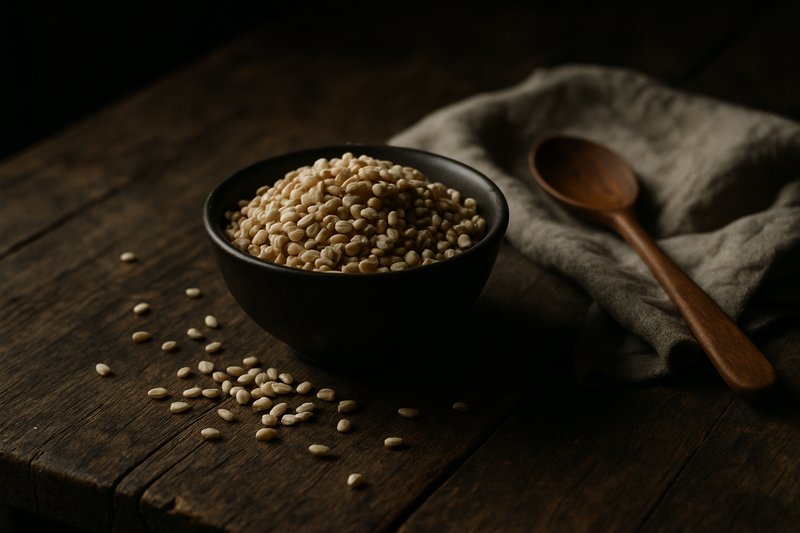
Hulled Barley · Photograph
Discover the hulled barley health benefits backed by research — from cholesterol-lowering beta-glucan and gut-friendly fiber to blood sugar support and whole-grain nutrition. Learn how it compares to pearl barley, how much to eat, and what to watch out for.
Key Nutrients
% Daily Value based on 2,000 cal diet
Key active compounds in hulled barley
- Beta-glucan (β-glucan): A viscous, soluble polysaccharide (a type of complex carbohydrate) concentrated in the bran. It forms a gel in your digestive tract that is responsible for most of barley's cholesterol-lowering and blood-sugar-moderating effects.
- Arabinoxylans and other non-starch polysaccharides: Complex cell-wall fibers that add stool bulk, feed beneficial gut bacteria (a prebiotic effect), and may support the gut barrier.
- Phenolic acids (e.g., ferulic acid): Antioxidant plant compounds found in the bran and germ that may reduce oxidative stress (cellular damage from unstable molecules called free radicals) and inflammation.
- Plant sterols: Cholesterol-like molecules found naturally in grains; they compete with dietary cholesterol for absorption in the intestine, helping lower blood cholesterol levels.
- Saponins: Surface-active plant compounds that may contribute to antioxidant and cholesterol-lowering effects; human data are still emerging.
- Phytate (phytic acid): A storage form of phosphorus in grains. It has antioxidant properties and may have anticancer effects, but it can modestly reduce how much of certain minerals (like iron and zinc) you absorb in a single meal — an effect that matters mainly if a grain is your only mineral source.
Buying guide: what to look for
This is one of two optional modules chosen for this ingredient because form and processing directly affect nutritional value.
Hulled barley (dried): Look for the word "hulled" specifically on the package. "Pot barley" is sometimes used as a synonym, though some pot barley is lightly pearled — check the label. Avoid "pearl" or "pearled" if you want whole grain.
Label tips:
- Ingredient list should read: "barley" or "hulled barley" — nothing else.
- Check for a "whole grain" stamp from the Whole Grains Council if available.
- Organic options are available but not nutritionally superior to conventionally grown hulled barley.
Barley flakes / rolled barley: Minimally processed and retain most of the beta-glucan. Good for porridge or overnight oats–style preparations.
Barley flour (whole grain): Useful for baking; ensure the label says "whole grain barley flour" to confirm the bran is included.
Storage: Store dry hulled barley in an airtight container in a cool, dry place for up to one year. Cooked barley keeps in the refrigerator for up to five days and freezes well for up to three months.
Prep and pairing ideas
Basic cooking method: Rinse hulled barley well. Use a 1:3 ratio of barley to water or broth. Bring to a boil, reduce heat, cover, and simmer for 45–60 minutes until tender but still chewy. Pre-soaking in water overnight reduces this to about 30 minutes.
Three practical pairings:
- Hulled barley + roasted root vegetables + tahini dressing — The grain's nutty chew pairs well with caramelized sweetness from roasted carrots, parsnips, or beets. Tahini adds healthy fat and creaminess that makes the meal more satisfying and helps absorb fat-soluble plant compounds.
- Hulled barley + leafy greens + lemon-garlic dressing — Warm barley wilts sturdy greens like kale or Swiss chard just enough. Lemon brightens the dense grain, and the greens contribute folate and vitamin K alongside barley's B vitamins and fiber.
- Hulled barley + legumes (lentils or chickpeas) + cumin-spiced broth — Combining barley with legumes creates a complementary amino acid profile, pushing protein quality higher. This combination is a staple in many traditional diets and makes a filling, low-glycemic soup or stew.
Batch cooking tip: Cook a large pot on the weekend and refrigerate in portions. Barley reheats well and works in grain bowls, soups, salads, or as a side in place of rice or pasta.
Bottom line
Hulled barley earns its whole-grain status. The research backing its soluble fiber — beta-glucan — for LDL cholesterol reduction is among the most robust for any single food component, strong enough for an FDA-recognized health claim. Its benefits for blood sugar management and gut health are meaningful and supported by consistent, if not yet conclusive, human data. It is affordable, versatile, and genuinely nutritious in a way that pearl barley cannot match.
The practical caveats are real: it contains gluten, it takes longer to cook, and people with celiac disease, IBS, or kidney disease need to approach it carefully or avoid it. For everyone else, adding ½ to 1 cup of cooked hulled barley to regular meals is one of the more straightforward whole-food upgrades you can make.
Explore the Plantopedia heart health hub for more ingredient guides organized around cardiovascular support.
How Hulled Barley Compares
| Compared with | What's different |
|---|---|
| Hulled Barley vs. Pearl Barley | Retains the bran and germ, offering 17g of fiber per 100g compared to the refined pearl version. |
| Hulled Barley vs. Wheat Berries | Chewier texture with higher magnesium (133mg) and longer cooking times than soft wheat berries. |
| Hulled Barley vs. Brown Rice | Higher in soluble beta-glucan fiber and stays firm in soups, whereas brown rice softens significantly. |
Health Benefits
Things to Know
Gluten: Hulled barley contains gluten. It is absolutely not suitable for anyone with celiac disease, wheat-barley-rye allergy, or confirmed non-celiac gluten sensitivity. It is not a gluten-free grain.
Digestive adjustment: High fiber content can cause gas, bloating, or loose stools when introduced too quickly. Start with a smaller portion (¼ to ½ cup cooked) and increase over two to four weeks while drinking plenty of water.
IBS and low-FODMAP diets: Barley contains fermentable carbohydrates that may trigger symptoms in people with irritable bowel syndrome (IBS). Those on a low-FODMAP protocol should check with a dietitian before adding it.
Kidney disease: Hulled barley is relatively high in potassium and phosphorus. People with moderate to advanced chronic kidney disease (CKD) who must limit these minerals should discuss serving sizes with their nephrologist or renal dietitian.
Diabetes medication: Beta-glucan-rich foods can improve blood sugar control enough to affect how well glucose-lowering medications work. If you use insulin or oral hypoglycemics, monitor blood sugar more closely when substantially increasing barley intake, and flag the change to your prescriber.
Medication timing: As with any high-fiber food, separating your most critical medications from a very high-fiber barley meal by one to two hours is a reasonable precaution, since fiber can mildly slow absorption of some drugs.
Pregnancy and breastfeeding: Hulled barley is a nutritious whole grain that is generally considered safe during pregnancy and breastfeeding as a food. No specific concerns apply beyond the gluten caveat above.
Cholesterol and blood pressure medications: Barley's lipid and blood pressure effects are generally additive and beneficial alongside statins or antihypertensives, but it is always worth mentioning significant dietary changes to your prescriber.
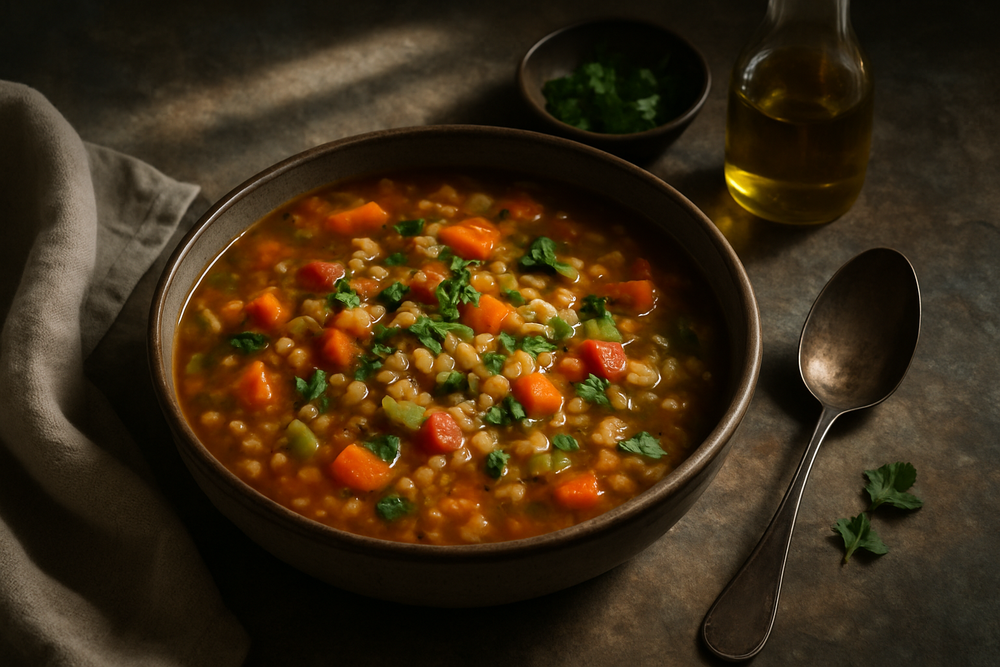
Prep Ideas
- — Hulled barley + roasted root vegetables + tahini dressing — The grain's nutty chew pairs well with caramelized sweetness from roasted carrots, parsnips, or beets. Tahini adds healthy fat and creaminess that makes the meal more satisfying and helps absorb fat-soluble plant compounds.
- — Hulled barley + leafy greens + lemon-garlic dressing — Warm barley wilts sturdy greens like kale or Swiss chard just enough. Lemon brightens the dense grain, and the greens contribute folate and vitamin K alongside barley's B vitamins and fiber.
- — Hulled barley + legumes (lentils or chickpeas) + cumin-spiced broth — Combining barley with legumes creates a complementary amino acid profile, pushing protein quality higher. This combination is a staple in many traditional diets and makes a filling, low-glycemic soup or stew.
Glossary
Shop This Ingredient
Stock your pantry with quality hulled barley.
Buy on AmazonAs an Amazon Associate, Plantopedia earns from qualifying purchases. This costs you nothing extra and helps us keep the encyclopedia free.
Frequently Asked Questions
Heart health and cholesterol This is where the evidence is strongest. Multiple randomized controlled trials (studies where participants are randomly assigned to a treatment or control group) and meta-analyses (pooled analyses of many trials) show that beta-glucan from barley consistently lowers LDL cholesterol — the type most associated with cardiovascular risk — and total cholesterol in adults, particularly those who already have elevated levels. One meta-analysis found that barley beta-glucan reduced total cholesterol by approximately 0.30 mmol/L and LDL cholesterol by roughly 0.27 mmol/L compared to control diets. Another found that a median intake of about 6.5–6.9 g of barley beta-glucan per day over four weeks significantly lowered LDL and non-HDL cholesterol. Trials using concentrated barley beta-glucan at doses of 3–5 g per day also demonstrated significant LDL reductions in people with elevated cholesterol. It is worth noting that one crossover trial using a highly beta-glucan-enriched product did not show clinically significant lipid improvements in all participants, underscoring that individual responses vary. Benefits appear dose-dependent and are influenced by the molecular weight of the beta-glucan, what food it comes in, and your baseline cholesterol level. Digestive health and gut microbiome support Hulled barley's combined fiber profile — soluble beta-glucan plus insoluble fiber and arabinoxylans — supports digestive regularity by adding both bulk to stool and a food source for beneficial gut bacteria (a prebiotic effect). Reviews characterize barley as a standout grain for gut health because of this dual fiber matrix, which may reduce the risk of conditions linked to poor gut health over time. Because fiber ferments in the large intestine, adding large amounts quickly can cause temporary gas or bloating. Starting with a smaller portion and increasing gradually — alongside adequate water intake — typically helps the digestive system adapt. Blood sugar and metabolic health Hulled barley has a relatively low glycemic index (GI), meaning it raises blood sugar more slowly than most refined grains. The beta-glucan gel slows gastric emptying (how fast food leaves the stomach) and the rate at which carbohydrates are absorbed, which flattens the blood sugar spike after a meal. Reviews of whole-grain barley suggest regular consumption may contribute to lower type 2 diabetes risk, and multiple studies report improvements in post-meal glucose and insulin responses. Long-term trials specifically using hulled barley and hard clinical diabetes endpoints — like HbA1c or diagnosis rates — are more limited, so the evidence is best described as "consistent but not yet definitive" for hard outcomes. Inflammation and recovery Barley's phenolic acids, plant sterols, and prebiotic fiber create an indirect anti-inflammatory environment: feeding beneficial gut bacteria, reducing oxidative stress, and supporting a healthier gut lining. Reviews link regular barley consumption to reduced risk of chronic diseases associated with low-grade inflammation — heart disease, stroke, type 2 diabetes, and certain cancers. Most of this evidence is mechanistic (explaining how it might work) or observational, rather than coming from large human trials that measured inflammatory markers directly. The anti-inflammatory angle is promising but still developing.
Pearl barley is the version most commonly found in supermarkets. It has been polished (pearled) to remove the outer bran layer, which shortens cooking time but strips away a substantial portion of the fiber, B vitamins, minerals, and phytochemicals. Hulled barley retains all of these because only the indigestible hull — the hard outer casing the grain grows in — has been removed. That makes it the true whole-grain option. The trade-off is practical: hulled barley typically needs 45–60 minutes of simmering (versus about 25–30 minutes for pearl), and has a chewier texture. Pre-soaking overnight reduces cooking time considerably. For everyday meals where you want maximum nutritional return, hulled barley is the better choice. Pearl barley is still a decent source of some fiber and nutrients and is preferable to refined grain alternatives if hulled is not available.
Research on beta-glucan and cholesterol typically uses doses of 3–10 g of beta-glucan per day, which translates roughly to ½ to 1½ cups of cooked hulled barley incorporated into meals. The FDA's heart-health claim threshold is 3 g of beta-glucan per day — achievable with about ¾ cup of cooked hulled barley. For general whole-grain intake, dietary guidelines in many countries recommend making at least half of your grain servings whole grains. Replacing one serving of a refined grain (white rice, white bread) with hulled barley each day is a reasonable, evidence-aligned starting point. Start low if you are new to high-fiber grains. Begin with ¼ cup cooked per meal and increase gradually over two to four weeks to allow your digestive system to adapt. There is no established upper limit for whole-grain barley, but very large portions could cause GI discomfort in sensitive individuals.
Quick Answers
Common questions, answered in a line.
Hulled barley is not gluten-free and is unsafe for individuals with celiac disease or gluten sensitivity. Because it contains gluten, it must be strictly avoided by anyone with a wheat-barley-rye allergy or confirmed non-celiac gluten sensitivity.
To cook hulled barley, use a 1:3 ratio of grain to liquid and simmer for 45–60 minutes until tender but chewy. Rinsing the grain well before boiling is recommended, and pre-soaking it overnight can reduce the total cooking time to approximately 30 minutes.
Hulled barley contains beta-glucan, a soluble fiber that forms a gel in the digestive tract to help lower LDL cholesterol and moderate blood sugar. It also provides antioxidant phenolic acids, plant sterols that compete with dietary cholesterol, and prebiotic fibers for gut health.
People with irritable bowel syndrome (IBS) or those following a low-FODMAP diet should use caution, as barley contains fermentable carbohydrates that may trigger symptoms. Additionally, those with chronic kidney disease should consult a doctor due to the grain's potassium and phosphorus content.
When buying hulled barley, look for the word "hulled" on the package and check the ingredient list to ensure it only contains barley. You can also look for a "whole grain" stamp from the Whole Grains Council to confirm it hasn't been pearled or refined.
Store dry hulled barley in an airtight container in a cool, dry place for up to one year. Once cooked, the grain will keep in the refrigerator for up to five days or can be frozen for up to three months.
Hulled barley pairs well with roasted root vegetables, leafy greens with lemon-garlic dressing, or legumes like lentils and chickpeas. Combining it with legumes is particularly beneficial as it creates a complementary amino acid profile that increases overall protein quality.
For Readers in the USA
Local context — sourcing, seasonality, and regional notes.
In the United States, most barley is grown in the Northern Plains and Pacific Northwest, with Idaho, Montana, and North Dakota leading as the top producing states. While barley is harvested in mid-to-late summer, hulled barley is available year-round in dried form across all regions.
You can find hulled barley at major health food chains like Whole Foods Market and Sprouts, or in the bulk bins and natural food aisles of regional grocers like Wegmans, Publix, and Kroger. If your local supermarket only carries pearl barley, specialty markets or online retailers are reliable sources for the whole-grain hulled version.
The US FDA allows food labels to claim that soluble fiber from whole grain barley may reduce the risk of coronary heart disease when part of a diet low in saturated fat and cholesterol. To qualify for this claim, a food must provide at least 0.75 grams of soluble fiber per serving.
While Americans traditionally use pearl barley in beef barley soup, hulled barley is increasingly popular in modern US cuisine as a nutrient-dense base for grain bowls, breakfast porridges, and as a chewy substitute for brown rice. It is a staple in American "farm-to-table" cooking due to its hearty texture and nutty flavor.
AI Clinical Review
- Clearly distinguishes hulled barley as a true whole grain versus pearl barley, which loses bran and key nutrients.
- Accurately highlights beta‑glucan as the main soluble fiber linked to LDL (“bad”) cholesterol reduction and notes the FDA‑authorized heart‑health claim when intake meets the threshold.
- Appropriately describes additional, plausible benefits for glycemic control, satiety, and gut health when fiber is increased gradually.
- Offers practical buying/cooking guidance that matters for nutrient retention (look for “hulled,” consider flakes/whole‑grain flour, and allow longer cook times or pre‑soak).
- Long‑term outcomes for diabetes (e.g., HbA1c change or reduced incidence) are less robust than short‑term post‑meal glucose/insulin findings.
- Anti‑inflammatory and microbiome benefits are supported mainly by mechanistic studies and small trials; larger, longer RCTs are still needed.
- Cholesterol responses vary by dose, product, and beta‑glucan characteristics (such as molecular weight and food matrix), so individual results can differ.
- Reported fiber and beta‑glucan amounts can vary by barley variety, degree of processing, and cooking yield; nutrition databases may not perfectly match every product.
- Gluten: Barley is not suitable for celiac disease, wheat–barley–rye allergy, or diagnosed non‑celiac gluten sensitivity. People with IBS or on a low‑FODMAP plan may need caution and a slow ramp‑up.
- Kidney disease: Barley contains meaningful potassium and phosphorus; those with moderate–advanced CKD should review portions with a renal clinician.
- Medications: Very high‑fiber meals can slightly delay absorption of some drugs; separating critical meds by 1–2 hours is reasonable. If using insulin or oral glucose‑lowering agents, monitor more closely when increasing barley.
- Dose and form: Trials often use about 3–10 g/day of beta‑glucan. In everyday terms, reaching ~3 g may require roughly 1–1½ cups cooked hulled barley (varies by product) or combining with other beta‑glucan sources like oats. Hulled retains more fiber than pearl; “pot barley” may be lightly pearled—check labels.
Contains gluten; longer cooking time than pearl barley.
References
- USDA FoodData Central — hulled barley nutrition data (fdc.nal.usda.gov)
- Medical News Today — barley nutrition and health overview (medicalnewstoday.com)
- European Journal of Clinical Nutrition meta-analysis: barley β-glucan and LDL/non-HDL cholesterol (nature.com)
- British Journal of Nutrition — barley β-glucan reduces cholesterol via bile acid metabolism (RCT) (cambridge.org)
- PubMed meta-analysis — β-glucan from barley and lipid-lowering capacity (PMID 20924392) (pubmed.ncbi.nlm.nih.gov)
- PMC review — barley as a nutritional powerhouse for gut health and chronic disease (pmc.ncbi.nlm.nih.gov)
- British Journal of Nutrition — concentrated barley β-glucan in hypercholesterolaemic adults (RCT) (cambridge.org)
- PubMed — emerging science on whole-grain oat and barley components (PMID 32728756) (pubmed.ncbi.nlm.nih.gov)
- PMC — barley-derived soluble fiber, serum lipids, and FDA health claim (pmc.ncbi.nlm.nih.gov)
- Healthline — Is Barley Good for You? Evidence-based overview (healthline.com)
Know Your Numbers
Eating healthy is a start. Now get to know your biomarkers.
Food changes bloodwork — inflammation, lipids, blood sugar and nutrient status all respond to what you eat. 59 markers from $59.
- Results in 7–10 days at 2,000+ Quest sites
- Licensed provider reviews every result
- One flat price, no membership, HSA/FSA eligible
Educational information only, not medical advice. Panels are ordered and reviewed through our licensed partner; Plantopedia may earn a commission.