Japanese Sweet Potato — health benefits and uses
A prized autumn comfort food in Japan, roasted whole over stones by street vendors.
The Short Answer
Japanese sweet potatoes are nutrient-dense tubers known for their purple skin and yellow flesh. They provide 26g of carbohydrates, 3.3g of fiber, and over 13,000 IU of Vitamin A per cup to support energy levels and eye health.

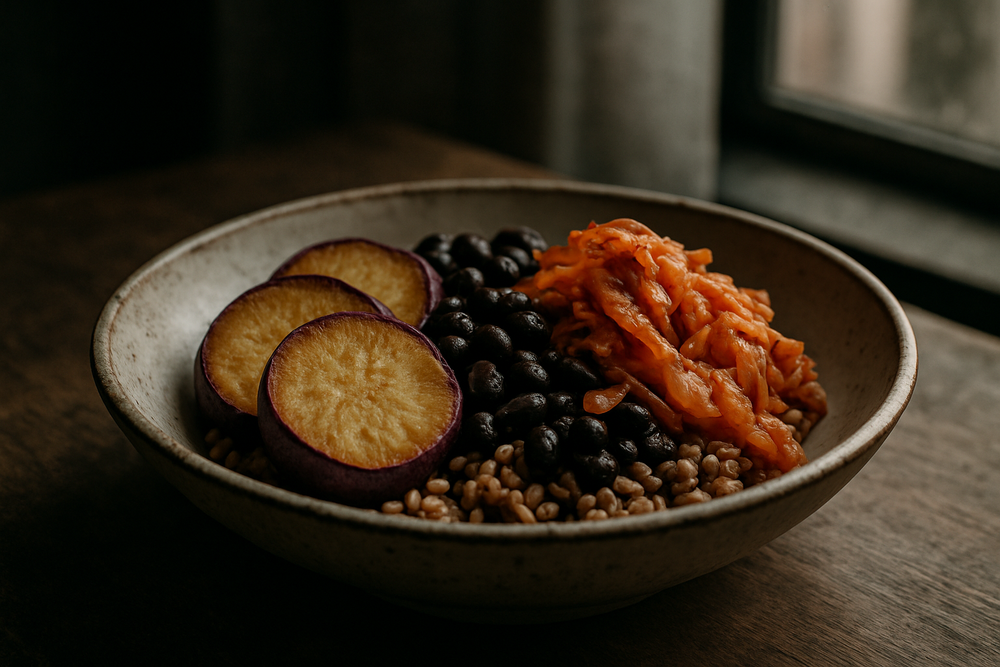
Japanese Sweet Potato · Photograph
Discover the Japanese sweet potato health benefits backed by nutrition science — from blood sugar support to gut health. Learn nutrition facts, the best ways to cook satsumaimo, and who should take caution.
Key Nutrients
% Daily Value based on 2,000 cal diet
Key active compounds
- Beta-carotene and carotenoids — Fat-soluble pigments (color-producing compounds) in plant foods that your body can convert into vitamin A. They also act as antioxidants (molecules that neutralize cell-damaging free radicals).
- Resistant starch — A starch fraction that passes through the small intestine undigested and is fermented by gut bacteria in the colon, where it produces beneficial short-chain fatty acids (more on this below).
- Soluble and insoluble dietary fiber — Two forms of fiber: soluble fiber dissolves in water and slows digestion; insoluble fiber adds bulk to stool and speeds transit. Japanese sweet potatoes contain both, especially in and just under the skin.
- Polyphenols including chlorogenic acids — A broad family of plant compounds with antioxidant and metabolic-signaling properties. Chlorogenic acids are also found in coffee and many vegetables and may modestly influence blood sugar metabolism.
- Potassium — An electrolyte (a mineral that carries electrical charge in body fluids) essential for blood pressure regulation and nerve and muscle function.
- Vitamin B6 (pyridoxine) — A B vitamin that acts as a cofactor (a helper molecule) in dozens of enzymatic reactions, including making neurotransmitters and red blood cells.
- Manganese — A trace mineral involved in bone development, carbohydrate metabolism, and the function of antioxidant enzymes.
How to cook Japanese sweet potatoes for the best nutritional value
The preparation method matters — not dramatically, but enough to be worth knowing.
Baking or roasting whole (skin-on) is the gold standard for nutrition and flavor. High dry heat concentrates the natural sugars and brings out the chestnut sweetness without leaching water-soluble nutrients. The skin crisps slightly and all the skin-adjacent fiber stays intact.
Boiling or steaming chunks preserves a slightly lower glycemic index than roasting, because the starch matrix stays more compact. Some potassium and B vitamins leach into cooking water, so using the least amount of water and saving it for soups helps.
Mashing or puréeing disrupts the starch matrix and may raise the glycemic index somewhat compared with intact chunks, but the fiber and micronutrients remain. Including the skin in mashed preparations maintains the fiber advantage.
Processed forms — chips, fries, dessert pastes — change the health profile significantly. Frying adds calorie-dense fat; adding sugar increases glycemic load. The benefits discussed on this page apply to minimally processed, whole cooked tubers.
One quick tip: letting baked or boiled Japanese sweet potatoes cool to room temperature before eating (or cooling overnight and reheating) increases resistant starch content through a process called retrogradation, where starch molecules re-form more tightly packed structures that resist digestion.
Who benefits most from Japanese sweet potatoes
The active person seeking steady energy
- Complex carbohydrates digest slowly, providing sustained glucose rather than a quick spike and crash.
- High potassium supports muscle function and recovery after exercise.
- The calorie-to-nutrient ratio is favorable for fueling workouts without overshooting energy needs.
The plant-based eater building a balanced plate
- Satsumaimo covers the "whole-grain starch" slot on a plant-based plate more nutrient-densely than white rice or white bread.
- Pairs naturally with legumes and greens to build a complete meal.
- The skin's fiber contributes to daily fiber targets, which most people don't meet.
Prep and pairing ideas
Japanese sweet potatoes are versatile. Here are three practical combinations and the nutritional logic behind each:
1. Roasted satsumaimo + black beans + leafy greens The legumes add plant protein and more fiber; leafy greens contribute folate, calcium, and additional antioxidants. The vitamin C in the sweet potato helps your body absorb the non-heme iron in the beans (non-heme iron is the form found in plant foods, which is less readily absorbed than the heme iron in meat, but vitamin C can significantly improve its uptake).
2. Steamed chunks + miso tahini dressing + sesame seeds Tahini (sesame paste) and sesame seeds add healthy fats that boost absorption of the fat-soluble beta-carotene in the sweet potato. Miso adds savory depth and probiotics (live beneficial bacteria). Together, this is a genuinely balanced small plate.
3. Japanese sweet potato in a grain bowl with brown rice and kimchi Combining two complex-carb sources with fermented kimchi (a probiotic food) and the resistant starch from the cooled sweet potato creates a gut-microbiome-friendly meal. The cooled potato increases resistant starch via retrogradation (see above).
Basic roasting method: Preheat oven to 400°F (205°C). Scrub the potato, pierce a few times with a fork, place directly on oven rack or a baking sheet, and roast 45–60 minutes until a skewer passes through easily and the skin wrinkles. The natural sugars concentrate and the flesh becomes creamy-dense. No oil needed.
Bottom line
Japanese sweet potatoes (satsumaimo) are a genuinely nutrient-dense whole-food starch — not a superfood miracle, but a well-rounded addition to a plant-forward diet. Their moderate calorie count, meaningful fiber, low-ish glycemic index, and solid lineup of potassium, beta-carotene, B6, and manganese make them a smarter swap for refined starches in most diets.
The strongest evidence supports their benefit for digestive health (fiber and resistant starch), modest blood sugar management (lower GI than white potatoes and refined grains), and micronutrient contribution (especially vitamin A and potassium). Heart and anti-inflammatory benefits are plausible based on their nutrient profile but not yet proven in tuber-specific clinical trials.
Eat them with the skin on when possible, avoid deep-frying, and combine them with protein and fat to further moderate blood sugar impact. Most people can enjoy one serving daily without concern. Those with kidney disease, diabetes, or relevant medication regimens should check with their healthcare provider about appropriate portions.
Looking to explore more whole-food starches and complex carbohydrates? Browse the Plantopedia starchy foods collection for evidence-aligned guides on how whole foods fit your specific health goals.
How Japanese Sweet Potato Compares
| Compared with | What's different |
|---|---|
| Japanese Sweet Potato vs. Orange Sweet Potato | White flesh and a chestnut-like flavor; higher in starch and calories than orange varieties. |
| Japanese Sweet Potato vs. Yam (Dioscorea) | A true yam with rough bark-like skin; lower in Vitamin A and much starchier than Japanese sweet potatoes. |
| Japanese Sweet Potato vs. White Potato | Creamy white interior with a waxy texture and lower sugar content than the Japanese tuber. |
Health Benefits
Things to Know
Diabetes and insulin resistance: Japanese sweet potatoes are lower GI than most refined starches but still contain about 26 g of carbohydrates per medium tuber. Count them within your total carbohydrate budget and monitor your individual glucose response, as GI values vary by person and preparation method.
Chronic kidney disease (CKD): If your doctor has advised you to limit dietary potassium (common in CKD), be aware that one medium Japanese sweet potato provides roughly 450 mg — a significant portion of a restricted daily allowance. Boiling and discarding the cooking water (called "leaching") can reduce potassium content.
Potassium-raising medications: Potassium-sparing diuretics (e.g., spironolactone, amiloride), ACE inhibitors, and ARBs (types of blood pressure medications) can raise blood potassium levels. Eating large amounts of potassium-rich foods alongside these drugs may contribute to hyperkalemia (dangerously high blood potassium) in susceptible individuals.
Glucose-lowering medications: Changes in starchy food intake and glycemic index can affect blood glucose patterns. If you adjust how much Japanese sweet potato you eat regularly, check with your prescriber about medication timing or dosing.
IBS and sensitive digestion: A sudden large increase in fiber and resistant starch can cause gas, bloating, or cramping. Increase portions gradually over a few weeks to give your gut microbiome time to adapt.
Very-low-carbohydrate or ketogenic diets: A medium Japanese sweet potato contributes 26 g of net carbohydrates, which may exceed the daily carbohydrate ceiling for strict keto or low-carb protocols.
Pregnancy: Japanese sweet potatoes are a safe, nutritious whole food during pregnancy. The high vitamin A figure (as provitamin A from carotenoids) is not a concern — unlike preformed vitamin A from animal liver or supplements, provitamin A from plants does not carry a toxicity risk at food-typical intakes.
Glossary
Shop This Ingredient
Stock your pantry with quality japanese sweet potato.
Buy on AmazonAs an Amazon Associate, Plantopedia earns from qualifying purchases. This costs you nothing extra and helps us keep the encyclopedia free.
Frequently Asked Questions
The benefits below are supported by the nutrient composition of Japanese sweet potatoes and broader research on those nutrients. Direct clinical trials using Japanese sweet potatoes as the study intervention are limited, so "may help" and "research suggests" are the honest qualifiers throughout. Heart and circulation A medium Japanese sweet potato provides roughly 450 mg of potassium — about as much as a medium banana — alongside 3+ grams of dietary fiber. In large observational studies (research that tracks diet patterns in populations over time without controlling what people eat), both higher potassium intake and higher dietary fiber intake are consistently linked with lower blood pressure and better cardiovascular risk profiles. The tuber is also cholesterol-free and virtually fat-free, making it compatible with heart-healthy eating patterns that emphasize plant-based complex carbohydrates over saturated fat. No clinical trial has directly tested Japanese sweet potatoes on heart outcomes, so this benefit is extrapolated from general fiber-and-potassium data. Replacing refined starches or high-sodium processed foods with Japanese sweet potatoes may be a net positive for heart health within a balanced diet, but it should not be treated as a standalone cardiovascular strategy. Digestive health and microbiome This is where the evidence is strongest relative to what Japanese sweet potatoes actually contain. Their 3–4 g of mixed fiber per serving adds bulk to stool, supports regular bowel movements, and provides substrate for your gut microbiome (the community of bacteria and other microorganisms in your large intestine). The resistant starch fraction is particularly interesting: bacteria in the colon ferment it to produce short-chain fatty acids (SCFAs) — including butyrate, acetate, and propionate — which play established roles in colon cell health, inflammation modulation, and even appetite signaling. Eating the skin preserves more of the fiber and should be the default for anyone prioritizing Japanese sweet potato skin fiber benefits. People with irritable bowel syndrome (IBS) or sensitive digestion may experience gas or bloating at larger portions, as any high-fiber starchy food can be fermentable. Blood sugar and metabolism Japanese sweet potatoes have a reported glycemic index (GI) of roughly 45–55 when boiled or baked — a number that measures how quickly a food raises blood glucose compared with pure glucose. For context, white bread typically scores above 70, and many white potato preparations score 70–85. A lower GI means a slower, more gradual glucose rise after eating, which is generally favorable for energy stability and blood sugar control. The combination of fiber, resistant starch, and dense complex carbohydrates explains this gentler response. Research on low-GI diets broadly supports improved glycemic (blood-sugar-related) control in people with and without type 2 diabetes, but no intervention trial has used Japanese sweet potatoes specifically as the study food. People with diabetes should still count the approximately 26 g of carbohydrate per medium tuber and work with their care team on portions and medication timing. Inflammation and recovery Japanese sweet potatoes are a meaningful source of provitamin A carotenoids and vitamin C — both of which contribute to antioxidant defenses in the body. Antioxidants help neutralize free radicals (unstable molecules produced by normal metabolism and environmental exposures) that can otherwise contribute to chronic low-grade inflammation over time. Observational research links carotenoid-rich diets with lower markers of oxidative stress and some inflammatory mediators (signaling molecules involved in the inflammatory response). However, there are no direct human clinical trials demonstrating anti-inflammatory effects specifically from Japanese sweet potatoes. Any benefit here is likely best understood as part of an overall plant-rich dietary pattern rather than a unique property of this one tuber.
There is no established therapeutic dose for Japanese sweet potatoes because they are a whole food, not a supplement. Standard dietary guidance supports building your plate around a variety of vegetables, legumes, whole grains, and starchy tubers rather than optimizing a specific food. Practical ranges used in research and practice: One small to medium tuber (100–150 g cooked, skin-on) per sitting is the most common serving in the literature and aligns with general starch-serving guidelines. One to two servings per day fits comfortably within most people's carbohydrate needs, depending on overall diet, activity level, and health goals. People managing blood sugar or carbohydrate intake should think in terms of the 26 g of carbohydrates per medium tuber and fit that into their total daily carbohydrate target rather than focusing on the number of potatoes. Starting with half a medium tuber and increasing over a few weeks is a smart approach if you are new to higher-fiber eating — it gives your digestion time to adjust without bloating. If you are replacing refined starches (white bread, white rice, processed snacks) with Japanese sweet potatoes, the overall nutritional shift is likely positive: more fiber, more micronutrients, a lower glycemic response, and greater satiety (the feeling of fullness).
Quick Answers
Common questions, answered in a line.
Baking or roasting Japanese sweet potatoes whole with the skin on is the best method to preserve their nutritional value and chestnut-like flavor. High dry heat concentrates natural sugars without leaching water-soluble vitamins, while keeping the fiber-rich skin intact.
Japanese sweet potatoes are a nutrient-dense source of complex carbohydrates, fiber, potassium, beta-carotene, vitamin B6, and manganese. They also contain resistant starch and polyphenols, such as chlorogenic acids, which support metabolic health and provide antioxidant effects.
You can increase the resistant starch in Japanese sweet potatoes by letting them cool to room temperature or refrigerating them overnight after cooking. This process, called retrogradation, reforms the starch molecules into structures that resist digestion and benefit gut bacteria.
Individuals with chronic kidney disease (CKD) should be cautious because Japanese sweet potatoes are high in potassium, providing about 450 mg per medium tuber. Those on potassium-sparing diuretics, ACE inhibitors, or ARBs should also monitor intake to avoid hyperkalemia.
Yes, Japanese sweet potatoes are a safe and nutritious whole food choice during pregnancy. They provide a high amount of provitamin A from carotenoids, which unlike preformed vitamin A from animal sources, does not carry a toxicity risk at normal dietary levels.
Japanese sweet potatoes can support blood sugar management because they have a lower glycemic index than refined starches and white potatoes. However, people with diabetes should still count the roughly 26 grams of carbohydrates per tuber toward their daily budget.
Pairing Japanese sweet potatoes with healthy fats, such as tahini or sesame seeds, significantly improves the body's absorption of fat-soluble beta-carotene. Additionally, the vitamin C in the potato helps increase the absorption of non-heme iron from plant foods like beans.
For Readers in the USA
Local context — sourcing, seasonality, and regional notes.
In the U.S., you can find Japanese sweet potatoes at H Mart, Mitsuwa, Whole Foods Market, and increasingly at Trader Joe’s or local farmers markets. While once exclusive to Asian grocers, their popularity has led major retailers to stock them year-round, often labeled by their purple skin and creamy white interior.
Domestic Japanese sweet potatoes are primarily grown in California and North Carolina, with the peak harvest season occurring between late summer and early fall. Although they are harvested once a year, they are cured and stored in temperature-controlled facilities, making them available in U.S. grocery stores through the winter and spring.
When buying Japanese sweet potatoes in the U.S., look for the USDA Organic seal if you want to avoid synthetic pesticides and ensure non-GMO production. Because these tubers are often eaten with the skin on to maximize fiber, many American consumers prefer organic varieties to minimize exposure to soil-applied chemicals.
In U.S. markets, the most common variety of Japanese sweet potato is the Murasaki, which features a distinct purple skin and sweet, nutty white flesh. While "Satsumaimo" is the general Japanese term, American shoppers may also see them labeled as "Oriental Sweet Potatoes" or "Kotobuki" depending on the region and retailer.
AI Clinical Review
- Accurately frames Japanese sweet potatoes as a fiber‑rich, complex‑carbohydrate starch with a generally lower glycemic index than many white‑potato preparations.
- Highlights meaningful nutrients (potassium, vitamin B6, manganese, provitamin A carotenoids) and correctly notes that benefits come from the overall nutrient package rather than a “superfood” effect.
- Emphasizes practical prep choices (skin‑on, baking/boiling, cooling to raise resistant starch) and cautions that frying or adding sugar changes the health profile.
- Sensibly positions them as a nutritious swap for refined starches within a balanced, plant‑forward eating pattern.
- Reported glycemic index values (often ~45–55) vary with cultivar, ripeness, cooking method, and individual response; treat GI as a range rather than a fixed number.
- Claims about “higher” resistant starch are plausible but not well standardized across varieties; head‑to‑head data versus other tubers are limited, and increases with cooling apply broadly to cooked starches.
- Cardiovascular, anti‑inflammatory, and glycemic benefits are largely inferred from nutrients and low‑GI patterns; there are few trials using Japanese sweet potatoes as the direct intervention.
- Vitamin A numbers in databases can reflect orange‑fleshed sweet potatoes; pale/cream‑fleshed Japanese types typically contain less beta‑carotene, and conversion to active vitamin A varies with diet and health.
- Portion guidance: about 100–150 g cooked (1 small–medium) per sitting is reasonable; a medium provides ~26 g carbohydrate—people with diabetes should count this and monitor their personal glucose response.
- Potassium (~450 mg per medium) is beneficial for most, but those with chronic kidney disease or on ACE inhibitors/ARBs or potassium‑sparing diuretics should discuss portions with a clinician; boiling and discarding the water can lower potassium.
- If you have IBS or a sensitive gut, introduce gradually—fiber, resistant starch, and naturally occurring polyols can cause gas/bloating at larger portions.
- Form matters: whole baked or steamed, skin‑on, preserves fiber and micronutrients; fries, chips, or sugary pastes add fats/sodium/sugars and change metabolic impact.
Whole-food starch; enjoy the skin for extra fiber.
References
- USDA FoodData Central — sweet potato nutritional data (fdc.nal.usda.gov)
- USDA MyPlate — guidance on grains and starchy vegetables (myplate.gov)
- Verywell Health — Are Japanese sweet potatoes healthy? (overview with references) (verywellhealth.com)
- Verywell Health — Japanese sweet potatoes vs. regular potatoes (verywellhealth.com)
- SelfHacked — 4 health benefits of Japanese sweet potato + nutrition (review of available literature) (selfhacked.com)
- GreatFarmer — Health benefits of Japanese sweet potatoes (nutrient and benefit overview) (greatfarmer.com.vn)
- GreatFarmer — Japanese sweet potatoes: all you need to know (variety and cooking overview) (greatfarmer.com.vn)
- SimplyDelicious — Japanese sweet potato nutrition: why this purple powerhouse lives up to the hype (simplydeliciousflagstaff.com)
- Everyday Health — Nutritional facts for an oriental sweet potato (everydayhealth.com)
- ReciPal — Japanese sweet potato nutrition facts (calorie and macro data) (recipal.com)
Know Your Numbers
Eating healthy is a start. Now get to know your biomarkers.
Food changes bloodwork — inflammation, lipids, blood sugar and nutrient status all respond to what you eat. 59 markers from $59.
- Results in 7–10 days at 2,000+ Quest sites
- Licensed provider reviews every result
- One flat price, no membership, HSA/FSA eligible
Educational information only, not medical advice. Panels are ordered and reviewed through our licensed partner; Plantopedia may earn a commission.