Kokum Butter — health benefits and uses
Kokum is an Ayurvedic cooling fruit; its butter soothes and moisturizes.
The Short Answer
Kokum butter is a firm, plant-based seed fat used as a vegan alternative to ghee or cocoa butter in Indian sweets and chocolate. It is highly shelf-stable and consists primarily of stearic and oleic acids with 2.8 mg of vitamin E per tablespoon.
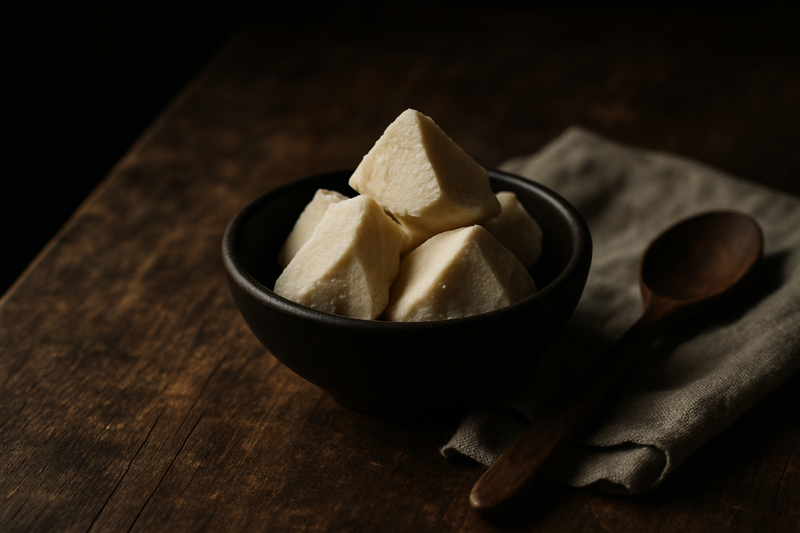
Kokum Butter · Photograph
Discover kokum butter benefits, uses, and side effects in one clear guide. Learn how this stable, cocoa-butter-like seed fat from Garcinia indica is used in Indian sweets, chocolate-making, and skin care — plus nutrition facts, safety tips, and how it compares to cocoa butter.
Key Nutrients
% Daily Value based on 2,000 cal diet
Key active compounds
- Stearic acid (C18:0) — the dominant saturated fatty acid (~50–67%); research suggests it has a more neutral effect on blood LDL cholesterol than palmitic acid, though it is still a saturated fat.
- Oleic acid (C18:1) — a monounsaturated (one double bond) omega-9 fatty acid (~30–42%); the same type found in olive oil, associated with heart-neutral or mildly positive effects in the wider diet literature.
- Palmitic acid (C16:0) — a minor saturated fatty acid (~2–5%); present in small amounts.
- Linoleic acid (C18:2) — a small amount of omega-6 polyunsaturated fat; contributes minimally.
- Tocopherols (vitamin E) — fat-soluble antioxidants reported at around 20 mg per 100 g of kokum seed fat; help protect both the butter itself from rancidity and, potentially, cells from oxidative stress.
- Phytosterols — plant-derived sterols found in the unsaponifiable fraction (roughly 1–1.4% of the fat); may modestly influence cholesterol absorption in the gut at sufficient doses.
- Trace phenolic compounds — minor antioxidant molecules more likely to be present in unrefined kokum fat than in refined food-grade butter.
Prep and pairing ideas
Kokum butter is solid at room temperature and melts cleanly, making it easy to use in the following ways:
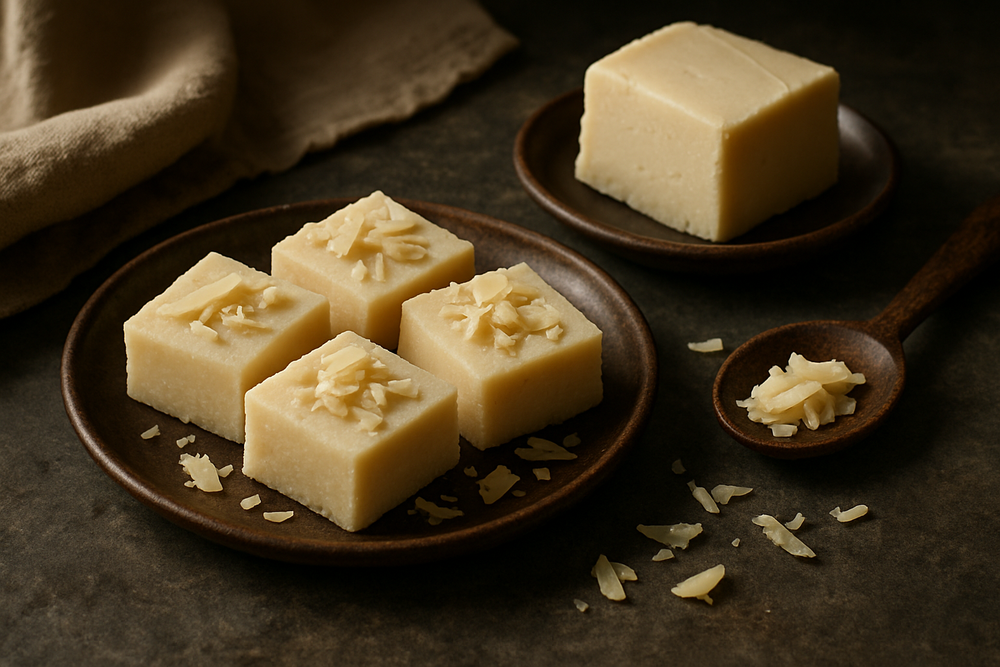
In Indian sweets (mithai). Melt 1–2 teaspoons into traditional barfis, halwas, or ladoos in place of ghee for a neutral, non-dairy fat. It sets firmly as it cools, giving confections a clean snap.
As a cocoa butter substitute in homemade chocolate. Combine melted kokum butter with cacao powder and a sweetener of your choice. Its neutral flavour lets the cacao's own notes come through more purely than with flavoured cocoa butter.
In no-bake energy balls or fat bombs. A tablespoon of kokum butter helps bind rolled oats, nut butter, and dried fruit into firm, shelf-stable balls that hold their shape at room temperature — useful in warm climates where coconut oil-based bites turn soft.
Bottom line
Kokum butter is a fascinating, underappreciated seed fat that punches above its weight in the kitchen and the bathroom. Its high stearic and oleic acid content gives it a fatty acid profile that is more heart-neutral than many tropical fats, and its vitamin E content adds a small antioxidant bonus. As a cocoa butter equivalent, it is genuinely useful in plant-based confectionery and chocolate-making.
The honest caveat: the human evidence base for eating kokum butter is thin. Most health claims rest on what we know about its component fatty acids and antioxidants from broader nutrition research — not from controlled trials using kokum butter itself. Treat it as a quality niche fat to use thoughtfully, not a superfood to add by the spoonful.
If you're plant-based, curious about traditional Indian ingredients, or simply looking for a stable neutral fat for confectionery or skin care, kokum butter is worth exploring. Just keep portions small, confirm food-grade labelling for culinary use, and let it complement — rather than dominate — an otherwise varied diet.
Looking for more guidance on fats that fit your health goals? Browse the Plantopedia Goals hub to find ingredient guides mapped to specific outcomes.
How Kokum Butter Compares
| Compared with | What's different |
|---|---|
| Kokum Butter vs. Cocoa Butter | Kokum has a neutral scent and higher melting point, while cocoa butter smells strongly of chocolate. |
| Kokum Butter vs. Coconut Oil | Kokum butter is a brittle solid at room temperature, whereas coconut oil melts at 76°F (24°C). |
| Kokum Butter vs. Ghee | Kokum is a plant-based seed fat with a higher stearic acid content than dairy-based ghee. |
Health Benefits
Things to Know
Saturated fat budget.: A tablespoon of kokum butter provides 10 g of saturated fat — half the daily upper limit recommended by many health bodies (typically 20 g for a 2,000-calorie diet). Factor this into your overall intake.
Calorie density.: At ~120 calories per tablespoon, kokum butter is energy-dense. Small amounts contribute meaningfully to daily calorie totals, especially if added to calorie-rich sweets.
Food-grade only for cooking.: Cosmetic-grade kokum butter may contain additives, preservatives, or processing residues not intended for ingestion. Check the label every time.
Cardiovascular conditions.: If you have high LDL cholesterol, heart disease, or hyperlipidemia, discuss solid fat use with your dietitian before adding kokum butter to your regular diet. Its stearic-acid profile is more favourable than some saturated fats, but it is still a saturated fat.
Gallbladder or fat-malabsorption disorders.: High-fat foods can worsen symptoms; consult your doctor first.
Weight management.: Its calorie density means portion awareness matters if you are managing your weight.
Garcinia allergy.: Documented allergies are rare, but those with known hypersensitivity to Garcinia species or seed-derived fats should use caution.
Medication interactions.: No specific interactions are documented, but large amounts of fat in a meal can alter the absorption of some lipophilic (fat-soluble) medications. If you take drugs that require careful dosing, check with your pharmacist.
Pregnancy and infants.: No safety concerns specific to kokum butter in culinary amounts are documented, but as with any niche ingredient, pregnant individuals may wish to stick to established culinary uses. Keep cosmetic-grade products out of reach of young children.
Glossary
Shop This Ingredient
Stock your pantry with quality kokum butter.
Buy on AmazonAs an Amazon Associate, Plantopedia earns from qualifying purchases. This costs you nothing extra and helps us keep the encyclopedia free.
Frequently Asked Questions
Most of what we know about kokum butter's health potential comes from its fatty acid profile and antioxidant content rather than dedicated human trials. The evidence base is emerging, not established, so treat the points below as "reasonable hypotheses" rather than proven outcomes. Heart and circulation Kokum butter's fatty acid mix — dominated by stearic and oleic acids — is considered more heart-neutral than that of many other tropical fats dominated by lauric or palmitic acids. Stearic acid is well-studied in the broader nutrition literature for having less impact on LDL (low-density lipoprotein, often called "bad") cholesterol than palmitic acid. Oleic acid, as found in olive oil, is associated with favourable lipid profiles in large dietary studies. That said, no human clinical trials have directly tested kokum butter consumption on cardiovascular outcomes. Use it as you would any solid cooking fat — in small amounts, within your total daily saturated fat budget. Most major health organisations recommend keeping saturated fat below 10% of total calories. Digestive health and microbiome There are no studies specifically examining kokum butter's effects on digestion or gut bacteria. As a pure fat, it slows gastric emptying (the rate at which food leaves your stomach), which may briefly reduce appetite, but this is a property shared by all dietary fats, not unique to kokum butter. In typical culinary amounts (a teaspoon or tablespoon in a recipe), it is unlikely to cause GI discomfort in most people. Blood sugar and metabolism Kokum butter contains zero carbohydrates, so it does not raise blood glucose directly. Adding fat to a carbohydrate-containing meal can blunt the glycaemic response (the spike in blood sugar after eating) by slowing carbohydrate absorption — but again, this is a general fat effect. No studies have tested kokum butter specifically for blood sugar or insulin outcomes. Inflammation and recovery Kokum butter's vitamin E content gives it a small, plausible anti-inflammatory credential, since tocopherols are well-established free-radical scavengers. Free radicals are unstable molecules that can damage cells; antioxidants help neutralise them. However, 2.8 mg of vitamin E per tablespoon is a meaningful but modest amount, and any systemic anti-inflammatory effect would depend on your whole dietary pattern — not this one fat alone. Skin emollient properties (topical use) While not a traditional "health benefit" of eating it, kokum butter's most evidence-supported application may actually be topical. Its high melting point (around 38–40 °C, close to skin temperature), oxidative stability, and ability to form a non-greasy film make it a well-regarded emollient in natural cosmetics. Formulators use it in body butters, lip balms, and baby oil preparations. Clinical dermatology trials are still lacking, but its physicochemical profile aligns well with other seed butters used for dry skin.
For most cooking purposes, food-grade kokum butter and cocoa butter are nearly interchangeable. Here's how they compare: | Property | Kokum butter | Cocoa butter | | --- | --- | --- | | Stearic acid | 50–67% | 30–35% | | Oleic acid | 30–42% | 30–35% | | Palmitic acid | 2–5% | 25–30% | | Melting point | 38–40 °C | 34–38 °C | | Flavour | Neutral | Mild chocolate aroma | | Oxidative stability | Very high | High | Kokum butter melts slightly higher than cocoa butter and is virtually flavourless, making it better suited to applications where you don't want a chocolate note. It is sometimes blended with other tropical fats to create cocoa butter equivalents (CBEs) — industry-standard substitutes used when cocoa butter is expensive or in short supply. For skin care, both are popular emollients. Kokum butter absorbs slightly faster and is less occlusive (less greasy-feeling) than cocoa butter, which some people prefer for body lotions. For eating, always confirm food-grade labelling regardless of which you choose.
The Indian-cuisine home cook Wants a traditional, plant-based solid fat for sweets and confections without the dairy of ghee. Prefers a neutral-tasting fat that doesn't overpower spices or cacao flavours. Benefits from its long shelf life and resistance to rancidity — useful for batch-cooking sweets. The natural skincare enthusiast Looking for a non-greasy, stable emollient for DIY lip balms, body butters, or facial bars. Wants a plant-based alternative to beeswax or lanolin (an animal-derived moisturiser) that melts at skin temperature. Appreciates its oxidative stability, which extends the shelf life of homemade formulations.
No standardised daily dose exists from human clinical trials. Practical guidance is based on traditional culinary use and general saturated fat recommendations: Culinary use: Traditional Indian recipes typically incorporate 5–15 g (roughly 1–3 teaspoons) per serving of a sweet or confection. This is a sensible starting range for most adults. Daily ceiling: Given that 14 g (1 tablespoon) provides 10 g of saturated fat, most adults should treat it as an occasional-use fat rather than a daily staple, keeping total saturated fat intake in line with dietary guidelines. Start low. If you've never used it, begin with 5 g (about 1 teaspoon) in a recipe to assess tolerance and flavour preference before scaling up. Topical use: No set limit; use as needed in formulations at concentrations typical for seed butters (commonly 5–30% of a recipe). Patch test first if you have sensitive skin. There is no evidence that small culinary amounts (5–15 g per occasion) cause harm in healthy adults, but more is not better — especially given the calorie and saturated fat load.
Quick Answers
Common questions, answered in a line.
Kokum butter is a solid, shelf-stable seed fat derived from the Garcinia indica plant that is commonly used as a dairy-free alternative to ghee or a cocoa butter substitute. It is highly valued in Indian confectionery and skin care for its neutral flavor and firm texture.
Kokum butter consists primarily of stearic acid (50–67%) and oleic acid (30–42%), along with small amounts of palmitic acid and linoleic acid. It also contains beneficial tocopherols (vitamin E) and phytosterols which may influence cholesterol absorption.
Yes, you can eat kokum butter, provided it is explicitly labeled as food-grade rather than cosmetic-grade. It is traditionally used in Indian sweets like barfis and halwas or as a plant-based fat for making homemade chocolates and energy balls.
One tablespoon of kokum butter contains approximately 120 calories and 10 grams of saturated fat. This amount represents roughly half of the daily saturated fat limit recommended for a standard 2,000-calorie diet.
Kokum butter contains approximately 20 mg of tocopherols (vitamin E) per 100 grams. These fat-soluble antioxidants help protect the butter from becoming rancid and may help protect human cells from oxidative stress.
Kokum butter is an effective stabilizer for no-bake energy balls because it remains firm at room temperature, even in warm climates. Its high stearic acid content ensures the snacks hold their shape better than those made with coconut oil.
People with high LDL cholesterol or heart disease should consult a dietitian before adding kokum butter to their diet due to its high saturated fat content. Those with gallbladder issues or known allergies to Garcinia species should also exercise caution.
For Readers in the USA
Local context — sourcing, seasonality, and regional notes.
You can find food-grade kokum butter at Indian grocery stores (like Patel Brothers), specialty health food stores, and major online retailers like Amazon. While common in the cosmetics aisle of stores like Whole Foods, culinary-grade versions are typically imported and sold in the international food section.
In the U.S., the FDA regulates kokum butter as a food additive or "Generally Recognized as Safe" (GRAS) substance when used in confectionery, provided it meets specific purity standards. Always look for "Food Grade" or "USP Grade" on the label to ensure it is safe for consumption rather than for external cosmetic use only.
While the Garcinia indica tree is native to India and not commercially grown in the U.S., kokum butter products are available year-round due to their long shelf life and imported nature. Because the butter is stable at room temperature, it does not require refrigerated shipping, making it accessible in all 50 states regardless of the season.
American pastry chefs and home cooks often use kokum butter as a vegan-friendly stabilizer for chocolate and frostings because it has a higher melting point than cocoa butter. It is particularly popular in southern U.S. states where high humidity and heat make traditional butter-based confections prone to melting.
AI Clinical Review
- Clearly explains what kokum butter is and why it’s an unusually stable solid plant fat, with a fatty‑acid profile dominated by stearic and oleic acids.
- Helpfully distinguishes food‑grade from cosmetic‑grade products and gives practical culinary and topical use ideas.
- Appropriately frames the human evidence as limited and avoids overstating health claims; most points are reasonable extrapolations from known fatty‑acid and vitamin E research.
- Provides a sensible comparison with cocoa butter (slightly higher melting point, neutral flavor) for both confectionery and skincare uses.
- There are no robust human trials testing kokum butter intake on LDL cholesterol, glycemia, weight, or cardiovascular outcomes; stearic acid’s “neutrality” can vary by overall diet and what it replaces.
- Systemic antioxidant or anti‑inflammatory benefits from its modest vitamin E content are plausible but unproven specifically for kokum butter.
- Data on digestive or microbiome effects are essentially absent; any appetite or glycemic effects described are general to dietary fat, not kokum‑specific.
- For skin, support is largely based on physicochemical properties and formulator experience; comparative clinical trials versus other butters are scarce.
- Portion and saturated‑fat budget: 1 tablespoon ≈ 14 g fat (~10 g saturated). Reasonable culinary use is small (about 1–3 teaspoons/5–15 g), within a diet that keeps saturated fat under 10% of calories; people with high LDL or heart disease are often advised to aim closer to 5–6%.
- Form matters: use only clearly labeled food‑grade products for cooking; cosmetic‑grade may include additives not intended for ingestion.
- Who should check in first: individuals with hyperlipidemia, gallbladder disease, fat‑malabsorption or pancreatitis, and those taking medications whose absorption is affected by meal fat.
- Variability: vitamin E and other minor compounds vary by cultivar and processing; highly refined butters may contain less antioxidant content than unrefined seed fat.
Culinary use is niche; ensure food-grade. Generally safe.
References
- USDA FoodData Central — general plant fat nutrition reference (fdc.nal.usda.gov)
- WebMD — Kokum Butter: Health Benefits, Nutrition, and How to Use (webmd.com)
- The Pharma Journal — Review-based study on nutritional composition and health aspects of kokum (thepharmajournal.com)
- Wikipedia — Kokum butter: overview of fatty acid composition and uses (en.wikipedia.org)
- Indian Horticulture (ICAR) — Kokum: The purple pulse of the Konkan, horticultural and compositional review (epubs.icar.org.in)
- Archives of Nutrition and Public Health — Composition and vitamin E content of kokum seed fat (escientificpublishers.com)
- IJPPR — Product development and evaluation of kokum-butter baby oil formulation study (ijppr.humanjournals.com)
- SDIOPR — Kokum butter as a potential cocoa butter equivalent: review of fatty acid profile and confectionery use (sdiopr.s3.ap-south-1.amazonaws.com)
- Madar Corporation — Kokum butter technical specification and fatty acid data sheet (madarcorporation.com)
- Truemeds — Kokum butter benefits overview, uses and safety summary (truemeds.in)
Know Your Numbers
Eating healthy is a start. Now get to know your biomarkers.
Food changes bloodwork — inflammation, lipids, blood sugar and nutrient status all respond to what you eat. 59 markers from $59.
- Results in 7–10 days at 2,000+ Quest sites
- Licensed provider reviews every result
- One flat price, no membership, HSA/FSA eligible
Educational information only, not medical advice. Panels are ordered and reviewed through our licensed partner; Plantopedia may earn a commission.