Mustard Oil — health benefits and uses
Traditional Ayurvedic warming oil used for massage and as a chest rub for congestion.
The Short Answer
Mustard oil is a pungent cooking oil high in monounsaturated fats (8.3g) and omega-3s, though its high erucic acid content leads to regulatory restrictions in the US. It is prized in South Asian cuisine for its sharp aroma and high smoke point.
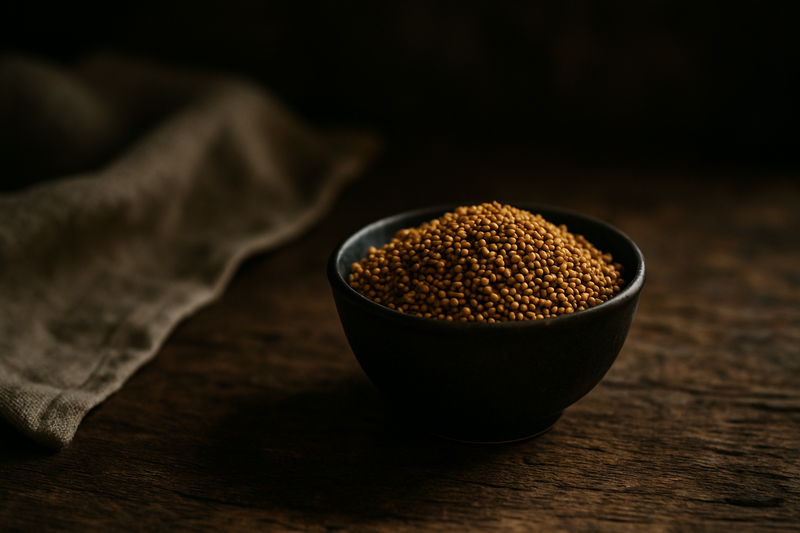
Mustard Oil · Photograph
Explore mustard oil health benefits and side effects, including its heart-healthy fat profile, anti-inflammatory compounds, and the erucic acid safety concerns that make it controversial in the US. Learn which type to choose, how much is reasonable, and how it's used in Indian and Bengali cooking.
Key Nutrients
% Daily Value based on 2,000 cal diet
Key Active Compounds
Mustard oil gets its distinctive character from a set of bioactive compounds not commonly found in most other cooking oils:
- Allyl isothiocyanate (AITC): The sulfur-containing molecule responsible for mustard oil's sharp, nose-tingling aroma. Formed when glucosinolates in mustard seeds are broken down by an enzyme called myrosinase. In lab and animal studies, AITC shows strong antimicrobial, antioxidant, and anti-inflammatory activity. Human trials are limited.
- Glucosinolates: Sulfur-rich precursor compounds found in all Brassica family plants (broccoli, cabbage, mustard). When mustard seeds are crushed or chewed, glucosinolates convert to isothiocyanates and other bioactive molecules. These are the parent compounds behind many of mustard oil's proposed health properties.
- Erucic acid: A very-long-chain monounsaturated fatty acid (22 carbons) naturally present in mustard and rapeseed oils. In traditional expressed mustard oil, erucic acid can make up roughly 20–40% of total fatty acids. High intake has been linked to myocardial lipidosis (fat accumulation in heart muscle) in animal studies, driving regulatory restrictions in multiple countries.
- Alpha-linolenic acid (ALA): An omega-3 fatty acid comprising roughly 6% of mustard oil's fat. ALA is an essential fat — your body cannot make it, so you need it from food.
- Linoleic acid: An omega-6 fatty acid at roughly 15% of total fat.
- Phenolic antioxidants: Minor phenolic compounds and tocopherols (vitamin E-type molecules) present in small amounts in cold-pressed versions. Mustard oil is not a major polyphenol source compared with extra virgin olive oil, but these compounds contribute to the oil's oxidative stability.
Myths vs. Facts About Mustard Oil
Myth 1: Mustard oil is banned everywhere outside India. Fact: Mustard oil is widely sold and cooked with across South Asia, parts of Europe, and other regions. In the US specifically, expressed (high-erucic) mustard oil faces an FDA import alert and is often labeled "for external use only" — but it is not universally banned worldwide.
Myth 2: "Cold-pressed" or "kachhi ghani" mustard oil is always safer. Fact: Cold-pressing preserves more bioactive compounds and flavor, but it does not reduce erucic acid content. In fact, unrefined cold-pressed mustard oil tends to have higher erucic acid levels than refined versions. "Natural" does not automatically mean lower risk here.
Myth 3: Mustard oil is a proven cure for joint pain. Fact: Traditional massage use is widespread and many people report subjective relief. But there are no rigorous controlled human trials confirming that topical mustard oil reduces joint pain more effectively than other oils or standard treatments. It may be soothing, but "proven cure" overstates the evidence.
Is Mustard Oil Safe for Cooking? Refined vs. Cold-Pressed Mustard Oil Explained
This is arguably the most important practical question about mustard oil.
Unrefined / cold-pressed / kachhi ghani mustard oil retains the highest levels of allyl isothiocyanate, flavor, and aroma — making it the preferred choice for authentic Indian and Bengali cooking. But it also retains the most erucic acid, typically 20–40% of total fatty acids in expressed oil. This is the type most often labeled "for external use only" in the US.
Refined, food-grade mustard oil undergoes processing that reduces erucic acid content to levels that comply with national food standards in countries like India, where food-grade mustard oil is legally defined and regulated. Refining also reduces the pungency somewhat. If you are cooking with mustard oil regularly, food-grade refined versions are generally the more cautious choice.
A note on "edible" labeling in the US: Because the FDA considers expressed mustard oil with high erucic acid content an unsafe food additive, products are commonly labeled "for external use only" to comply with import regulations — even though the cultural practice of cooking with it continues in South Asian households across the country. If you want to use mustard oil in cooking in the US context, look for products explicitly labeled as food-grade or edible, sourced from brands that test and report erucic acid levels.
Smoke point: Mustard oil's smoke point is approximately 250 °C (480 °F), which is genuinely high and suitable for deep-frying, tadka, and high-heat stir-frying. However, any oil subjected to prolonged very high heat generates oxidation byproducts, so moderation in high-heat use is sensible regardless of which oil you choose.
Prep and Pairing Ideas
Mustard oil's pungency softens considerably with heat, making it more versatile than its raw smell suggests. Here are practical ways to use it:
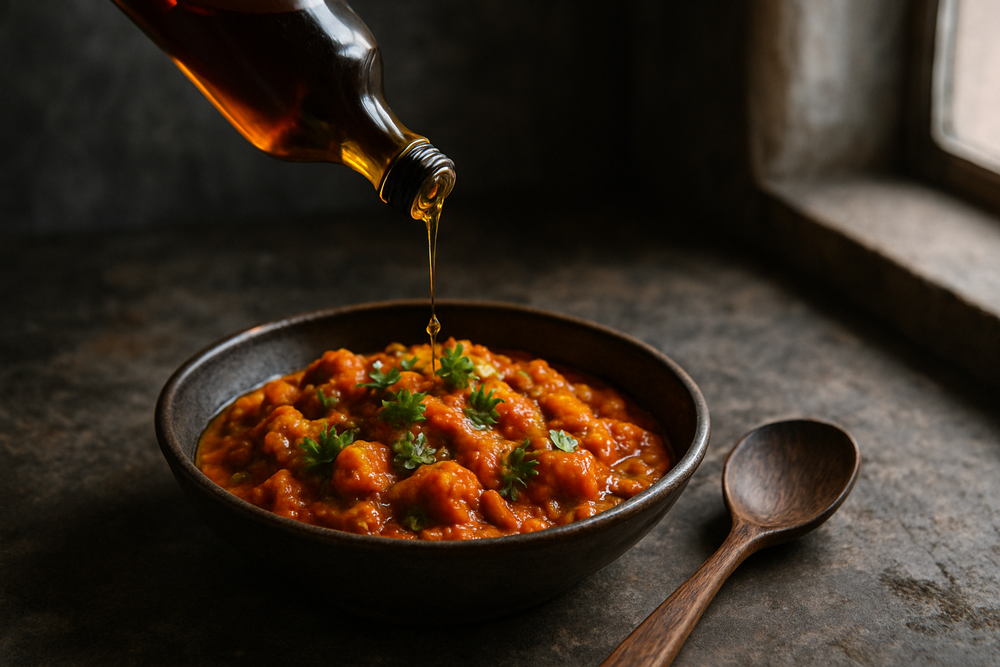
For tadka (tempering): Heat 1–2 teaspoons of mustard oil in a small pan until it just begins to smoke (which actually mellows the erucic acid's sharpness and reduces raw pungency). Add whole mustard seeds, dried chilies, curry leaves, or kalonji (nigella seeds), then pour over dal, rice, or vegetables. This is the backbone of Bengali and Bihari home cooking.
For pickling: Combine mustard oil with salt, turmeric, fenugreek, and your vegetables of choice (raw mango, cauliflower, carrots). The oil's antimicrobial allyl isothiocyanate content actively helps preserve the pickle. Traditional Indian achar (pickle) depends on this mechanism.
For marinating fish: Coat fish fillets with mustard oil, turmeric, and salt before pan-frying or steaming. This is a classic Bengali preparation (machher jhol) and the oil adheres well to fish skin, creating a fragrant crust.
Three practical pairings:
- Mustard oil + turmeric + black pepper: The fat in mustard oil enhances the absorption of curcumin (the active compound in turmeric), while piperine in black pepper boosts it further. A culinary combination with overlapping anti-inflammatory potential.
- Mustard oil + mustard seeds + curry leaves (tadka base): Classic South Indian and Bengali flavor base. The brief high-heat blooming of seeds in oil releases volatile flavor compounds and reduces raw pungency.
- Mustard oil + raw garlic + salt (for chutneys and bhortas): In Bangladeshi and Bengali cooking, mashed vegetables (bhorta) dressed with mustard oil and raw garlic create a sharp, pungent condiment. The oil carries fat-soluble allicin compounds from garlic, amplifying flavor and potential antimicrobial value.
Bottom Line
Mustard oil is a nutritionally interesting cooking oil with a legitimately favorable fatty acid profile, biologically active compounds (especially allyl isothiocyanate), and a deep culinary tradition in South Asian cooking. Its high smoke point makes it technically well-suited for the high-heat tadka and pickling methods it has been used for across generations.
However, it carries a real and not-yet-fully-resolved safety consideration in erucic acid. Animal evidence is concerning enough that multiple regulatory bodies — including the US FDA and Hong Kong food authorities — restrict high-erucic mustard oil in food use. Human outcome data are limited and do not yet confirm or refute whether the levels consumed in traditional diets cause harm or confer benefit.
The most practical stance: if you enjoy mustard oil's unique flavor in Indian and Bengali cooking, choose food-grade refined versions where possible, use it as part of a varied fat intake rather than exclusively, and avoid very high daily amounts — especially if you have cardiovascular risk factors. If you are pregnant, feeding an infant, or have a heart condition, discuss with your doctor first.
Looking to explore how cooking oils fit into specific health goals? Browse our cooking oils and heart health guide.
How Mustard Oil Compares
| Compared with | What's different |
|---|---|
| Mustard Oil vs. Canola Oil | Contains significantly higher levels of erucic acid and a sharper, pungent flavor profile. |
| Mustard Oil vs. Olive Oil | Contains ALA omega-3s and sulfur compounds (AITC) which olive oil lacks. |
Health Benefits
Things to Know
Erucic acid risk: The most important safety consideration. Choose food-grade, refined mustard oil for regular cooking; avoid using high-erucic expressed mustard oil as your sole or primary fat source.
Cardiovascular conditions: People with existing heart disease, cardiomyopathy, or high cholesterol should discuss mustard oil use with their doctor, given animal evidence linking high erucic acid to myocardial lipidosis.
Infants and young children: Some pediatric health bodies advise caution with mustard oil in infant massage, citing potential skin barrier disruption and erucic acid exposure concerns. Consult a pediatrician before use on babies.
Pregnancy and breastfeeding: Robust human safety data are lacking. Precautionary guidance from regulators suggests limiting high-erucic oil exposure during pregnancy and breastfeeding. If you cook with mustard oil regularly, discuss with your midwife or physician.
Mustard allergy / Brassica allergy: Mustard is a recognized allergen. If you have a mustard, mustard seed, or broader Brassica family allergy, avoid mustard oil. Inhalation of vapors during high-heat cooking may also trigger reactions in sensitized individuals.
Skin sensitivity: Topical application can cause irritation, especially in people with eczema, rosacea, or broken skin. The isothiocyanates are genuine irritants in concentrated form.
Medication interactions: No well-established drug interactions are specific to mustard oil. As with any oil high in omega-3 and omega-6 fatty acids, very high intakes could theoretically influence bleeding time; people on anticoagulants (e.g., warfarin) should maintain consistent fat intake and consult their doctor.
Caloric density: Like all oils, mustard oil is calorie-dense. One tablespoon = ~124 calories. Quantity matters for weight management.
Prep Ideas
- — **Mustard oil + turmeric + black pepper:** The fat in mustard oil enhances the absorption of curcumin (the active compound in turmeric), while piperine in black pepper boosts it further. A culinary combination with overlapping anti-inflammatory potential.
- — **Mustard oil + mustard seeds + curry leaves (tadka base):** Classic South Indian and Bengali flavor base. The brief high-heat blooming of seeds in oil releases volatile flavor compounds and reduces raw pungency.
- — **Mustard oil + raw garlic + salt (for chutneys and bhortas):** In Bangladeshi and Bengali cooking, mashed vegetables (bhorta) dressed with mustard oil and raw garlic create a sharp, pungent condiment. The oil carries fat-soluble allicin compounds from garlic, amplifying flavor and potential antimicrobial value.
Glossary
Shop This Ingredient
Stock your pantry with quality mustard oil.
Buy on AmazonAs an Amazon Associate, Plantopedia earns from qualifying purchases. This costs you nothing extra and helps us keep the encyclopedia free.
Frequently Asked Questions
The honest answer is that many claimed benefits are biologically plausible but not yet firmly proven in controlled human trials. Here is what the current evidence actually says, area by area. Heart and Circulation Mustard oil's fat profile — roughly 60% monounsaturated, 21% polyunsaturated, and only 11–12% saturated — looks favorable when compared with butter, lard, or palm oil. Diets that replace saturated fats with unsaturated fats are consistently linked in large human studies with better blood lipid profiles and reduced cardiovascular risk. The presence of ALA (omega-3) adds further theoretical value. However, the story is complicated by erucic acid. Animal studies have shown that high erucic acid intake can cause myocardial lipidosis — essentially, fat droplets accumulating in heart muscle cells — and other cardiac lesions. Human data directly connecting mustard oil consumption to cardiovascular outcomes are limited and mixed. So while the overall fat quality looks promising, the erucic acid concern means mustard oil benefits for heart health cannot currently be stated as a clean win. Choosing food-grade, lower-erucic versions and not using it as your only fat source is a practical middle ground. Digestive Health and Microbiome Traditionally, mustard oil is used in tadka (the technique of blooming spices in hot oil) and in pickles specifically because its pungency stimulates appetite and is thought to support digestion. The mechanism behind this is partly real: allyl isothiocyanate activates sensory receptors in the mouth and stomach lining, increasing salivation and gastric secretions — a genuine physiological effect. That said, there are no robust human clinical trials measuring whether mustard oil improves actual digestive outcomes like gastric emptying rate, bloating scores, or gut microbiome diversity compared with other oils. For people with acid reflux or sensitive stomachs, the pungency can actually provoke irritation rather than relief. Start with small amounts to assess your own tolerance. Blood Sugar and Metabolism Mustard oil contains no carbohydrates and therefore has a glycemic index of zero — it does not directly raise blood glucose. Replacing high-glycemic carbohydrates with unsaturated fats can improve insulin sensitivity according to broader dietary research, and mustard oil's fat profile is consistent with this principle. However, no clinical trials have tested mustard oil specifically as a blood-sugar intervention. Calorie density matters: at 124 calories per tablespoon, excessive use can contribute to caloric surplus, which is counterproductive for metabolic health. Inflammation and Recovery Allyl isothiocyanate and other isothiocyanates in mustard oil can switch off certain inflammatory signaling pathways and reduce oxidative stress in laboratory and animal models — this is well-established in the basic science literature. Mustard oil massage is also a traditional remedy for joint stiffness and muscle aches across South Asia. The problem is the translation gap: what happens in a cell culture or a rat does not automatically happen in a human body after eating or applying mustard oil. No large, well-controlled human trials have demonstrated that regular mustard oil consumption measurably lowers inflammatory biomarkers (like C-reactive protein) compared with other oils. The anti-inflammatory properties of mustard oil should currently be considered emerging evidence — biologically plausible, not yet proven. Antimicrobial Properties This is one of the better-supported benefits, at least mechanistically. Allyl isothiocyanate is a potent antimicrobial compound in lab settings, inhibiting the growth of bacteria and fungi. This directly explains why mustard oil has been used for millennia in Indian pickles and preserves — it genuinely helps suppress microbial growth in food. For culinary preservation purposes, this property is practically useful. Whether consuming mustard oil translates to meaningful antimicrobial effects inside the human body is a different and largely unanswered question.
There are no widely accepted clinical dosage guidelines for mustard oil — this is partly because it is a food, not a supplement, and partly because most of the safety research focuses on limiting erucic acid rather than specifying a safe serving amount. Traditional culinary context: In South Asian diets where mustard oil is the primary cooking fat, consumption may range from roughly 1–3 tablespoons per person per day across all meals, depending on cooking style. Practical guidance based on available evidence: Use it as one of several fats in your kitchen, not as your only cooking oil. Prioritize food-grade, refined mustard oil for everyday cooking; reserve cold-pressed varieties for occasional small-quantity use (as a finishing oil or in pickles). For heart-healthy patterns, no single oil should dominate — variety matters. If you are outside South Asia and using products labeled "for external use only," be aware of the regulatory context and erucic acid content before deciding to cook with them. Start with small amounts (1 teaspoon to 1 tablespoon per dish) and assess digestive tolerance, especially if you are new to mustard oil. The bottom line on quantity: moderate use within a varied fat intake is a more defensible position than using large amounts exclusively, given the unresolved questions around erucic acid in humans.
Quick Answers
Common questions, answered in a line.
Mustard oil contains allyl isothiocyanate (AITC), a sulfur-containing molecule that provides its sharp aroma and exhibits antimicrobial and anti-inflammatory properties. It also features glucosinolates, alpha-linolenic acid (an omega-3), and phenolic antioxidants like vitamin E.
Mustard oil is not universally banned; it is widely used in South Asia and parts of Europe, though the US FDA restricts high-erucic versions for edible use. In the United States, these oils are often labeled "for external use only" due to specific import regulations regarding erucic acid.
Mustard oil is excellent for high-heat cooking because it has a high smoke point of approximately 250 °C (480 °F). This makes it technically suitable for deep-frying, stir-frying, and the traditional Indian tempering technique known as tadka.
Refined mustard oil is generally safer for regular consumption because the refining process reduces erucic acid to levels that comply with national food standards. While cold-pressed versions retain more flavor and bioactive compounds, they also contain higher levels of erucic acid.
Erucic acid is a long-chain fatty acid in mustard oil that has been linked to myocardial lipidosis (fat accumulation in heart muscle) in animal studies. Because of these safety concerns, several regulatory bodies limit the amount of high-erucic oil allowed in food products.
Mustard oil is traditionally used for massage, but there are no rigorous human trials confirming it is a "proven cure" for joint pain. While many people report subjective relief from topical application, the evidence for its effectiveness compared to other treatments is limited.
In Bengali and Indian cooking, mustard oil is used for tadka (tempering spices), marinating fish for dishes like machher jhol, and preserving traditional vegetable pickles (achar). It is also commonly mixed with raw garlic and salt to dress mashed vegetable condiments called bhortas.
For Readers in the USA
Local context — sourcing, seasonality, and regional notes.
You can typically find mustard oil at Indian and South Asian grocery stores like Patel Brothers, or at major retailers such as Whole Foods and Amazon. While common in ethnic markets, be aware that many bottles in the US are labeled "for external use only" due to FDA regulations regarding erucic acid levels.
The FDA prohibits the sale of expressed mustard oil for food use because its high erucic acid content is considered an "unsafe food additive." To legally sell traditional mustard oil in the US, manufacturers often label it for massage or topical use, despite it being a staple cooking ingredient in South Asian cultures.
While mustard seeds are grown extensively in states like North Dakota and Montana, most mustard oil sold in the US is imported from India or Bangladesh. Domestic production focuses primarily on mustard flour, condiments, and "canola" (low-erucic rapeseed oil) rather than the pungent, high-erucic oil used in traditional Asian cuisine.
The USDA Organic seal on mustard oil ensures the seeds were grown without synthetic pesticides, but it does not change the oil's high erucic acid content. Even if a product is certified organic, it must still follow FDA labeling requirements regarding its suitability for consumption if it contains high levels of erucic acid.
AI Clinical Review
- Explains mustard oil’s fat profile clearly: mostly monounsaturated fat with some omega‑3 ALA and low saturated fat—consistent with broader evidence that replacing saturated fats with unsaturated fats can support heart health.
- Accurately describes allyl isothiocyanate (the pungent compound) and its antimicrobial/anti‑inflammatory activity in lab settings while noting the scarcity of human trials.
- Highlights erucic acid (a very‑long‑chain fat) as the main safety concern and correctly links this to U.S. regulatory caution and “for external use only” labeling on some products.
- Distinguishes between cold‑pressed and refined, food‑grade oils and frames refined/lower‑erucic options as the more cautious everyday choice; also notes the high smoke point for traditional high‑heat techniques.
- Cardiovascular outcomes: Human trials directly comparing mustard oil with other oils on blood lipids, inflammation, or events are limited; most concern about erucic acid comes from animal data, and the human dose–response is not well defined.
- Anti‑inflammatory and digestive claims remain largely mechanistic or tradition‑based; robust clinical endpoints (e.g., CRP reduction, symptom scores, gut microbiome shifts) have not been consistently demonstrated.
- Antimicrobial effects are well supported in food preservation, but translating this to meaningful benefits inside the body after eating mustard oil is unproven.
- If you cook with mustard oil regularly, look for food‑grade/refined products with verified lower erucic acid and use it as one of several fats rather than your only oil; starting with roughly 1 teaspoon to 1 tablespoon per dish is a practical range.
- People with cardiovascular disease or cardiomyopathy, those who are pregnant or breastfeeding, and infants/young children should be cautious and discuss use with a clinician.
- Avoid if you have a mustard/Brassica allergy; vapors during high‑heat cooking may also provoke symptoms. Topical use can irritate sensitive or broken skin.
- All oils are calorie‑dense (~120–130 kcal per tablespoon). Very high‑heat, prolonged frying increases oxidation byproducts regardless of the oil—moderation and varied cooking methods help manage this.
Contains erucic acid; sold in the US labeled 'for external use only' in many stores, though widely cooked with in South Asian cuisine.
References
- USDA FoodData Central — Mustard oil nutrient data (fdc.nal.usda.gov)
- FDA Import Alert on Expressed Mustard Oil (erucic acid / unsafe food additive classification) (accessdata.fda.gov)
- Hong Kong Centre for Food Safety — Erucic Acid in Edible Fats and Oils (regulatory guideline, 2020) (cfs.gov.hk)
- Medical News Today — Mustard oil: Benefits and side effects (overview article) (medicalnewstoday.com)
- HealthifyMe — Mustard oil nutrition, health benefits and side effects (overview) (healthifyme.com)
- Pharmeasy — Mustard oil health benefits, nutrition and safety (consumer health overview) (pharmeasy.in)
- Asian Journal of Dairy and Food Research — Scientific review of mustard oil composition and health effects (scispace.com)
- Wikipedia — Mustard oil: fatty acid profile and regulatory status (en.wikipedia.org)
- ICICI Lombard — Side effects of mustard oil and caution groups (consumer advisory) (icicilombard.com)
- Suvie Blog — Mustard oil: India's golden oil (culinary overview including smoke point data) (blog.suvie.com)
Know Your Numbers
Eating healthy is a start. Now get to know your biomarkers.
Food changes bloodwork — inflammation, lipids, blood sugar and nutrient status all respond to what you eat. 59 markers from $59.
- Results in 7–10 days at 2,000+ Quest sites
- Licensed provider reviews every result
- One flat price, no membership, HSA/FSA eligible
Educational information only, not medical advice. Panels are ordered and reviewed through our licensed partner; Plantopedia may earn a commission.