Nigella Seeds — health benefits and uses
A cornerstone of Unani and traditional Middle Eastern medicine, historically called the seed of blessing.
The Short Answer
Nigella seeds, also known as kalonji, are savory spice seeds used to support blood sugar and inflammation levels due to the active compound thymoquinone. They offer a unique peppery, onion-like flavor and provide 19mg of calcium per teaspoon.
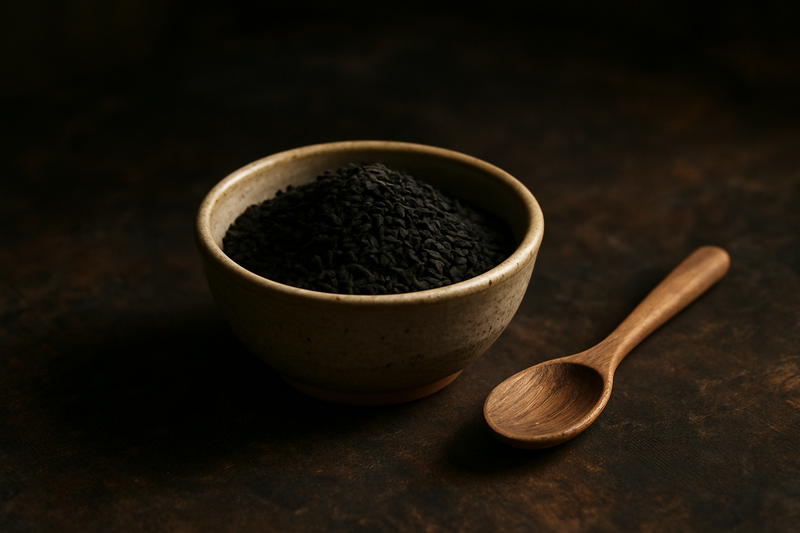
Nigella Seeds · Photograph
Discover the evidence-based nigella seeds (black cumin) health benefits — from blood sugar and blood pressure support to anti-inflammatory antioxidant properties. Learn how to use kalonji in cooking, how much is safe per day, and who should take care with black seed oil supplements.
Key Nutrients
% Daily Value based on 2,000 cal diet
Key active compounds in nigella seeds
- Thymoquinone — The headline bioactive. A monoterpene quinone (a type of plant chemical with a ring structure) found in the volatile oil of the seeds. Most of nigella's antioxidant, anti-inflammatory, blood-sugar-lowering, and cardioprotective effects in research are linked to this compound.
- Nigellone (dithymoquinone) — A polymer (a larger molecule built from thymoquinone units) also found in the seed oil. Associated with antioxidant and potential bronchodilatory (airway-opening) effects in experimental models.
- Unsaturated fatty acids (fixed oils) — Cold-pressed nigella oil is rich in linoleic acid and oleic acid, the same heart-friendly fats found in other plant oils. These contribute to its calorie density and potential cardiometabolic benefits.
- Alkaloids (nigellidine, nigellicine) — Nitrogen-containing plant compounds that show antioxidant and anti-inflammatory activity in lab studies, though their exact role in human health is still being mapped.
- Saponins and flavonoids — Broad classes of plant chemicals (phytochemicals) that provide antioxidant and membrane-stabilising effects. Well demonstrated in cell and animal studies; human data are more limited.
Prep and pairing ideas
Nigella seeds need no special preparation for culinary use. Here are practical ways to get them into your daily rotation:
- Flatbreads and crackers: Press whole seeds into naan, roti, or homemade sourdough before baking. The heat blooms their toasty aroma and creates a satisfying crunch.
- Dal and lentil dishes: Add a teaspoon to the tempering oil (the spiced oil poured over cooked lentils) along with cumin and mustard seeds. The combination is classic for a reason — each seed adds a distinct flavour layer.
- Roasted vegetables: Toss cauliflower, carrots, or sweet potato with olive oil, nigella seeds, and a pinch of turmeric before roasting at high heat.
- Yoghurt dips and raita: Stir a half teaspoon of seeds into plant-based yoghurt with cucumber and mint. The seeds add texture and a subtle sharpness.
- Egg dishes or tofu scrambles: Scatter over a finished dish just before serving for a nutty garnish.
- Storage tip: Keep seeds in a sealed jar away from heat and light. Whole seeds stay fresh for up to a year; ground powder loses flavour within a few months.
Who benefits most from adding nigella seeds to their diet?
The whole-food plant-based cook who wants flavour and function:
- Wants to add culinary variety to legume-heavy meals
- Interested in seeds with a research backing beyond basic nutrition
- Happy to use small daily amounts rather than capsules
The person managing cardiometabolic health alongside medication:
- Wants to support blood sugar and cholesterol through diet
- Understands that supplements are not a replacement for prescribed treatment
- Will discuss any concentrated nigella supplement with their doctor before starting
Bottom line
Nigella seeds are one of the more evidence-backed culinary seeds in the functional food space. Their main bioactive compound, thymoquinone, drives consistent anti-inflammatory and antioxidant effects across multiple human meta-analyses. Supplemental forms — seed powder and especially the cold-pressed oil — show modest but real improvements in blood sugar, LDL cholesterol, triglycerides, and blood pressure in people with type 2 diabetes and metabolic syndrome.
For most people, the smartest starting point is the kitchen, not the supplement aisle. Whole nigella seeds are inexpensive, widely available in South Asian and Middle Eastern grocery stores, and add a genuinely distinctive flavour to everything from flatbreads to roasted vegetables. The whole-food approach means you get the plant matrix — fibre, fatty acids, thymoquinone, flavonoids, all working together — without the concentrated dose that raises interaction concerns.
If you have diabetes, high blood pressure, or take multiple medications and want to explore concentrated nigella seed oil or powder for its studied metabolic benefits, that conversation belongs with your doctor or a registered dietitian who can monitor your response safely.
How Nigella Seeds Compares
| Compared with | What's different |
|---|---|
| Nigella Seeds vs. Black Sesame Seeds | Tastes of onion and oregano; used as a whole seed topper for breads. |
| Nigella Seeds vs. Black Cumin (Bunium bulbocastanum) | Actually a variety of cumin; earthy and sweet rather than sharp and peppery. |
| Nigella Seeds vs. Onion Seeds (Allium cepa) | Provides 19mg of calcium per teaspoon and unique antioxidant thymoquinone. |
Health Benefits
Things to Know
Blood sugar medication: (metformin, sulphonylureas, insulin): Nigella can lower fasting glucose and HbA1c. Combined with medication, this raises the risk of hypoglycaemia (blood sugar dropping too low). Monitor glucose levels and consult your doctor.
Blood pressure medication: (ACE inhibitors, beta-blockers, diuretics, calcium channel blockers): Nigella supplementation may reduce blood pressure by a few mmHg, which can be additive with these drugs. Check in with your prescriber.
Lipid-lowering drugs: (statins, fibrates): Nigella may further reduce LDL and triglycerides. Generally beneficial but combined effects should be monitored.
Antiplatelet or anticoagulant drugs: (aspirin, warfarin, clopidogrel, direct oral anticoagulants): Preclinical data suggest possible effects on platelets and coagulation. Concentrated oil or extracts could theoretically affect bleeding risk.
Pregnancy and breastfeeding: High-dose supplements are generally not recommended due to limited safety data. Culinary sprinkle amounts are considered food-safe.
Low blood pressure: Nigella's blood-pressure-lowering effect may be unwanted if your baseline is already low.
Pre-surgery: Supplement use may need to be paused before planned procedures due to effects on blood sugar and blood pressure. Discuss with your surgical team.
Known allergies: to Nigella sativa or related plants, or history of spice allergies: patch-test oil topically and introduce seeds gradually.
Children: Culinary amounts are considered safe. Supplements should be supervised by a paediatrician.
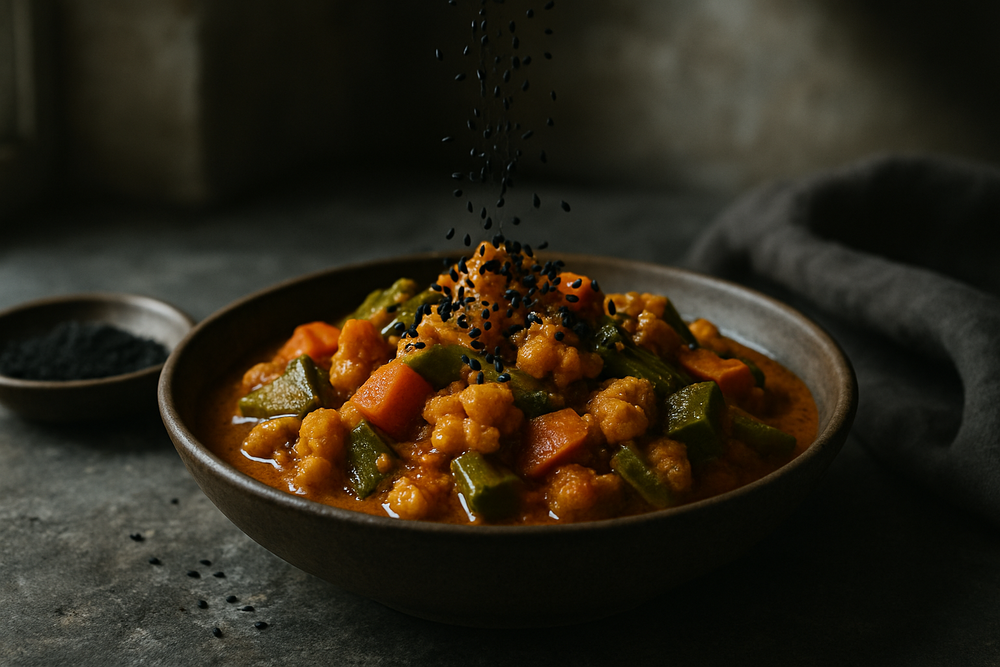
Prep Ideas
- — **Flatbreads and crackers:** Press whole seeds into naan, roti, or homemade sourdough before baking. The heat blooms their toasty aroma and creates a satisfying crunch.
- — **Dal and lentil dishes:** Add a teaspoon to the tempering oil (the spiced oil poured over cooked lentils) along with cumin and mustard seeds. The combination is classic for a reason — each seed adds a distinct flavour layer.
- — **Roasted vegetables:** Toss cauliflower, carrots, or sweet potato with olive oil, nigella seeds, and a pinch of turmeric before roasting at high heat.
- — **Yoghurt dips and raita:** Stir a half teaspoon of seeds into plant-based yoghurt with cucumber and mint. The seeds add texture and a subtle sharpness.
- — **Egg dishes or tofu scrambles:** Scatter over a finished dish just before serving for a nutty garnish.
- — **Storage tip:** Keep seeds in a sealed jar away from heat and light. Whole seeds stay fresh for up to a year; ground powder loses flavour within a few months.
- — Wants to add culinary variety to legume-heavy meals
- — Interested in seeds with a research backing beyond basic nutrition
- — Happy to use small daily amounts rather than capsules
- — Wants to support blood sugar and cholesterol through diet
- — Understands that supplements are not a replacement for prescribed treatment
- — Will discuss any concentrated nigella supplement with their doctor before starting
Glossary
Shop This Ingredient
Stock your pantry with quality nigella seeds.
Buy on AmazonAs an Amazon Associate, Plantopedia earns from qualifying purchases. This costs you nothing extra and helps us keep the encyclopedia free.
Frequently Asked Questions
Heart and circulation Several randomised trials in people with type 2 diabetes and metabolic syndrome report that nigella sativa oil or seed powder improved cardiometabolic risk markers — meaning the biological indicators linked to heart disease risk. Improvements included reductions in total cholesterol, LDL cholesterol (often called "bad" cholesterol), and triglycerides (blood fats), alongside modest drops in blood pressure. One clinical trial in people with type 2 diabetes found nigella oil significantly decreased fasting blood sugar, HbA1c (a 3-month blood sugar average), total cholesterol, triglycerides, LDL cholesterol, BMI, waist circumference, and both systolic and diastolic blood pressure compared with placebo. An updated meta-analysis of randomised trials concluded that nigella sativa supplementation reduced systolic blood pressure by roughly 3 mmHg and diastolic blood pressure by about 2.7 mmHg — modest but statistically meaningful reductions. Important context: Most data come from people with existing metabolic disease, not healthy adults. Trial doses are also higher than typical culinary use. Heterogeneity (variation in study design, dose, and duration) across trials means some individual studies showed no effect. Nigella should be viewed as a potential adjunct to standard heart care, not a replacement for it. Digestive health and microbiome Nigella seeds have a centuries-long reputation as a carminative (a substance that helps relieve gas and bloating) and digestive spice. They are traditionally added to flatbreads and legume dishes partly because they are believed to make heavier foods easier on the gut. The seeds contribute a small amount of dietary fibre and bioactive oils, which can support gut function indirectly. However, formal human randomised trials specifically targeting digestive symptoms — such as irritable bowel syndrome or dyspepsia (indigestion) — are limited. The digestive case rests more on traditional use and plausible biology than high-quality clinical trials. This is an area where more research is genuinely needed. Blood sugar and metabolism This is where nigella's human evidence is strongest for practical application. Multiple RCTs in people with type 2 diabetes consistently show improved glycaemic control — meaning better blood sugar regulation — with nigella seed or oil supplementation. A meta-analysis of RCTs found significant improvements in fasting glucose (blood sugar after an overnight fast) and HbA1c, as well as triglycerides and LDL cholesterol. One year-long study of 57 patients with type 2 diabetes found that 2 g/day of nigella seed alongside standard oral medication led to significant reductions in blood pressure, heart rate, and cardiometabolic parameters. The magnitude of HbA1c reduction is clinically meaningful but moderate — nigella is not a substitute for prescribed diabetes medication. Inflammation and recovery This is arguably nigella's most consistently documented benefit across human research. Multiple systematic reviews and meta-analyses of RCTs confirm that nigella sativa supplementation reduces key inflammation markers: CRP (C-reactive protein) — a standard blood marker of inflammation TNF-α (tumour necrosis factor-alpha) — a pro-inflammatory signalling molecule (cytokine) MDA (malondialdehyde) — a marker of oxidative stress, meaning cellular damage from unstable molecules called free radicals TAC (total antioxidant capacity), SOD (superoxide dismutase), and GPx (glutathione peroxidase) — markers of the body's own antioxidant defences, all of which improved with nigella supplementation A meta-analysis of 20 RCTs showed significant reductions in CRP, TNF-α, and MDA, and significant increases in total antioxidant capacity, glutathione peroxidase, and superoxide dismutase. The consistency of these findings across diverse patient populations is notable.
The answer depends entirely on your goal. Whole seeds (culinary use) are the most practical, safest, and most sustainable daily form. Toasted lightly in a dry pan or added raw to dough, they deliver flavour and small amounts of thymoquinone without meaningful risk of drug interactions. This is the whole-food, food-as-medicine approach. Ground seed powder (roughly 1–3 g/day) is what most clinical trials use. It can be stirred into yoghurt, smoothies, or warm water with honey. This bridges culinary and supplemental use. Cold-pressed nigella seed oil (liquid) delivers a more concentrated dose of thymoquinone and unsaturated fatty acids. It is used in trials targeting blood sugar and blood pressure. More potent means more potential benefit — but also more potential for interactions with medication. Oil capsules (standardised supplements) are used in RCTs at 500–2000 mg/day. They offer precision and convenience but should be treated as supplements with pharmacologic (drug-like) effects rather than as food. Standardised extracts (enriched in thymoquinone) are research-grade preparations not equivalent to whole-food use. Bottom line on form: For everyday health, whole seeds in food are a great starting point. If you are considering seed powder or oil for a specific health goal, speak to a healthcare professional first — especially if you take medication.
There is no single universally agreed therapeutic dose. Here is what the research landscape looks like: Culinary/whole food use: A pinch to 2 teaspoons (roughly 0.5–4 g) of whole seeds per day is typical in food contexts. No safety concerns are reported at these amounts in healthy adults. Seed powder in clinical trials: Most RCTs showing blood sugar and lipid benefits used 1–3 g/day (roughly half a teaspoon to a heaped teaspoon of ground powder), often divided into two doses taken with meals. Nigella seed oil in trials: Studies targeting blood pressure and inflammation often used 500–2000 mg/day of oil (roughly a quarter to a full teaspoon of liquid), taken for 8 weeks to 12 months. Start low: If you are introducing seeds as a regular supplement rather than a culinary flavour, start with 1 g/day and increase gradually over a few weeks, paying attention to digestive tolerance and any changes in blood sugar or blood pressure readings if you monitor these. Duration: Most human trials ran for 8–12 weeks, with one year-long study. Long-term safety data beyond 12 months are limited. Reminder: Culinary amounts used as a whole food ingredient are far below doses used in clinical trials. You are unlikely to see dramatic metabolic effects from sprinkling seeds on your bread, but you are also at minimal risk of the interactions that matter for concentrated supplements.
Quick Answers
Common questions, answered in a line.
Thymoquinone is the primary bioactive compound in nigella seeds responsible for most of their antioxidant, anti-inflammatory, and blood-sugar-lowering effects. This monoterpene quinone is found in the seed's volatile oil and is linked to cardioprotective benefits in research.
You can use nigella seeds by pressing them into flatbreads like naan, adding them to tempering oil for dal, or tossing them with vegetables before roasting. They also work well stirred into yoghurt dips, raita, or scattered over egg dishes and tofu scrambles as a nutty garnish.
Yes, nigella seeds may lower fasting glucose and HbA1c, which can increase the risk of hypoglycemia if you are also taking insulin or metformin. You should monitor your glucose levels closely and consult your doctor before using concentrated supplements alongside diabetes medication.
Nigella seeds contain heart-friendly unsaturated fatty acids, specifically linoleic acid and oleic acid, which are also found in other healthy plant oils. These fixed oils contribute to the seeds' calorie density and potential cardiometabolic benefits.
Whole nigella seeds stay fresh for up to one year when stored in a sealed jar away from heat and light. If the seeds are ground into a powder, they will lose their flavor much faster, typically within a few months.
Pregnant and breastfeeding women should avoid high-dose nigella supplements due to limited safety data, though culinary amounts are considered food-safe. Additionally, those with low blood pressure or those scheduled for surgery should exercise caution due to the seeds' effects on blood pressure and blood sugar.
For Readers in the USA
Local context — sourcing, seasonality, and regional notes.
You can buy nigella seeds at major U.S. retailers like Whole Foods Market and Sprouts, or at local South Asian and Middle Eastern grocery stores where they are often labeled as "Kalonji." Online retailers like Amazon and Penzeys Spices also offer them in bulk or jarred forms.
While nigella seeds are native to Southwest Asia, they can be grown in the U.S. during the spring and summer across USDA Hardiness Zones 2 through 11. They thrive in full sun and well-drained soil, often blooming in early summer before producing seed pods in late summer or fall.
In the U.S., you may see nigella seeds sold as "black cumin," "black onion seed," or "kalonji," though they are botanically unrelated to true cumin or onions. To ensure you are getting the correct plant, check the label for the scientific name Nigella sativa.
The FDA classifies nigella seeds (Nigella sativa) as "Generally Recognized as Safe" (GRAS) for use as a spice or flavoring agent in food. However, concentrated black seed oil supplements are regulated as dietary supplements, not drugs, meaning their purity and labeling are managed under the DSHEA framework.
AI Clinical Review
- Clearly differentiates culinary use from supplemental doses and sets realistic expectations (adjunct, not a replacement for medication).
- Accurately highlights the best-supported areas in human research: modest improvements in glycemic control, lipids, blood pressure, and consistent reductions in inflammatory markers (e.g., CRP) in people with type 2 diabetes/metabolic syndrome.
- Identifies thymoquinone as the key bioactive and explains why oils/capsules deliver higher, pharmacologic-like exposures.
- Offers practical, food-first ways to use whole seeds that align with a safety-forward approach.
- Effects from typical culinary amounts are not well quantified; most trials use higher supplemental doses and run 8–12 weeks, limiting long-term conclusions.
- Digestive/microbiome benefits are grounded largely in tradition and plausible mechanisms; robust RCTs for IBS or dyspepsia are sparse.
- Hard clinical outcomes (fewer cardiovascular events, diabetes complications) have not been established despite favorable biomarker changes.
- Product variability (oil vs powder, thymoquinone content, extraction methods) can influence results and may explain mixed findings across studies.
- Safety/medications: Supplemental forms can lower blood sugar and blood pressure—people on antidiabetic or antihypertensive drugs should monitor closely and consult a clinician; theoretical interaction risks exist with antiplatelet/anticoagulant therapy and around surgery.
- Populations needing caution: Pregnancy/lactation (avoid high-dose supplements), individuals with low baseline blood pressure, and those with spice allergies or prior reactions to Nigella sativa.
- Dose and form: Culinary use ~0.5–4 g whole seeds/day is generally well tolerated; trial doses often use 1–3 g/day powder or 500–2000 mg/day oil. Start low and reassess tolerance/effects.
- Quality matters: Choose reputable products if supplementing; look for standardized thymoquinone content and avoid using supplements as a substitute for prescribed care.
Concentrated seed oil may lower blood pressure and blood sugar; use culinary amounts if on medication.
References
- USDA FoodData Central — nutrient data for seeds and plant protein foods (fdc.nal.usda.gov)
- MyPlate Protein Foods Group — guidance on nuts and seeds as plant protein sources (myplate.gov)
- Nigella sativa for metabolic syndrome management — comprehensive review (pmc.ncbi.nlm.nih.gov)
- Meta-analysis: effect of Nigella sativa on inflammatory and oxidative stress biomarkers (pubmed.ncbi.nlm.nih.gov)
- Meta-analysis of 20 RCTs on Nigella sativa inflammation and antioxidant markers (pubmed.ncbi.nlm.nih.gov)
- RCT: effect of Nigella sativa oil on cardiometabolic risk factors in type 2 diabetes (pubmed.ncbi.nlm.nih.gov)
- Meta-analysis: Nigella sativa on glycaemic control, lipid profiles, and oxidative stress (onlinelibrary.wiley.com)
- Updated meta-analysis: antihypertensive effects of Nigella sativa supplementation (onlinelibrary.wiley.com)
- Systematic review: Nigella sativa supplementation on blood parameters (pmc.ncbi.nlm.nih.gov)
- One-year RCT: Nigella sativa supplementation in type 2 diabetic patients (pmc.ncbi.nlm.nih.gov)
Know Your Numbers
Eating healthy is a start. Now get to know your biomarkers.
Food changes bloodwork — inflammation, lipids, blood sugar and nutrient status all respond to what you eat. 59 markers from $59.
- Results in 7–10 days at 2,000+ Quest sites
- Licensed provider reviews every result
- One flat price, no membership, HSA/FSA eligible
Educational information only, not medical advice. Panels are ordered and reviewed through our licensed partner; Plantopedia may earn a commission.