How much onion should you eat daily? Use red or white onion to significantly improve bone density and blood sugar. Get the evidence-based do
Color, fiber, and everyday plate-building angle
The Short Answer
Eating 100–150g of onions daily provides a concentrated source of quercetin and organosulfur compounds that support heart health, bone density, and blood sugar control.

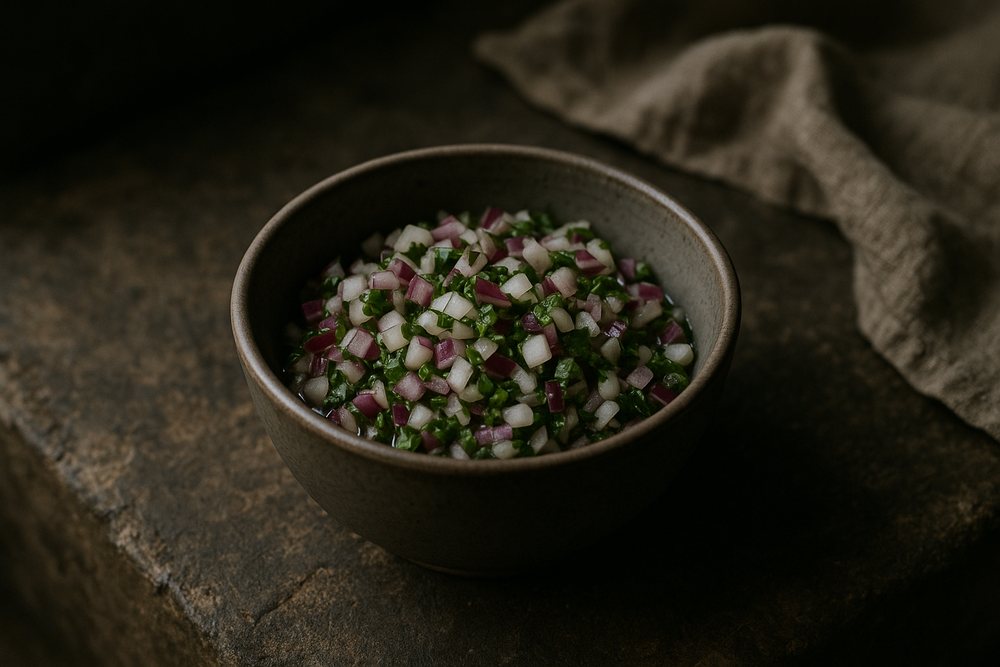
Onion · Photograph
Onions are arguably the most "bang-for-your-buck" superfood out there. They are cheap, available everywhere, and you probably already have them in your pantry.
Key Nutrients
% Daily Value based on 2,000 cal diet
Key Takeaways
- 1. Onions contain 5–10 times more quercetin than most other vegetables, a potent flavonoid that supports vascular dilation and reduces systemic inflammation.
- 2. Rich in specialized polysaccharides and fibers that act as "fertilizer" for beneficial gut bacteria, promoting a diverse and healthy microbiome.
- 3. High concentrations of organosulfur compounds help prevent the oxidation of LDL cholesterol and support healthy blood pressure regulation.
- 4. Sulfur compounds and fiber work synergistically to help stabilize blood sugar levels and improve insulin sensitivity.
- 5. The highest concentration of flavonoids is found in the outermost fleshy layers; minimal peeling is essential to preserve these health-promoting compounds.
Why onion health benefits matter for modern wellness
Onions are arguably the most "bang-for-your-buck" superfood out there. They are cheap, available everywhere, and you probably already have them in your pantry.
What makes them special is the quercetin. Onions have 5–10 times more of this flavonoid compound than most other fruits or veggies. When you combine that with their unique organosulfur compounds like onionin A, you get a food that supports multiple body systems simultaneously.
Key active compounds in onions
Flavonoids:
- Quercetin: The heavy-hitting antioxidant, mostly found in the outer layers.
- Anthocyanins: These give red and purple onions their color and provide extra antioxidant power.
- Kaempferol and luteolin: Extra compounds that help fight inflammation.
Organosulfur compounds:
- Allicin: This is what gives onions that pungent kick and antimicrobial strength.
- S-allyl cysteine (SAC): A stable compound that helps protect your cells.
- Cysteine sulfoxides: These turn into bioactive compounds the second you start chopping.
- Onionin A: A sulfur compound you really only find in onions.
Other bioactives:
- Polysaccharides: These are prebiotic fibers that are great for gut health.
- Saponins: Compounds that contribute to your overall internal "maintenance."
Buying guide for maximum nutrition
- Selection: Pick firm bulbs with dry, papery skin. If it’s soft or smells funky, leave it.
- Storage: Keep them in a cool, dry, breezy spot.
- Prep: Don't over-peel! The outermost fleshy layers have the highest concentration of flavonoids. Peel off the paper, but try to keep as much of the onion as possible.
Prep and pairing ideas
- Raw: Slice them thin for salads or quick-pickle them to make them easier to digest.
- Cooking: Sauté lightly or roast under 400°F to keep the nutrients intact.
- Synergy: Pair onions with healthy fats (like olive oil or avocado) to boost the bioavailability of their fat-soluble compounds.
Conclusion
At the end of the day, onions are an absolute powerhouse of antioxidants, organosulfur compounds, and prebiotic fiber that most of us take for granted. The research is detailed: adding them to your daily routine can support your heart, help lower inflammation, and contribute to better gut health. While they aren't a magic bullet, eating about 100–150g daily is a very cheap and effective way to protect your body.
Whether you’re eating raw red onions for the flavonoids or cooking down yellow ones to help with blood sugar control, you’re doing your long-term health a massive favor. Just remember to peel them carefully and cook them gently to keep those nutrients working for you. Ready to build meals that maximize your onion benefits? Our meal planner can help you incorporate optimal amounts of onions and other nutrient-dense ingredients into your daily routine.
How Onion Compares
| Compared with | What's different |
|---|---|
| Onion vs. Shallots | Milder, sweeter flavor with higher water content; less pungent for raw eating. |
| Onion vs. Leeks | Milder and sweeter; lacks the high concentration of quercetin found in bulb onions. |
| Onion vs. Red Onion | Higher in anthocyanins and antioxidants, whereas yellow onions are higher in sulfur compounds. |
Health Benefits
Things to Know
Digestion: If your stomach is sensitive, start small. Cooked onions are usually much easier on the gut than raw ones for people with IBS.
Interactions: Because onions can thin the blood slightly, be careful if you’re already on blood thinners. They can also pick up the pace of diabetes meds, so watch your levels if you're focusing on blood sugar control.
Reflux: Raw onions trigger heartburn, so keep an eye on that.
Common Uses
- —Consuming raw or lightly sautéed onions with carbohydrate-heavy meals to blunt post-meal glucose spikes.
- —Used as the foundational "aromatic" (sautéed gently in healthy fats) for soups, stews, and sauces to enhance the bioavailability of quercetin.
- —Freshly chopped raw onions are used in salsas and salads to provide a dose of allicin and other sulfur-based defense compounds.
- —Integrated into the daily diet as a consistent source of prebiotic fiber to maintain intestinal lining integrity and probiotic diversity.
- —Regular consumption of 100g or more daily is associated with improved bone mineral density, particularly in post-menopausal women.
Best Forms
Best for heat-sensitive Vitamin C and sulfur power. Pro tip: chopping them activates the enzymes that create allicin.
Sautéing them gently can actually increase the bioavailability of quercetin, making it easier for your body to use.
Go Red for max antioxidants; go Yellow or White for higher sulfur and antimicrobial power.
Prep Ideas
- — Raw: Slice them thin for salads or quick-pickle them to make them easier to digest.
- — Cooking: Sauté lightly or roast under 400°F to keep the nutrients intact.
- — Synergy: Pair onions with healthy fats (like olive oil or avocado) to boost the bioavailability of their fat-soluble compounds.
Glossary
Shop This Ingredient
Stock your pantry with quality onion.
Buy on AmazonAs an Amazon Associate, Plantopedia earns from qualifying purchases. This costs you nothing extra and helps us keep the encyclopedia free.
Frequently Asked Questions
Onions support heart health through potassium and quercetin, help reduce inflammation markers, provide prebiotic fiber for digestive health, and contain sulfur compounds with antimicrobial properties. Research suggests they also help with blood sugar regulation, though more human studies are needed.
A typical serving of 100-150g fresh onion provides meaningful amounts of quercetin and sulfur compounds. Research studies often use servings of 100-200g of fresh onion. Start with smaller amounts if you have digestive sensitivity and gradually increase as tolerated.
Red onions contain higher levels of anthocyanins and total flavonoids, giving them superior antioxidant activity. Yellow and white onions are richer in organosulfur compounds like allicin. Both offer health benefits, so choose based on your primary health goals and taste preferences.
Raw onions retain maximum vitamin C and sulfur compounds, while cooking may increase the bioavailability of some quercetin compounds. Both forms offer benefits: raw onions for maximum bioactive compounds, cooked onions for better digestibility and enhanced absorption of certain nutrients.
Research suggests onions may help reduce inflammatory markers, primarily through quercetin content. Quercetin has been studied for its ability to neutralize free radicals and modulate inflammatory pathways. However, individual results may vary, and onions should be part of an overall anti-inflammatory diet pattern.
Onions are safe for most people in normal food amounts. Those with IBS or FODMAP sensitivities may experience digestive symptoms. People on blood-thinning medications should consult their doctors about high intake, and those with onion allergies should avoid them completely.
Quick Answers
Common questions, answered in a line.
Onions are exceptional sources of flavonoids, containing 5–10 times more quercetin than most other fruits and vegetables. This heavy-hitting antioxidant is primarily concentrated in the outer layers of the onion, supporting multiple body systems simultaneously.
To maximize nutrients, peel off the papery skin but keep as many of the outermost fleshy layers as possible, as these contain the highest flavonoid concentration. Avoid over-peeling or using onions that are soft or have a funky smell.
Adding onions to your daily routine can support heart health, lower inflammation, and contribute to better gut health through their supply of prebiotic fiber. Regular consumption of 100g or more daily is also associated with improved bone mineral density, particularly in post-menopausal women.
You can improve the bioavailability of an onion's fat-soluble compounds by pairing them with healthy fats like olive oil or avocado. For specific health goals, eating them with carbohydrate-heavy meals may help blunt post-meal glucose spikes.
The pungent kick and antimicrobial strength of onions come from allicin, a powerful organosulfur compound. Other unique sulfur-based compounds include onionin A and cysteine sulfoxides, which become bioactive the moment you start chopping.
If you have a sensitive stomach or IBS, start with small portions and choose cooked onions, which are usually easier to digest than raw ones. Be aware that raw onions may also trigger heartburn or reflux in some individuals.
Onions contain polysaccharides, which are prebiotic fibers that support gut health. These fibers help maintain intestinal lining integrity and promote probiotic diversity within the digestive system.
For Readers in the USA
Local context — sourcing, seasonality, and regional notes.
The primary onion-producing states in the U.S. include Washington, Idaho, Oregon, and California, which provide a steady supply of various cultivars year-round. These regions specialize in different types, such as the long-day onions grown in northern states like Michigan and New York, which are ideal for winter storage.
While storage onions are available year-round, specialty sweet onions like Vidalias from Georgia and Walla Wallas from Washington have limited seasonal windows, typically from spring through summer. Most domestic "summer onions" are non-storage varieties with higher water content and a milder flavor compared to the hardier "winter onions."
In the U.S., you can find standard yellow, red, and white onions at all major grocery chains like Kroger, Walmart, and Whole Foods, while farmers markets often feature regional heirloom varieties. Specialty retailers like Trader Joe's and H-Mart also provide specific varieties like shallots or pearl onions that are staples in diverse American culinary traditions.
The USDA and FDA provide guidelines for onion safety, including organic certification standards and traceback protocols to manage foodborne illness risks like Salmonella. Choosing USDA Certified Organic onions ensures the crop was grown without synthetic pesticides, which some consumers prefer since onions are a staple crop.
AI Clinical Review
- Onions are a nutrient-dense, affordable food that provide flavonoids (notably quercetin) and sulfur compounds; red onions add anthocyanins, and outer layers tend to be richer in these compounds.
- Both raw and cooked onions can fit into a healthy pattern: raw preserves vitamin C and certain sulfur compounds, while gentle cooking can improve tolerance and retain many polyphenols.
- Potential cardiovascular and anti-inflammatory benefits are plausible and supported by early human data on blood pressure, endothelial function, and oxidative stress markers—though effects are modest and diet‑context dependent.
- Practical guidance on selection, storage, and minimal trimming to preserve phytonutrients aligns with best culinary-nutrition practices.
- Most findings on heart health, lipid changes, and blood sugar control come from small trials or observational and lab studies; consistent benefits on hard clinical outcomes (e.g., fewer events) are not established.
- Antimicrobial claims are largely based on in vitro (test‑tube) work; eating onions has not been proven to prevent or treat infections in humans.
- The article mentions “allicin”; this compound is characteristic of garlic. Onions form related sulfur compounds, so benefits should not be assumed identical to garlic’s.
- Microbiome effects are biologically plausible due to prebiotic fibers, but individual responses vary and dose, form, and overall diet likely influence outcomes.
- Typical study servings are about 100–200 g/day; a practical range for many adults is 50–150 g/day, adjusted to tolerance. Very large amounts may cause gas, bloating, or cramps.
- Onions (including powders) are high in FODMAP fructans and commonly trigger IBS symptoms; those following a low‑FODMAP plan should be cautious and may need individualized guidance.
- If you use anticoagulants/antiplatelets or diabetes medications, avoid sudden large increases in intake and consider monitoring (for bleeding risk or glucose changes); discuss with your clinician if unsure.
- Raw onions can worsen reflux in some people; true onion allergy is rare but requires strict avoidance. Culinary amounts are generally safe in pregnancy and breastfeeding unless individually not tolerated.
Frame as food education, not disease treatment.
References
- USDA FoodData Central onion nutrition data (fdc.nal.usda.gov)
- Recent advances in bioactive compounds and health functions of onions - PMC review (pmc.ncbi.nlm.nih.gov)
- Bioactive composition of onion and health benefits - Pharma Journal (thepharmajournal.com)
- Onion bioactives: chemistry and pharmacotherapeutic properties - Wiley review (iadns.onlinelibrary.wiley.com)
- NIH National Center for Complementary and Integrative Health - Antioxidants fact sheet
- Raw vs cooked onion nutrition comparison - Tufts Nutrition Letter (nutritionletter.tufts.edu)
- Onion health research compilation - National Onion Association (onions-usa.org)
Know Your Numbers
Eating healthy is a start. Now get to know your biomarkers.
Food changes bloodwork — inflammation, lipids, blood sugar and nutrient status all respond to what you eat. 59 markers from $59.
- Results in 7–10 days at 2,000+ Quest sites
- Licensed provider reviews every result
- One flat price, no membership, HSA/FSA eligible
Educational information only, not medical advice. Panels are ordered and reviewed through our licensed partner; Plantopedia may earn a commission.
Filed Under
Health Goals This Supports
Related Ingredients
Best Foods to Feed Good Gut Bacteria
Gut bacteria run on fermentable carbohydrate your own enzymes cannot digest. Here are the foods with the best human evidence behind them, how to introduce them without wrecking your week, and the honest limits of what microbiome research can currently claim.
Foods That May Worsen Bloating
Bloating has less to do with any single "bad" food and more to do with how much fermentable carbohydrate reaches your gut at once, how sensitive your gut is to stretching, and how quickly gas clears. The foods most consistently linked to bloating are beans and lentils, cruciferous vegetables...
How Fiber Changes the Gut Microbiome
A mechanism explainer: what happens to fiber after it leaves the small intestine, which microbes act on it, what they produce, and how much of that chain has been demonstrated in people rather than mice.
Prebiotic Foods: What They Are and Why They Matter
A precise, non-hyped explanation of what makes a food component prebiotic, the fermentation chain it sets off in the colon, and the difference between a well-mapped mechanism and a proven health outcome.
Prebiotics vs. Probiotics: What's the Difference?
A side-by-side comparison of prebiotics and probiotics, including what each one is, how strong the human evidence is for each, and a practical guide to deciding whether either is worth your money.
Why Beans Cause Gas and How to Make Them Easier to Digest
Beans cause gas mainly because of raffinose-family oligosaccharides, sugars like raffinose and stachyose that your small intestine cannot break down. Humans do not produce the enzyme needed to digest these sugars, so they pass largely intact into the colon, where resident bacteria ferment them....