Parboiled Rice — health benefits and uses
The parboiling process, traditional in India, drives nutrients from the bran into the grain.
The Short Answer
Parboiled rice is rice that has been partially boiled in its husk, a process that drives B-vitamins into the grain and creates resistant starch. This results in a lower glycemic index and a firmer texture that stays separate when cooked compared to standard
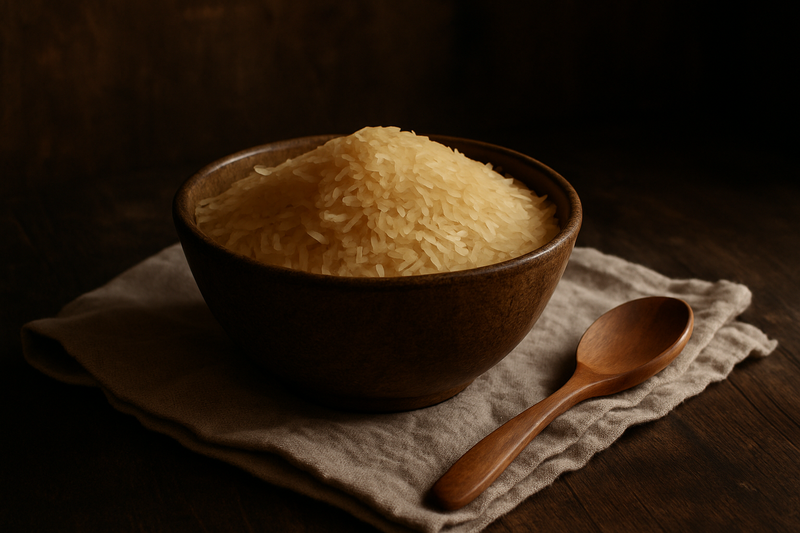
Parboiled Rice · Photograph
Discover parboiled rice health benefits, nutrition facts, glycemic index, and how it compares to white and brown rice. Learn how this pre-steamed grain fits into blood sugar-friendly, gluten-free eating — with practical cooking tips and portion guidance.
Key Nutrients
% Daily Value based on 2,000 cal diet
Key active compounds in parboiled rice
- Resistant starch (RS): A fraction of starch — roughly 1–7% depending on variety and processing — that resists digestion in the small intestine and reaches the colon, where gut bacteria ferment it into short-chain fatty acids (SCFAs). SCFAs are thought to support gut lining integrity and may improve insulin sensitivity.
- Amylose-rich starch: Linear starch molecules that naturally form more compact, slowly digestible structures. Parboiling and cooling encourage these molecules to realign (a process called retrogradation), which further lowers GI. Higher-amylose rice varieties tend to have the most pronounced benefit.
- Thiamine (B1), Niacin (B3), Vitamin B6: Water-soluble B-vitamins that migrate from the bran into the endosperm (the starchy inner grain) during steaming. These support energy metabolism — the chemical process of converting carbohydrates, fats, and proteins into usable fuel — and nervous system function.
- Phytic acid (phytate): A naturally occurring compound in grains that can bind to minerals like iron and zinc and reduce their absorption. Levels are lower in parboiled white rice than in brown rice due to polishing, but some phytate remains. This has both a mineral-binding downside and a modest antioxidant upside; the net effect in a varied diet is generally small.
- Magnesium and phosphorus: Trace amounts retained through parboiling that support bone health, energy production (ATP synthesis), and muscle function.
Prep and pairing ideas
Parboiled rice is one of the most forgiving grains to cook — it is harder to make mushy than regular white rice, which is exactly why it excels in dishes where texture matters.
Basic stovetop method for firm, separate grains: Use a 1:2 ratio of dry rice to water. Bring to a boil, reduce heat to low, cover, and simmer for 20–25 minutes. Let rest off the heat for 5 minutes before fluffing. The grains will be distinctly separate and slightly firmer than regular white rice.
Three practical pairings:
- Parboiled rice + black-eyed peas + tomatoes and spices (Jollof-style): The classic West African combination. Legumes add protein, fiber, and iron that complement rice's carbohydrate energy. The tomato base provides lycopene and vitamin C, which enhances iron absorption from the beans.
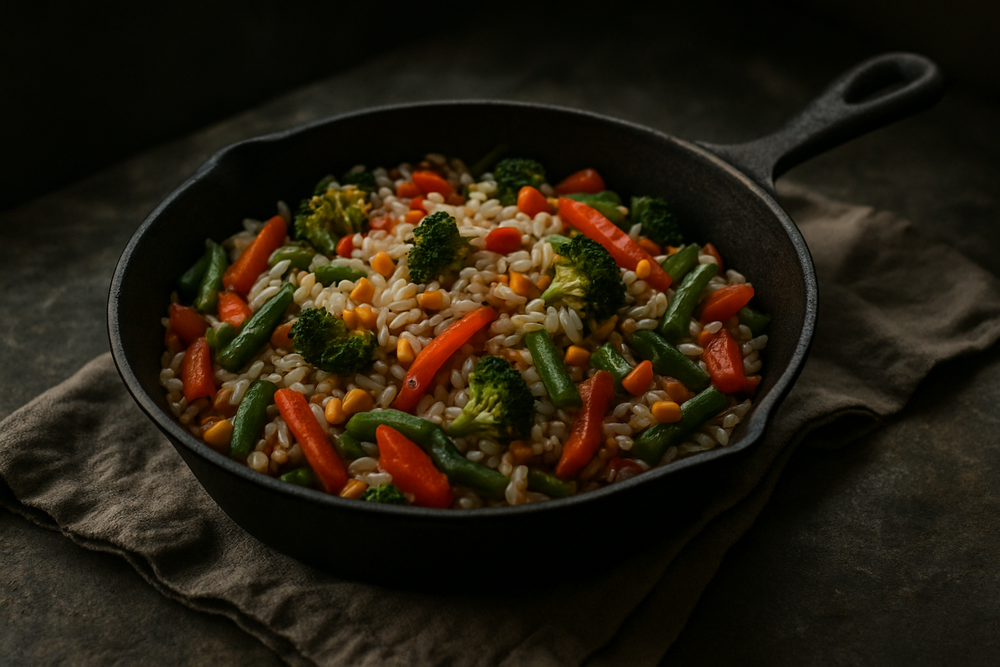
- Parboiled rice + grilled salmon or mackerel + roasted broccoli: The omega-3 fats from fatty fish slow gastric emptying, which further blunts the glycemic impact of the rice. Broccoli adds fiber, folate, and sulforaphane (a plant compound with antioxidant properties). This pairing is practical for meal prep — all three components hold well in the fridge for 3–4 days.
- Cooled parboiled rice + chickpeas + cucumber and herbs (grain bowl): Cooling the rice overnight increases resistant starch. Combined with chickpea protein and fiber and the low-calorie bulk of cucumber, this is a filling, blood-sugar-friendly lunch. Add olive oil and lemon dressing for healthy fat that slows carbohydrate absorption.
Storage tip: Cook a large batch, portion into ½–1 cup servings, and refrigerate for up to 4 days or freeze for up to 3 months. Reheat with a splash of water to restore moisture.
Bottom line
Parboiled rice is a genuinely useful grain choice for people who love the texture and versatility of white rice but want a modest nutritional step up. Its pre-steaming process locks in more B-vitamins and produces a lower-GI, partially resistant starch that raises blood sugar more slowly than regular white rice. It is gluten-free, easy to cook, and culturally central to some of the world's most beloved rice dishes.
That said, it is not a health food in the way that brown rice, oats, or legumes are. It still delivers a substantial carbohydrate load, and its fiber and micronutrient content falls short of intact whole grains. Think of parboiled rice as a smart default starch rather than a therapeutic food: use it as a reliable, portion-friendly base, pair it generously with vegetables, legumes, and protein, and complement it with genuinely high-fiber grains throughout the day.
If you currently eat a lot of plain white rice, switching to parboiled is a low-effort, evidence-supported upgrade. If you are already eating mostly whole grains, parboiled rice is a convenient and delicious option for meals where texture and cooking ease matter most.
How Parboiled Rice Compares
| Compared with | What's different |
|---|---|
| Parboiled Rice vs. White Rice | Lower glycemic index and higher B-vitamin content due to the pressure-steaming process. |
| Parboiled Rice vs. Brown Rice | Softer texture and shorter cooking time, though it contains less fiber than the whole grain. |
| Parboiled Rice vs. Jasmine Rice | Stickier texture with higher starch release, whereas parboiled grains remain firm and separate. |
Health Benefits
Things to Know
Portion size still matters.: Parboiled rice has a lower GI than white rice, but eating three cups at a meal will still produce a large glucose load. Most guidelines suggest ½–1 cup cooked per meal as part of a balanced plate.
It is still a refined starch.: Despite its advantages over white rice, parboiled rice is less nutrient-dense than brown rice, oats, quinoa, or legumes. MyPlate guidelines recommend at least half of all grain servings be whole grains.
Diabetes and insulin users: Switching from high-GI white rice to parboiled rice can change your postprandial glucose patterns. If you use rapid-acting insulin or sulfonylureas (a class of oral glucose-lowering medication), discuss any diet change with your clinician or dietitian — timing and dosing may need modest adjustment.
Chronic kidney disease (CKD): Parboiled rice is relatively low in phosphorus and potassium, making it friendlier than many high-phosphorus foods for people on CKD-specific dietary restrictions. That said, all mineral intake should be reviewed with a renal dietitian.
Celiac disease and gluten sensitivity: Plain, uncontaminated parboiled rice is naturally gluten-free. Always check that the product is certified gluten-free if cross-contamination from shared facilities is a concern.
Low-fiber therapeutic diets: During acute flares of inflammatory bowel conditions, parboiled white rice is often well tolerated and may be a useful short-term staple. Reintroduce higher-fiber foods as symptoms improve.
Pregnancy: Parboiled rice is safe in normal food quantities during pregnancy. The B-vitamins retained through parboiling support energy metabolism. Enriched versions also add folate, which is important in pregnancy — check the label.
Arsenic note: All rice naturally absorbs some inorganic arsenic from soil and water. People who eat large amounts of rice daily (especially young children or pregnant women) may wish to vary their grain sources. Rinsing rice before cooking and using a higher water-to-rice ratio (draining excess water) can reduce arsenic content modestly.
Prep Ideas
- — **Parboiled rice + black-eyed peas + tomatoes and spices (Jollof-style):** The classic West African combination. Legumes add protein, fiber, and iron that complement rice's carbohydrate energy. The tomato base provides lycopene and vitamin C, which enhances iron absorption from the beans.
- — **Parboiled rice + grilled salmon or mackerel + roasted broccoli:** The omega-3 fats from fatty fish slow gastric emptying, which further blunts the glycemic impact of the rice. Broccoli adds fiber, folate, and sulforaphane (a plant compound with antioxidant properties). This pairing is practical for meal prep — all three components hold well in the fridge for 3–4 days.
- — **Cooled parboiled rice + chickpeas + cucumber and herbs (grain bowl):** Cooling the rice overnight increases resistant starch. Combined with chickpea protein and fiber and the low-calorie bulk of cucumber, this is a filling, blood-sugar-friendly lunch. Add olive oil and lemon dressing for healthy fat that slows carbohydrate absorption.
Glossary
Shop This Ingredient
Stock your pantry with quality parboiled rice.
Buy on AmazonAs an Amazon Associate, Plantopedia earns from qualifying purchases. This costs you nothing extra and helps us keep the encyclopedia free.
Frequently Asked Questions
Heart and circulation There are no large clinical trials directly linking parboiled rice consumption to reduced cardiovascular events or improved cholesterol levels. Its heart-related advantages are indirect: a lower GI compared to high-GI white rice may contribute to better postprandial (after-meal) blood glucose and insulin patterns, which over time are linked to lower cardiovascular risk in population studies. Parboiled rice is also very low in sodium, which is relevant for blood pressure management. Small amounts of magnesium and B-vitamins support vascular function and energy metabolism, but the absolute amounts per serving are modest. For a heart-healthy diet, parboiled rice is best used as an improvement on regular white rice within meals that are otherwise built around vegetables, legumes, and minimally processed whole grains — not as a stand-alone heart food. Digestive health and microbiome Parboiled rice is good for gut health in a specific, limited way. Its resistant starch content — while not dramatic — does slow starch digestion in the small intestine and delivers some fermentable carbohydrate to the colon, where bacteria convert it into SCFAs like butyrate. Butyrate is the primary fuel for colonocytes (cells lining the colon) and may support gut barrier integrity. Direct human trials measuring microbiome changes or bowel outcomes specifically from parboiled rice are sparse, so most of the digestive benefit is inferred from its RS content rather than proven in clinical studies. People with sensitive digestion often find parboiled rice easier to tolerate than high-fiber whole grains, making it a useful transition food — but those prioritizing gut health should look to legumes, oats, and vegetables as primary fiber sources, using parboiled rice as a complementary starch. Blood sugar and metabolism This is where the evidence for parboiled rice is strongest. Multiple human glycemic index studies consistently show that parboiled rice produces a lower postprandial blood glucose rise than regular white rice, with GI values typically in the 48–56 range (low-to-medium) compared with 60–72 for many standard white rice varieties. The mechanism involves two things working together: the heat-and-pressure treatment during parboiling converts some starch into a more compact form that enzymes digest more slowly, and the increased resistant starch fraction bypasses the small intestine altogether. This does not make parboiled rice a "safe" food for people with diabetes in unlimited quantities — it is still a significant source of carbohydrate — but switching from regular white rice to parboiled rice, while keeping portions to about ½–1 cup cooked per meal and pairing with vegetables and protein, can meaningfully reduce glucose spikes. Inflammation and recovery There are no direct human studies measuring inflammatory markers like C-reactive protein (CRP) specifically after parboiled rice consumption. Any anti-inflammatory effect is speculative and would likely work indirectly through better blood sugar management — high postprandial glucose is associated with increased oxidative stress and low-grade inflammation. Compared with high-GI refined starches, lower-GI staples like parboiled rice may contribute to a calmer postprandial inflammatory environment, but this has not been confirmed in parboiled rice–specific research. People with inflammatory conditions should prioritize anti-inflammatory foods (vegetables, berries, nuts, fatty fish, legumes) and treat parboiled rice as a neutral staple rather than an active therapeutic food.
How you buy, cook, and store parboiled rice affects its glycemic and nutritional profile more than most people realize. Parboiled white rice (long-grain) is the most widely studied form and what most GI research uses. It gives the classic firm, separate-grain result and is the best-documented version for glycemic response. Parboiled brown rice keeps the bran layer intact, so it has more fiber (3–4 g per cup), more magnesium, and a richer nutrient profile while still benefiting from the parboiling-induced starch changes. If you can find it and enjoy the nuttier texture, it offers the best of both worlds. Human GI data are fewer, but its nutritional profile is closer to brown rice with a likely lower GI. Instant or quick-cook parboiled rice has been pre-cooked and dried a second time for speed. Many commercial versions still show lower GI than conventional white rice when cooked as directed, though values can vary slightly by brand and processing method. Convenience is the main benefit; check the label for sodium if it is a seasoned product. Cooled and reheated parboiled rice is worth knowing about. When cooked rice cools, the amylose molecules undergo retrogradation — they re-crystallize into more resistant structures. Reheating does not fully reverse this. Studies suggest that cooled-and-reheated rice has a measurably higher resistant starch content than freshly cooked rice. This is mechanistically sound and widely cited, though direct human outcome data (actual blood glucose measurements from cooled vs. hot parboiled rice) are still limited.
The everyday rice-lover looking for a simple upgrade Cooks the same as regular white rice (slightly firmer and more forgiving of over-cooking). Retains more B-vitamins than regular white rice with zero extra effort. Works perfectly in rice cookers, pilafs, Jollof rice, and casseroles that call for firm, separate grains. The person managing blood sugar on a moderate-carb approach Provides a meaningfully lower GI than standard white rice without requiring a complete switch to brown rice. The firm texture holds well in meal-prep containers, making it practical for portioning and pairing with proteins and vegetables. Cooling and reheating may add a small additional resistant starch benefit for those tracking glycemic response carefully.
Most glycemic index studies use portions providing 50 g of available carbohydrate, which corresponds to roughly 1 cup (about 155–160 g) of cooked parboiled rice. That is a reasonable benchmark for a standard meal serving for most adults. For people managing blood sugar, a practical starting point is ½ cup cooked per meal, paired with plenty of non-starchy vegetables (filling half the plate) and a source of protein or healthy fat. This pairing approach reduces the overall glycemic load — a measure of both GI and total carbohydrate quantity — more effectively than reducing rice alone. The MyPlate framework suggests grains fill roughly a quarter of the plate, with at least half of total daily grain servings coming from whole grains. If parboiled white rice is your primary grain, consider alternating servings with higher-fiber options like brown rice, quinoa, oats, or barley to diversify your fiber and micronutrient intake. There is no single "right" amount for everyone — activity level, metabolic health, body size, and total dietary pattern all matter. If you are uncertain about the right portion for your specific health goals, a registered dietitian can help you find a practical starting point.
Quick Answers
Common questions, answered in a line.
Parboiled rice contains resistant starch and linear amylose molecules that realign during cooling to create a lower glycemic index. This retrogradation process helps the rice digest more slowly, resulting in a steadier blood sugar response compared to regular white rice.
Parboiled rice is a gluten-free grain that is often well-tolerated during inflammatory bowel flares because it is a low-fiber starch. It provides a reliable energy source for those with celiac disease or gluten sensitivity when kept free from facility cross-contamination.
The parboiling process involves steaming the grain, which forces water-soluble B-vitamins like thiamine (B1), niacin (B3), and vitamin B6 from the outer bran into the starchy center. This makes it more nutrient-dense than regular white rice, though it has less fiber than brown rice.
Cooling parboiled rice overnight increases its concentration of resistant starch, which ferments in the colon to support gut lining integrity. Combining the cooled rice with fiber-rich chickpeas and healthy fats like olive oil further blunts its glycemic impact.
To cook firm parboiled rice, use a 1:2 ratio of dry rice to water, simmer covered for 20–25 minutes, and let it rest for 5 minutes before fluffing. This method ensures the grains remain distinctly separate and avoid the mushy texture common in regular white rice.
Parboiled rice contains resistant starch that gut bacteria ferment into short-chain fatty acids (SCFAs) in the colon. These SCFAs are thought to improve insulin sensitivity and support the health of the intestinal lining.
Parboiled rice is relatively low in phosphorus and potassium, making it a friendlier carbohydrate option for those following chronic kidney disease dietary restrictions. However, patients should still review their total mineral intake with a renal dietitian.
For Readers in the USA
Local context — sourcing, seasonality, and regional notes.
In the U.S., you can find parboiled rice at major retailers like Walmart, Kroger, and Publix, often sold under the Uncle Ben’s (Ben's Original) or Mahatma brands. It is frequently located in the international aisle or the bulk rice section of most standard American supermarkets.
The majority of parboiled rice in the U.S. is grown in the Mississippi River Delta region, including Arkansas, Louisiana, Mississippi, and Missouri, where it is harvested from late August through October. While available year-round due to its shelf-stable nature, these Southern states lead the nation in domestic production and processing.
Look for the USDA Organic seal to ensure the rice was grown without synthetic pesticides, and check the nutrition label for "enriched" status, which indicates the addition of FDA-regulated levels of folic acid. American-processed parboiled rice is often enriched to help consumers meet daily requirements for B vitamins and iron.
Parboiled rice is a staple in American Southern and Gulf Coast cuisine, particularly in dishes like Cajun jambalaya and Lowcountry boil, where its ability to stay firm and separate is highly valued. It is also the preferred grain for Texas-style Spanish rice and many Caribbean-influenced dishes found in Florida and New York.
AI Clinical Review
- Parboiling moves water‑soluble B‑vitamins (especially thiamine, niacin, B6) from the bran into the grain, so parboiled white rice retains more of these than standard white rice.
- Glycemic impact: parboiled rice generally has a lower glycemic index (GI) than many white rices, due to starch changes and modest resistant starch (a fiber‑like starch that’s digested more slowly).
- Positioning: it’s a practical “in‑between” option—friendlier for blood sugar than regular white rice, but not as nutrient‑dense as intact whole grains like brown rice.
- Practical cooking guidance is sound: firm, separate grains; cooling/reheating can modestly raise resistant starch; pairing with protein, fat, and vegetables further blunts glucose spikes.
- Long‑term outcomes: there are few trials tying parboiled rice intake directly to cardiovascular events, inflammatory markers, or clinical endpoints; most benefits are inferred from GI and resistant starch data.
- Microbiome effects: claims about gut benefits are plausible via resistant starch, but human studies specifically testing parboiled rice’s impact on microbiota and symptoms are limited.
- Variability: GI and resistant starch content vary by rice variety (amylose level), parboiling method, cooking time, and whether the rice is cooled—so individual responses can differ.
- Portions matter: a common starting point is 1/2–1 cup cooked per meal. If you use rapid‑acting insulin or sulfonylureas, monitor glucose closely when switching from higher‑GI rice and discuss adjustments with your clinician.
- Celiac/gluten: rice is naturally gluten‑free, but choose certified gluten‑free products if cross‑contact is a concern; seasoned/instant mixes may add sodium or gluten‑containing ingredients.
- Kidney disease: parboiled rice is relatively low in potassium and phosphorus, but total mineral targets vary—people with chronic kidney disease should individualize portions with a renal dietitian.
- Food safety: cooked rice can harbor Bacillus cereus if left at room temperature too long. Cool promptly, refrigerate within 1–2 hours, store up to 3–4 days, and reheat until steaming hot; freeze for longer storage.
Lower glycemic response than plain white rice but still a refined starch; portion mindfully.
References
- USDA FoodData Central — parboiled rice nutrient data (fdc.nal.usda.gov)
- University Hospitals nutrition facts: parboiled white rice, 1 cup cooked (uhhospitals.org)
- MyPlate grains guidance — whole vs. refined grain recommendations (myplate.gov)
- Human GI trial: glycemic index of Indica and Japonica parboiled rice subspecies (pubmed.ncbi.nlm.nih.gov)
- Human trial: comparison of regular and parboiled rice on glycemic response (sciencedirect.com)
- Research: effect of parboiling on resistant starch, dietary fiber, and GI of rice (pubmed.ncbi.nlm.nih.gov)
- Research: amylose content, parboiling, and other factors affecting resistant starch formation in rice (publish.csiro.au)
- Review: Sri Lankan traditional parboiled rice and lifestyle disease risk (pmc.ncbi.nlm.nih.gov)
- Healthline overview: parboiled (converted) rice nutrition and benefits (healthline.com)
- WebMD overview: parboiled rice health benefits (webmd.com)
Know Your Numbers
Eating healthy is a start. Now get to know your biomarkers.
Food changes bloodwork — inflammation, lipids, blood sugar and nutrient status all respond to what you eat. 59 markers from $59.
- Results in 7–10 days at 2,000+ Quest sites
- Licensed provider reviews every result
- One flat price, no membership, HSA/FSA eligible
Educational information only, not medical advice. Panels are ordered and reviewed through our licensed partner; Plantopedia may earn a commission.