Poha — health benefits and uses
A light, easily digested food eaten across India and used in temple offerings.
The Short Answer
Poha is a gluten-free flattened rice that provides 25g of carbohydrates and 2.5g of protein per 80g serving. It is a light, easily digestible grain rich in B vitamins and iron, especially when fortified.
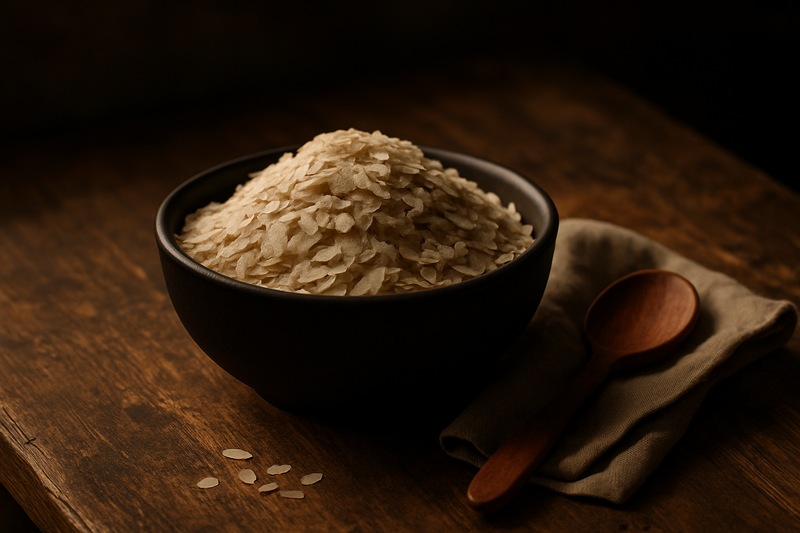
Poha · Photograph
Discover poha nutrition and health benefits in this complete guide. Learn about calories, iron content, glycemic impact, brown vs white poha, and how to make this gluten-free Indian breakfast work harder for your health.
Key Nutrients
% Daily Value based on 2,000 cal diet
Key active compounds in poha
- Gamma-oryzanol — A mixture of ferulic acid esters (compounds where a plant acid bonds to a fat-like molecule) found mainly in the bran fraction. Most abundant in brown-rice poha; very low in white poha. Linked to antioxidant activity and modest cholesterol-lowering effects in rice-bran research.
- Ferulic acid and phenolic acids — Antioxidant plant compounds concentrated in the outer grain layers. Substantially reduced during milling; brown-rice poha retains meaningfully more than white.
- Phytic acid (inositol hexaphosphate) — A natural phosphorus-storage molecule found in all grains. It acts as an antioxidant but also binds to minerals like iron and zinc, mildly reducing how much your body absorbs. More abundant in brown-rice poha.
- Thiamin (B1) and niacin (B3) — B vitamins important for converting carbohydrates into energy. Present in plain poha; higher in parboiled or fortified versions.
- Resistant starch — A type of starch that partially resists digestion, acting more like fiber in the gut. Formed when cooked poha cools; its amount varies by variety and cooking method.
Prep and pairing ideas
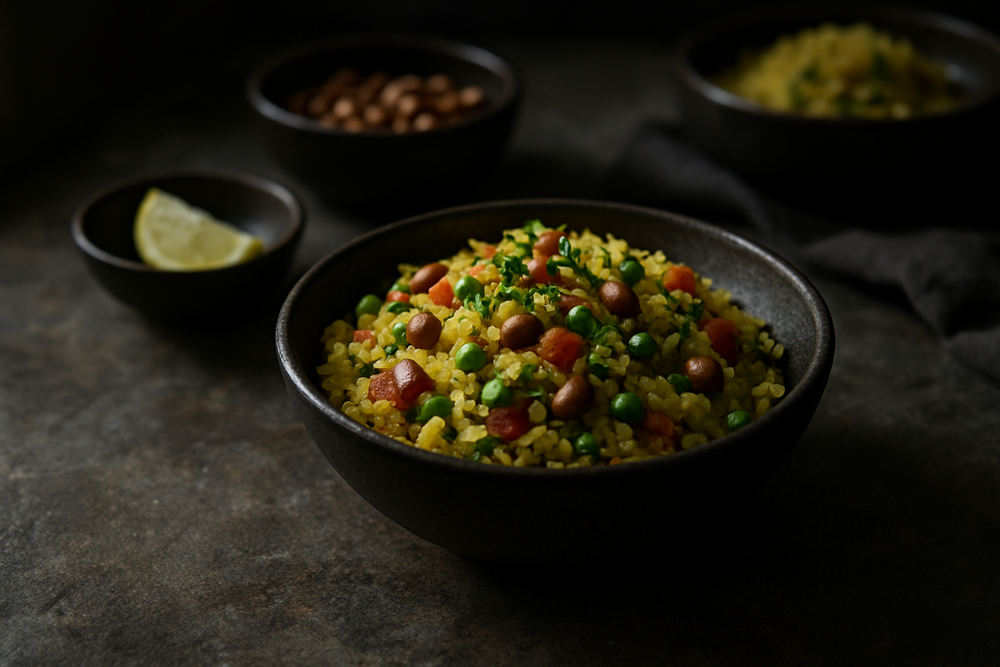
Classic vegetable poha: Soak 60–80 g of thick poha for 5 minutes, drain, and toss with tempered mustard seeds, curry leaves, onion, green chilli, turmeric, and a handful of green peas. Finish with lemon juice and fresh coriander. The lemon juice boosts iron absorption; the peas add plant protein and fiber.
Poha with peanuts and pomegranate: Dry-roast poha lightly, mix with dry-roasted peanuts, pomegranate seeds, diced cucumber, and a squeeze of lime. Serves as a cold snack or salad. Peanuts provide protein and healthy fat, slowing glucose absorption from the flakes.
Overnight oats-style brown-rice poha: Soak brown-rice poha in plain dairy-free milk with a pinch of cardamom and chia seeds overnight. Top with sliced banana and crushed almonds in the morning. The chia seeds add omega-3 fatty acids and extra fiber; the nuts further lower the glycemic load of the meal.
Buying guide: fresh, packaged, fortified — what to look for
Label check for type: Look for "brown rice poha," "red rice poha," or "thick poha" on the front of pack. If the label just says "poha" or "flattened rice," assume it is standard thin white.
Fortified vs. unfortified: Iron content will be listed under the nutrition panel. Unfortified plain poha typically shows 1–3 mg iron per 100 g. Fortified poha will show 10–28 mg. Neither is universally better — it depends on your iron status.
Certification: For celiac disease, choose products with a certified gluten-free mark rather than relying on "made from rice" alone.
Freshness: Poha has a long shelf life when dry (often 6–12 months), but buy from stores with high turnover. Signs of staleness: musty smell, clumping, or discoloration. Store in an airtight container away from moisture.
Organic options: Available for brown-rice and red-rice varieties. Organic certification limits pesticide exposure but does not materially change the nutritional profile.
Bottom line
Poha is a practical, naturally gluten-free grain food with centuries of kitchen history behind it. Its nutritional value is genuinely tier-dependent: brown-rice or thick poha brings real whole-grain benefits — more fiber, more phytochemicals, and better blood sugar management — while standard thin white poha is nutritious enough as part of a varied diet but should not be leaned on for fiber or antioxidant needs.
The single easiest upgrade you can make is to add more vegetables, a small handful of peanuts, and a squeeze of lemon to whatever variety you use. That one habit improves fiber, protein, fat quality, iron absorption, and micronutrient density all at once. For most healthy adults, one bowl of well-made vegetable poha is a perfectly sensible, easy-to-prepare start to the day.
How Poha Compares
| Compared with | What's different |
|---|---|
| Poha vs. White Rice | Poha is parboiled, flattened, and dried, requiring only a quick soak rather than boiling. |
| Poha vs. Rice Flakes (Cereal) | Poha is processed specifically to be light and porous for quick breakfast dishes. |
Health Benefits
Things to Know
Blood sugar: Large portions of thin white poha can spike blood glucose quickly. Start with a smaller serving (50 g dry), pair with protein and vegetables, and monitor your response if you have diabetes or prediabetes.
Iron overload: Iron-fortified poha products can be very high in iron. People with hemochromatosis (a condition where the body stores too much iron) or those taking high-dose iron supplements should check labels carefully and discuss with their doctor.
Celiac disease and gluten sensitivity: Plain rice-based poha is naturally gluten-free, but cross-contamination can occur in mills that also process wheat. Look for certified gluten-free labeling if you have celiac disease.
Rice allergy: Rare but documented. If you have a known rice allergy, poha is a rice product and should be avoided.
Arsenic exposure: Rice can accumulate inorganic arsenic from soil and water. If rice-based foods (including poha) are a daily staple, rotating with other grains (oats, millet, quinoa) is a sensible precaution — especially for young children, as noted in general rice safety guidance from regulatory bodies.
Kidney disease: People with advanced chronic kidney disease (stages 4–5) on mineral restrictions should work with a renal dietitian to factor in grain intake including poha.
Medication interactions: Large servings of white poha may affect post-meal blood sugar, which can influence the dose requirements of insulin or oral diabetes medications. Iron-fortified poha adds to total iron intake and may interact with iron supplementation. These interactions are dose-dependent — speak with your prescriber if unsure.
Glossary
Shop This Ingredient
Stock your pantry with quality poha.
Buy on AmazonAs an Amazon Associate, Plantopedia earns from qualifying purchases. This costs you nothing extra and helps us keep the encyclopedia free.
Frequently Asked Questions
Heart and circulation Large, long-running studies consistently show that people who eat more whole grains have lower rates of heart disease and stroke, with improvements seen in LDL cholesterol (the "bad" kind), blood pressure, and body weight. Brown-rice or red-rice poha, as minimally processed whole-grain products, can fit into that favorable dietary pattern. Standard thin white poha is made from refined rice and contains little fiber or bran-based compounds, so it is unlikely to drive meaningful heart benefits on its own. Its cardiovascular impact depends more on the overall dish — adding vegetables, turmeric, mustard seeds, and peanuts creates a heart-friendlier meal than eating plain white flakes. No human clinical trials have tested poha specifically for cardiovascular outcomes, so benefits are reasonably inferred from broader whole-grain and rice research. Digestive health and microbiome Rice-based foods are some of the most easily tolerated grains in clinical settings. Poha's light, soft texture makes it gentle on the stomach, and its gluten-free nature means it is generally well-suited for people with celiac disease or non-celiac gluten sensitivity (provided no cross-contamination occurred during manufacturing — always check labels). Brown-rice poha contributes more fiber, which supports stool bulk and bowel regularity. Resistant starch formed when cooked poha cools can also act as a prebiotic (a food source for beneficial gut bacteria). Thin white poha is low in fiber and has a more limited effect on gut health. Adding vegetables, a squeeze of lemon juice, and fresh herbs to your poha dish modestly boosts the prebiotic and micronutrient value of the meal. Blood sugar and metabolism White rice consistently raises blood sugar more sharply than whole grains in human studies, and standard thin white poha behaves similarly. The glycemic index (a measure of how quickly a food raises blood glucose compared with pure glucose) of white poha is likely moderate to high, though no controlled glycemic-index trial has been published specifically for poha. Brown-rice or thick poha, especially when cooked with peanuts (which add protein and fat), vegetables (which add fiber), and legumes, can approximate a mixed moderate-glycemic meal. Portion size is especially important: large servings of any rice product amplify the glucose spike. People managing diabetes or insulin resistance should discuss appropriate poha portions with their care team. Inflammation and recovery Whole-grain dietary patterns are linked with lower blood levels of CRP (C-reactive protein — a marker of inflammation measured on a blood test) in multiple human studies. The likely drivers are fiber and the phenolic compounds in the bran and germ. Brown-rice poha contains these compounds; white poha does not, in meaningful amounts. Any anti-inflammatory benefit you get from a poha meal is more likely to come from the spices, vegetables, and plant oil you cook with (turmeric, for example, is regularly used in vegetable poha and has its own well-studied anti-inflammatory properties) than from the rice flakes themselves. No human trials have specifically examined poha's effect on inflammatory biomarkers. Iron and anemia support This is where poha has an especially practical role. Iron deficiency is one of the most common nutrient deficiencies worldwide, and iron-fortified poha — where iron salts are added during manufacturing or as part of public-health programs — can deliver 16–28 mg of iron per 100 g of dry flakes. That compares to roughly 1.5 mg in a plain cooked serving from unfortified flakes. Including a source of vitamin C (lemon juice, tomatoes, or fresh vegetables) in your poha dish helps convert plant-based (non-heme) iron into a form the body absorbs more readily. This practical pairing makes fortified vegetable poha with a squeeze of lime one of the more iron-accessible plant breakfasts available.
The busy commuter or student who skips breakfast Poha cooks in under 10 minutes — soak, drain, temper spices, done. A vegetable poha with peanuts provides carbohydrates for energy, a small hit of protein, and B vitamins to support focus. Choosing thicker or brown-rice flakes keeps energy steadier through the morning. The person looking to manage iron intake through food Iron-fortified poha is one of the more accessible iron-rich plant foods, especially for those who avoid meat. Pairing with lemon juice or tomatoes meaningfully boosts iron absorption. Check the product label — iron content varies widely between brands and standard vs. fortified versions.
| Type | Fiber | Micronutrients | Glycemic Impact | Best for | | --- | --- | --- | --- | --- | | Thin white poha | Low | Modest | Moderate–high | Quick meals, easy digestion | | Thick / parboiled poha | Moderate | Slightly higher | Moderate | Everyday use, a better white-poha swap | | Brown-rice poha | Higher | Higher (Mg, phenolics) | Lower | Whole-food, plant-based diets; blood sugar support | | Red-rice poha | Higher | Higher (anthocyanins) | Lower | Antioxidant-focused eating | | Iron-fortified poha | Low–moderate | Iron-enriched | Moderate–high | Iron-deficiency prevention programs | If whole-food eating is your goal, brown-rice or red-rice poha is the strongest choice. If you are working with what is available at your local store, choosing thick over thin white poha, and loading your dish generously with vegetables and peanuts, closes much of the nutritional gap.
General guidance: Most adults can comfortably include 50–100 g of dry poha per meal (roughly 130–260 kcal when cooked simply), once daily as a breakfast or snack, within the broader grain recommendation of 5–8 ounce-equivalents per day depending on age, sex, and activity level. At least half of total daily grain intake is ideally from whole-grain sources — this is where brown-rice or thick poha earns its place. If you are managing weight: A single 60-g dry serving cooked with vegetables and minimal oil lands around 150–200 kcal — reasonable for a light breakfast. Adding peanuts or legumes increases satiety without dramatically raising the calorie count. If you have diabetes: Start with 50 g dry (about half a cup of dry flakes), pair it with protein and fat sources, and test your post-meal blood glucose response. Work with your healthcare team on precise portions. If you are using fortified poha for iron: Even one serving of iron-fortified poha daily can contribute meaningfully to iron needs, but do not rely on a single food to correct deficiency — a full dietary and clinical assessment is more reliable. Start low, assess how you feel, and adjust portions gradually. This is general guidance, not a personalized prescription.
Quick Answers
Common questions, answered in a line.
Poha is naturally gluten-free because it is made from flattened rice, but individuals with celiac disease should look for a "certified gluten-free" label. This certification ensures the product was not cross-contaminated in mills that also process wheat.
Adding lemon juice to poha is highly beneficial because the vitamin C boosts your body's ability to absorb the iron found in the rice flakes. This simple addition significantly improves the micronutrient density and nutritional value of your meal.
People with hemochromatosis or those taking high-dose iron supplements should be cautious with fortified poha, as it can contain between 10–28 mg of iron per 100g. Large portions of white poha can also cause rapid blood sugar spikes, which may affect diabetes medication needs.
To make poha more filling and nutritious, pair it with protein sources like green peas or peanuts and add plenty of fiber-rich vegetables. Adding healthy fats and protein helps slow down glucose absorption, which manages blood sugar levels more effectively.
Brown-rice poha is generally considered superior for nutrition because it retains the bran layer, which is rich in fiber, gamma-oryzanol, and phenolic acids. These compounds provide antioxidant activity and better blood sugar management compared to standard white versions.
Poha contains several key nutrients including B vitamins like thiamin (B1) and niacin (B3), iron, and antioxidant compounds like ferulic acid. Brown and red varieties also provide gamma-oryzanol and higher levels of dietary fiber.
For Readers in the USA
Local context — sourcing, seasonality, and regional notes.
You can find poha at most Indian grocery stores (like Patel Brothers), specialty markets, and increasingly in the "International" or "Rice" aisles of major chains like Whole Foods and Wegmans. It is most commonly sold in the United States as "flattened rice" or "beaten rice."
When buying poha in the US, look for the USDA Organic seal or a "Certified Gluten-Free" label from organizations like GFCO to ensure the product meets strict domestic purity standards. Because rice products can sometimes be cross-contaminated during processing, these US-specific certifications provide extra safety for those with celiac disease.
Since poha is a dry, shelf-stable product, it is available year-round across all US climates and does not have a specific domestic growing season. Most poha found in American markets is imported from India, though it is frequently used in US households as a quick, warm breakfast during the colder winter months.
In American grocery stores, you will typically find "Thin," "Medium," and "Thick" varieties of flattened rice. Thick poha is generally preferred for breakfast dishes like Kanda Poha because it holds its shape better after soaking, while thin varieties are often used for crispy snacks or "Chivda."
AI Clinical Review
- Clearly distinguishes white vs. thick/brown/red poha and ties those forms to meaningful differences in fiber, B vitamins, and plant compounds that affect heart and metabolic health.
- Sensibly frames most health benefits as coming from whole‑grain versions and from the total dish (vegetables, peanuts, legumes, lemon) rather than poha alone.
- Accurately notes that poha is naturally gluten‑free but may be cross‑contaminated, which matters for celiac disease.
- Highlights iron fortification as a practical tool where deficiency is common, and explains why pairing with vitamin C improves non‑heme iron absorption.
- Direct human studies on poha are sparse; many claims appropriately extrapolate from broader rice/whole‑grain and rice‑bran research. Effect sizes for typical poha portions remain uncertain.
- Glycemic index/load data specific to poha (especially by flake thickness and rice type) are limited; individual glucose responses can vary widely.
- The amount of resistant starch formed with cooling and reheating depends on preparation details, so gut and glycemic effects may differ from meal to meal.
- Portion matters for blood sugar: many adults do well starting around 50–60 g dry poha and pairing with protein, fat, and fiber; those with diabetes should monitor post‑meal readings and adjust with their care team.
- Iron‑fortified poha can contribute substantially to daily iron; adults should be mindful of the tolerable upper intake level (about 45 mg/day). People with hemochromatosis, thalassemia, or on iron therapy should review labels and consult a clinician.
- For celiac disease, choose certified gluten‑free products to avoid cross‑contact; rice allergy is rare but warrants avoidance if present.
- Rice can accumulate inorganic arsenic; rotating grains (e.g., oats, millet, quinoa) is prudent for frequent consumers, children, and during pregnancy. Also note that nutrition numbers vary by brand and by whether weights are listed dry vs. cooked—check labels and measure portions consistently.
Naturally gluten-free; thicker whole-rice poha retains more nutrition.
References
- USDA MyPlate — Grains group: whole vs refined grain guidance and recommended daily amounts (myplate.gov)
- USDA FoodData Central — rice and grain nutritional profiles used to contextualize poha values (fdc.nal.usda.gov)
- Vasudha Foods: Poha Nutrition Facts — calories, protein, iron, and carbs per 100 g (vasudhafoods.in)
- PharmEasy: Poha — uses, benefits, side effects, and safety overview (pharmeasy.in)
- Organic Mandya: Know Your Food — poha nutrition overview including iron fortification context (know.organicmandya.com)
- Redcliffe Labs: Poha calories and nutritional benefits (redcliffelabs.com)
- Oliva Clinic: Poha for weight loss — benefits, recipes, and nutritional values (olivaclinic.com)
- Pathkind Labs: Poha nutrition facts, calories, and health perks (pathkindlabs.com)
- Two Brothers India Shop: Poha calories, benefits, and nutritional value (twobrothersindiashop.com)
- NIH National Institute of Diabetes and Digestive and Kidney Diseases — general guidance on dietary carbohydrates and blood sugar management (niddk.nih.gov)
Know Your Numbers
Eating healthy is a start. Now get to know your biomarkers.
Food changes bloodwork — inflammation, lipids, blood sugar and nutrient status all respond to what you eat. 59 markers from $59.
- Results in 7–10 days at 2,000+ Quest sites
- Licensed provider reviews every result
- One flat price, no membership, HSA/FSA eligible
Educational information only, not medical advice. Panels are ordered and reviewed through our licensed partner; Plantopedia may earn a commission.