Puffed Quinoa — health benefits and uses
A modern take on the ancient Andean staple, valued for balanced protein.
The Short Answer
Puffed quinoa is a ready-to-eat, gluten-free seed that provides 4 grams of complete protein and 110 calories per cup. It is a crunchy, nutrient-dense alternative to processed cereals, rich in magnesium and antioxidants like quercetin.
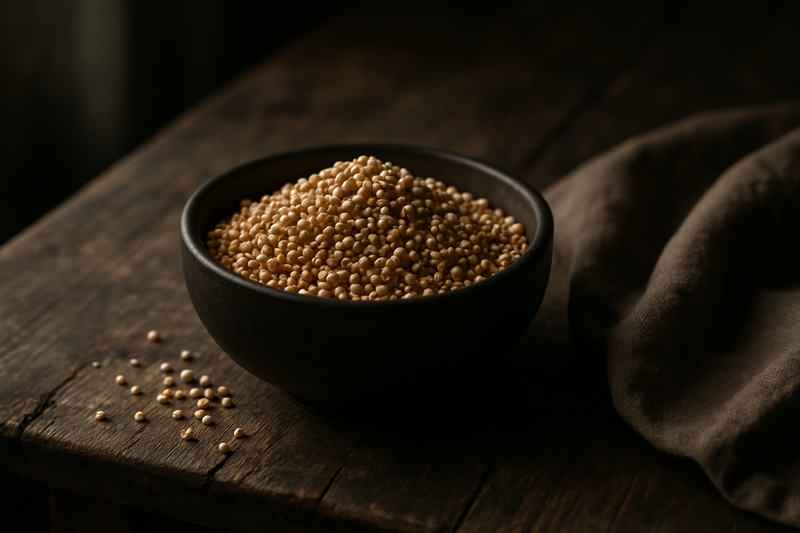
Puffed Quinoa · Photograph
Discover puffed quinoa nutrition and health benefits — from complete protein and fiber to heart and blood sugar support. Learn how this light, crunchy seed compares to cooked quinoa, who should try it, and the easiest ways to add it to yogurt, bars, and cereal.
Key Nutrients
% Daily Value based on 2,000 cal diet
Key active compounds
Quinoa's nutritional story goes beyond basic macros. Several bioactive compounds appear to contribute to the health effects seen in research:
- Flavonoids — quercetin and kaempferol: Polyphenolic plant compounds (meaning they contain multiple ring-shaped chemical structures linked to antioxidant activity) with antioxidant and anti-inflammatory properties in cell and animal studies.
- Saponins: Bitter-tasting glycosides (sugar-linked molecules) found mainly on the seed's outer coat. They show cholesterol-lowering and immune-modulating effects in lab models, but can cause mild GI upset in sensitive individuals. Rinsing, soaking, and heat processing (including puffing) substantially reduce saponin levels.
- Phenolic acids and other polyphenols: A broader family of plant antioxidants associated with reduced oxidative stress (cell damage from unstable molecules) and potentially favorable effects on blood lipids.
- Phytosterols: Plant compounds structurally similar to cholesterol that may help reduce how much cholesterol the gut absorbs.
- Complete protein (all nine essential amino acids): Unusual for a plant seed; supports muscle maintenance, immune function, and metabolic health.
- Dietary fiber (soluble and insoluble fractions): Supports stool regularity, satiety, and potentially beneficial gut bacteria.
Prep and pairing ideas
Puffed quinoa needs zero cooking. Here are practical ways to use it:
- Yogurt parfait topper: Scatter 2–3 tablespoons over plain Greek yogurt with fresh berries. You get crunch without the added sugar of most granola, plus an extra hit of protein.
- Overnight oats mix-in: Stir into assembled overnight oats before refrigerating, or add at serving time for crunch. Pairs especially well with banana and almond butter.
- Homemade energy bars: Combine puffed quinoa with rolled oats, nut butter, a touch of maple syrup, and seeds, then press into a tray and refrigerate. A whole-food bar with complete protein from both quinoa and nuts.
- Smoothie bowl finish: Sprinkle over any smoothie bowl for textural contrast without wilting the way some toppings do.
- Soup or salad topper: Use like croutons for a light crunch. Works especially well on creamy soups or grain salads.
- Baked goods add-in: Mix into muffin batter or press onto the outside of energy balls for a subtle crunch.
Buying guide: how to choose puffed quinoa
Plain puffed quinoa (best option): Single ingredient — "puffed quinoa" or "popped quinoa." No added sugar, oil, or flavoring. Buy this if you want the most flexibility and control over nutrition. Available in bulk bins, health food stores, and online.
Puffed quinoa cereals: Read the label carefully. Look for added sugar listed early in the ingredients (cane sugar, brown rice syrup, honey are all sugar) and watch for serving sizes — cereal boxes often list 30 g but the bowl you pour holds 60–80 g. Choose versions where quinoa is the first ingredient and sugar is below 5 g per serving.
Puffed quinoa granola bars: Most commercial bars add significant sugar and sometimes saturated fat. Use puffed quinoa as a component in homemade bars to control what goes in.
Label tip: "Made with quinoa" does not mean the product is mostly quinoa. Check whether quinoa appears in the first three ingredients.
Organic vs. conventional: No strong evidence that organic puffed quinoa has meaningfully different nutrition. More relevant is whether it is certified gluten-free if that matters for your health.
Bottom line
Puffed quinoa takes everything that makes quinoa a nutritionally compelling food — complete protein, fiber, iron, magnesium, and a favorable impact on blood lipids and blood sugar — and packages it in a format that requires zero prep. It is not a superfood cure-all, and most of the strongest research applies to quinoa broadly rather than the puffed form specifically. But puffed quinoa is a genuinely useful, versatile whole food that fits easily into a health-supporting diet.
The practical priority: choose plain or minimally sweetened versions, use it to replace rather than add to refined-grain cereals and bars, and introduce it gradually if your gut is sensitive. Those three habits are where most of the real-world benefit lives.
Looking to build a more complete whole-food eating pattern around ingredients like puffed quinoa? Browse the Plantopedia goals hub for personalized starting points based on what matters most to you.
How Puffed Quinoa Compares
| Compared with | What's different |
|---|---|
| Puffed Quinoa vs. Puffed Rice | Higher in protein and minerals, whereas rice is mostly carbohydrates. |
| Puffed Quinoa vs. Puffed Amaranth | Contains all nine essential amino acids; amaranth is slightly higher in fiber. |
| Puffed Quinoa vs. Cooked Quinoa | Crunchy and ready to eat, while cooked quinoa is soft and requires boiling. |
Health Benefits
Things to Know
Celiac disease or gluten sensitivity: Quinoa is naturally gluten-free, but cross-contamination during processing is common. Look for a certified gluten-free label on puffed quinoa products.
IBS or sensitive digestion: Residual saponins and a rapid increase in fiber can cause bloating or gas. Start with a small amount (1–2 tablespoons) and increase gradually over a week or two.
Kidney disease: Quinoa is relatively high in phosphorus, potassium, and magnesium. People on dialysis or with doctor-prescribed mineral restrictions should check with their care team before adding quinoa regularly.
Diabetes or prediabetes medications: Quinoa may modestly improve insulin sensitivity and blood sugar. If you take insulin or oral hypoglycemics (blood-sugar-lowering drugs), let your doctor know you are increasing whole-grain intake so they can monitor your levels.
Cholesterol medications (statins): Quinoa may add a small additional reduction in LDL and triglycerides. This is generally a benefit, but periodic lipid monitoring is sensible when combining dietary changes with medication.
Seed or grain allergies: Quinoa allergy is rare but possible. Introduce it slowly and watch for any allergic reaction, particularly if you have known seed sensitivities.
Pregnancy: Quinoa is a safe, nutritious whole food during pregnancy and provides folate, iron, and zinc — all important for fetal development. However, always discuss significant dietary changes with your midwife or OB.

Prep Ideas
- — **Yogurt parfait topper:** Scatter 2–3 tablespoons over plain Greek yogurt with fresh berries. You get crunch without the added sugar of most granola, plus an extra hit of protein.
- — **Overnight oats mix-in:** Stir into assembled overnight oats before refrigerating, or add at serving time for crunch. Pairs especially well with banana and almond butter.
- — **Homemade energy bars:** Combine puffed quinoa with rolled oats, nut butter, a touch of maple syrup, and seeds, then press into a tray and refrigerate. A whole-food bar with complete protein from both quinoa and nuts.
- — **Smoothie bowl finish:** Sprinkle over any smoothie bowl for textural contrast without wilting the way some toppings do.
- — **Soup or salad topper:** Use like croutons for a light crunch. Works especially well on creamy soups or grain salads.
- — **Baked goods add-in:** Mix into muffin batter or press onto the outside of energy balls for a subtle crunch.
Glossary
Shop This Ingredient
Stock your pantry with quality puffed quinoa.
Buy on AmazonAs an Amazon Associate, Plantopedia earns from qualifying purchases. This costs you nothing extra and helps us keep the encyclopedia free.
Frequently Asked Questions
Most human studies use cooked or flour-form quinoa, but the core bioactive compounds — fiber, complete protein, flavonoids, phytosterols — are retained in puffed form. Here's what the research shows by health area. Heart and circulation Multiple randomized controlled trials (RCTs — studies where participants are randomly assigned to a treatment or control group) and meta-analyses suggest that regular quinoa consumption can modestly improve cardiovascular risk markers. A dose-response RCT in overweight and obese adults found that 50 g of quinoa daily for 12 weeks significantly reduced serum triglycerides (blood fats linked to heart disease risk) and the prevalence of metabolic syndrome compared with lower doses or control. A crossover trial in older adults using quinoa-based biscuits reported small but favorable reductions in total and LDL cholesterol ("bad" cholesterol), body weight, and BMI. Harvard's Nutrition Source groups quinoa among whole grains associated with lower heart disease risk when eaten in place of refined grains. Evidence is moderate in strength; quinoa is not a treatment for heart disease, but consistent inclusion in a whole-food diet appears supportive. Digestive health and microbiome Quinoa provides both insoluble fiber (which adds bulk to stool and supports regularity) and soluble fiber (which forms a gel-like substance in the gut that may feed beneficial bacteria and slow digestion). Cleveland Clinic notes that quinoa's fiber can help reduce constipation. For puffed quinoa used as a topping, even a ¼ cup serving contributes a useful amount of fiber alongside protein. The saponins present in unprocessed quinoa can irritate the gut lining in sensitive people, but puffing significantly reduces saponin content — so puffed quinoa is generally well tolerated when introduced gradually, especially for people with sensitive digestion. Blood sugar and metabolism Quinoa has a relatively low glycemic impact compared with refined grains — meaning it tends to raise blood sugar more slowly and gently. A 2024 randomized trial found that quinoa outperformed a multigrain supplement in adults with impaired glucose tolerance (a pre-diabetes state), showing better time-in-range blood glucose, lower two-hour post-meal glucose, reduced insulin resistance (measured by HOMA-IR, a standard calculation), and lower rates of progressing to diabetes. A separate meta-analysis found that quinoa supplementation modestly reduced fasting insulin and improved triglycerides and waist circumference. Replacing refined-grain cereals or granola bars with puffed quinoa-based options is a practical application of this evidence, though direct trials on puffed quinoa specifically are not yet available. Inflammation and recovery Human evidence for direct anti-inflammatory effects is limited and less consistent than for lipid or glycemic effects. Some trials measured C-reactive protein (CRP — a blood marker of inflammation) and other markers but did not show significant changes compared to controls. Mechanistic and preclinical studies do report antioxidant and anti-inflammatory activity from quinoa's flavonoids, phenolic acids, and vitamin E, but these findings come mainly from cell and animal models. Consider this area promising but not yet confirmed by strong human trial data.
The short answer is yes, per gram — with one important caveat about water content. When quinoa is cooked, it absorbs water and roughly triples in weight. A ¼ cup of dry puffed quinoa (30 g) contains similar protein, fiber, and minerals as a ¼ cup of dry raw quinoa (43 g), but the puffed version has more air so it looks larger and feels lighter. Compared to an equivalent weight of cooked quinoa (which is mostly water), puffed quinoa is much more calorie- and nutrient-dense per cup. Puffed vs. cooked — quick comparison (per 30 g dry weight): Puffed quinoa: 115 kcal, 4 g protein, 1.7 g fiber — ready to eat, no cooking needed Cooked quinoa (30 g dry, yields 90 g cooked): 108 kcal, 4 g protein, 1.5 g fiber — requires rinsing and 15 minutes of simmering Neither form is nutritionally superior. The choice comes down to how you plan to use it. Puffed quinoa wins on convenience for cold applications; cooked quinoa is better as a warm base for meals. One real difference: commercial products. Many store-bought puffed quinoa cereals, granola bars, or snack clusters add sugar, honey, or oil. These additions can offset the metabolic benefits. Plain puffed quinoa (just quinoa, no additions) is the cleanest option.
There is no officially established "dose" for puffed quinoa specifically. Human trials on quinoa have generally used 20–50 g of dry quinoa seed per day (roughly ¼ to ½ cup dry), or substituted quinoa for one daily grain serving, and seen modest improvements in triglycerides, LDL cholesterol, insulin sensitivity, and weight over 8–12 weeks. For puffed quinoa as a topping or cereal component, a practical range is: Light use (topping): 2–3 tablespoons (10–15 g) over yogurt, oats, or a smoothie bowl. Adds a nutritional bonus without meaningfully affecting calorie balance. Moderate use (cereal base or snack bar): ¼ cup (30 g) as part of a mixed bowl or bar. This is close to the lower end of amounts studied in trials. Regular whole-grain serving: Up to ½ cup (40–45 g) as a cereal component, combined with other whole foods. Starting low is smart if you are new to quinoa or have sensitive digestion — even one tablespoon daily to start, building up over 1–2 weeks. There is no evidence that eating more than 50 g/day adds extra benefit; focus on consistent daily inclusion rather than large single servings.
Quick Answers
Common questions, answered in a line.
Puffed quinoa is a complete protein, meaning it contains all nine essential amino acids required by the body. This is unusual for a plant seed and makes it an excellent choice for supporting muscle maintenance, immune function, and overall metabolic health.
Puffed quinoa contains flavonoids like quercetin and kaempferol, which are polyphenolic plant compounds with antioxidant and anti-inflammatory properties. These compounds, along with phenolic acids, help reduce oxidative stress and cell damage caused by unstable molecules.
Puffed quinoa can help lower cholesterol because it contains phytosterols and saponins that may reduce cholesterol absorption in the gut. These compounds, combined with dietary fiber, support heart health by potentially improving blood lipid levels and reducing triglycerides.
Puffed quinoa may modestly improve insulin sensitivity and blood sugar levels, making it a favorable option for metabolic health. However, if you are taking blood-sugar-lowering medications like insulin, you should consult your doctor to monitor your levels when increasing intake.
If you have a sensitive digestive system, you should introduce puffed quinoa gradually, starting with just 1–2 tablespoons. While heat processing reduces bitter saponins, the fiber content and residual compounds can still cause bloating or gas in some individuals.
Puffed quinoa is naturally gluten-free, but you should always look for a "certified gluten-free" label to avoid potential cross-contamination. Cross-contamination often occurs during the processing stage, which is a critical concern for those with Celiac disease.
You can use puffed quinoa as a crunchy topper for yogurt parfaits, smoothie bowls, soups, and salads. Because it requires zero cooking, it is also a convenient ingredient for homemade energy bars, overnight oats, or as a mix-in for muffin batters.
For Readers in the USA
Local context — sourcing, seasonality, and regional notes.
In the US, you can find puffed quinoa at major health-conscious chains like Whole Foods Market, Sprouts Farmers Market, and Trader Joe's, or in the organic/bulk sections of large retailers like Kroger and Wegmans. It is also widely available through online marketplaces like Thrive Market and Amazon.
While most quinoa is grown in South America, US farmers in the Rocky Mountain region (particularly Colorado) and parts of the Pacific Northwest now cultivate domestic quinoa, though the puffed variety is still predominantly imported. Look for "grown in the USA" labels if you prefer domestically sourced grains.
Look for the USDA Organic seal and the "Certified Gluten-Free" logo to ensure the product meets federal standards for organic production and strict cross-contamination safety. The FDA regulates these labels to help consumers with Celiac disease or specific dietary preferences identify safe, high-quality products.
In the US, you may find it labeled as "popped quinoa" or "quinoa puffs," and it is frequently used as a gluten-free alternative to puffed rice or wheat in American-style breakfast cereals and granola bars. It is also gaining popularity as a protein-rich topping for trendy American smoothie bowls and yogurt parfaits.
AI Clinical Review
- Clearly explains that puffing expands the seed without meaningfully reducing protein, fiber, or minerals per gram, so nutrition is comparable to whole quinoa.
- Accurately notes quinoa’s “complete protein” status and its usefulness as a naturally gluten‑free option (with the caveat about cross‑contamination).
- Summarizes human data showing modest, supportive effects on triglycerides, LDL cholesterol, insulin resistance, and weight when quinoa replaces refined grains, consistent with evidence for whole‑grain patterns and several randomized controlled trials (RCTs).
- Offers practical guidance on how to use puffed quinoa and how to read labels to avoid added sugars and oils that can blunt metabolic benefits.
- Most trials use cooked or flour‑based quinoa; there are few head‑to‑head studies on puffed quinoa specifically, so benefits are inferred rather than proven for the puffed form.
- Effect sizes in RCTs are modest; quinoa is a supportive food, not a treatment for dyslipidemia, diabetes, or weight loss on its own.
- Anti‑inflammatory outcomes (for example, C‑reactive protein) are inconsistent across studies; mechanistic findings from cell/animal work don’t always translate to humans.
- The glycemic response may differ between puffed and cooked forms due to processing and food matrix; comparative data are limited, and toppings/mix‑ins will influence blood glucose.
- Practical intake used in studies is roughly 20–50 g/day of quinoa; for puffed quinoa this aligns with about 2–4 tablespoons up to 1/2 cup, ideally replacing refined‑grain snacks or cereals rather than adding extra calories.
- People with celiac disease or gluten sensitivity should choose certified gluten‑free products to minimize cross‑contact; facilities often process wheat alongside quinoa.
- If you have IBS or a sensitive gut, start small and increase gradually; puffing reduces bitter saponins, but fiber and residual compounds can still cause gas/bloating in some.
- Those with chronic kidney disease or mineral restrictions should check with their clinician (quinoa is relatively high in phosphorus, potassium, and magnesium). Individuals using insulin or hypoglycemic agents should monitor glucose when changing grain patterns.
A whole seed food; watch for added sweeteners in commercial versions.
References
- USDA FoodData Central — Quinoa, cooked (ID 168917): Core nutrition data for protein, fiber, minerals, and calorie content. (fdc.nal.usda.gov)
- Harvard T.H. Chan School of Public Health — Quinoa feature: Overview of quinoa's nutrition and whole-grain evidence base. (nutritionsource.hsph.harvard.edu)
- Harvard T.H. Chan School of Public Health — Whole Grains overview: Context for how quinoa fits into whole-grain dietary patterns and cardiovascular risk. (nutritionsource.hsph.harvard.edu)
- Cleveland Clinic — 4 Health Benefits of Quinoa: Practical summary of fiber, protein, digestive, and heart health points; notes gluten-free suitability. (health.clevelandclinic.org)
- Mayo Clinic — How to eat quinoa for breakfast, lunch and dinner: Guidance on practical use cases and gluten-free applicability. (mcpress.mayoclinic.org)
- RCT — Quinoa seed lowers serum triglycerides (dose-response, PMC5998774): 12-week RCT in overweight/obese adults; 50 g/day reduced triglycerides and metabolic syndrome prevalence. (pmc.ncbi.nlm.nih.gov)
- Systematic review and meta-analysis of quinoa supplementation trials (PubMed 33037704): Pooled analysis finding modest reductions in body weight, waist circumference, fat mass, insulin, and blood lipids. (pubmed.ncbi.nlm.nih.gov)
- RCT — Quinoa crossover trial in older adults (PubMed 31919583): Quinoa biscuits reduced total cholesterol, LDL, weight, and BMI versus control biscuits. (pubmed.ncbi.nlm.nih.gov)
- RCT — Quinoa vs. multigrain in impaired glucose tolerance (PubMed 39784492): Quinoa outperformed multigrain control on time-in-range glucose, 2-hour postprandial glucose, and HOMA-IR. (pubmed.ncbi.nlm.nih.gov)
- Review — Functional ingredients of quinoa and physiological effects (Wiley/FFT2.109): Comprehensive review of saponins, flavonoids, phytosterols, phenolic acids, and their mechanistic and clinical evidence. (onlinelibrary.wiley.com)
Know Your Numbers
Eating healthy is a start. Now get to know your biomarkers.
Food changes bloodwork — inflammation, lipids, blood sugar and nutrient status all respond to what you eat. 59 markers from $59.
- Results in 7–10 days at 2,000+ Quest sites
- Licensed provider reviews every result
- One flat price, no membership, HSA/FSA eligible
Educational information only, not medical advice. Panels are ordered and reviewed through our licensed partner; Plantopedia may earn a commission.