Rice Bran — health benefits and uses
Rice bran used in Japanese nukazuke and as a traditional skin scrub.
The Short Answer
Rice bran is a nutrient-dense food providing 6.3g of fiber and 234mg of magnesium per 20g serving. It is best used by stirring 1–2 tablespoons into smoothies, oatmeal, or replacing a portion of flour in baking recipes.
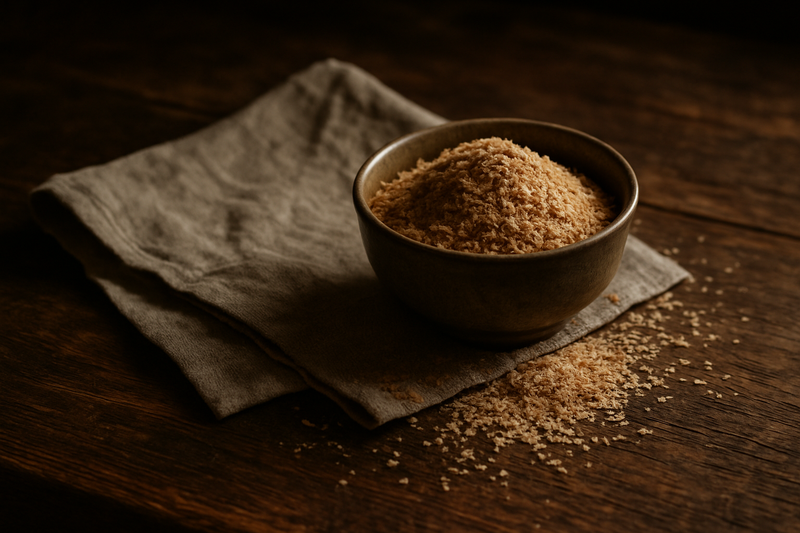
Rice Bran · Photograph
Discover rice bran health benefits and how to use it in smoothies, oatmeal, and baking. Learn about stabilized rice bran, its fiber, vitamin E, gamma-oryzanol content, heart health and blood sugar support, safety tips, and how it differs from rice bran oil.
Key Nutrients
% Daily Value based on 2,000 cal diet
Key active compounds in rice bran
- Gamma-oryzanol — A mixture of ferulic acid esters of plant sterols found almost uniquely in rice bran. Research suggests antioxidant, lipid-lowering, and blood sugar-modulating effects.
- Tocopherols — The "classic" forms of vitamin E; fat-soluble antioxidants that protect cell membranes from oxidative damage.
- Tocotrienols — Lesser-known vitamin E isoforms with an unsaturated side chain; particularly abundant in rice bran and studied for cardiovascular and anti-inflammatory effects.
- Phytosterols — Plant compounds structurally similar to cholesterol that compete with cholesterol for absorption in the intestine, potentially lowering LDL ("bad") cholesterol.
- Arabinoxylans — Complex non-starch polysaccharides (a type of dietary fiber) in the bran cell wall; act as prebiotics (food for beneficial gut bacteria) and may slow glucose absorption.
- Phenolic acids and flavonoids — Polyphenolic antioxidants including ferulic acid and chlorogenic acid; associated with anti-inflammatory and antimicrobial activity.
Buying guide: what to look for
Stabilized label — Non-negotiable. If it doesn't say "stabilized," skip it.
Ingredient list — Should list only rice bran (or stabilized rice bran). Watch for added sugars, artificial flavors, or fillers in flavored products.
Smell test — Fresh stabilized rice bran has a mild, slightly nutty aroma. A sharp, paint-like, or "off" smell means it has gone rancid — discard it.
Whole bran vs extract — For everyday food use, buy a plain powder. Capsule or tablet "rice bran extract" products are often concentrated and standardized for gamma-oryzanol; they're studied in clinical trials but aren't the same as culinary use.
Storage — Once opened, store in an airtight container in the refrigerator or freezer. Use within 1–2 months of opening.
Prep and pairing ideas
Rice bran powder has a mild, slightly nutty flavor that blends easily into foods without dominating the taste.
Smoothies: Start with 1 tablespoon blended into a fruit or vegetable smoothie. It adds fiber and healthy fats, which help the smoothie sustain energy longer.
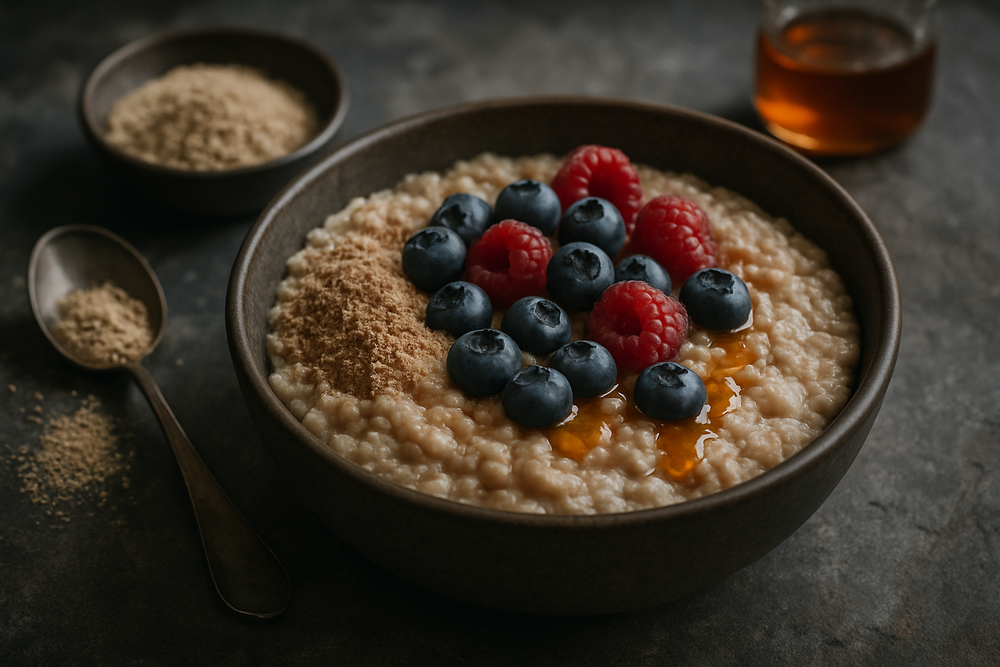
Oatmeal or porridge: Stir 1–2 tablespoons into cooked oats. The fiber and mineral content complements oats well, and the flavor is barely noticeable.
Baking: Replace 10–20% of the flour in muffins, pancakes, or quick breads with rice bran. It adds moisture, nutty flavor, and a significant fiber boost. Note that very high substitutions can make baked goods denser.
Practical pairings worth knowing:
- Rice bran + banana + almond milk (smoothie): Banana's natural sugars balance the mild bran flavor, while almond milk's fat-soluble environment helps absorb the tocotrienols and gamma-oryzanol more effectively.
- Rice bran + oats + berries (breakfast bowl): Oat beta-glucan (a type of soluble fiber) and rice bran fiber work together for a strong combined effect on post-meal blood sugar and cholesterol.
- Rice bran + olive oil + herbs (savory coating): Mix rice bran with herbs to coat vegetables before roasting — the bran crisps slightly and adds a nutritional boost to an otherwise simple dish.
Bottom line
Stabilized rice bran is one of the more nutrient-dense whole-food powders you can add to everyday meals. It delivers a meaningful dose of fiber, plant-based fats, iron, magnesium, B vitamins, vitamin E, and a unique antioxidant complex centered on gamma-oryzanol — all in a form that blends easily into smoothies, oatmeal, and baking.
The evidence for cardiovascular and metabolic benefits is promising and growing, but most human trials are still small or use concentrated extracts. Think of rice bran as a food-first fiber and micronutrient upgrade rather than a supplement with guaranteed outcomes.
Buy stabilized only. Store it cold. Start with small amounts and build up. And if you manage a chronic condition or take daily medications, loop in your care team before adding it in meaningful amounts.
If you're exploring food-based strategies for heart health, blood sugar balance, or digestive support, rice bran is a practical, affordable, and evidence-backed place to start.
Looking for personalized guidance on using ingredients like rice bran as part of a health goal? Explore our goals-based ingredient guides for tailored starting points.
How Rice Bran Compares
| Compared with | What's different |
|---|---|
| Rice Bran vs. Wheat Bran | Wheat bran is significantly higher in insoluble fiber but lower in healthy fats and vitamin E. |
| Rice Bran vs. Rice Bran Oil | Rice bran is a whole food powder; the oil is a refined extract lacking the fiber and minerals. |
| Rice Bran vs. Oat Bran | Oat bran contains more soluble beta-glucan fiber, while rice bran is higher in magnesium and zinc. |
Health Benefits
Things to Know
Start low, go slow.: High fiber intakes introduced quickly cause gas, bloating, and cramps for many people. Begin with 1 teaspoon and increase over 2–4 weeks.
Drink enough fluids.: Fiber needs water to move through the digestive tract. Add a large glass of water when you increase your rice bran intake.
Phytic acid and mineral absorption.: Rice bran contains phytic acid (an anti-nutrient that can bind iron, zinc, and calcium). Chronic very high intakes may modestly reduce mineral absorption. Typical culinary amounts (1–4 tablespoons/day) are unlikely to be a problem for people with adequate diets.
Medication timing.: High-fiber foods can theoretically slow or reduce the absorption of some oral medications (thyroid hormones, certain antibiotics, antidepressants). Take medications at least 1–2 hours before or after eating large amounts of rice bran.
Cholesterol and blood pressure medications.: Rice bran may have additive effects with statins, bile acid sequestrants, or antihypertensive drugs. Let your prescribing doctor know if you're adding it regularly.
Diabetes medications.: Rice bran can influence blood glucose; people on insulin, metformin, or sulfonylureas should monitor more closely when making significant dietary changes.
Pregnancy and breastfeeding.: Normal culinary amounts are considered safe. High-dose supplemental use has limited safety data; stick to food amounts and discuss with your midwife or OB.
Rice allergy.: Rare, but people with confirmed rice allergy should avoid rice bran.
IBS and IBD.: People with irritable bowel syndrome (IBS) or inflammatory bowel disease (IBD) may find high-fiber additions aggravate symptoms; introduce very gradually and monitor.
Prep Ideas
- — **Rice bran + banana + almond milk (smoothie):** Banana's natural sugars balance the mild bran flavor, while almond milk's fat-soluble environment helps absorb the tocotrienols and gamma-oryzanol more effectively.
- — **Rice bran + oats + berries (breakfast bowl):** Oat beta-glucan (a type of soluble fiber) and rice bran fiber work together for a strong combined effect on post-meal blood sugar and cholesterol.
- — **Rice bran + olive oil + herbs (savory coating):** Mix rice bran with herbs to coat vegetables before roasting — the bran crisps slightly and adds a nutritional boost to an otherwise simple dish.
Shop This Ingredient
Stock your pantry with quality rice bran.
Buy on AmazonAs an Amazon Associate, Plantopedia earns from qualifying purchases. This costs you nothing extra and helps us keep the encyclopedia free.
Frequently Asked Questions
Heart and circulation Rice bran provides three separate pathways that may support cardiovascular (heart and blood vessel) health: soluble fiber that helps remove cholesterol from the digestive tract, phytosterols that block cholesterol absorption, and gamma-oryzanol plus tocotrienols that act as antioxidants and may directly influence cholesterol production in the liver. Clinical studies and reviews of human trials report that adding rice bran or rice bran extracts to the diet improved total cholesterol, LDL cholesterol, triglycerides, and in some cases blood pressure in overweight or obese adults. Effects were seen over weeks to months of consistent use. The evidence is moderate strength — meaningful but not yet from large long-term trials in diverse populations. Rice bran benefits for heart health are among the most studied of all its effects, so this is where the evidence base is strongest for everyday users. Digestive health and microbiome Rice bran is approximately 22–32% dietary fiber by weight — a mix of insoluble fiber (which adds bulk and supports bowel regularity) and arabinoxylans (which feed beneficial gut bacteria). In practical terms, three tablespoons add about 6 grams of fiber, roughly 22% of the daily target most adults fall short of. Reviews and some clinical work suggest rice bran acts as a prebiotic, shifting gut microbiota composition in potentially favorable ways. Rice bran benefits for digestion and gut health include improved stool consistency and reduced constipation, consistent with general fiber science. Large-scale trials specifically on irritable bowel syndrome (IBS) or chronic constipation are still limited, though. Introduce rice bran gradually — jumping from zero to four or five tablespoons a day can cause bloating and gas while your gut microbiome adjusts. Blood sugar and metabolism The fiber and arabinoxylans in rice bran slow the rate at which glucose (sugar) enters the bloodstream after a meal — a key mechanism for reducing post-meal blood sugar spikes. Gamma-oryzanol and phenolic compounds may also modulate insulin sensitivity (how effectively cells respond to insulin). Clinical studies in overweight and obese individuals show improvements in fasting glucose and markers of insulin resistance with rice bran supplementation. Rice bran benefits for blood sugar and diabetes are promising, but most human data uses concentrated extracts rather than everyday culinary amounts, and evidence in people with established type 2 diabetes is more limited. If you manage diabetes with medication, discuss any significant dietary fiber increase with your care team first. Inflammation and recovery Rice bran's antioxidant compounds — particularly gamma-oryzanol, tocotrienols, and phenolic acids — appear to reduce markers of inflammation such as C-reactive protein in some clinical studies. This is especially relevant because chronic low-grade inflammation is linked to heart disease, metabolic syndrome, and other long-term conditions. Evidence here is still emerging; most data come from small trials or animal and cell studies. Rice bran is not a standalone anti-inflammatory treatment, but it may contribute meaningfully as part of an overall anti-inflammatory diet pattern.
This is one of the most common points of confusion, so it's worth addressing directly. Whole stabilized rice bran powder is the full bran layer, dried and heat-treated to stop rancidity. It contains fiber, minerals, B vitamins, fat-soluble antioxidants, and gamma-oryzanol in whole-food form. Rice bran oil is a refined oil extracted from the bran. It is rich in gamma-oryzanol and the fat-soluble antioxidants, but it contains no fiber, and most of the water-soluble vitamins and minerals are lost in processing. It's a reasonable cooking oil choice, but it is a different product with different uses. For the purposes of this guide — adding nutrition to smoothies and baking — stabilized rice bran powder is the appropriate form. When shopping, look for the word "stabilized" on the label. Unstabilized (raw) bran can go rancid within 12–24 hours of milling due to an enzyme called lipase (a fat-splitting enzyme naturally present in the bran) that activates once the grain is milled. Stabilization — usually by heat or enzyme deactivation — stops that process, preserving flavor, nutrients, and shelf life.
Most research uses 10–30 grams per day (roughly 2–6 tablespoons) divided across one or two meals. That's a wide range, so here's a practical ladder: Week 1–2: 1 teaspoon (about 3–5 g) once a day, mixed into food Week 3–4: 1 tablespoon (about 10 g) once a day Month 2 onward: 1–2 tablespoons twice a day (20–30 g total), if tolerated well There is no established official recommended daily amount for rice bran specifically. The upper range of clinical studies (30 g/day) is a reasonable ceiling for most healthy adults. More is not automatically better, and large amounts can exacerbate GI discomfort and may interfere with mineral absorption over time. If you are adding rice bran specifically to support cholesterol or blood sugar alongside a medical plan, discuss the amount with your healthcare provider.
Quick Answers
Common questions, answered in a line.
Stabilized rice bran is rice bran that has undergone a process to prevent it from going rancid. You should only buy rice bran labeled "stabilized" because the raw version spoils quickly due to active enzymes, whereas the stabilized form stays fresh and safe to eat.
Rice bran contains a unique antioxidant complex called gamma-oryzanol, which is a mixture of ferulic acid esters and plant sterols. Research suggests this specific compound may have antioxidant, lipid-lowering, and blood sugar-modulating effects in the body.
You can use rice bran by blending a tablespoon into smoothies, stirring it into cooked oatmeal, or replacing 10–20% of the flour in baking recipes. It has a mild, nutty flavor that adds fiber and healthy fats to muffins, pancakes, and quick breads.
Yes, rice bran can help support heart health because it contains phytosterols that compete with cholesterol for absorption, potentially lowering "bad" LDL cholesterol. It also provides tocotrienols and gamma-oryzanol, which are studied for their cardiovascular benefits.
The best way to store rice bran is in an airtight container in the refrigerator or freezer once it has been opened. Following these storage steps helps maintain freshness, and you should aim to use the product within 1 to 2 months of opening.
To avoid digestive issues like gas or bloating, start with just 1 teaspoon of rice bran and increase your intake slowly over 2–4 weeks. It is also important to drink plenty of water to help the fiber move through your digestive tract properly.
You can tell if rice bran is bad if it has a sharp, paint-like, or "off" smell, which indicates it has gone rancid. Fresh stabilized rice bran should always have a mild and slightly nutty aroma.
For Readers in the USA
Local context — sourcing, seasonality, and regional notes.
You can find stabilized rice bran at major US health food chains like Whole Foods Market and Sprouts Farmers Market, or via large online retailers like Amazon and Thrive Market. While rarely stocked in the baking aisle of standard supermarkets, it is often found in the supplement or "natural foods" section.
California, Arkansas, and Louisiana are the primary producers of rice in the US, ensuring a steady domestic supply of rice bran year-round. Because rice is harvested in the late summer and fall and the bran is stabilized immediately for shelf stability, there is no specific "peak season" for consumers.
Look for the USDA Organic seal on rice bran packaging to ensure the product was grown without synthetic pesticides and meets federal organic standards. Additionally, the FDA regulates rice bran as a "GRAS" (Generally Recognized As Safe) food ingredient, though they do not pre-approve specific health claims on labels.
In the US, rice bran is frequently marketed as "Solubles" or "Rice Bran Solubles," which are highly stabilized, water-soluble versions of the bran often used in the health and wellness community. These varieties are popular in American vegan and gluten-free baking as a nutrient-dense flour alternative.
AI Clinical Review
- Helpful distinction between stabilized whole rice bran (a fiber‑rich food) and rice bran oil (a refined cooking oil) with different uses and nutrients.
- Accurate emphasis on key bioactives—gamma‑oryzanol, vitamin E forms (tocopherols/tocotrienols), phytosterols, and arabinoxylans—and how they may relate to cholesterol, blood sugar, and inflammation.
- Balanced summary that human data suggest modest improvements in lipids and post‑meal glucose while noting most trials are short and small.
- Practical guidance on buying stabilized products, storage to prevent rancidity, and a gradual dose “ladder” to minimize GI upset.
- Many studies use extracts or enriched fractions of rice bran (higher in gamma‑oryzanol) rather than everyday culinary amounts, so the size of benefit from 1–2 tablespoons/day is uncertain.
- Cardiometabolic outcomes (LDL, triglycerides, blood pressure, inflammatory markers like CRP) show promise but are inconsistent across small, short‑duration trials.
- Microbiome and prebiotic claims are based on limited human data with intermediate endpoints; symptom benefits for IBS/IBD specifically are not well established.
- Tocotrienol‑specific effects (e.g., neuroprotective or lipid effects) from rice bran alone remain preliminary compared with data from isolated supplements.
- Typical studied intakes are about 10–30 g/day (≈2–6 Tbsp), but start lower and increase slowly to reduce gas/bloating; drink adequate fluids.
- High fiber can reduce absorption of some medications (e.g., levothyroxine, certain antibiotics/antidepressants); separate dosing by at least 2–4 hours and consult your prescriber.
- Phytic acid in bran can bind minerals (iron, zinc, calcium). Normal food‑level use is fine for most, but chronic high intakes may warrant attention to overall mineral intake.
- Rice products can contain inorganic arsenic; choose reputable brands, rotate grain sources (oats, barley, quinoa, etc.), and consider products that share third‑party heavy‑metal testing—especially for children, pregnancy, or high daily use.
Goes rancid quickly; buy stabilized. Distinct from rice bran oil.
References
- USDA FoodData Central — rice bran, crude nutrition data (fdc.nal.usda.gov)
- RxList Monograph: Rice Bran — health benefits, side effects, interactions, and dose (rxlist.com)
- PMC Review — Biological functions and activities of rice bran as a functional food ingredient (pmc.ncbi.nlm.nih.gov)
- PubMed Review — Rice bran: a comprehensive review of phytochemicals and bioactive compounds (pubmed.ncbi.nlm.nih.gov)
- PMC Review — Rice bran as a potent ingredient for functional foods (pmc.ncbi.nlm.nih.gov)
- PMC Review — Composition, microbiota, mechanisms, and anti-obesity properties of rice bran (ncbi.nlm.nih.gov)
- SAGE Journals — Biological functions and activities of rice bran: a narrative review (journals.sagepub.com)
- Nutribases.net — Rice bran, crude: calories, macros, and vitamins per 100 g (nutribases.net)
Know Your Numbers
Eating healthy is a start. Now get to know your biomarkers.
Food changes bloodwork — inflammation, lipids, blood sugar and nutrient status all respond to what you eat. 59 markers from $59.
- Results in 7–10 days at 2,000+ Quest sites
- Licensed provider reviews every result
- One flat price, no membership, HSA/FSA eligible
Educational information only, not medical advice. Panels are ordered and reviewed through our licensed partner; Plantopedia may earn a commission.