Thai Chili — health benefits and uses
Used across Southeast Asia to stimulate digestion and warm the body.
The Short Answer
Thai chilies, also known as bird's eye chilies, are highly concentrated sources of capsaicin and antioxidants like capsanthin, providing 7 mg of Vitamin C per pepper.
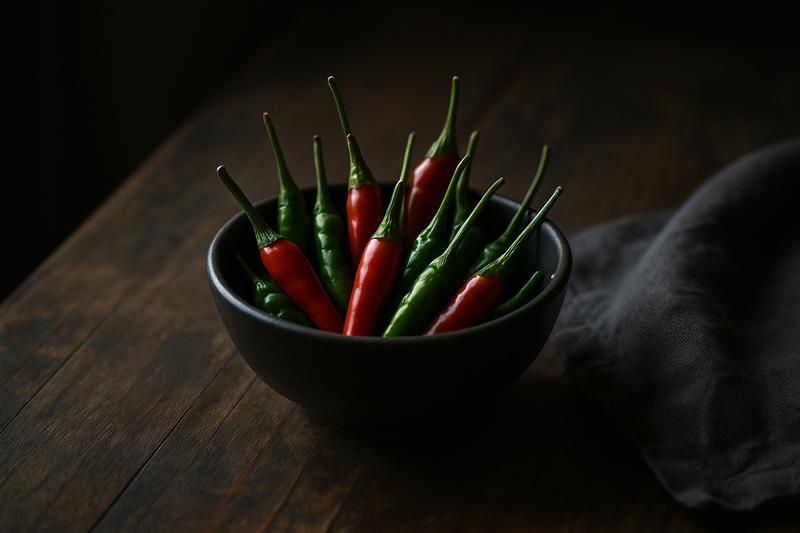
Thai Chili · Photograph
Discover the Thai bird's eye chili health benefits and side effects backed by nutrition science. From heart health and antioxidants to digestion and metabolism, learn how this fiery little pepper fits into a whole-food plant-based diet — and who should use caution.
Key Nutrients
% Daily Value based on 2,000 cal diet
Key active compounds in Thai chili
- Capsaicin — The primary capsaicinoid responsible for heat. Activates TRPV1 receptors (temperature-sensitive pain receptors) on nerve cells, triggering burning sensation, increased circulation, and thermogenesis (heat production in the body).
- Dihydrocapsaicin and related capsaicinoids — Structurally similar compounds that work alongside capsaicin; collectively these make up most of the "pungent fraction" of bird's-eye chili.
- Capsanthin and capsorubin — Red carotenoid pigments (plant pigments in the orange-red color family) with antioxidant activity. These help give Thai red chilies their color and may neutralize harmful reactive oxygen species (unstable molecules that can damage cells).
- Beta-carotene — A provitamin A carotenoid your body converts to vitamin A; supports vision, skin integrity, and immune defense.
- Flavonoids (quercetin, luteolin) — A class of plant polyphenols (protective plant compounds) found in chili peppers that may contribute to anti-inflammatory and vascular-protective effects seen in lab studies.
- Vitamin C — An antioxidant vitamin that supports collagen synthesis, immune function, and iron absorption. Hot chilies, including bird's-eye varieties, are a surprisingly concentrated source per gram.
Prep and pairing ideas
Thai bird's-eye chili works hardest when balanced against fat, acid, and fresh aromatics — the classic Southeast Asian flavor formula.
Three go-to pairings:
- Thai chili + coconut milk + lemongrass — The fat in coconut milk buffers capsaicin's heat while distributing its fat-soluble compounds throughout the dish. Lemongrass adds brightness and digestive-supporting volatile oils. This is the base of green and red Thai curries.
- Thai chili + lime juice + fresh cilantro — Lime's acidity balances the chili's punch and adds vitamin C alongside the chili's own. This trio forms the foundation of Thai dipping sauces and salad dressings like som tum (green papaya salad). Together they create a dish that's high in antioxidants and very low in calories.
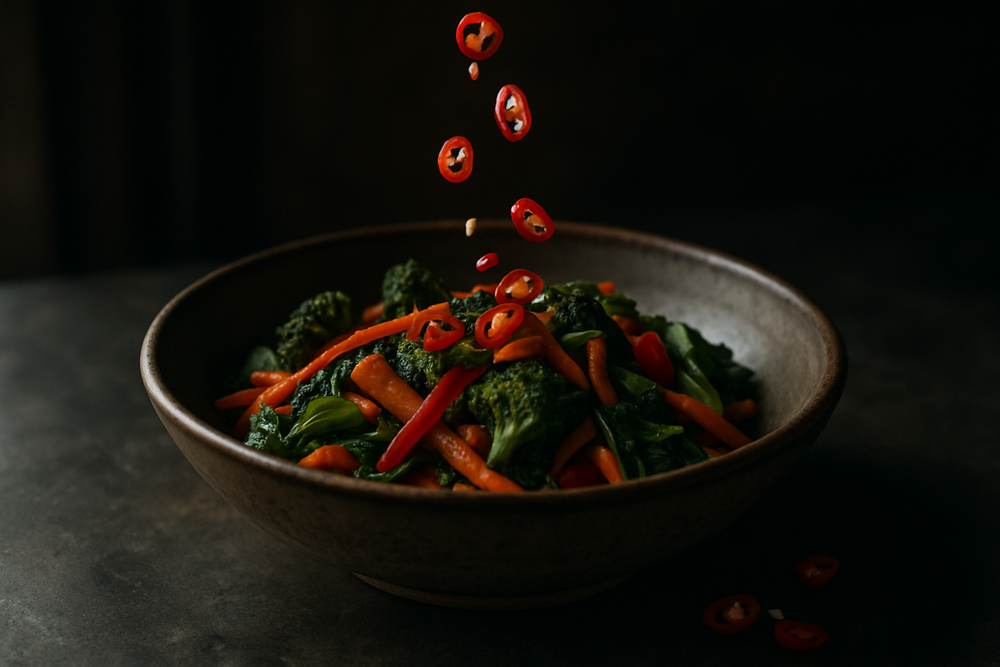
- Thai chili + garlic + tofu or tempeh — Garlic's allicin (a sulfur compound with its own research backing) and chili's capsaicin both target vascular and immune pathways in early research. Combined with plant protein from tofu or tempeh, this pairing makes a nutritionally complete stir-fry with multiple whole-food plant-based wins.
General prep tips:
- Remove seeds and white pith (the membrane inside the chili) to reduce heat without losing much flavor.
- Add chili early in cooking for deeper, more integrated heat; add it late for bright, sharper heat.
- Fresh red bird's-eye chilies are riper and slightly sweeter than green ones; both are nutritionally similar.
- Store fresh chilies in the refrigerator loosely wrapped for up to two weeks, or freeze whole for longer storage without significant loss of capsaicinoids.
Bottom line
Thai bird's-eye chili is a nutritionally lean, phytochemically rich spice that earns its place in a whole-food plant-based diet as much for flavor as for potential health support. The strongest evidence — from large observational cohorts — suggests that regular chili pepper consumption is associated with lower cardiovascular and all-cause mortality. Whether that association reflects a direct protective effect of capsaicin and its companion compounds, or simply the overall dietary patterns of people who cook with chili regularly, remains an open question.
At culinary doses, Thai chili is safe for most healthy adults, pairs beautifully with plant-based staples, and adds essentially no calories while contributing vitamin C, carotenoids, and potent capsaicinoids. For people with digestive conditions, it warrants real caution. For everyone else, using it consistently — not just occasionally — appears to be how the populations in the research actually eat it.
Think of this chili less as a supplement and more as what it is: a deeply flavorful, biologically active whole food that, used wisely, can make a plant-rich diet even more interesting and potentially more health-supportive.
Interested in how spices and anti-inflammatory foods fit into your personal health goals? Explore how ingredients like Thai chili connect to broader wellness patterns at Plantopedia /goals.
How Thai Chili Compares
| Compared with | What's different |
|---|---|
| Thai Chili vs. Jalapeño | Significantly milder with 2,500–8,000 Scoville units versus the Thai chili's 50,000–100,000 units. |
| Thai Chili vs. Serrano Pepper | Larger with thicker walls and a smoky fruitiness, whereas Thai chilis are small, thin, and biting. |
| Thai Chili vs. Habanero | A different species (C. chinense) with a floral, tropical aroma and much higher heat levels. |
Health Benefits
Things to Know
Start with very small amounts.: Bird's-eye chili is significantly hotter than most people are accustomed to. Even half a chili can overwhelm those new to this level of heat.
Wear gloves when handling fresh chilies.: Capsaicin transfers easily to skin and eyes and causes intense burning that is difficult to wash off with water alone (fat or dairy rinses capsaicin more effectively).
GI conditions: Avoid or strictly limit if you have GERD, gastritis, peptic ulcer disease, IBS, Crohn's disease, or ulcerative colitis. Thai chili can trigger or worsen flares.
Children and spice-sensitive adults: Much lower tolerance to capsaicin; not appropriate for young children.
Pregnancy and breastfeeding: Culinary amounts in traditional dishes are generally considered safe, but high-dose capsaicin supplements lack safety data — avoid supplements in these groups.
NSAID users and anticoagulants: NSAIDs (like ibuprofen) already increase GI irritation risk; combining with very spicy food may compound discomfort. Discuss with your prescriber if you use these regularly.
Cardiovascular medications: Very spicy meals can transiently raise heart rate. Specific drug-capsaicin pharmacokinetic interactions are not well documented, but people on multiple heart medications should use common sense and consult their doctor about high-frequency chili use.
Respiratory sensitivity: Capsaicin vapors (from cooking) and high oral doses can irritate mucous membranes and provoke coughing in people with asthma or chronic respiratory conditions.
Prep Ideas
- — Thai chili + coconut milk + lemongrass — The fat in coconut milk buffers capsaicin's heat while distributing its fat-soluble compounds throughout the dish. Lemongrass adds brightness and digestive-supporting volatile oils. This is the base of green and red Thai curries.
- — Thai chili + lime juice + fresh cilantro — Lime's acidity balances the chili's punch and adds vitamin C alongside the chili's own. This trio forms the foundation of Thai dipping sauces and salad dressings like som tum (green papaya salad). Together they create a dish that's high in antioxidants and very low in calories.
- — Thai chili + garlic + tofu or tempeh — Garlic's allicin (a sulfur compound with its own research backing) and chili's capsaicin both target vascular and immune pathways in early research. Combined with plant protein from tofu or tempeh, this pairing makes a nutritionally complete stir-fry with multiple whole-food plant-based wins.
- — Remove seeds and white pith (the membrane inside the chili) to reduce heat without losing much flavor.
- — Add chili early in cooking for deeper, more integrated heat; add it late for bright, sharper heat.
- — Fresh red bird's-eye chilies are riper and slightly sweeter than green ones; both are nutritionally similar.
- — Store fresh chilies in the refrigerator loosely wrapped for up to two weeks, or freeze whole for longer storage without significant loss of capsaicinoids.
Glossary
Shop This Ingredient
Stock your pantry with quality thai chili.
Buy on AmazonAs an Amazon Associate, Plantopedia earns from qualifying purchases. This costs you nothing extra and helps us keep the encyclopedia free.
Frequently Asked Questions
Heart health and circulation This is where the research is most substantial — though still observational. Several large population cohort studies and meta-analyses (studies that pool data from multiple studies) report that people who regularly eat chili peppers have meaningfully lower rates of cardiovascular death compared with those who rarely or never eat them. The Moli-sani Study, a large Italian cohort, found that adults eating chili peppers more than four times per week had roughly 23% lower all-cause mortality and substantially lower rates of death from heart disease and stroke compared with non-consumers. A meta-analysis pooling data from over half a million participants reported approximately 13–26% reductions in all-cause and cardiovascular mortality among regular chili eaters. Important caveat: These studies show association, not causation. Regular chili eaters may also follow overall healthier diets or lifestyles, and researchers cannot fully rule out confounding (when another unmeasured factor explains the result). Proposed biological mechanisms — improved fat breakdown, enhanced blood vessel dilation via TRPV1 activation, and anti-inflammatory effects of capsaicinoids — are supported mainly by small human trials and animal studies rather than large randomized trials. Digestive health and microbiome Evidence here is early and mixed. Capsaicin stimulates sensory nerves in the gastrointestinal (GI) tract, which can increase saliva and gastric juice production and may alter gut motility (the speed at which food moves through the digestive system). Some people find moderate chili consumption helps with sluggish digestion; others experience the opposite. For people with a healthy gut, occasional use of Thai chili in cooking is unlikely to cause lasting harm. For people with gastritis (stomach lining inflammation), peptic ulcers, irritable bowel syndrome (IBS), or gastroesophageal reflux disease (GERD), bird's-eye chili can worsen heartburn, abdominal cramping, and diarrhea — especially given how concentrated its capsaicin load is relative to milder peppers. The gut-microbiome-specific effects of capsaicin are an active area of early-stage research with no firm clinical conclusions yet. Blood sugar and metabolism Some small human feeding studies have found modest improvements in postprandial (after-meal) blood glucose and insulin responses when meals include chili or capsaicin, but results are not consistent across different populations or doses. Mechanistic research suggests capsaicin may improve insulin sensitivity through TRPV1-mediated effects on muscle and fat tissue and by influencing incretin hormones (gut-derived hormones that regulate insulin release after eating). However, clinically meaningful reductions in fasting glucose or HbA1c (a longer-term marker of blood sugar control) with typical culinary amounts of Thai chili have not been demonstrated in robust human trials. This remains an area of genuine scientific interest rather than established benefit. Inflammation and recovery Capsaicinoids and carotenoid pigments in hot chilies show antioxidant and anti-inflammatory activity in cell and animal models. Capsaicin also modulates the release of substance P (a neuropeptide involved in pain and inflammatory signaling). The indirect evidence from large mortality cohorts — where regular chili eaters tend to have lower cardiovascular and cancer-related death rates — hints at a possible anti-inflammatory effect over years of habitual consumption. That said, direct measurement of inflammatory biomarkers like C-reactive protein (CRP) in response to culinary Thai chili doses is rarely included in the large cohort studies, so the anti-inflammatory case, while plausible, is not firmly established in humans at cooking-level doses. Energy metabolism Small short-term human studies suggest that capsaicin can increase thermogenesis (calorie burning through heat production) and fat oxidation (the body's use of fat as fuel) after a spicy meal. The effect is real but modest — often in the range of 50–100 additional calories burned per meal in well-controlled experiments — and tolerance can develop with frequent exposure, blunting the effect over time. Thai bird's-eye chili delivers more capsaicin per gram than most common peppers, so the thermogenic signal may be stronger, but the practical contribution to energy balance at typical culinary amounts is likely small.
Fresh whole chili: The classic form. Sliced or left whole in curries, stir-fries, or salads. Provides the full complement of capsaicinoids, vitamin C, and carotenoids. Vitamin C degrades somewhat with prolonged high-heat cooking, so adding fresh chili near the end of cooking or using it raw preserves more. Dried chili flakes or powder: Drying concentrates capsaicinoids and deepens flavor. Vitamin C is largely lost, but fat-soluble carotenoids and capsaicinoids remain active. A small pinch of dried bird's-eye chili can be very hot — start with less than you think you need. Chili pastes (nam prik, sambal): Traditional preparations that blend fresh or dried Thai chilies with other ingredients. Potent and convenient, though commercial versions can be high in sodium; check labels. Chili oil: Capsaicinoids are fat-soluble and infuse well into oil. Adds heat and flavor, but the preparation is calorie-dense. Good for drizzling rather than cooking in large quantities. Capsaicin supplements: Standardized capsaicin extracts are used experimentally for weight management and pain conditions. Doses are much higher and more concentrated than culinary use; long-term safety data are limited. These are not equivalent to eating Thai chili in food and should only be used under medical guidance.
The everyday plant-based cook looking for depth of flavor without extra sodium or calories Bird's-eye chili delivers bold heat and complexity with essentially zero calories. It replaces or reduces the need for processed sauces and adds phytochemical variety to a vegetable-rich plate. Works beautifully in grain bowls, legume dishes, and roasted vegetable preparations — not just Thai food. The active adult interested in metabolic support Early research suggests capsaicin may modestly support fat oxidation and energy expenditure after meals. Combined with a physically active lifestyle and predominantly whole-food diet, regular moderate chili use may complement — though not replace — exercise and overall calorie balance. Expect subtle, cumulative effects rather than dramatic single-meal changes.
There is no officially established recommended daily intake for Thai chili or capsaicin from food. Here is what the evidence suggests as practical guidance: For those new to heat: Start with ¼ to ½ of one small bird's-eye chili per meal, 2–3 times per week. Allow your GI tract to adapt before increasing. For regular spice eaters: 1–3 chilies per meal, several times per week, is consistent with amounts consumed in populations studied for cardiovascular benefit (roughly defined as eating chili-spiced foods more than once per week, and ideally four or more times per week in the Italian cohort with the most detailed data). For maximum caution: Stick to amounts that don't cause heartburn, abdominal pain, or diarrhea. Your gut is the clearest signal about your personal threshold. Capsaicin supplements: Experimental doses in small trials typically range from 2–10 mg capsaicin per meal. This is not a recommendation; supplement use should only be discussed with a healthcare provider. Children: Not recommended due to intense heat and GI sensitivity. The key principle: regular moderate exposure — not heroic amounts — appears to be what population studies associate with potential benefit. More is not necessarily better, and with Thai bird's-eye chili specifically, the dose-discomfort threshold is lower than for milder peppers.
Quick Answers
Common questions, answered in a line.
Thai chili contains capsaicin, dihydrocapsaicin, and carotenoids like capsanthin and capsorubin. These compounds provide the pepper's characteristic heat and offer antioxidant activity, which helps neutralize unstable molecules that can damage cells.
Thai chilies are a concentrated source of Vitamin C, which supports immune function, collagen synthesis, and iron absorption. They also contain beta-carotene, a provitamin A carotenoid that the body converts to vitamin A to support vision and skin integrity.
To reduce the heat of a Thai chili without losing its flavor, you should remove the seeds and the white pith (the internal membrane). Additionally, adding the chili late in the cooking process provides a bright, sharp heat, while adding it early results in a deeper flavor.
People with digestive conditions such as GERD, gastritis, peptic ulcer disease, IBS, or Crohn's disease should avoid or strictly limit Thai chili. The capsaicin in the peppers can trigger or worsen flares and cause significant gastrointestinal discomfort.
You should wear gloves when handling fresh Thai chilies because capsaicin transfers easily to the skin and eyes, causing intense burning. If you get it on your skin, use fat or dairy to wash it off, as water alone is often ineffective at removing the oils.
Thai chili pairs best with fat, acid, and fresh aromatics, such as coconut milk, lime juice, and lemongrass. Fat helps distribute the pepper's fat-soluble compounds and buffers the heat, while acidity from lime balances the punch and adds extra Vitamin C.
Yes, you can store fresh Thai chilies in the refrigerator loosely wrapped for up to two weeks or freeze them whole for longer periods. Freezing does not cause a significant loss of the beneficial capsaicinoids responsible for the pepper's heat and health properties.
For Readers in the USA
Local context — sourcing, seasonality, and regional notes.
You can find fresh Thai bird's eye chilies at major US grocery chains like Whole Foods and Wegmans, as well as local H Mart locations and Southeast Asian markets. While standard supermarkets often carry them in small plastic clamshells, international markets typically offer them in bulk or larger bags at a lower price point.
In the US, Thai chilies are primarily grown in warm climates like Florida, California, and Texas, where they thrive during the hot summer months. Because they require a long, frost-free growing season, home gardeners in northern states typically plant them in containers after the last spring frost to ensure the soil is sufficiently warm.
While 'Thai chili' and 'Bird's Eye' are used interchangeably in US stores, you may also see them labeled as Prik Ki Nu or occasionally confused with the larger, milder Serrano pepper. True Thai bird's eye chilies are much smaller (about 1-2 inches) and significantly higher on the Scoville scale than the common jalapeño or serrano peppers found in American produce aisles.
The USDA Organic seal ensures that Thai chilies were grown without synthetic fertilizers or prohibited pesticides, which is a common concern for consumers eating the pepper's skin. If organic options are unavailable at your local grocer, the FDA recommends thoroughly rinsing fresh produce under running water to reduce pesticide residues before prep.
AI Clinical Review
- Clearly explains that Thai bird’s eye chilies are extremely high in capsaicinoids, which drive heat and many studied effects.
- Accurately frames the strongest human evidence as observational: regular chili intake is associated with lower cardiovascular and all‑cause mortality but does not prove cause and effect.
- Notes the realistic nutrition profile—very low calories with meaningful vitamin C and carotenoids per gram—and that benefits likely come from consistent culinary use, not large single doses.
- Usefully differentiates forms (fresh, dried, paste, oil) and points out that capsaicinoids persist while vitamin C is heat/air sensitive.
- Metabolic and weight‑management effects appear modest and short‑lived in small trials; tolerance to capsaicin can reduce thermogenesis over time.
- Blood‑sugar benefits are inconsistent across studies; typical cooking amounts have not shown reliable improvements in HbA1c or fasting glucose.
- “Anti‑inflammatory” and microbiome claims are supported mainly by lab or animal data; human biomarker studies at culinary doses are limited.
- Vascular effects (e.g., better endothelial function or blood pressure changes) remain plausible but unproven in large randomized trials.
- Dose and tolerance: Start small and increase only if comfortable. Many people do well with ¼–1 chili at a meal; regular users may tolerate 1–3. Stop or reduce if you experience heartburn, pain, or diarrhea.
- Who should be cautious: Individuals with GERD, gastritis/ulcers, IBS or IBD, young children, and those sensitive to airway irritation (e.g., asthma). Pregnant or breastfeeding people should avoid high‑dose capsaicin supplements.
- Medications and symptoms: Very spicy meals can transiently raise heart rate and may aggravate NSAID‑related GI irritation; those on multiple cardiac or anticoagulant meds should check in with a clinician if using chilies frequently.
- Form matters: Drying concentrates heat but removes most vitamin C; pastes can be high in sodium; chili oil adds calories. Gloves help prevent skin/eye exposure; dairy or fat can blunt burning if needed.
Very hot; handle carefully and use sparingly.
References
- USDA FoodData Central — nutrient data for hot chili peppers (fdc.nal.usda.gov)
- MyPlate — USDA vegetable group guidance including peppers (myplate.gov)
- Meta-analysis: chili pepper intake and all-cause and disease-specific mortality (PubMed 35038885) (pubmed.ncbi.nlm.nih.gov)
- Meta-analysis: spicy chili food and cardiovascular mortality (PubMed 33657876) (pubmed.ncbi.nlm.nih.gov)
- Moli-sani Study cohort: chili pepper consumption and mortality in Italian adults (JACC 2019) (jacc.org)
- AHA Circulation abstract: impact of chili pepper intake on cardiovascular mortality (ahajournals.org)
- PMC meta-analysis: chili pepper intake and all-cause and specific-cause mortality (pmc.ncbi.nlm.nih.gov)
- PLOS One cohort: hot red chili pepper consumption and all-cause mortality in US adults (journals.plos.org)
- ScienceDirect: association of pepper intake with all-cause and specific-cause mortality (meta-analysis) (sciencedirect.com)
- Observatoire Prévention: overview of chili pepper research and cardiovascular disease prevention (observatoireprevention.org)
Know Your Numbers
Eating healthy is a start. Now get to know your biomarkers.
Food changes bloodwork — inflammation, lipids, blood sugar and nutrient status all respond to what you eat. 59 markers from $59.
- Results in 7–10 days at 2,000+ Quest sites
- Licensed provider reviews every result
- One flat price, no membership, HSA/FSA eligible
Educational information only, not medical advice. Panels are ordered and reviewed through our licensed partner; Plantopedia may earn a commission.