Torreya Nuts — health benefits and uses
Traditionally used in Chinese folk practice as a mild vermifuge and snack.
The Short Answer
Torreya nuts are nutrient-dense conifer seeds containing 180 calories and 10 grams of unsaturated fat per ounce. They are uniquely rich in sciadonic acid, a rare fatty acid studied for its potential to support healthy lipid metabolism and heart health.

Torreya Nuts · Photograph
Discover torreya nuts health benefits and side effects in this evidence-based guide. Learn about the nutrition facts for Chinese fei zi, heart-healthy fats, antioxidant compounds, safety tips, and how to enjoy these aromatic conifer seeds as a whole-food snack.
Key Nutrients
% Daily Value based on 2,000 cal diet
Key Active Compounds in Torreya Seeds
- Sciadonic acid (all-cis-5,11,14-eicosatrienoic acid): A non-methylene-interrupted polyunsaturated fatty acid unique to certain conifer seed oils. Animal and cell studies suggest it may modulate lipid metabolism, gut microbiota composition, and inflammatory pathways. No human trials have specifically tested sciadonic acid supplementation.
- Cardamaric acid (cis-5,10,14-eicosenoic acid): Another unusual C20 fatty acid found in T. grandis nut oil. Biochemical data propose it may help manage blood lipids and support cardiovascular health, but evidence remains preclinical.
- Tocopherols (vitamin E family): Fat-soluble antioxidants — particularly alpha-tocopherol — concentrated in the seed oil. They protect cell membranes and LDL cholesterol from oxidation and may support immune function.
- Plant sterols (β-sitosterol, campesterol): Phytosterols that structurally mimic cholesterol. In the broader diet, plant sterols are well documented to modestly reduce intestinal cholesterol absorption and improve LDL levels; torreya oil contains meaningful amounts.
- Polyphenols (flavonoids, phenolic acids): A diverse family of plant chemicals detected in torreya nuts and their processing byproducts. In laboratory settings they show radical-scavenging (antioxidant) activity, though quantities delivered by a normal serving of roasted kernels are not yet well characterized.
- Water-soluble polysaccharides: Complex carbohydrate chains isolated from T. grandis nuts. Preclinical work shows antioxidant and possible immune-modulating properties; human data do not yet exist.
- Linoleic and oleic acids: These are the dominant unsaturated fats in torreya kernels — the same fats prominent in walnuts and olive oil, respectively, and with a stronger evidence base for heart health from human trials in other nuts.
Are Torreya Nuts Good for You? Potential Health Benefits
Heart and Circulation
The most plausible health story for torreya nuts centers on the heart. About 79% of the fat in the kernel is unsaturated, including linoleic acid and oleic acid — fatty acids consistently associated with improved blood cholesterol ratios in large human nut-consumption studies (though those studies used almonds, walnuts, and pistachios, not torreya specifically).
The unique angle is sciadonic acid. In a rat study, T. grandis seed oil rich in sciadonic acid reduced markers of obesity and favorably shifted gut microbiota. A separate animal study on T. nucifera seed oil found reductions in plasma and liver triglycerides (blood fats) and changes in lipid-metabolism enzymes. Cell studies show torreya compounds may inhibit cholesterol esterification (a process involved in plaque buildup) and protect LDL from oxidation. Plant sterols in the oil further add to this plausible but unproven picture.
Bottom line on heart health: Torreya nuts are probably in the same ballpark as other tree nuts for cardiovascular support when eaten as part of a balanced diet. But no controlled human trial has yet confirmed this, so "may support heart health" is the honest framing.
Digestive Health and Microbiome
Traditional East Asian medicine has long used torreya fruit coatings and seed preparations as remedies for constipation, digestive discomfort, and intestinal parasites. Modern science has started investigating these uses. A pericarp (outer seed coat) extract from T. nucifera demonstrated antiparasitic activity against Trichinella spiralis — a roundworm — in mice, lending some credibility to the traditional anthelmintic (anti-parasite) use. The mechanism appears to involve immune modulation rather than direct toxicity to the parasite.
As for everyday digestive support: a 30 g serving provides about 2 g of dietary fiber, which contributes to normal stool consistency, and the fat content helps slow gastric emptying, supporting satiety. The sciadonic acid animal study also noted shifts in gut microbiota composition, though translating this to human digestive benefits requires clinical study. For torreya nuts and digestion, the evidence is interesting but early.
Blood Sugar and Metabolism
No human trials have evaluated torreya nuts for glucose control or diabetes prevention. What the research does show is that T. nucifera seed oil improved the behavior of fat cells (adipocytes) in a lab setting, influencing genes involved in both fat storage and glucose handling. The rat studies on torreya oil also hinted at improved lipid-metabolism enzyme activity, which could indirectly benefit insulin sensitivity.
Practically speaking, torreya nuts are high in fat and low in sugar, giving them a minimal direct impact on blood glucose — a characteristic they share with most tree nuts. People following a lower-glycemic eating pattern may find them a satisfying, slow-burning snack. Specific anti-diabetic claims, however, are premature based on current evidence.
Inflammation and Recovery
In vitro (cell culture) studies on T. nucifera essential oil found strong suppression of key inflammatory messengers — IL-1β, IL-6, nitric oxide, and PGE2 — in immune cells stimulated with a bacterial trigger. A hot-water leaf extract showed antioxidant and anti-melanogenic (skin-tone evening) properties and was non-irritating in a small human skin test. These results point to real anti-inflammatory potential in torreya-derived compounds, but they come from leaf extracts and essential oils, not from eating the roasted kernels.
The tocopherols and polyphenols in the whole nut do provide genuine antioxidant activity — this is among the better-supported claims for torreya nuts antioxidant properties, consistent with similar findings in walnut and pecan research. Whether this translates to measurable reductions in systemic inflammation markers in humans eating torreya nuts as a snack remains unstudied.
What Form of Torreya Is Best? Roasted Kernels vs. Seed Oil vs. Extracts
Whole roasted kernels (fei zi) are the most traditional, accessible, and whole-food-aligned way to eat torreya. Roasting develops their characteristic aroma — earthy, slightly resinous — and softens the texture. This form delivers fat, fiber, protein, minerals, and all the phytochemicals together, as nature packaged them.
Cold-pressed torreya seed oil concentrates the unsaturated fats, tocopherols, and sterols into a cooking or finishing oil. Most of the mechanistic research was conducted on seed oil at doses far higher than you'd get from culinary use, so the oil should be viewed as a culinary ingredient rather than a proven supplement. It can be used similarly to walnut oil — for dressings and low-heat cooking.
Seed coat (pericarp) preparations belong to traditional medicine territory. The antiparasitic data are genuinely interesting but dosing is poorly standardized, and this form of torreya is not a standard food.
Leaf extracts and essential oils are research and cosmeceutical materials, not dietary items.
For most people: roasted whole kernels are the recommended starting point. They are the most studied form for nutritional context, the most widely available in East Asian grocery markets, and the safest in terms of dosing.
Prep and Pairing Ideas
Torreya nuts are most commonly enjoyed simply roasted and salted in China and Japan. If you find raw kernels, roast them at 160–170 °C (320–340 °F) for 12–15 minutes, shaking occasionally, until golden and fragrant. Salt lightly. Let cool completely before sealing — they continue to develop aroma as they cool.
Three practical pairings:
- Torreya nuts + green tea: The mild bitterness and grassy notes of a Longjing (Dragon Well) tea, itself a Zhejiang specialty like torreya, complement the nuts' resinous warmth beautifully. The polyphenols in both foods make this a doubly antioxidant-rich pairing.
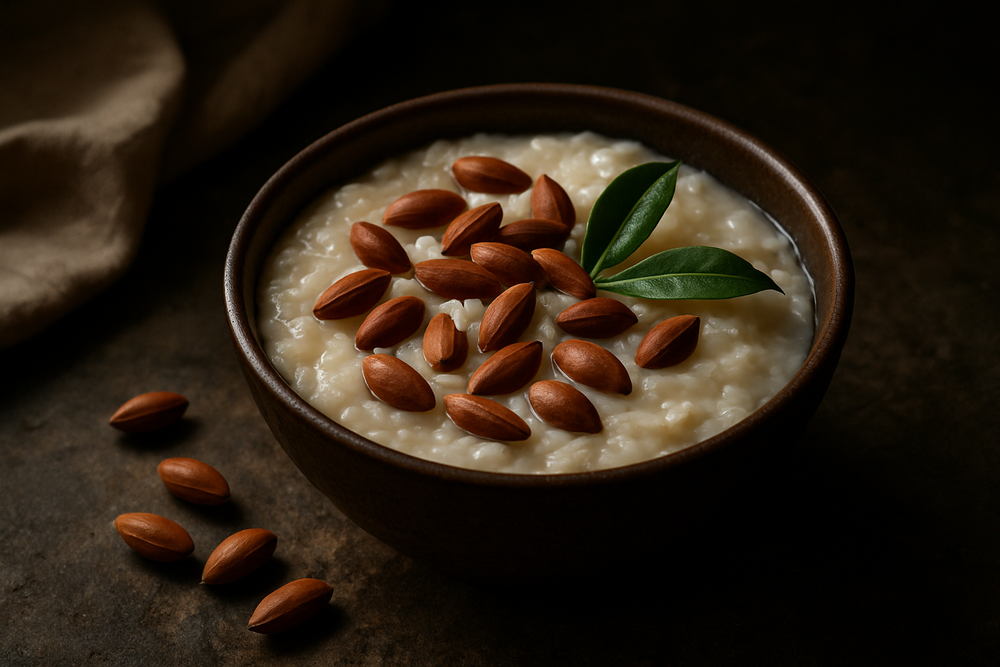
- Torreya nuts + congee (rice porridge): In traditional eastern Chinese cooking, a small handful of torreya nuts is added to congee for textural contrast and fat-soluble nutrient delivery. The slow-cooked starch helps slow the absorption of the nuts' fat, moderating satiety signals.
- Torreya nuts + dark leafy greens (e.g., spinach stir-fry): The fat in torreya nuts significantly enhances the absorption of fat-soluble vitamins (A, K) and carotenoids in dark greens — a principle well established for nuts and seeds generally. Toss a few crushed roasted torreya nuts over stir-fried greens as a finishing crunch.
Bottom Line
Torreya nuts — China's ancient fei zi — are a genuinely interesting whole food that stands on its own as an aromatic, nutrient-dense snack. Their predominantly unsaturated fat profile, combined with unusual fatty acids like sciadonic acid and cardamaric acid, plant sterols, tocopherols, and polyphenols, positions them as a plausible addition to a heart-conscious, plant-forward diet. Traditional uses for digestion and antiparasitic purposes have some early scientific backing, but no human clinical trials have yet confirmed specific health outcomes for torreya nut consumption.
The honest summary: eat them for what they are — a flavorful, whole-food fat source with a rich culinary heritage and a compelling but still-emerging body of research. Buy from reputable sources, confirm species identification, respect portion sizes, and introduce them gradually. If you have tree nut allergies, are pregnant, or take medications affected by vitamin E or plant sterols, check with your healthcare provider first.
How Torreya Nuts Compares
| Compared with | What's different |
|---|---|
| Torreya Nuts vs. Pine Nuts | Torreya nuts are larger with a distinct conifer aroma and unique sciadonic acid. |
| Torreya Nuts vs. Walnuts | Torreya nuts contain more carbohydrates and starch compared to the fat-heavy walnut. |
Health Benefits
Things to Know
Species identification matters: Only Torreya grandis (Chinese torreya) and Torreya nucifera (Japanese kaya) produce commonly eaten edible nuts. Avoid confusing torreya foliage with Taxus (yew) species — yew berries and seeds are toxic. Purchase from reputable specialty or Asian grocery suppliers; do not forage unless you are certain of identification.
Tree nut allergy: If you have a known tree nut or seed allergy, introduce torreya cautiously or avoid it altogether. Cross-reactivity data specific to torreya are not available, but it is prudent to treat it like any unfamiliar tree nut.
Caloric density: At roughly 5–6 kcal per gram, torreya nuts are energy-dense. For weight management, treat them as you would macadamias or pine nuts — delicious in modest portions.
Young children: Whole nuts pose a choking hazard for children under five. Offer only in age-appropriate preparations following pediatric guidance.
Pregnancy and breastfeeding: Culinary amounts of properly identified roasted torreya nuts are likely fine, consistent with general nut-intake guidance. High-dose torreya seed oil or concentrated extracts have not been safety-tested in pregnancy; avoid these.
Fat malabsorption conditions: People with severe gallbladder disease, pancreatic insufficiency, or fat-malabsorption syndromes may experience GI discomfort with any high-fat food, including torreya nuts.
Anticoagulant medications (e.g., warfarin): Torreya seed oil contains tocopherols; very high supplemental vitamin E has a theoretical risk of enhancing bleeding. Normal culinary nut portions are unlikely to be an issue, but high-dose torreya oil supplements warrant caution and discussion with your prescriber.
Cholesterol-lowering medications (statins, ezetimibe): Plant sterols in torreya oil can additively reduce cholesterol absorption — generally a benefit, but worth mentioning to your clinician if you use concentrated torreya oil products alongside these drugs.
Antidiabetic medications: Large dietary changes involving high-fat foods can affect insulin requirements. Discuss significant dietary additions with the clinician managing your diabetes.
Prep Ideas
- — Torreya nuts + green tea: The mild bitterness and grassy notes of a Longjing (Dragon Well) tea, itself a Zhejiang specialty like torreya, complement the nuts' resinous warmth beautifully. The polyphenols in both foods make this a doubly antioxidant-rich pairing.
- — Torreya nuts + congee (rice porridge): In traditional eastern Chinese cooking, a small handful of torreya nuts is added to congee for textural contrast and fat-soluble nutrient delivery. The slow-cooked starch helps slow the absorption of the nuts' fat, moderating satiety signals.
- — Torreya nuts + dark leafy greens (e.g., spinach stir-fry): The fat in torreya nuts significantly enhances the absorption of fat-soluble vitamins (A, K) and carotenoids in dark greens — a principle well established for nuts and seeds generally. Toss a few crushed roasted torreya nuts over stir-fried greens as a finishing crunch.
Glossary
Shop This Ingredient
Stock your pantry with quality torreya nuts.
Buy on AmazonAs an Amazon Associate, Plantopedia earns from qualifying purchases. This costs you nothing extra and helps us keep the encyclopedia free.
Frequently Asked Questions
There is no officially established recommended dose for torreya nuts from clinical trials. The sensible default is to treat them like other tree nuts: about 20–30 g per day (roughly 8–15 kernels depending on size) fits comfortably within general nut-intake guidance and aligns with how they are traditionally consumed as a snack in Zhejiang province. If you are new to torreya nuts, start with a smaller amount — around 10–15 g — for the first week to see how your digestion responds to an unfamiliar high-fat seed. Their fat profile is predominantly unsaturated and generally well tolerated, but individual GI responses to new foods vary. For torreya seed oil: Culinary use as a finishing oil (1–2 teaspoons per day) seems reasonable by analogy with walnut or pine nut oil. High-dose supplemental use is not supported by human safety data. Beyond daily snacking, torreya nuts fit naturally into the broader nut and seed group recommended by USDA MyPlate as part of a varied, plant-forward protein pattern. They are not a substitute for medical treatment of any condition. Looking to build a broader healthy-fat eating pattern? Explore Plantopedia's goals library for curated ingredient combinations organized by health goal.
Quick Answers
Common questions, answered in a line.
Torreya nuts may support heart health because 79% of their fat is unsaturated, including oleic and linoleic acids which are linked to improved cholesterol. They also contain unique compounds like sciadonic acid and plant sterols that may help manage blood lipids and prevent plaque buildup.
The most traditional and safest way to eat torreya is as whole roasted kernels, which provide a balance of fat, fiber, protein, and minerals. You can also use cold-pressed torreya seed oil for culinary purposes like salad dressings, similar to how you would use walnut oil.
Torreya nuts contain several potent antioxidants, including tocopherols (vitamin E), polyphenols, and water-soluble polysaccharides. These compounds help protect cell membranes and LDL cholesterol from oxidation while supporting overall immune function.
Torreya nuts provide about 2 grams of dietary fiber per 30-gram serving and have been used in traditional medicine to address constipation and intestinal parasites. Modern animal studies have also shown that torreya extracts may possess antiparasitic properties.
Torreya nuts have a minimal impact on blood sugar because they are high in healthy fats and very low in sugar. While human trials are lacking, laboratory research suggests that torreya seed oil may influence genes involved in glucose handling and fat storage.
Sciadonic acid is a unique polyunsaturated fatty acid found in conifer seeds like torreya that may help regulate lipid metabolism and gut bacteria. While human trials are pending, animal studies suggest it can reduce markers of obesity and favorably shift the microbiome.
People with tree nut allergies should avoid torreya nuts, and those on anticoagulant or cholesterol-lowering medications should consult a doctor before using concentrated torreya oil. Additionally, ensure you only consume seeds from Torreya grandis or Torreya nucifera, as similar-looking yew seeds are toxic.
For Readers in the USA
Local context — sourcing, seasonality, and regional notes.
Torreya nuts are primarily sold in the U.S. at Asian supermarkets (such as H Mart or 99 Ranch Market) and through specialty online retailers. While rarely found in mainstream grocers like Kroger or Safeway, they are often labeled as "Fei Zi" or "Grand Torreya" in the snack or traditional herb aisles.
In the U.S., torreya nuts are most commonly imported from China or Korea, as commercial cultivation of the Chinese Torreya (Torreya grandis) is extremely limited domestically. While the Florida Torreya (Torreya taxifolia) is native to the Florida Panhandle and Georgia, it is a critically endangered species and is not harvested for food.
Torreya nuts fall under the FDA's general food safety regulations for tree nuts and must be labeled according to the Food Allergen Labeling and Protection Act (FALPA). If you are buying imported seeds, look for the USDA Organic seal if you want to ensure the product meets U.S. federal organic production standards.
Torreya nuts are typically available year-round in dried or roasted form at specialty U.S. retailers, though new harvests usually arrive in late fall. Because they are shelf-stable seeds, their availability does not fluctuate as significantly as fresh American seasonal produce like berries or stone fruit.
AI Clinical Review
- Clearly positions torreya nuts as a whole-food fat source rich in unsaturated fats, vitamin E (tocopherols), and plant sterols—consistent with what supports heart health in other nuts.
- Appropriately highlights unique non–methylene-interrupted fatty acids (NMIFAs—an uncommon type of polyunsaturated fat), while being careful not to overclaim benefits.
- Accurately notes that most supportive data are preclinical (cell/animal) and that human trials specific to torreya are lacking.
- Offers practical, food-first guidance (roasted kernels as the default form; typical portions around a small handful) and sensible culinary uses.
- Emphasizes safe sourcing and species identification to avoid confusion with toxic yew—useful, consumer-relevant safety advice.
- Cardiometabolic outcomes (cholesterol, triglycerides, inflammation) have not been tested in controlled human studies with torreya nuts; current claims are extrapolated from other nuts and seed-oil models.
- The real-world intake and bioavailability of sciadonic and cardamaric acids from a typical serving are not well defined, and dose–response data in humans are absent.
- Antiparasitic and microbiome findings come from pericarp extracts and animal studies; these do not yet translate to proven benefits from eating roasted kernels.
- Nutrient and polyphenol levels vary by cultivar and roasting; standardized nutrition data for widely sold products remain limited.
- Portions: treating torreya like other nuts (about 20–30 g/day) is reasonable; they’re energy-dense, so start smaller if you’re new or managing calories.
- Form matters: roasted whole kernels are the most food-like option; seed oils/extracts have far less human safety/efficacy data—stick to culinary amounts.
- Who should check in first: anyone with tree nut/seed allergies; people who are pregnant or breastfeeding (avoid high-dose oils/extracts); those on anticoagulants (vitamin E considerations), cholesterol-lowering drugs (plant sterols), or diabetes medications.
- Practical safety: buy only clearly labeled edible species (Torreya grandis or T. nucifera); avoid foraging; whole nuts can be a choking risk for young children; high-fat foods may aggravate fat-malabsorption conditions.
Eat only properly prepared culinary torreya; avoid confusing with toxic look-alikes.
References
- USDA MyPlate — Protein Foods Group guidance on nuts and seeds (myplate.gov)
- USDA FoodData Central — General nut and seed nutrition database (fdc.nal.usda.gov)
- Functional compounds of Torreya grandis nuts and their processing byproducts — PubMed review (pubmed.ncbi.nlm.nih.gov)
- Torreya grandis seed oil, sciadonic acid accumulation, and gut microbiota — ScienceDirect animal study (sciencedirect.com)
- Torreya nucifera seed oil and 3T3-L1 adipocyte differentiation — BMC Complementary Medicine (bmccomplementmedtherapies.biomedcentral.com)
- Torreya nucifera pericarp extract against Trichinella spiralis — PubMed (pubmed.ncbi.nlm.nih.gov)
- Composition and unique fatty acids (cardamaric acid) in T. grandis nut oil — Journal of Oleo Science (jstage.jst.go.jp)
- Review of pine nut oil and non-methylene-interrupted fatty acids including sciadonic acid — University of Southampton (eprints.soton.ac.uk)
- Anti-melanogenic and skin irritation evaluation of T. nucifera leaf extract — Pharmazie (storage.imrpress.com)
- Torreya nucifera essential oil: antibacterial and anti-inflammatory effects — International Journal of Pharmacology (scialert.net)
Know Your Numbers
Eating healthy is a start. Now get to know your biomarkers.
Food changes bloodwork — inflammation, lipids, blood sugar and nutrient status all respond to what you eat. 59 markers from $59.
- Results in 7–10 days at 2,000+ Quest sites
- Licensed provider reviews every result
- One flat price, no membership, HSA/FSA eligible
Educational information only, not medical advice. Panels are ordered and reviewed through our licensed partner; Plantopedia may earn a commission.