Urfa Biber — health benefits and uses
Used in Anatolian cooking as a warming culinary spice.
The Short Answer
Urfa Biber is a Turkish chili flake known for its smoky, raisin-like flavor and deep purple hue caused by high anthocyanin content. It offers gentle heat alongside 0.9g of fiber and 72mg of potassium per serving.

Urfa Biber · Photograph
Discover Urfa biber health benefits and how to use it in everyday cooking. Learn what the research says about this smoky Turkish chili's antioxidants, capsaicin content, nutrition facts, and practical tips for adding it to lentils, stews, and roasted vegetables.
Key Nutrients
% Daily Value based on 2,000 cal diet
Key active compounds in Urfa Biber
- Capsaicin and capsaicinoids — The group of pungent compounds responsible for chili heat. They activate TRPV1 receptors (temperature and pain sensors in your nervous system), and in experimental research have shown effects on pain signaling, thermogenesis (heat production), vasodilation (blood vessel widening), and appetite regulation. A Turkish analysis confirmed measurable capsaicin levels in Urfa pepper samples.
- Anthocyanins — Pigmented flavonoids (a type of polyphenol, or plant-based antioxidant molecule) that give Urfa Biber its distinctive dark wine-purple hue. Anthocyanins are associated with cardiovascular and anti-inflammatory effects in population research.
- Carotenoids (including beta-carotene) — Fat-soluble pigments with provitamin A activity. They support vision, immune defense, and act as antioxidants (molecules that neutralize damaging free radicals) in the body.
- Phenolic acids and other flavonoids — A broad class of polyphenolic compounds that modulate oxidative stress and inflammatory cell-signaling pathways.
Prep and pairing ideas
Urfa Biber is one of the most versatile finishing spices in plant-based cooking. Its gentle, slow-building heat and smoky-sweet depth rarely overwhelm; they deepen.
Common pairings:
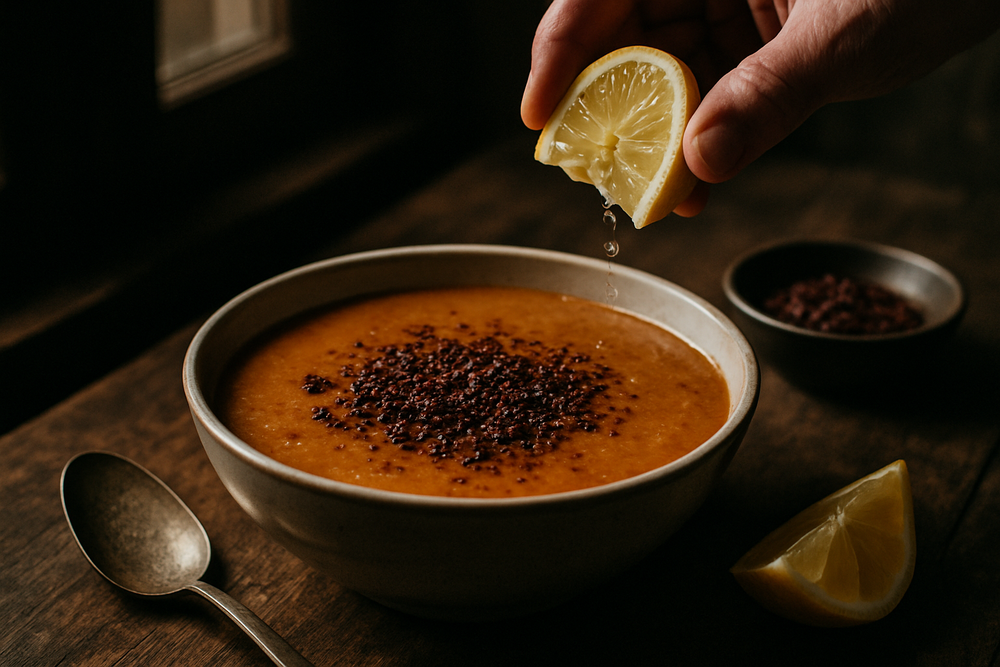
- Red lentils and lemon — Stir a teaspoon of Urfa Biber into a red lentil soup along with garlic and cumin, then finish with a squeeze of lemon. The acidity of the lemon cuts through the smoke and lifts the iron-rich legumes into something genuinely complex.
- Roasted cauliflower and tahini — Toss cauliflower florets with olive oil and Urfa Biber before roasting. Drizzle with tahini and finish with more flakes. The nutty sesame and dark chili smoke are natural partners, and the fat in tahini helps absorb the fat-soluble carotenoids in the spice.
- Labneh or plant-based yogurt — Swirl a generous pinch into thick strained yogurt with a drizzle of olive oil. Use as a dip or dollop beside roasted vegetables. The cool dairy base balances the warmth, making Urfa Biber approachable for spice-cautious eaters.
Other practical uses:
- Sprinkle over hummus, avocado toast, or scrambled eggs (or tofu scramble)
- Fold into tomato-based pasta sauce or shakshuka
- Add to whole grain pilafs with dried fruit and nuts
- Use in spice rubs for tempeh, mushrooms, or baked chickpeas
To explore more Urfa Biber in whole food plant-based cooking, visit Plantopedia Goals for recipe-forward health guides.
Bottom line
Urfa Biber is a genuinely interesting whole-food spice — not because it is a superfood in the marketing sense, but because it combines real phytochemical activity (capsaicin, anthocyanins, carotenoids) with a flavor profile that makes it easy to eat more plants. The research on chili peppers more broadly suggests modest but real signals for cardiovascular health, metabolic support, and anti-inflammatory activity. None of this is specific to Urfa Biber yet, and none of it is a substitute for overall diet quality. But used daily in lentils, stews, roasted vegetables, and dips, it earns its place as a low-calorie, flavor-dense, antioxidant-contributing ingredient in a whole-food, plant-based kitchen.
How Urfa Biber Compares
| Compared with | What's different |
|---|---|
| Urfa Biber vs. Aleppo Pepper | Milder, oil-cured texture with chocolate-raisin notes compared to Aleppos brighter, tart heat. |
| Urfa Biber vs. Cayenne Pepper | Rich in dark anthocyanins and lower heat (4k–8k SHU) than the sharper, bright red Cayenne (30k–50k SHU). |
Health Benefits
Things to Know
GI sensitivity: — If you have GERD, peptic ulcer disease, IBS, IBD, or hemorrhoids, chili can aggravate symptoms. Start with the smallest pinch and build slowly, or avoid if symptoms worsen.
Antihypertensive medications: — Capsaicin can influence blood pressure modestly. If your blood pressure is unstable or heavily medicated, mention significant dietary changes to your prescriber.
Antidiabetic medications: — Chili may affect glucose and appetite slightly. Those on insulin or sulfonylureas (a class of diabetes drugs that lower blood sugar) should monitor for unexpected hypoglycemia (low blood sugar) if making large dietary changes.
Anticoagulants/antiplatelets: — No strong interaction data exists, but very large amounts of spicy food alongside medications like warfarin warrant caution; keep your doctor informed.
Pregnancy and breastfeeding: — Small culinary amounts are generally fine, but if you already experience significant heartburn or reflux during pregnancy, Urfa Biber may aggravate it.
Children: — More sensitive to capsaicin's heat and GI effects; introduce in very small amounts only.
Capsicum allergy: — Rare, but if you have a known allergy to any Capsicum species, avoid this spice.
Topical capsaicin users: — Heavy concurrent use of oral and topical capsaicin products may compound irritation; balance across both forms.
Prep Ideas
- — Red lentils and lemon — Stir a teaspoon of Urfa Biber into a red lentil soup along with garlic and cumin, then finish with a squeeze of lemon. The acidity of the lemon cuts through the smoke and lifts the iron-rich legumes into something genuinely complex.
- — Roasted cauliflower and tahini — Toss cauliflower florets with olive oil and Urfa Biber before roasting. Drizzle with tahini and finish with more flakes. The nutty sesame and dark chili smoke are natural partners, and the fat in tahini helps absorb the fat-soluble carotenoids in the spice.
- — Labneh or plant-based yogurt — Swirl a generous pinch into thick strained yogurt with a drizzle of olive oil. Use as a dip or dollop beside roasted vegetables. The cool dairy base balances the warmth, making Urfa Biber approachable for spice-cautious eaters.
- — Sprinkle over hummus, avocado toast, or scrambled eggs (or tofu scramble)
- — Fold into tomato-based pasta sauce or shakshuka
- — Add to whole grain pilafs with dried fruit and nuts
- — Use in spice rubs for tempeh, mushrooms, or baked chickpeas
Glossary
Shop This Ingredient
Stock your pantry with quality urfa biber.
Buy on AmazonAs an Amazon Associate, Plantopedia earns from qualifying purchases. This costs you nothing extra and helps us keep the encyclopedia free.
Frequently Asked Questions
Because no human trials have studied Urfa Biber specifically, everything here draws on research into chili peppers and capsaicin more broadly. That caveat matters, but it does not make the data irrelevant — Urfa Biber shares the same key active molecules as other Capsicum annuum varieties. Heart and circulation A pooled analysis of prospective cohort studies found that people who ate hot chili regularly had a modestly lower risk of all-cause and cardiovascular mortality compared with those who rarely ate it. Smaller human trials on capsaicin have shown improvements in vasodilation and modest blood pressure effects, possibly through TRPV1-mediated relaxation of blood vessel walls and improved endothelial (inner lining of blood vessels) function. Urfa Biber's anthocyanins and polyphenols add a layer of antioxidant activity that may help reduce oxidative stress — an upstream driver of atherosclerosis (plaque buildup in arteries). Evidence is promising but not yet strong enough to use chili as a primary heart strategy. Digestive health and microbiome Human responses to chili are highly individual. Some studies suggest capsaicin can stimulate gastric enzyme secretion and increase gut motility (the speed at which food moves through the digestive tract), which may aid digestion. The fiber content of dried chili flakes, while modest per teaspoon, adds up across a varied plant-based diet. However, capsaicin can also worsen heartburn, abdominal cramping, and diarrhea in people with GERD, IBS, or inflammatory bowel disease. The net digestive effect depends heavily on your baseline gut health. If you are looking into Urfa biber benefits for digestion and metabolism, start with a small pinch and assess your individual tolerance. Blood sugar and metabolism Several small human trials on red pepper and capsaicin suggest modest improvements in postprandial (after-meal) glucose handling and possible effects on insulin sensitivity, though results are inconsistent. Capsaicin may also slightly increase thermogenesis and energy expenditure — studies on red pepper supplements show a small but measurable calorie-burning effect. Urfa Biber itself has a low carbohydrate load at culinary doses, meaning it will not spike blood sugar directly. These metabolic signals are real but subtle; treat them as adjunctive to overall diet quality, not a primary therapy. Inflammation and recovery Is Urfa biber good for inflammation? The capsaicin and polyphenols in Urfa Biber both have demonstrated anti-inflammatory activity in cell and animal models — reducing production of pro-inflammatory cytokines (signaling proteins that promote inflammation) and neutralizing free radicals. In humans, topical capsaicin is well supported for reducing neuropathic and arthritic pain through nerve desensitization. Oral intake is less studied for systemic inflammation specifically, and the evidence is early. Still, incorporating an antioxidant-dense spice into daily meals as part of a broader whole-food pattern is a reasonable, low-risk strategy that the research broadly supports.
Urfa Biber is almost always sold as coarsely crushed flakes — this is the traditional form and the most practical for everyday cooking. A fine-ground powder is also available and distributes flavor more evenly, though it may feel slightly more intense because of greater mucosal contact. Whole dried Urfa peppers exist but are rare outside Turkey. Flakes vs. powder: Flakes are better for finishing dishes (sprinkled on just before serving), while powder blends more seamlessly into marinades, sauces, and spice rubs. Nutritionally they are equivalent; the difference is texture and intensity of flavor. Supplement form: Isolated capsaicin supplements exist, but they are not the same as eating whole Urfa Biber. Whole flakes deliver the full matrix of capsaicin, fiber, polyphenols, and minerals together — a combination that may behave differently in the body than an isolated extract. High-dose capsaicin supplements should not be used without medical guidance. Buying guide: Look for dark, slightly oily flakes — the deep burgundy-purple color and faint sheen from the sweating process are signs of good quality. Check the ingredient list — quality Urfa Biber should contain only dried Urfa chilies and sometimes salt. Avoid blends with fillers or artificial color. Sodium watch — some commercial products add a notable amount of salt during processing. If you are monitoring sodium, compare labels. Storage — buy in quantities you will use within 6 to 12 months. Store in an airtight jar away from heat and light to preserve color, aroma, and capsaicin content.
There is no established therapeutic dose for Urfa Biber because it has not been studied as a supplement. Culinary guidance is straightforward: Starting point: A small pinch (roughly ¼ teaspoon or about 0.5 g) is enough to notice the flavor without much heat. Good for heat-sensitive individuals. Typical culinary range: 1–2 teaspoons (2–4 g) per dish, used in one or two meals per day. This is where most of the flavor and phytochemical activity from food-level research applies. Upper practical range: Some recipes use up to 1 tablespoon (about 6 g) for a whole pot or pan serving four people — reasonable for most healthy adults. Start low, scale slowly — If your GI system is not used to spicy food, build up over one to two weeks rather than adding large amounts immediately. No benefit to extremes — There is no evidence that eating very large amounts of chili flakes produces proportionally greater health benefits; the risk of GI discomfort increases meaningfully above a few teaspoons.
Quick Answers
Common questions, answered in a line.
Urfa Biber contains capsaicin, anthocyanins, carotenoids (like beta-carotene), and phenolic acids. These active compounds contribute to the spice's dark purple color and provide antioxidant, anti-inflammatory, and metabolic support.
Urfa Biber is a versatile finishing spice that pairs exceptionally well with red lentils, roasted cauliflower, tahini, and plant-based yogurt. You can also sprinkle it over avocado toast, hummus, or tofu scrambles to add a smoky-sweet depth and gentle heat.
Capsaicin, the pungent compound found in Urfa Biber, activates temperature and pain sensors known as TRPV1 receptors in the nervous system. Experimental research suggests this compound may influence pain signaling, thermogenesis, and appetite regulation.
Urfa Biber gets its distinctive dark wine-purple hue from anthocyanins, which are pigmented flavonoids. These plant-based antioxidant molecules are associated with anti-inflammatory and cardiovascular effects in population research.
Urfa Biber can aggravate symptoms for those with GERD, peptic ulcer disease, IBS, IBD, or hemorrhoids. Additionally, its capsaicin content may interact with blood pressure medications or antidiabetic drugs like insulin, so medical consultation is advised.
Urfa Biber contains fat-soluble carotenoids, such as beta-carotene, which the body can absorb more effectively when the spice is paired with healthy fats. Combining the pepper with ingredients like tahini or olive oil helps optimize the uptake of these provitamin A nutrients.
For Readers in the USA
Local context — sourcing, seasonality, and regional notes.
You can typically find Urfa Biber at specialty grocers like Whole Foods Market, spice shops like Penzeys, or through major online retailers like Amazon and Thrive Market. While it is rarely stocked in conventional supermarkets, it is a staple at Middle Eastern and Mediterranean grocers found in most major US metropolitan areas.
Urfa Biber is primarily imported to the US from Turkey, but domestic gardeners in USDA Hardiness Zones 8-11 can grow the heirloom Capsicum annuum peppers during the hot summer months. Because the spice requires a labor-intensive "sweating" and drying process to achieve its dark color, most US consumers rely on professionally processed imports rather than homegrown versions.
In the US, Urfa Biber is often sold under the name "Isot pepper," though it is increasingly labeled by its Turkish name to appeal to the growing domestic interest in regional spices. Some specialty brands may also market it as "cured Aleppo pepper" due to its similar moist texture, though Urfa is distinctively darker and smokier.
When buying Urfa Biber in the US, look for the USDA Organic seal or labels indicating the spice is free from added salt, oils, or artificial colorants. Since the FDA does not specifically regulate the "sweating" process unique to this pepper, choosing reputable brands ensures the moisture content doesn't lead to premature molding in your pantry.
AI Clinical Review
- Clear, accurate description of Urfa Biber’s production, flavor, and moderate heat, with a useful emphasis on how enjoyable spices can support a more plant-forward diet.
- Appropriately frames health claims as extrapolated from broader chili/capsaicin research and not specific clinical trials on Urfa Biber.
- Summarizes key bioactive compounds (capsaicin, anthocyanins, carotenoids) and plausible cardiometabolic and anti-inflammatory signals without hype.
- Practical guidance on culinary dosing (pinch to ~1–2 tsp), quality cues, storage, and the note that some brands include added salt.
- No human trials on Urfa Biber specifically; capsaicin and polyphenol content can vary by cultivar, processing (“sweating”), and storage, so potency isn’t standardized.
- Observational links between chili intake and lower mortality are prone to confounding, and small trials on blood pressure, glucose, and thermogenesis often use purified capsaicin or higher doses than typical cooking.
- Actual anthocyanin/carotenoid intake and bioavailability from teaspoon quantities of dried flakes are not well quantified and may depend on fat co‑ingestion and the food matrix.
- Gut and microbiome effects are highly individual; some people experience symptom relief while others see worsening reflux or IBS symptoms.
- Dosing: starting with ~¼ tsp and building to 1–2 tsp/day is reasonable for most; more isn’t necessarily better and increases GI upset risk.
- Form: flakes vs powder are nutritionally similar; powder disperses more evenly and may feel hotter. Whole-food use differs from high‑dose capsaicin supplements, which should not be used without clinical guidance.
- Caution groups: those with GERD/peptic ulcer/IBS/IBD or hemorrhoids should titrate slowly or avoid during flares; children are more sensitive; pregnancy/reflux may worsen.
- Medications: if you use antihypertensives, insulin/sulfonylureas, or anticoagulants/antiplatelets, culinary amounts are typically safe, but discuss larger, sustained increases with your clinician and monitor symptoms and glucose as relevant.
Moderate heat; use to taste.
References
- USDA FoodData Central — dried red chili peppers (nutrition reference) (fdc.nal.usda.gov)
- Specialty Produce — Urfa Biber Chile Peppers information and facts (specialtyproduce.com)
- Spices Inc — Urfa Biber nutrition facts per 1 tsp (spicesinc.com)
- SnapCalorie — Urfa chili macro and micronutrient breakdown (snapcalorie.com)
- Know the Pepper — Urfa Biber flavor, heat level, and kitchen uses (knowthepepper.com)
- Yeni Şafak / Turkish research — capsaicin content in Urfa and Maraş peppers (yenisafak.com)
- OhMyFacts — 15 facts about Urfa Biber including antioxidants and digestive effects (ohmyfacts.com)
- NIH NCCIH — Hot peppers and capsaicin: safety and interactions overview (nccih.nih.gov)
- Chili pepper consumption and all-cause mortality — pooled analysis of prospective cohorts (peer-reviewed; search PubMed: "chili pepper mortality cohort")
- Effects of red pepper (Capsicum annuum) on energy expenditure and appetite — human trial review (peer-reviewed; search PubMed: "capsaicin thermogenesis human trial")
Know Your Numbers
Eating healthy is a start. Now get to know your biomarkers.
Food changes bloodwork — inflammation, lipids, blood sugar and nutrient status all respond to what you eat. 59 markers from $59.
- Results in 7–10 days at 2,000+ Quest sites
- Licensed provider reviews every result
- One flat price, no membership, HSA/FSA eligible
Educational information only, not medical advice. Panels are ordered and reviewed through our licensed partner; Plantopedia may earn a commission.