Whole Wheat Pasta — health benefits and uses
Plant-based energy base; pair with legumes/vegetables for a complete meal
The Short Answer
Whole wheat pasta is a nutrient-dense grain providing 7g of fiber and 8g of protein per 2 oz dry serving. It retains the entire wheat kernel, offering significantly more magnesium, iron, and B vitamins than refined white pasta.
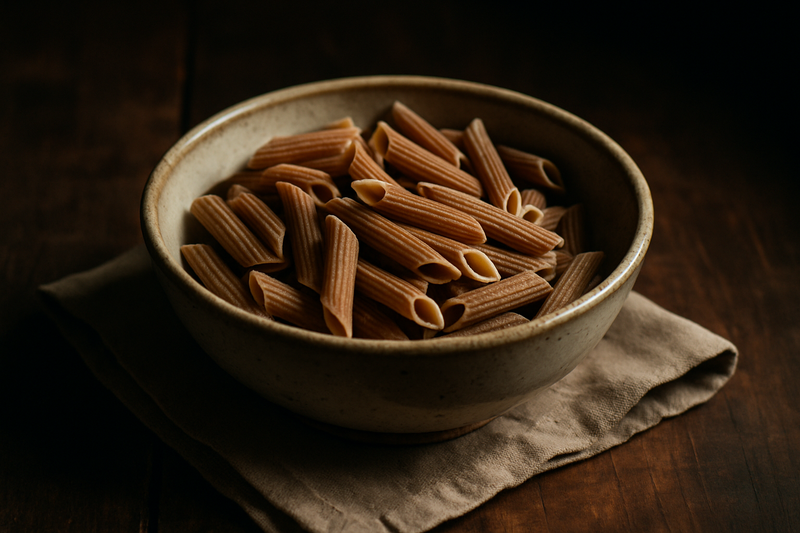
Whole Wheat Pasta · Photograph
Whole wheat pasta is one of the most practical upgrades you can make to a plant-based plate. Unlike regular pasta, which strips away the outer layers of the grain, whole wheat pasta keeps the entire wheat kernel — bran, germ, and starchy centre (endosperm) — intact. The result is a familiar, versatile staple that delivers more fibre, more minerals, and a slower energy release than its refined counterpart.
Key Nutrients
% Daily Value based on 2,000 cal diet
Key active compounds
- Dietary fibre (soluble and insoluble): Slows digestion, feeds beneficial gut bacteria, supports bowel regularity, and blunts blood sugar spikes after meals
- Phenolic compounds (found mainly in the bran fraction): A family of plant antioxidants that may help reduce oxidative stress and chronic low-grade inflammation — oxidative stress refers to cellular damage caused when harmful molecules called free radicals outpace the body's defences
- B vitamins (thiamin, niacin, folate): Co-factors for energy metabolism and nervous system function, retained in greater amounts in whole grain products
- Vitamin E (from the wheat germ): A fat-soluble antioxidant that helps protect cell membranes
- Minerals (magnesium, iron, zinc, potassium): Support blood pressure, oxygen transport, immune function, and fluid balance — all present at higher levels than in refined pasta
Buying guide: what to look for on the shelf
Choosing well at the shop takes about 10 seconds once you know what to scan for:
- Ingredient list: "Whole wheat flour" or "whole durum wheat semolina" must be the first ingredient. If it says "enriched wheat flour" first, it is refined pasta.
- Fibre per serving: Look for at least 4–6 g of fibre per dry 2 oz (56 g) serving. Below 3 g per serving usually signals a blend with significant refined flour.
- Protein per serving: Whole wheat pasta typically offers 7–9 g of protein per dry serving; this is a useful secondary check.
- Shape matters for cooking: Thicker shapes like penne or rigatoni hold sauces well; spaghetti and linguine cook quickly but need a watchful eye to avoid going past al dente.
- Organic vs conventional: Organic whole wheat pasta uses organically grown wheat, but its core nutritional benefits come from being whole grain, not from organic certification. Choose based on personal preference and budget.
- Storage: Store dried whole wheat pasta in a cool, dry cupboard in a sealed container. Unlike refined pasta, whole wheat pasta contains the germ with small amounts of natural oils — in warm or humid conditions it can go stale or develop off-flavours faster. Use within 12 months of purchase for best quality.
Prep and pairing ideas
Whole wheat pasta has a slightly nuttier, earthier flavour than white pasta and holds up well to robust sauces. A few practical ideas:
- Cook al dente. "Al dente" (Italian for "to the tooth") means the pasta still has a slight firmness when bitten. This keeps the glycaemic impact a touch lower than fully soft pasta and improves texture with thicker sauces.
- Pair with lentils or white beans for a complete amino acid profile and an additional fibre boost. A simple whole wheat penne e lenticchie (pasta with lentils) is a classic Italian combination that checks most nutritional boxes.
- Load the bowl with non-starchy vegetables — roasted cherry tomatoes, spinach, courgette, broccoli, or aubergine — to increase volume, micronutrients, and additional fibre without dramatically increasing calories.
- Use a light, flavourful sauce.
How Whole Wheat Pasta Compares
| Compared with | What's different |
|---|---|
| Whole Wheat Pasta vs. White Pasta | Higher fiber (7g) and protein (8g) with an earthy flavor compared to milder, low-fiber white pasta. |
| Whole Wheat Pasta vs. Chickpea Pasta | Higher in protein and gluten-free, but whole wheat provides more B vitamins and a classic pasta texture. |
| Whole Wheat Pasta vs. Spelt Pasta | Slightly lower protein than wheat but offers a distinct nutty flavor and different gluten structure. |
Health Benefits
Things to Know
Celiac disease, wheat allergy, non-celiac gluten sensitivity: Whole wheat pasta contains gluten and wheat proteins — it must be avoided entirely by these groups. Legume-based pasta or certified gluten-free alternatives are appropriate substitutions.
IBS and FODMAP sensitivity: Wheat contains fructans, a type of fermentable carbohydrate that can trigger digestive symptoms (bloating, gas, loose stools) in people with irritable bowel syndrome (IBS) or those following a low-FODMAP diet. Smaller portions may be tolerated; work with a dietitian to find your threshold.
Diabetes and insulin resistance: Whole wheat pasta is preferable to refined pasta for blood sugar management, but it still raises blood glucose. Count total carbohydrates and pair with protein, fat, and non-starchy vegetables for a slower overall glycaemic response. People on insulin or glucose-lowering medications should account for pasta's carbohydrate content when adjusting doses.
Chronic kidney disease (CKD): Some individuals with advanced CKD are advised to limit whole grains due to higher phosphorus and potassium content. This requires individualised guidance from a nephrologist or renal dietitian.
High-fibre adjustment: If you are not used to eating much fibre, increasing whole wheat pasta intake too quickly can cause temporary gas, bloating, or loose stools. Introduce it gradually over 1–2 weeks and drink adequate water.
Medication timing: High-fibre meals can theoretically slow the absorption of some oral medications. As a general precaution, separate highly fibre-rich meals from time-sensitive medications by at least 1–2 hours if your pharmacist or doctor advises it.
Pregnancy: Whole wheat pasta is a safe, nutrient-dense choice during pregnancy and provides folate and iron relevant to fetal development. Check with your midwife or obstetrician if you have specific grain or gluten concerns.

Prep Ideas
- — Cook al dente. "Al dente" (Italian for "to the tooth") means the pasta still has a slight firmness when bitten. This keeps the glycaemic impact a touch lower than fully soft pasta and improves texture with thicker sauces.
- — Pair with lentils or white beans for a complete amino acid profile and an additional fibre boost. A simple whole wheat penne e lenticchie (pasta with lentils) is a classic Italian combination that checks most nutritional boxes.
- — Load the bowl with non-starchy vegetables — roasted cherry tomatoes, spinach, courgette, broccoli, or aubergine — to increase volume, micronutrients, and additional fibre without dramatically increasing calories.
- — Use a light, flavourful sauce.
Shop This Ingredient
Stock your pantry with quality whole wheat pasta.
Buy on AmazonAs an Amazon Associate, Plantopedia earns from qualifying purchases. This costs you nothing extra and helps us keep the encyclopedia free.
Frequently Asked Questions
Most of the strongest research looks at whole grains as a broad food category rather than pasta specifically. Where pasta-specific studies exist, they are noted. The overall picture is consistent: replacing refined grains with whole grains is one of the most consistently supported dietary habits in nutrition science. Heart and circulation Large observational studies and meta-analyses (studies that pool data from many trials) show that people who eat around 2–3 servings of whole grains per day have roughly 20–30% lower risk of cardiovascular disease and stroke compared to those eating mostly refined grains. One review of 10 studies found that three 1-oz servings of whole grains daily was associated with about a 22% lower risk of heart disease. The mechanisms researchers point to include: higher fibre intake lowering LDL ("bad" cholesterol), the mineral magnesium supporting healthy blood pressure, and antioxidant compounds reducing arterial inflammation. Whole wheat pasta, as a 100% whole grain food providing this same fibre and mineral profile, fits within this pattern — though most trials were not pasta-specific. Digestive health and microbiome A cooked cup of whole wheat pasta delivers about 5 g of dietary fibre — roughly twice the amount in the same portion of white pasta. This fibre does two key jobs: it adds bulk to stool (helping prevent constipation) and it feeds the beneficial bacteria in your large intestine (your gut microbiome — the community of trillions of microbes living in your digestive tract that influence immunity, mood, and metabolism). Research on whole grain intake consistently links it to better bowel regularity and healthier digestive function. If you are switching from white pasta, start with a smaller portion and increase gradually to avoid temporary gas or bloating as your gut adjusts. Blood sugar and metabolism Whole wheat pasta has a lower glycemic index (GI) than refined pasta — glycemic index is a scale that ranks how quickly a carbohydrate-containing food raises blood glucose after eating, from 0 to 100. The intact bran and higher fibre content of whole wheat pasta slow the digestion and absorption of its carbohydrates, producing a smoother blood sugar curve. Population-level data suggest that regularly choosing whole grains over refined grains is associated with around a 30% lower risk of developing type 2 diabetes when at least 2 servings per day are consumed. For people already managing blood sugar, whole wheat pasta is generally a better choice than refined pasta — but it still contains meaningful carbohydrates and should be portion-controlled within an overall balanced meal. Evidence directly comparing whole wheat pasta to white pasta on glycemic outcomes is more limited than the evidence for whole grain breads and cereals, so confidence here is rated moderate rather than strong. Inflammation and recovery The bran of whole wheat pasta contains phenolic compounds — plant antioxidants — that are largely stripped away in refined flour. Reviews of human dietary research suggest that diets rich in whole grains are associated with lower markers of chronic inflammation (biomarkers like CRP, or C-reactive protein, a protein the liver releases during systemic inflammation) compared to refined-grain diets. Direct randomised trials specifically on whole wheat pasta and inflammation are limited; most of the evidence is extrapolated from broader whole-grain research. This area is best characterised as emerging — promising, but not yet confirmed by robust pasta-specific trials. Energy and physical performance As an energy-dense carbohydrate source with a more gradual glucose release than white pasta, whole wheat pasta is a practical base for athletes and active people who need sustained fuel without sharp energy spikes. The iron content supports oxygen transport to working muscles, and magnesium plays a role in muscle function and recovery.
Is 100% whole wheat pasta always the better choice? For maximising fibre, micronutrients, and phytochemicals, 100% whole wheat pasta is the gold standard. It is milled entirely from whole wheat flour that retains all three kernel fractions. Look for "whole wheat flour" or "whole durum wheat semolina" as the first (and ideally only) ingredient on the label. Whole-grain blend pastas mix some whole wheat flour with refined flour. They sit between white and whole wheat pasta in terms of nutrition — better than purely refined, but not delivering the full whole-grain benefit. Labels can be misleading: a product calling itself "multigrain" or even "made with whole grain" may contain only a small percentage of whole grain flour. Enriched refined pasta is made from refined flour with added vitamins and minerals to partially replace what milling removes. It still lacks fibre and phytochemicals. Quick label tip: The first ingredient should say whole wheat flour or whole durum wheat. If "enriched wheat flour" or "semolina" appears first, the product is predominantly refined, regardless of what the front of the pack claims.
Quick Answers
Common questions, answered in a line.
Whole wheat pasta is nutritionally superior because it retains the entire wheat kernel, including the bran, germ, and endosperm. This preservation provides significantly higher levels of dietary fibre, B vitamins, Vitamin E, and essential minerals compared to refined pasta.
Cook whole wheat pasta "al dente" so that it retains a slight firmness when bitten. This cooking method helps maintain a lower glycaemic impact and ensures the texture holds up well when paired with robust, plant-based sauces.
To verify pasta is truly whole grain, ensure "whole wheat flour" or "whole durum wheat semolina" is listed as the first ingredient. Additionally, check the label for at least 4–6 grams of fibre per 56g dry serving to ensure it is not a refined blend.
Whole wheat pasta is a good choice for blood sugar management because its high fibre content and phenolic compounds help blunt glucose spikes after meals. However, it still contains carbohydrates and should be paired with protein and healthy fats for a stable glycaemic response.
Whole wheat pasta contains natural oils in the wheat germ, meaning it can go stale or develop off-flavours faster than refined pasta. It is best stored in a cool, dry cupboard within a sealed container and consumed within 12 months of purchase.
Whole wheat pasta contains gluten and wheat proteins, which means it must be avoided by anyone with Celiac disease or wheat allergies. Those with IBS may also find the fructans in wheat trigger bloating or gas, necessitating smaller portions or specific alternatives.
To create a nutritionally complete meal, pair whole wheat pasta with lentils or white beans to achieve a full amino acid profile. Adding non-starchy vegetables like spinach, broccoli, or roasted tomatoes will further increase the dish's volume and micronutrient density.
For Readers in the USA
Local context — sourcing, seasonality, and regional notes.
In the United States, look for the "100% Whole Grain" Stamp from the Whole Grains Council to ensure the product contains a full serving of whole wheat. This yellow-and-black stamp is a reliable voluntary labeling tool used by American manufacturers to help shoppers distinguish true whole grain products from those made with refined flour blends.
Whole wheat pasta is readily available at major US retailers like Walmart, Kroger, and Albertsons, as well as specialty grocers such as Whole Foods Market or Trader Joe's. Most national brands, including Barilla and Ronzoni, offer whole wheat lines, often positioned as a healthier "Better-for-You" option in the pasta aisle.
Most wheat used for US pasta is grown in the "Wheat Belt" across states like North Dakota, Montana, and Kansas, which lead the nation in durum and hard red winter wheat production. Because dried pasta is a shelf-stable product, it is available year-round in every region of the United States, regardless of the local growing season.
While the USDA does not require whole wheat pasta to be organic, choosing "USDA Organic" certified brands ensures the wheat was grown without synthetic pesticides or fertilizers. For Americans focused on health, the primary benefit remains the whole grain content, though organic varieties are popular at farmers markets and health food cooperatives.
AI Clinical Review
- Clearly explains what makes whole wheat “whole” (bran, germ, endosperm) and why this preserves fiber, minerals, and phytochemicals compared with refined pasta.
- Accurately reflects the evidence that higher whole‑grain intake is linked to lower cardiovascular and type 2 diabetes risk, and that fiber supports bowel regularity and a healthier gut microbiome.
- Provides realistic nutrition figures per cooked cup and notes the protein–lysine gap, with a practical tip to pair with legumes.
- Offers useful label-reading and storage guidance that helps shoppers choose 100% whole wheat products and keep quality high.
- Many benefits cited come from studies on whole grains as a category; pasta‑specific randomized trials are fewer, so effect sizes for whole wheat pasta alone are less certain.
- Glycemic impact varies with pasta shape, particle size, and cooking time (e.g., al dente vs very soft), so “lower GI” is a general trend rather than a guarantee for every product or preparation.
- Claims around reduced inflammation mostly derive from observational data and mixed biomarker results; antioxidant (phenolic) activity in humans is promising but not definitive.
- Mineral bioavailability can be influenced by phytic acid in bran; the real-world impact on iron and zinc status depends on overall diet (e.g., vitamin C–rich foods can improve absorption).
- Gluten: Whole wheat pasta is not suitable for celiac disease, wheat allergy, or diagnosed non‑celiac gluten sensitivity; low‑FODMAP eaters with IBS may need smaller portions due to wheat fructans.
- Blood sugar: A cooked cup still provides meaningful carbohydrate; people with diabetes or insulin resistance should watch portions, pair with protein/veg/fats, and adjust medications with clinician guidance.
- Kidney disease: Whole grains contain more potassium and phosphorus; those with moderate to advanced CKD should confirm appropriate portions with a renal clinician.
- Practical use: Increase fiber gradually with adequate fluids to minimize GI discomfort; store in a cool, dry, sealed container because the wheat germ’s natural oils can go stale sooner than refined pasta.
For grain products, clarify whole-grain vs refined where relevant.
References
- PubMed — Wholegrain vs. refined wheat bread and pasta. Effect on postprandial glycemia, appetite, and subsequent ad libitum energy intake in young healthy adults (pubmed.ncbi.nlm.nih.gov)
- PubMed — Effects on satiation, satiety and food intake of wholegrain and refined grain pasta (pubmed.ncbi.nlm.nih.gov)
- PMC, National Library of Medicine — Development of Novel Pasta Products with Evidence Based Impacts on Health-A Review (pmc.ncbi.nlm.nih.gov)
- PubMed — Algae Incorporation and Nutritional Improvement: The Case of a Whole-Wheat Pasta (pubmed.ncbi.nlm.nih.gov)
- USDA FoodData Central — USDA FoodData Central (fdc.nal.usda.gov)
Know Your Numbers
Eating healthy is a start. Now get to know your biomarkers.
Food changes bloodwork — inflammation, lipids, blood sugar and nutrient status all respond to what you eat. 59 markers from $59.
- Results in 7–10 days at 2,000+ Quest sites
- Licensed provider reviews every result
- One flat price, no membership, HSA/FSA eligible
Educational information only, not medical advice. Panels are ordered and reviewed through our licensed partner; Plantopedia may earn a commission.