Za'atar — health benefits and uses
Flavor-first apothecary angle; use food amounts rather than supplement claims
The Short Answer
Za'atar is a Middle Eastern spice blend typically made from dried thyme, oregano, marjoram, toasted sesame seeds, and tart sumac. It is traditionally eaten by dipping flatbread into olive oil and then into the spice mixture, or used as a dry rub for roasted

Za'atar · Photograph
Za'atar (Origanum syriacum and related species, though the blend itself is not a single plant) is one of the oldest seasoning traditions in the world. Across Lebanon, Palestine, Jordan, Syria, and Israel, it sits on nearly every breakfast table — a small bowl of dried herb blend, a pour of olive oil, and a piece of flatbread. It is at once pantry staple, cultural inheritance, and, increasingly, a favorite of cooks exploring Mediterranean-style eating far beyond the Levant.
Key Nutrients
% Daily Value based on 2,000 cal diet
Key active compounds
Za'atar blends together several plant-derived ingredient groups, each bringing its own character:
- Aromatic essential oils — Volatile (meaning they evaporate and reach your nose quickly) compounds found naturally in thyme, oregano, and marjoram. They give za'atar its distinctive scent and are studied in laboratory settings for antioxidant and antimicrobial properties, though za'atar-specific human trials are not yet available.
- Plant polyphenols from herbs and sumac — Non-nutrient plant compounds that contribute color, tartness, and antioxidant capacity. Sumac in particular is one of the most polyphenol-dense spices in the Eastern Mediterranean pantry. In the kitchen, these polyphenols mainly mean flavor and a deep reddish hue.
- Lignans and plant fats from sesame seeds — Toasted sesame seeds bring a small dose of healthy unsaturated fats, lignans (plant compounds with weak estrogen-like activity studied in cancer prevention research), and a nutty richness that rounds out the blend.
A note on terms: Polyphenols are naturally occurring plant chemicals — not vitamins or minerals — that act as antioxidants, meaning they help neutralize unstable molecules in the body. Volatile compounds simply means the aromatic chemicals that easily turn into vapor (hence the smell).
Buying guide
Za'atar quality varies enormously, and a few label checks go a long way.
- Ingredients list: Wild thyme, thyme, or oregano should appear first or second. Sumac (the actual berry, not citric acid alone) should be present. Sesame seeds should be listed — if they are absent, the blend will lack body and nuttiness.
- Sodium content: Compare brands. Some commercial blends list salt as the second ingredient. If you are watching sodium, look for "low-sodium" versions or make your own so you control the salt.
- Freshness: Buy from stores with high turnover. Dried herb blends degrade after 6–12 months. A bright, resinous aroma when you open the jar is a good sign; a dusty, flat smell means it has lost most of its aromatic oils.
- Regional styles: Palestinian za'atar tends to be earthy and heavily herbed; Lebanese versions are often more sesame-forward and slightly lighter in color; Syrian blends can be tangier with more sumac. Exploring a few styles is half the fun.
- Sesame-free options: Available from specialty spice sellers if allergy is a concern — check labels carefully and look for dedicated allergen-free facilities.
Prep and pairing ideas
Za'atar is one of the most versatile seasonings in a plant-forward kitchen. Here are the pairings that work especially well and why:
Za'atar + olive oil + flatbread or sourdough The most ancient and honest pairing. The oil carries the fat-soluble aromatic compounds directly to your palate, sesame adds crunch, and sumac cuts the richness with brightness. Nutritionally, you are getting healthy fats, polyphenols, and a satisfying meal anchor — especially if paired with vegetables or a protein like labneh or eggs.
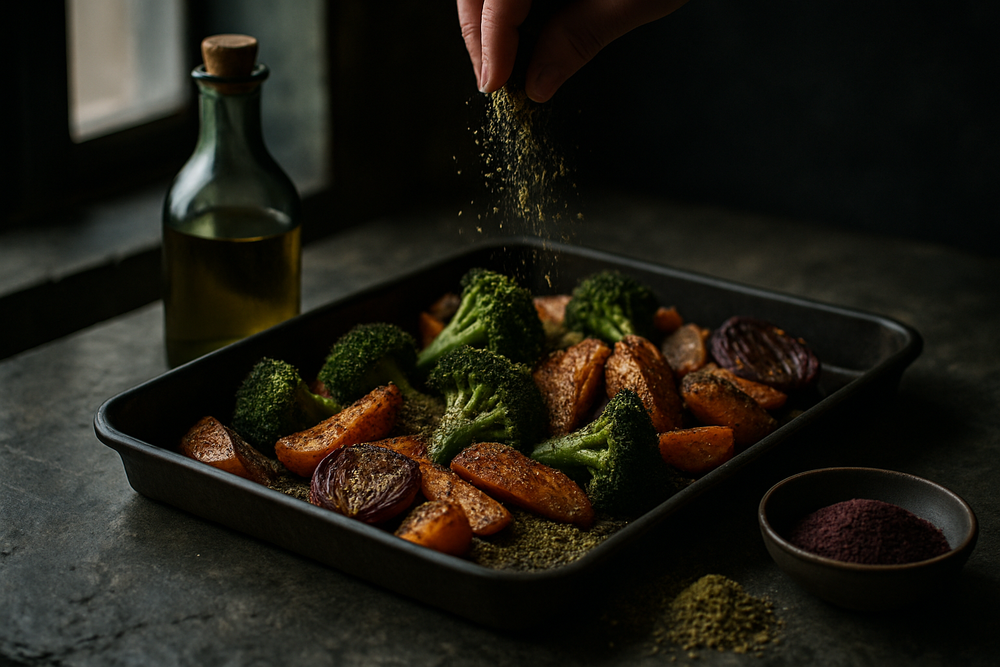
Za'atar + roasted vegetables (especially cauliflower, sweet potato, or eggplant) Toss vegetables in olive oil, sprinkle za'atar over the top in the last 10 minutes of roasting (adding it too early causes bitterness), and finish with a squeeze of lemon. The tangy-herby notes complement the natural caramelized sweetness of roasted vegetables, making it much easier to eat a large variety of them in one sitting.
Za'atar + hummus or labneh A classic mezze move — spread hummus or labneh in a shallow bowl, drizzle with olive oil, and dust generously with za'atar. This combination brings together plant protein (from chickpeas), probiotics (from strained yogurt), healthy fats, and the polyphenols from the spice blend, all in a dish that takes about three minutes to assemble.
Bottom line
Za'atar is not a medicine
How Za'atar Compares
| Compared with | What's different |
|---|---|
| Za'atar vs. Dukkah | Za'atar is a blend of herbs, sesame, and tart sumac, whereas Dukkah is nut-based (usually hazelnut). |
| Za'atar vs. Oregano | Za'atar is a tangy, nutty blend, while Oregano is a single herb with a bitter, peppery profile. |
Health Benefits
Things to Know
Sesame allergy: Sesame is a top-nine allergen in the US and is present in virtually all traditional za'atar blends. Anyone with a sesame allergy should avoid standard za'atar or seek verified sesame-free products.
Herb allergies: Za'atar contains plants from the Lamiaceae (mint) family — thyme, oregano, marjoram. If you have known reactions to these herbs, proceed with caution.
Sodium sensitivity: People managing high blood pressure, kidney disease, or heart failure should check the sodium content of commercial blends and may prefer low-sodium or homemade versions.
Digestive sensitivity: Sumac is tart and acidic; aromatic herbs can be potent. If you have active acid reflux or a very sensitive gut, start with a small pinch and see how your body responds.
Anticoagulant medications: Large amounts of sesame or concentrated herb products may theoretically interact with blood-thinning medications like warfarin, though the small culinary amounts in za'atar are unlikely to be clinically significant. If you are on these medications and significantly increasing your intake of any herb or seed, a quick check with your pharmacist is a sensible step.
Pregnancy: Za'atar as a culinary seasoning in normal food amounts is generally considered safe during pregnancy. Consuming it in very large, supplement-like quantities is a different question — but that is not how za'atar is typically eaten.
Children and multiple food allergies: Introduce mixed spice blends containing sesame and multiple herbs gradually, guided by an allergist if your child has a history of food allergies.
Shop This Ingredient
Stock your pantry with quality za'atar.
Buy on AmazonAs an Amazon Associate, Plantopedia earns from qualifying purchases. This costs you nothing extra and helps us keep the encyclopedia free.
Frequently Asked Questions
Here is the honest picture: za'atar has not been studied as a standalone health intervention in rigorous human clinical trials. Most of what we know about its potential benefits comes from the known properties of its individual ingredients, traditional use across generations, and the broader research on Mediterranean-style dietary patterns. With that context, here is how it fits into the picture. Heart and circulation Za'atar is a staple of Mediterranean-style eating, a dietary pattern consistently associated with lower rates of cardiovascular disease in large population studies. Using za'atar as your go-to seasoning can make olive oil, vegetables, and legumes more appealing — the building blocks of that pattern. The blend itself is not a cardiovascular drug, but as a flavor tool it can support heart-healthy meal construction by replacing heavier, higher-sodium sauces and dressings. Digestive health and microbiome Across the Levant, za'atar is often eaten at breakfast with bread, yogurt, and vegetables, and is culturally associated with feeling light and comfortable after eating. There are no controlled studies on za'atar and gut health specifically. However, the herbs it contains — thyme, oregano, marjoram — have been studied individually for their aromatic compounds, and diets rich in varied plant-based herbs and spices are associated with greater gut microbiome diversity. The microbiome refers to the community of bacteria and other microorganisms living in your digestive tract, increasingly linked to overall health. At a practical level, if za'atar helps you eat more fiber-rich plant foods, your gut bacteria will likely thank you. Blood sugar and metabolism No human trials have tested za'atar for blood sugar control. Its indirect contribution is more interesting: as a deeply satisfying seasoning, it can make lentils, roasted chickpeas, and fiber-dense vegetables genuinely craveable. High-fiber meals tend to have a lower glycemic impact — meaning they raise blood sugar more slowly — compared with lower-fiber, more processed alternatives. Za'atar does not lower blood sugar on its own, but it is a useful flavor tool for building meals that do. Inflammation and recovery Za'atar's component herbs and sumac contain polyphenols and aromatic compounds that laboratory research has linked to anti-inflammatory activity. The honest framing here is that these are mostly test-tube findings; we cannot currently say that eating za'atar measurably reduces inflammation in humans. Traditional medicine across the Eastern Mediterranean has long treated za'atar as a tonic and restorative food, which reflects generations of practical observation even if it precedes the language of clinical trials. A note on cultural wisdom and cognitive tradition In Levantine food culture, there is a long-standing association between eating za'atar at breakfast and starting the day with mental clarity and energy. This is experiential and cultural rather than clinically proven, but it is worth noting: a satisfying, herb-rich, plant-forward breakfast that you actually enjoy eating is a genuinely good thing for your daily routine, whatever the mechanism.
Za'atar is almost always used in two ways, and both are worth having in your repertoire. Dry spice blend (classic): A jar of good-quality za'atar is the most flexible form. Sprinkle it on finished dishes, use it as a dry rub before roasting, or mix into dressings. Look for blends that list whole or ground sumac (not just "citric acid" as a substitute), dried thyme or wild thyme as a primary ingredient, and toasted sesame seeds. Freshness matters — dried herbs lose their aromatic oils over time, so smell the blend before buying if you can. Za'atar in olive oil (mezze style): Mix two to three parts za'atar with one part good extra-virgin olive oil in a small bowl. The oil blooms the aromatic compounds and binds everything into a dippable paste. This is the most traditional serving method and the one that best showcases the blend's complexity. As a finishing sprinkle: Added at the end of cooking rather than during, so the sesame seeds stay nutty and the herbs stay bright rather than becoming bitter from prolonged heat.
Za'atar is a culinary seasoning, not a supplement, and there is no established therapeutic or recommended daily dose. In everyday cooking: As a finishing sprinkle: A pinch to one teaspoon per serving is typical. As a dip (za'atar in olive oil): One to two tablespoons of the blend mixed with oil, shared among two to four people, is the traditional approach. As a dry rub or marinade ingredient: One to two teaspoons per portion works well before roasting or grilling. If you are new to za'atar, start with a modest amount — sumac can be quite tart and the aromatic herbs are potent. Most people find they gradually increase how much they use as they become accustomed to the flavor profile. There is no upper culinary limit for healthy adults, but if you are using a salty commercial blend daily, monitoring total sodium intake makes sense.
Quick Answers
Common questions, answered in a line.
Za'atar is a traditional Middle Eastern seasoning blend primarily composed of dried wild thyme or oregano, tart sumac, and toasted sesame seeds. Traditional regional styles vary; for example, Palestinian blends are often earthy and herb-heavy, while Lebanese versions may be more sesame-forward.
To identify high-quality za'atar, look for a blend where thyme or oregano is the first ingredient and check for a bright, resinous aroma. Avoid blends that use citric acid as a substitute for real sumac, and check the salt content to ensure it is not used as a primary filler.
Yes, traditional za'atar almost always contains toasted sesame seeds, which are one of the top nine allergens. Individuals with sesame allergies should avoid standard blends and look for specialty sesame-free versions from dedicated allergen-free facilities.
You can use za'atar by mixing it with olive oil for dipping bread, dusting it over hummus or labneh, or tossing it with roasted vegetables like cauliflower and eggplant. For the best flavor when roasting, add the spice blend during the last 10 minutes of cooking to prevent the herbs from becoming bitter.
Za'atar provides antioxidant and antimicrobial benefits through aromatic essential oils found in its herbs, along with healthy unsaturated fats and lignans from sesame seeds. Additionally, the sumac in the blend is one of the most polyphenol-dense spices available in the Eastern Mediterranean pantry.
People managing high blood pressure or kidney disease should be cautious of za'atar's sodium content, as some commercial blends list salt as a primary ingredient. Those with acid reflux may also be sensitive to the tart, acidic nature of the sumac used in the blend.
Most dried za'atar blends maintain their quality for approximately 6 to 12 months before the aromatic oils begin to degrade. A flat or dusty smell is a primary indicator that the seasoning has lost its freshness and flavor.
For Readers in the USA
Local context — sourcing, seasonality, and regional notes.
You can find za'atar at major US grocery chains like Whole Foods and Trader Joe’s, as well as specialty Middle Eastern markets and spice shops. While standard supermarkets often stock it in the international or spice aisle, purchasing from Mediterranean grocers often ensures a fresher, more authentic blend with higher herb-to-salt ratios.
While the Origanum syriacum herb is native to the Levant, gardeners in USDA hardiness zones 9-11 can grow it as a perennial, while those in cooler climates grow it as a summer annual. Most za'atar components found in the US are imported, but domestic boutique herb farms in California and the Southwest have begun cultivating these specific varieties for local markets.
When buying za'atar in the US, look for the USDA Organic seal to ensure the herbs and sesame seeds were grown without synthetic pesticides or GMOs. Additionally, since za'atar is a blend, US food labeling laws require that common allergens like sesame—which is now a major FDA-regulated allergen—be clearly disclosed on the packaging.
AI Clinical Review
- Clearly explains that za’atar is a blend (not a single herb) and that its main value is as a flavor tool that helps people enjoy more vegetables, legumes, and olive‑oil–based dishes.
- Accurately notes that there are no rigorous human trials on za’atar itself; any potential benefits are inferred from its ingredients and from Mediterranean-style eating patterns.
- Summarizes key constituents (aromatic oils, polyphenols, sesame lignans) without overstating their clinical relevance at culinary doses.
- Offers practical guidance on forms and use (finishing sprinkle, olive‑oil dip) and flags that sodium can vary widely across commercial blends.
- Appropriately highlights sesame as a common allergen and frames pregnancy safety in normal culinary amounts.
- Cardiometabolic benefits are best attributed to the overall dietary pattern; we don’t have trials showing za’atar alone improves cholesterol, blood pressure, or glycemia.
- Antioxidant/antimicrobial and anti‑inflammatory findings for thyme/oregano/sumac largely come from test‑tube or animal studies; human relevance at seasoning amounts is uncertain.
- Microbiome support is plausible through higher plant‑food intake, but za’atar‑specific human data are lacking, and effective amounts are unknown.
- Cultural associations with mental clarity/energy are experiential; there are no controlled studies confirming cognitive effects.
- Typical culinary ranges: a pinch up to ~1 teaspoon per serving; 1–2 tablespoons of the blend for an olive‑oil dip shared among 2–4; ~1–2 teaspoons per portion as a rub. If using salty blends daily, account for total sodium or choose/prepare low‑salt versions.
- Allergies and sensitivities: sesame (top‑nine allergen in the U.S.) is standard in traditional blends; mint‑family herb sensitivities (thyme/oregano/marjoram) can occur; sumac’s acidity and aromatic herbs may aggravate reflux—start with small amounts if sensitive.
- Medications and special populations: large increases in herb/seed intake can theoretically interact with anticoagulants (e.g., warfarin); check with a clinician or pharmacist if you’re on blood thinners or multiple meds. Normal culinary use is generally considered safe in pregnancy; introduce cautiously in children with food‑allergy history per allergist guidance.
- Product variation and quality: blends differ by region and brand; look for real sumac (not just citric acid), and consider sesame‑free versions if needed. For best aroma, buy from high‑turnover sellers and use within ~6–12 months.
Use culinary framing; avoid treatment claims or supplement-dose guidance.
References
- PubMed — The Impact of Za'atar Antioxidant Compounds on the Gut Microbiota and Gastrointestinal Disorders: Insights for Future Clinical Applications (pubmed.ncbi.nlm.nih.gov)
- PubMed — The occurrence of aflatoxins and labelling compliance of locally produced za'atar mix products (pubmed.ncbi.nlm.nih.gov)
- PMC, National Library of Medicine — Unveiling Antimicrobial and Antioxidant Compositional Differences between Dukkah and Za'atar via SPME-GCMS and HPLC-DAD (pmc.ncbi.nlm.nih.gov)
- PubMed — Effect of Processed Chickpea Flour Incorporation on Sensory Properties of Mankoushe Zaatar (pubmed.ncbi.nlm.nih.gov)
- PMC, National Library of Medicine — Origanum syriacum L. (Za'atar), from Raw to Go: A Review (pmc.ncbi.nlm.nih.gov)
- PMC, National Library of Medicine — Application of the Hurdle Technology Concept to the Fresh Za'atar (Origanum syriacum) Preservation (pmc.ncbi.nlm.nih.gov)
- Wiley Online Library — Jfbc.13251 (onlinelibrary.wiley.com)
- ScienceDirect — S1018364722000027 (sciencedirect.com)
Know Your Numbers
Eating healthy is a start. Now get to know your biomarkers.
Food changes bloodwork — inflammation, lipids, blood sugar and nutrient status all respond to what you eat. 59 markers from $59.
- Results in 7–10 days at 2,000+ Quest sites
- Licensed provider reviews every result
- One flat price, no membership, HSA/FSA eligible
Educational information only, not medical advice. Panels are ordered and reviewed through our licensed partner; Plantopedia may earn a commission.