Cane Vinegar — health benefits and uses
A tropical pantry vinegar kept living for its digestive tang.
The Short Answer
Cane vinegar is a fermented condiment made from sugarcane juice, prized for its mellow acidity and 4–7% acetic acid content. It is a staple in Filipino cuisine, used to tenderize proteins and balance rich flavors in dishes like adobo.

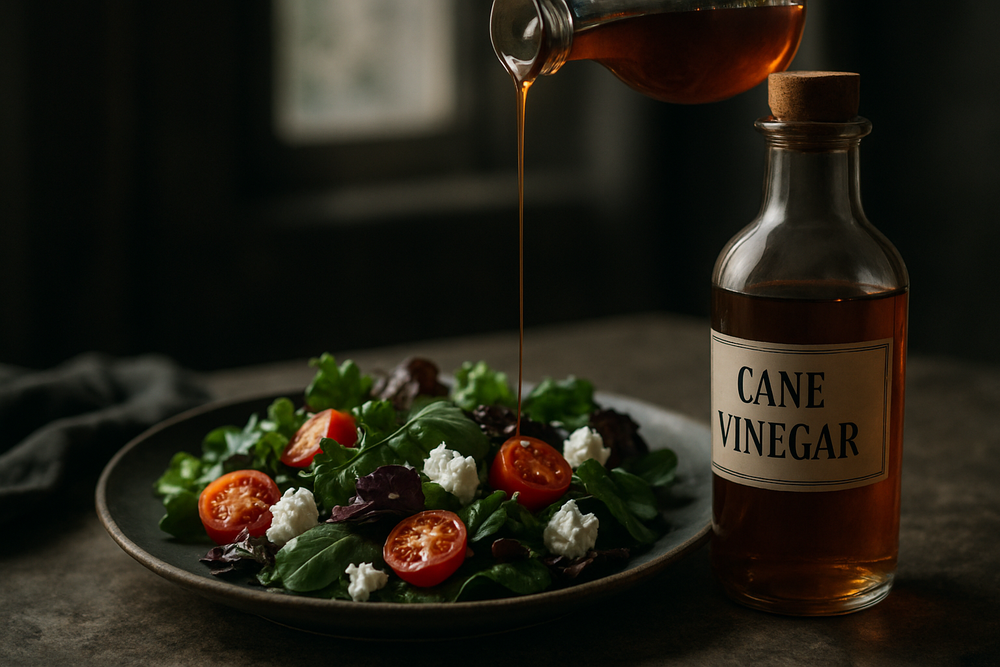
Cane Vinegar · Photograph
Discover cane vinegar health benefits and how to use it safely — from blood sugar support and gut health to its role in Filipino adobo. Evidence-based, layperson-friendly guide covering nutrition, dosage, side effects, and how it compares to apple cider vinegar.
Key Nutrients
% Daily Value based on 2,000 cal diet
Key active compounds in cane vinegar
- Acetic acid — A short-chain fatty acid (a type of organic acid produced by fermentation that your body can use as a fuel signal) that gives vinegar its sour taste and accounts for most of its studied metabolic effects. Concentration in cane vinegar is typically 4–7%.
- Organic acids (oxalic, tartaric, succinic, citric) — Naturally occurring acids identified in sugarcane vinegar by chromatographic analysis (a lab technique that separates and identifies chemical components). They contribute to flavour complexity, help maintain low pH, and may support antioxidant activity.
- Polyphenols from sugarcane — Phenolic compounds and flavonoids (plant pigments with antioxidant properties) retained from the original cane juice. Sugarcane vinegar has been measured at roughly 132 µg/mL total polyphenol content, giving it modest but real antioxidant activity in laboratory tests.
- Acetic acid bacteria (in raw/unpasteurised versions) — Live microorganisms responsible for the fermentation; present in unfiltered bottles and sometimes marketed as probiotic-active, though human evidence for a gut-microbiome benefit specific to cane vinegar is not yet established.
Prep and pairing ideas
Cane vinegar works beautifully across a wide range of whole-food preparations. Here are three practical pairings that make the most of its mellow depth.
Common pairings
1. Cane vinegar + garlic + bay leaf → Filipino chicken or tofu adobo This is the classic. The acidity of cane vinegar tenderises proteins, balances the richness of soy sauce, and infuses the braising liquid with a gentle tartness. Tofu or tempeh adobo is an easy plant-based entry point. The low-heat simmer also preserves more of the organic acid profile than high-heat flash cooking.
2. Cane vinegar + ginger + cucumber → quick-pickled vegetable salad A swift no-cook pickle: thin-sliced cucumbers, radishes, or green papaya soaked in a 1:1 mix of cane vinegar and water with a pinch of salt and fresh ginger for 20–30 minutes. The acidity is mellower than white vinegar, making this approachable for vinegar-shy eaters. Served alongside a starchy meal, the acetic acid may help blunt the post-meal glucose rise.
3. Cane vinegar + olive oil + fresh herbs → salad dressing A simple vinaigrette where cane vinegar replaces the more typical apple cider or red-wine vinegar. Its darker colour adds visual warmth, and its milder tang pairs especially well with bitter greens like arugula or radicchio. Using this dressing over a lentil and grain salad keeps it firmly within a whole-food, plant-based framework.
Bottom line
Cane vinegar is a low-calorie, fermented whole-food condiment with a legitimate place in a plant-rich diet. Its main bioactive compound, acetic acid, has the most consistent research support of any component — specifically for modest, short-term reductions in post-meal blood sugar and insulin when used with high-carbohydrate meals. Evidence for heart, gut, and anti-inflammatory benefits exists but is mostly indirect, borrowed from apple cider vinegar studies, and not yet confirmed in direct cane-vinegar human trials.
Used in cooking — especially in the Filipino culinary tradition of adobo, pickles, and dipping sauces — cane vinegar is a safe, flavour-forward way to bring acetic acid into your meals without the dental and gastrointestinal risks that come with daily undiluted vinegar shots. If you want to use it as a daily tonic for blood sugar support, dilute it well, drink it with a meal, rinse your mouth afterwards, and flag it with your doctor if you take diabetes medication or diuretics.
Think of cane vinegar as a culinary ally that happens to have some metabolic upside — not a supplement, not a cure, and not a substitute for an overall plant-centred dietary pattern.
Looking to match ingredients to your specific health goals? Browse the Plantopedia Goals Library to find whole-food strategies organised by outcome.
How Cane Vinegar Compares
| Compared with | What's different |
|---|---|
| Cane Vinegar vs. Apple cider vinegar | Cane vinegar is noticeably milder and less acidic than the sharp, fruity bite of ACV. |
| Cane Vinegar vs. Black vinegar | Cane vinegar is mellow and slightly woody, lacking the intense fermented funk of dark rice vinegars. |
| Cane Vinegar vs. White distilled vinegar | Cane vinegar is naturally fermented from cane juice, while white vinegar is typically grain-derived. |
Health Benefits
Things to Know
Dilute before drinking.: Never sip cane vinegar straight. Undiluted vinegar at 4–7% acidity is strong enough to erode tooth enamel over repeated exposure. Mix at least 1–2 tablespoons into a full 240 mL (8 oz) glass of water.
Rinse your mouth.: After drinking a vinegar tonic, rinse with plain water. Do not brush immediately — acids temporarily soften enamel, and brushing too soon can increase wear.
Dental caution.: Clinical studies including an 8-week randomised trial and multiple in-vitro enamel erosion studies confirm that acidic beverages including vinegar cause measurable mineral loss from tooth surfaces. Daily vinegar drinking carries real dental risk, particularly if you already have enamel loss, dry mouth, or a high cavity risk.
Stomach and reflux risk.: People with GERD (gastroesophageal reflux disease), peptic ulcer, or a generally sensitive stomach may find that acidic liquids worsen heartburn or nausea — especially taken on an empty stomach or before bed.
Diabetes and medication interaction.: Vinegar can modestly lower post-meal glucose and insulin, which may stack on top of insulin or sulfonylurea (a class of diabetes medication that stimulates insulin release) doses, increasing hypoglycaemia risk. Monitor blood sugar more closely if you add regular vinegar to an existing diabetes regimen and discuss with your prescriber.
Diuretic interaction.: High vinegar intake has been associated with low potassium (hypokalaemia). If you take potassium-depleting diuretics such as furosemide (loop diuretics) or thiazide diuretics, excessive vinegar use could compound medication-induced potassium losses.
Gastroparesis.: Because vinegar slows gastric emptying, people with gastroparesis (delayed stomach emptying) should use it cautiously and only in small culinary amounts.
Pregnancy and children.: No evidence-based upper limit exists for cane vinegar during pregnancy; culinary amounts are generally considered safe, but therapeutic-style daily tonic use is not established as safe and should be discussed with a midwife or doctor. Avoid using vinegar drinks for weight-loss or detox purposes in children and adolescents — erosion risks are documented and benefits in this population are unproven.
Glossary
Shop This Ingredient
Stock your pantry with quality cane vinegar.
Buy on AmazonAs an Amazon Associate, Plantopedia earns from qualifying purchases. This costs you nothing extra and helps us keep the encyclopedia free.
Frequently Asked Questions
Cane vinegar is made by a two-stage fermentation of sugarcane sap or juice. In the first stage, yeasts convert the natural sugars into ethanol (alcohol); in the second stage, acetic acid bacteria convert that alcohol into acetic acid, creating vinegar. The result is a dark, mellow condiment with roughly 4–7% acidity that is distinct from white distilled vinegar in both flavour and colour.
Research on vinegars generally — using doses of 10–30 mL taken with or just before high-carbohydrate meals — consistently shows modest reductions in post-meal blood sugar and insulin spikes, likely because acetic acid slows starch digestion and gastric emptying. Because cane vinegar contains acetic acid at similar concentrations to the vinegars studied, comparable short-term effects are plausible. However, direct human trials on cane vinegar specifically are lacking, and these effects should complement — not replace — evidence-based diabetes management.
Culinary amounts (5–15 mL in cooking or dressings) are considered safe for most adults. Daily drinking as a tonic is where caution is needed: multiple studies confirm that repeated exposure to undiluted or inadequately diluted vinegar erodes tooth enamel, and acidic liquids can worsen reflux or stomach irritation in susceptible individuals. If you do drink it daily, always dilute in at least 240 mL of water, consume it with a meal, and rinse your mouth with plain water afterwards.
Most human clinical research has used apple cider vinegar (ACV) or white vinegar, so ACV has a larger direct evidence base. Cane vinegar's acetic acid content falls in the same 4–7% range, so its metabolic effects are likely similar. The practical differences are flavour (cane vinegar is mellower and less pungent), culinary tradition (cane vinegar is the go-to in Filipino cooking), and polyphenol profile (cane vinegar retains compounds from sugarcane juice). Neither is definitively "better" — choose based on the recipe and your taste preferences.
It can, if used frequently in undiluted or concentrated form. Both in-vitro enamel erosion studies and a clinical randomised trial of twice-daily vinegar drinks found measurable increases in tooth mineral loss compared with low-acid controls. Case reports describe severe erosive wear in individuals drinking a glass of apple cider vinegar daily. The risk is real but manageable: always dilute, avoid swishing vinegar around your mouth, and rinse with water after consuming vinegar tonics.
Raw, unpasteurised cane vinegar does contain live acetic acid bacteria and may contain residual yeasts and fermentation by-products. Some of these organisms are technically alive, but vinegar's very low pH (typically 2–3) means most microorganisms cannot survive in it for long. More importantly, there are no high-quality human trials showing that drinking cane vinegar meaningfully improves gut microbiome diversity or composition. It is best described as a fermented food with possible microbiome-adjacent properties rather than a clinically validated probiotic.
Clinical trials used approximately 15–30 mL (1–2 tablespoons) diluted in water or food, taken with or just before a high-carbohydrate meal. Starting at 1 teaspoon (5 mL) and increasing gradually is sensible for those new to vinegar tonics. Staying at or below 30 mL/day and always diluting are the key safety parameters. People taking insulin or diabetes medications should monitor blood sugar more closely and discuss any supplemental vinegar use with their healthcare provider.
Quick Answers
Common questions, answered in a line.
Cane vinegar consists of 4–7% acetic acid, various organic acids (oxalic, tartaric, succinic, and citric), and sugarcane-derived polyphenols. These bioactive compounds contribute to its sour flavor, low pH, and modest antioxidant activity observed in laboratory tests.
Cane vinegar is a staple in Filipino cuisine, most notably used in chicken or tofu adobo, quick-pickled vegetable salads, and dipping sauces. Its mellow acidity makes it an ideal tenderizer for proteins and a balanced base for salad dressings and vinaigrettes.
If you take diabetes medications like insulin or sulfonylureas, or potassium-depleting diuretics, you should consult your doctor before using cane vinegar regularly. The vinegar's ability to lower post-meal glucose and its potential to lower potassium levels may interfere with these specific treatments.
People with GERD, peptic ulcers, or gastroparesis should exercise caution, as the acidity can worsen heartburn and slow stomach emptying. Those with sensitive stomachs may find that consuming acidic liquids like vinegar increases nausea or gastric discomfort.
After consuming a vinegar tonic, you should rinse your mouth with plain water and wait before brushing your teeth. Brushing immediately after exposure to acid can increase wear on tooth enamel, which is temporarily softened by the vinegar.
Cane vinegar contains roughly 132 µg/mL of total polyphenol content, which provides modest antioxidant activity in lab settings. These plant pigments and flavonoids are retained from the original sugarcane juice during the fermentation process.
For Readers in the USA
Local context — sourcing, seasonality, and regional notes.
Cane vinegar is primarily found in Asian grocery stores like H Mart or Seafood City, though major chains like Whole Foods and Kroger increasingly carry it in their international aisles. You can also find artisanal or organic versions through online retailers and specialty health food stores across the United States.
The most common type of cane vinegar found in the U.S. is Filipino "Sukang Iloko," known for its dark color and mellow flavor, followed by white cane vinegar which is sharper and clear. While both are made from sugarcane, the dark variety is traditionally preferred for authentic adobo and dipping sauces in American-Filipino households.
The FDA regulates cane vinegar as a food product, requiring a minimum of 4% acidity to be legally labeled as "vinegar" in the United States. When shopping, look for the USDA Organic seal if you want to ensure the sugarcane was grown without synthetic pesticides or GMOs.
Sugarcane for vinegar production is primarily grown in the tropical climates of Florida, Louisiana, and Texas, though most bottled cane vinegar in the U.S. is imported from the Philippines or Taiwan. While domestic sugarcane is harvested from autumn through spring, the vinegar itself is a shelf-stable fermented product available year-round.
AI Clinical Review
- Clearly explains what cane vinegar is, its 4–7% acetic acid content, and that acetic acid is the likely driver of modest, short‑term reductions in post‑meal glucose and insulin when used with carbohydrate‑rich meals.
- Accurately frames cane vinegar as very low in calories and macronutrients; any potential benefit relates to its acids and polyphenols rather than nutrient density.
- Provides realistic dosing ranges consistent with clinical studies (about 10–30 mL/day, commonly ~15–20 mL), emphasizing use in food or well‑diluted with meals.
- Appropriately highlights dental erosion and gastrointestinal irritation risks from undiluted or high‑volume use and offers practical mitigation (dilution, rinsing), discouraging “vinegar shots.”
- Most human trials involve apple cider or white vinegar; direct, high‑quality studies on cane vinegar itself are limited, so effects are inferred rather than proven.
- Longer‑term outcomes (HbA1c, fasting glucose, blood lipids, blood pressure, inflammatory markers) are mixed or modest at best; benefits appear meal‑level rather than disease‑modifying.
- “Probiotic” claims for raw/unfiltered vinegar are not supported by clinical trials; survival of microbes in a very acidic medium and meaningful microbiome changes remain uncertain.
- Antioxidant/polyphenol data are largely from lab assays; translation to clinically relevant anti‑inflammatory effects has not been established.
- Practical range: 1–2 teaspoons to 1 tablespoon (5–15 mL) per use, up to ~30 mL/day, taken with or just before a carbohydrate‑containing meal and always diluted (for example, in 8 oz/240 mL water or in dressings/recipes).
- Use caution if you have GERD, gastritis, or gastroparesis, and if you take insulin or sulfonylureas (hypoglycemia risk) or potassium‑wasting diuretics (rare low potassium reported); check with your clinician.
- Protect teeth: avoid undiluted sipping or swishing; rinse with water afterward and wait before brushing to reduce enamel wear.
- Raw/unfiltered (“with mother”) vs filtered is mainly a culinary choice; there’s no convincing human evidence that raw forms confer extra probiotic benefits. Look for 4–7% acidity and no added sugars on the label.
Acidic; dilute for drinking.
References
- USDA FoodData Central — sugarcane vinegar nutrition data (fdc.nal.usda.gov)
- PMC review: Vinegar as a potential functional food, with focus on sugarcane vinegar (pmc.ncbi.nlm.nih.gov)
- Journal of Biosciences and Medicines — preparation and characteristics of sugarcane vinegar (biolscigroup.us)
- Meta-analysis: vinegar consumption attenuates postprandial glucose and insulin (Scandinavian J Clinical Lab Investigation, 2017) (pubmed.ncbi.nlm.nih.gov)
- Nutrition Reviews 2014 — effect and mechanisms of vinegar on glucose metabolism (academic.oup.com)
- Diabetes Care 2004 — vinegar improves insulin sensitivity in insulin-resistant and type 2 diabetic subjects (diabetesjournals.org)
- Diabetes Care 2010 — vinegar decreases postprandial hyperglycaemia in patients with type 1 diabetes (diabetesjournals.org)
- Journal of Medicinal Food 2021 — randomised trial: daily vinegar ingestion contributes to erosive tooth wear (liebertpub.com)
- Harvard Health Publishing — apple cider vinegar: does it really work? (safety and evidence overview) (health.harvard.edu)
- University College London Hospitals (UCLH) — apple cider vinegar evidence summary (uclh.org)
Know Your Numbers
Eating healthy is a start. Now get to know your biomarkers.
Food changes bloodwork — inflammation, lipids, blood sugar and nutrient status all respond to what you eat. 59 markers from $59.
- Results in 7–10 days at 2,000+ Quest sites
- Licensed provider reviews every result
- One flat price, no membership, HSA/FSA eligible
Educational information only, not medical advice. Panels are ordered and reviewed through our licensed partner; Plantopedia may earn a commission.