Dongchimi (Radish Water Kimchi) — health benefits and uses
A winter Korean water kimchi valued for its cooling, thirst-quenching broth.
The Short Answer
Dongchimi is a cooling, fermented Korean radish water kimchi prized for its live probiotic cultures and tangy brine. It provides 31 mg of Vitamin C per cup and is traditionally used as a digestive aid or a base for cold noodle soups.
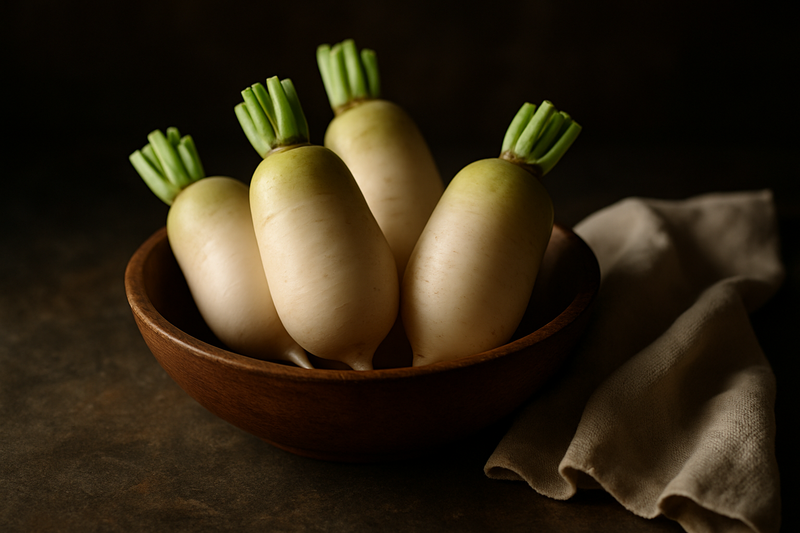
Dongchimi (Radish Water Kimchi) · Photograph
Discover the dongchimi (radish water kimchi) health benefits and side effects, from probiotic gut support to sodium cautions. Evidence-based, layperson-friendly guide with nutrition facts, safe serving tips, and how this traditional Korean fermented radish fits a whole-food plant-based diet.
Key Nutrients
% Daily Value based on 2,000 cal diet
Key active compounds
- Lactic acid bacteria (LAB): Strains including Lactobacillus plantarum, Weissella cibaria, Leuconostoc spp., and Lactobacillus sakei are the main microbes driving fermentation. These are the live organisms often described as "probiotics" in fermented foods.
- Lactic acid: The organic acid produced by LAB during fermentation. It creates dongchimi's tangy taste, lowers the pH to inhibit harmful bacteria, and contributes to the acidic gut environment that favours beneficial microbes.
- Glucosinolates and isothiocyanates (e.g., sulforaphene): Sulfur-containing plant compounds naturally concentrated in radish. Fermentation is thought to enhance their bioavailability and soften some of their goitrogenic (thyroid-disrupting) potential. Goitrogenic means the compound, in very high amounts, may interfere with thyroid iodine uptake — a practical concern mainly at very high raw intake.
- Short-chain fatty acids (SCFAs): Not present in the food itself, but produced in the gut when bacteria ferment LAB and dietary fibre. Acetate, propionate, and butyrate are the main ones; they nourish the colon lining, support the gut barrier, and may influence immune signalling.
- Vitamin C: Radish is a reasonable source, and some vitamin C survives the fermentation process, supporting antioxidant defence and iron absorption.
Prep and pairing ideas
Dongchimi is one of the simpler fermented vegetables to enjoy at home. A basic preparation involves submerging small whole radishes in a seasoned brine of water, sea salt, garlic, ginger, and green onion, then leaving them to ferment at room temperature for 1–2 days before moving to the refrigerator to ferment slowly for another 1–3 weeks. The brine grows more sour and complex over time.
Common pairings:
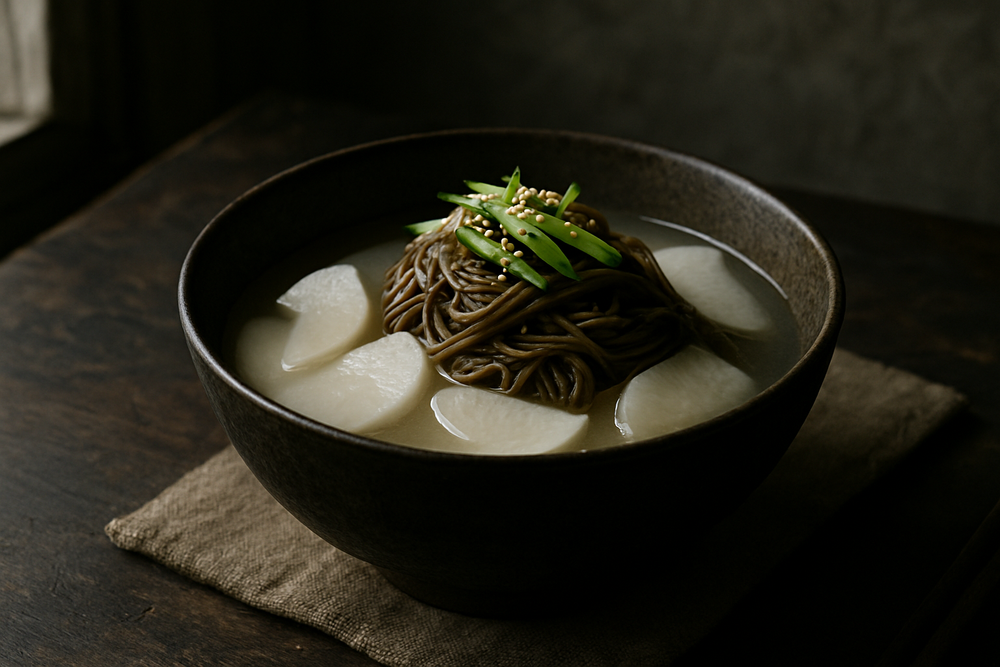
- Cold buckwheat or sweet potato noodles (naengmyeon): Dongchimi brine is the traditional liquid base for this dish. The tangy, icy brine offsets the neutral noodles and is cooling in summer. For a whole-food plant-based version, skip the animal protein toppings and add cucumber, sliced pear, and toasted sesame seeds.
- Steamed rice with mixed banchan (Korean side dishes): A small bowl of dongchimi solids alongside plain steamed rice and roasted seaweed provides a satisfying textural and flavour contrast. The radish's crunch and tartness cut through the starchiness of the rice and help round out the meal without adding significant calories.
- Grain bowls or bibimbap-style assemblies: Chopped dongchimi radish adds fermented tang and crunch to grain bowls built on brown rice or barley, layered with roasted vegetables, edamame, and a light sesame dressing. The lactic acid in the kimchi acts as a natural flavour brightener, reducing the need for added vinegar or salt.
Myths vs facts
Myth: Dongchimi is basically just salty water with no nutritional value. Fact: While it is very low in calories, dongchimi provides live lactic acid bacteria, vitamin C (~34% DV per cup), modest fibre, and bioactive radish compounds including isothiocyanates. The nutrition is not dramatic, but it is genuinely there.
Myth: Drinking lots of dongchimi brine is a proven weight-loss strategy. Fact: Dongchimi brine is extremely low in calories and may support satiety within a meal, but no clinical trials have confirmed it as a weight-loss intervention. Heavy brine consumption also loads up on sodium, which counteracts many benefits of an otherwise low-sodium diet.
Myth: Dongchimi and regular cabbage kimchi are nutritionally interchangeable. Fact: They share the fermentation process and some LAB strains, but differ in sodium levels, phytochemical profiles (radish glucosinolates vs. cabbage compounds), and heat — dongchimi is typically mild and clear, while baechu kimchi is red and often significantly spicier. Sodium content per serving can also differ depending on the recipe.
Bottom line
Dongchimi is a quietly impressive fermented food: nearly calorie-free, mildly hydrating, and a meaningful source of live lactic acid bacteria and vitamin C when eaten fresh and unpasteurised. The research underpinning its health benefits draws mainly from broader kimchi and lacto-fermented vegetable studies rather than dongchimi-specific trials, so claims should stay proportionate. The one area where direct human data on dongchimi exists — oral health — is promising but limited in scope.
The biggest practical consideration is sodium. Nearly half your daily sodium target can arrive in a single cup of dongchimi with brine. For most healthy people eating an otherwise low-sodium diet, this is manageable. For those with high blood pressure, heart failure, or kidney disease, portion size and how much brine is consumed matters a great deal.
Eaten as a side dish in the way Korean culinary tradition uses it — a modest serving alongside a balanced meal — dongchimi is a smart, whole-food plant-based addition that brings flavour, texture, fermented gut support, and radish's distinctive phytochemical profile to the table with minimal caloric cost.
Explore how fermented foods like dongchimi fit into your broader wellness goals at /goals.
How Dongchimi (Radish Water Kimchi) Compares
| Compared with | What's different |
|---|---|
| Dongchimi (Radish Water Kimchi) vs. Baechu-kimchi (Napa Cabbage) | Uses a brine base resulting in a clear, drinkable liquid rather than a thick chili paste. |
| Dongchimi (Radish Water Kimchi) vs. Danmuji (Pickled Radish) | Fermented in water for a crunchy, tart finish rather than being vinegared and dyed yellow. |
Health Benefits
Things to Know
Sodium is the main caution.: One cup of dongchimi with brine provides roughly 46% of the daily recommended sodium intake. People with hypertension, heart failure, chronic kidney disease, or cirrhosis who are on sodium-restricted diets should account for this carefully and may need to limit portion size or frequency.
Histamine sensitivity.: Fermented foods are naturally higher in histamine and other biogenic amines (compounds formed during fermentation). People with histamine intolerance or mast cell disorders may experience reactions — flushing, headache, GI discomfort — from fermented foods including dongchimi.
Inflammatory bowel disease (IBD).: During an active flare of conditions like Crohn's disease or ulcerative colitis, many people find fermented or high-fibre foods irritating. In remission, some individuals tolerate them well. Consult your gastroenterologist before adding fermented foods during any active IBD phase.
Medication interactions.: High regular sodium intake from dongchimi brine may reduce the effectiveness of antihypertensive medications (blood pressure drugs) and diuretics. If you are on a medically prescribed sodium limit, count dongchimi's brine toward your daily allowance.
Thyroid caution.: Glucosinolates in radish are mildly goitrogenic at very high intakes. Typical food-amount servings of dongchimi are unlikely to cause problems for people with normal thyroid function, but those with hypothyroidism or who take thyroid medication should keep portions moderate and speak with their doctor.
Pregnancy.: Fermented foods are generally considered safe in pregnancy when made from wholesome ingredients, but the high sodium content of dongchimi brine deserves extra attention given that sodium requirements shift during pregnancy. Opt for smaller solid portions over large amounts of brine.
New to fermented foods?: Start with a small serving — 30–50 g of the solid radish pieces — to let your gut microbiome adjust gradually before increasing portion size or incorporating more brine.
Prep Ideas
- — Cold buckwheat or sweet potato noodles (*naengmyeon*): Dongchimi brine is the traditional liquid base for this dish. The tangy, icy brine offsets the neutral noodles and is cooling in summer. For a whole-food plant-based version, skip the animal protein toppings and add cucumber, sliced pear, and toasted sesame seeds.
- — Steamed rice with mixed banchan (Korean side dishes): A small bowl of dongchimi solids alongside plain steamed rice and roasted seaweed provides a satisfying textural and flavour contrast. The radish's crunch and tartness cut through the starchiness of the rice and help round out the meal without adding significant calories.
- — Grain bowls or bibimbap-style assemblies: Chopped dongchimi radish adds fermented tang and crunch to grain bowls built on brown rice or barley, layered with roasted vegetables, edamame, and a light sesame dressing. The lactic acid in the kimchi acts as a natural flavour brightener, reducing the need for added vinegar or salt.
Shop This Ingredient
Stock your pantry with quality dongchimi (radish water kimchi).
Buy on AmazonAs an Amazon Associate, Plantopedia earns from qualifying purchases. This costs you nothing extra and helps us keep the encyclopedia free.
Frequently Asked Questions
Digestive health and microbiome This is the area with the most support, though most evidence comes from fermented vegetables and kimchi broadly rather than dongchimi trials specifically. A University of Minnesota–linked study on lacto-fermented vegetables found that regular consumers showed greater diversity of gut metabolites and increased production of acetate and propionate — two SCFAs linked to colon health and immune modulation — compared with non-consumers. LAB strains common in kimchi, including L. plantarum and L. sakei, temporarily colonise the gut, compete with harmful bacteria, and appear to encourage favourable shifts in microbial balance. Practical observation from fermented radish users suggests improved stool regularity at intakes of around 15–30 g/day, though this data is self-reported rather than from controlled trials. People new to fermented foods may notice temporary gas or mild bloating as the gut microbiome adjusts — this usually settles within a week or two of consistent, small servings. Heart and circulation Dongchimi is very low in calories and contains fibre and LAB — characteristics shared across kimchi varieties that have been linked to heart-health markers in observational research. In the Korean Genome and Epidemiology Study (KoGES), a large cohort study, higher kimchi intake (particularly 2–<3 servings per day) was associated with more favourable HDL cholesterol levels — HDL being the so-called "good" cholesterol. The study was observational and did not isolate dongchimi specifically, so direct cause-and-effect cannot be assumed. The important caveat: dongchimi's high sodium content could offset these potential benefits if large amounts of brine are regularly consumed, especially in people who are salt-sensitive or already managing cardiovascular disease. Blood sugar and metabolism Dongchimi is very low in carbohydrates (3.5 g per cup) and has a negligible effect on blood sugar by itself. Its high water and fibre content may help with satiety — the feeling of fullness — and displace higher-calorie, higher-glycaemic foods when eaten as part of a structured meal. Some research on fermented food patterns suggests improvements in postprandial (after-meal) glucose responses, but no clinical trials have directly tested dongchimi for blood sugar control. For people with metabolic syndrome, the sodium load in the brine warrants consideration, as hypertension often coexists with blood sugar issues. Inflammation and recovery Fermented radish provides bioavailable vitamin C and isothiocyanates, two categories of compounds with antioxidant and anti-inflammatory potential. LAB strains found in kimchi are associated, in mechanistic and observational research, with enhanced gut barrier integrity and modulation of inflammatory signalling pathways — partly via SCFA production. However, anti-inflammatory effects in humans remain inferred from broader kimchi and fermented vegetable literature rather than dongchimi-specific trials. It is also worth noting that chronically high sodium intake itself can contribute to low-grade vascular inflammation, which is a reason to keep brine portions moderate. Oral health — a surprising specific finding One small clinical study (PubMed ID 28894075) used dongchimi juice enriched with kimchi-derived Lactobacillus as an oral rinse in Korean patients. The dongchimi rinse reduced oral pathogens and scored higher on patient satisfaction compared with chlorhexidine — a standard antiseptic mouthwash. This is the most specific human trial on dongchimi to date, though it involved rinsing rather than eating, and the juice was specially formulated. It should not be interpreted as a reason to substitute your mouthwash without professional guidance, but it does open an interesting avenue of research.
Dongchimi comes in a few forms, and the choice affects both nutrition and probiotic content. Whole radish pieces in clear brine (traditional): This is the authentic form — small radishes fermented with garlic, ginger, and green onion in salted water. Both the solids and the liquid are eaten. This form provides fibre, micronutrients, and live LAB when the product is unpasteurised (not heat-treated). Dongchimi brine as a drink or soup base: The brine alone is often sipped or used as the liquid base for cold noodle dishes. It is hydrating and tangy, but also concentrated in sodium. A small pour — 100 ml or so — is a common serving size for drinking; a full bowl of cold noodle soup may use considerably more. Refrigerated homemade or commercial dongchimi: Homemade versions vary widely in salt level, fermentation stage, and microbial density. Commercial refrigerated versions are more standardised but may also vary in salt content. Live, unheated (unpasteurised) products are more likely to contain active LAB. Shelf-stable, heat-treated versions will not have meaningful probiotic content.
There is no established therapeutic dose for dongchimi. In traditional Korean eating patterns, it appears as a small side dish — roughly 50–150 g of solids per meal — with brine sipped in modest quantities. Korean nutrition databases commonly reference a 180–200 g serving (solids plus liquid), which provides around 14–18 kcal but close to 1 g of sodium. Observational kimchi studies categorise moderate intake as approximately 2–3 servings per day across various kimchi types, but dongchimi is rarely the sole or primary variety consumed. A reasonable starting point for most healthy adults is: Solid radish pieces: 50–100 g per sitting (1–2 times daily), progressively increased as tolerated. Brine as a drink: 50–100 ml at a time. Drinking large volumes of brine as a "health tonic" is not supported by clinical evidence and adds substantial sodium. As a soup base: One bowl of cold noodle soup with dongchimi brine is a culinary tradition, not a concern for most healthy people eating otherwise low-sodium meals. For people managing blood pressure, smaller portions or a diluted brine version may be appropriate. If you are managing a health condition, ask a registered dietitian to help you factor dongchimi's sodium into your overall dietary targets.
Quick Answers
Common questions, answered in a line.
Dongchimi is a low-calorie fermented radish water kimchi that provides live lactic acid bacteria (probiotics), vitamin C, and sulfur-containing compounds like glucosinolates. While nearly calorie-free, a single cup can provide approximately 34% of the Daily Value for vitamin C.
The primary microbes in dongchimi include Lactic Acid Bacteria (LAB) strains such as Lactobacillus plantarum, Weissella cibaria, Leuconostoc spp., and Lactobacillus sakei. These live organisms drive the fermentation process and are responsible for the food's probiotic properties.
While dongchimi is very low in calories and may help you feel full during a meal, there are no clinical trials confirming it as an effective weight-loss intervention. Additionally, its high sodium content can counteract the benefits of a low-sodium diet if consumed in excess.
Dongchimi is typically mild, clear, and made from radish, whereas regular cabbage kimchi (baechu kimchi) is usually red, spicier, and contains different phytochemicals. They also differ in their sodium levels and specific strains of lactic acid bacteria.
Dongchimi is a high-sodium food, with one cup of the radish and brine providing roughly 46% of the daily recommended sodium limit. This high salt content is a concern for individuals with high blood pressure, heart failure, or kidney disease.
Radishes contain glucosinolates which can be goitrogenic in very high amounts, meaning they might interfere with thyroid iodine uptake. While fermentation may soften this effect, people with hypothyroidism or those on thyroid medication should maintain moderate portion sizes.
Dongchimi is traditionally used as a cooling base for cold buckwheat or sweet potato noodles (naengmyeon) and served as a crunchy side dish for steamed rice or grain bowls. Its tangy lactic acid acts as a natural flavor brightener, reducing the need for extra salt or vinegar in meals.
For Readers in the USA
Local context — sourcing, seasonality, and regional notes.
You can buy dongchimi at major Korean grocery chains like H Mart and Zion Market, or at local Asian markets in cities with large Korean-American populations. While less common in standard supermarkets like Kroger or Safeway, refrigerated "water kimchi" is increasingly available in the natural foods section of West Coast retailers.
In the U.S., the traditional Korean "mu" radish used for dongchimi is harvested in late fall, though it is available year-round in most specialty produce aisles. Look for radishes that feel heavy for their size and have smooth, firm skin to ensure they have the crisp texture necessary for proper fermentation.
While the FDA does not have specific identity standards for dongchimi, it regulates it as a "fermented food" which must be processed according to food safety guidelines to prevent spoilage. If you are buying commercially, look for the USDA Organic seal if you want to ensure the radishes were grown without synthetic pesticides.
Yes, many American home cooks successfully substitute the smaller, rounder "watermelon radish" or even standard red globe radishes if traditional Korean mu is unavailable. While the flavor profile will shift slightly, these varieties are widely available at US farmers markets and provide a similar crunch and peppery finish.
AI Clinical Review
- Clear, accurate description of dongchimi as a very low‑calorie, mildly sour, lacto‑fermented radish with live lactic acid bacteria (LAB) when unpasteurized.
- Balanced emphasis on sodium: the brine is hydrating but salty, so portion size matters—especially for people monitoring blood pressure.
- Sensible framing of benefits: likely gut‑friendly effects are inferred from broader kimchi/fermented‑vegetable research rather than dongchimi‑specific trials.
- Practical distinctions between forms (homemade vs commercial; pasteurized vs unpasteurized) and how these affect live cultures and salt exposure.
- Dongchimi‑specific human studies are scarce; most claims extrapolate from other kimchi or fermented‑vegetable data, so effects should be viewed as plausible, not proven.
- “Probiotic” content varies widely by recipe, fermentation time, storage, and whether a product is pasteurized; strain identity and dose are not standardized.
- Observational links between kimchi intake and cardiometabolic markers suggest association, not causation; high sodium could offset potential benefits for some.
- The oral‑rinse study with dongchimi juice is small and topical (mouthwash), so it doesn’t establish health effects from eating or drinking dongchimi.
- Serving ideas are reasonable: start with small portions of solids (for example, a few bites/30–50 g) and modest sips of brine if desired, then adjust to your overall sodium budget.
- If you want live cultures, look for refrigerated, unpasteurized products and keep them cold; pasteurized or shelf‑stable versions won’t deliver active LAB.
- Populations who should check in with a clinician first: those with hypertension, heart failure, chronic kidney disease, or on diuretics/antihypertensives (because of sodium); people with histamine intolerance or during active IBD flares; individuals with thyroid disease who consume large amounts of Brassica vegetables; and those who are pregnant (favor smaller portions of solids over large brine servings).
- Food safety basics still apply for homemade versions: use clean equipment, keep vegetables submerged, and refrigerate after the initial room‑temperature fermentation to limit spoilage.
Salty brine; the liquid is part of the dish.
References
- USDA FoodData Central — radish and kimchi nutrient reference (fdc.nal.usda.gov)
- Korean national standard food composition data for dongchimi (lampcook.com)
- Dongchimi nutrition facts summary — Corevia Fitness / KFDA data (coreviafitness.com)
- KoGES cohort study: kimchi intake and serum lipid profile in Korean adults (springermedizin.de)
- Human clinical trial: dongchimi juice as an oral hygiene agent vs. chlorhexidine (PubMed 28894075) (pubmed.ncbi.nlm.nih.gov)
- University of Minnesota: lacto-fermented vegetables and gut microbiome diversity — human observational study (twin-cities.umn.edu)
- Microbiome explainer: what happens when you eat kimchi or fermented vegetables (jonestrustyourgut.co.uk)
- Kimchi fermentation and health benefits overview — BodySpec (bodyspec.com)
- Fermented radish wellness guide: digestion, glucosinolates, and safety (thelivinglook.com)
- Easy Dongchimi recipe with nutrition overview — My Korean Kitchen (mykoreankitchen.com)
Know Your Numbers
Eating healthy is a start. Now get to know your biomarkers.
Food changes bloodwork — inflammation, lipids, blood sugar and nutrient status all respond to what you eat. 59 markers from $59.
- Results in 7–10 days at 2,000+ Quest sites
- Licensed provider reviews every result
- One flat price, no membership, HSA/FSA eligible
Educational information only, not medical advice. Panels are ordered and reviewed through our licensed partner; Plantopedia may earn a commission.