Cornstarch — health benefits and uses
A modern refined kitchen staple derived from the endosperm of maize.
The Short Answer
Cornstarch is a gluten-free thickening agent made of pure starch that contains 30 calories and 7 grams of carbohydrates per tablespoon. It is used to create glossy sauces, stabilize puddings, and produce crispy coatings on fried foods.
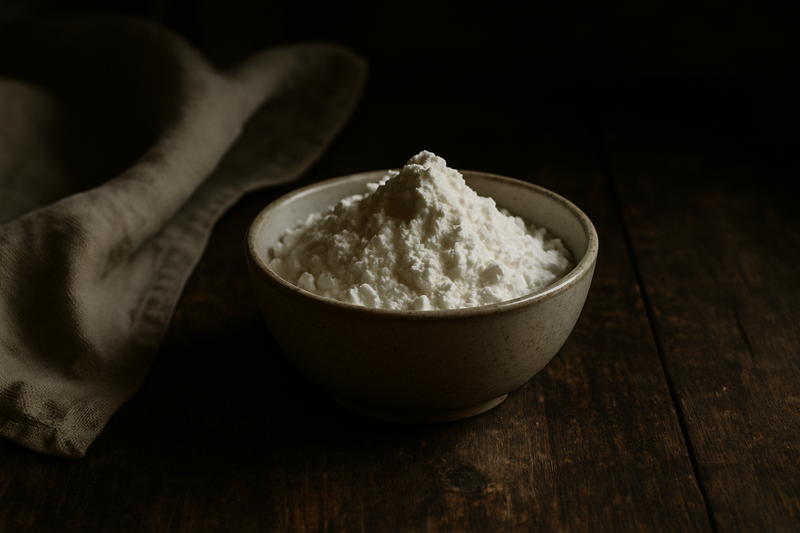
Cornstarch · Photograph
Is cornstarch healthy, or just an empty-calorie thickener? Get the full picture: cornstarch nutrition facts, gluten-free safety, blood sugar effects, and how to use it wisely in sauces, gravies, and crispy coatings.
Key Nutrients
% Daily Value based on 2,000 cal diet
Key active compounds in cornstarch
Cornstarch is not rich in phytochemicals (protective plant compounds) the way whole foods are. Its "active" components are structural starches:
- Amylose — the mostly straight-chain fraction of starch, made of glucose units linked end-to-end. Amylose contributes to gel firmness when cornstarch cools after cooking, which is why a cornstarch-thickened sauce that you refrigerate can become quite firm.
- Amylopectin — the highly branched fraction. It swells quickly during heating, which is what creates that smooth, viscous texture in a hot sauce. Amylopectin is rapidly digested to glucose after eating, contributing to cornstarch's high glycemic index (a measure of how quickly a food raises blood sugar).
Both fractions are essentially pure digestible starch. Unlike the starch found in whole grains, there is no surrounding fiber, protein, or phytonutrient matrix to slow digestion.
Buying guide
What to look for on the label:
- Single ingredient: The ingredient list should say "cornstarch" or "corn starch" and nothing else.
- Certified gluten-free seal: If you have celiac disease or gluten sensitivity, do not rely on "naturally gluten-free" claims alone — look for a third-party certification seal (such as GFCO) that indicates the facility controls for cross-contamination.
- Non-GMO label: If this matters to you, most commercial corn in the United States is genetically modified. Non-GMO Project verified options are widely available.
- Organic options: Available in most natural grocery stores; the starch itself is nutritionally identical, but organic certification addresses pesticide concerns at the crop level.
Fresh vs. packaged: Cornstarch is a shelf-stable dry good — there is no meaningful difference between "fresh" and "older" cornstarch as long as it is stored in a cool, dry place, sealed away from moisture. Clumping is the main enemy; a lump-free powder that dissolves cleanly in cold water before heating is what you want.
Prep and pairing ideas
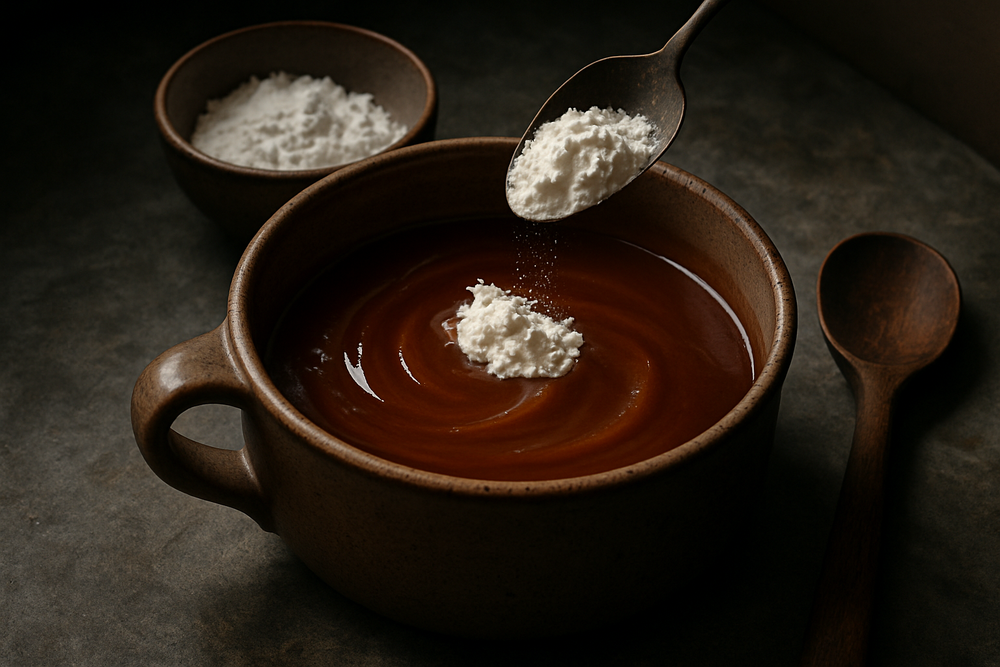
Thickening sauces and gravies: Mix 1–2 teaspoons of dry cornstarch with an equal volume of cold water (this is called a slurry) before adding it to a hot liquid. Stir the slurry in near the end of cooking and bring to a gentle simmer for about 1 minute until the sauce turns glossy and thick. Adding cornstarch directly to hot liquid causes clumping.
Crispy coatings: Toss tofu, tempeh, mushrooms, or vegetables in a thin coating of cornstarch before pan-frying or air-frying. The starch forms a light, glassy crust that stays crispier longer than flour-based coatings.
Stir-fry marinades: A small amount of cornstarch mixed into a marinade (a technique called "velveting" in Chinese cooking) keeps proteins or tofu tender and helps the sauce cling to the food.
Smooth desserts: Cornstarch is the classic thickener for fruit compotes, puddings, and pie fillings. It produces a clearer, glossier result than flour, which can make fruit fillings look cloudy.
Bottom line
Cornstarch is an excellent, gluten-free functional ingredient for thickening sauces, gravies, and soups and for creating crispy coatings — and that is genuinely its best use. It is not a nutrition story. It contains almost no fiber, protein, vitamins, or minerals, and its high-glycemic starch means it is best used in the small amounts a recipe actually calls for rather than as a food in its own right.
On a whole-food, plant-based plate, cornstarch earns a modest, supporting role: a teaspoon here to finish a sauce, a light dusting there to crisp up tofu. It is not something to fear at culinary doses, and not something to lean on for health. Used thoughtfully, it makes plant-based cooking smoother — literally.
Explore more about building balanced, plant-forward meals on the Plantopedia goals page.
How Cornstarch Compares
| Compared with | What's different |
|---|---|
| Cornstarch vs. Corn flour | Contains protein and fiber, whereas cornstarch is pure carbohydrate. |
| Cornstarch vs. Potato starch | Produced from a tuber and thickens at lower temperatures than cornstarch. |
| Cornstarch vs. Arrowroot powder | Derived from a tropical root and creates a clearer, more neutral-tasting gel. |
Health Benefits
Things to Know
Blood sugar caution: Cornstarch is a high-glycemic carbohydrate. People with type 2 diabetes, prediabetes, or insulin resistance should use it sparingly and factor it into their overall carbohydrate awareness for the meal.
Corn allergy: If you have a known allergy to corn or corn-derived ingredients, avoid cornstarch entirely.
Celiac disease / gluten sensitivity: Standard cornstarch is naturally gluten-free, but cross-contamination in processing facilities is a real risk. Always choose a certified gluten-free brand.
Weight management: Cornstarch adds calories (about 30 per tablespoon) without fiber or protein, meaning it contributes little to satiety (the feeling of fullness). Frequent use in large amounts may add up calorically without helping you feel satisfied.
Diabetes medications: The carbohydrate in cornstarch can raise blood glucose, which may affect insulin or oral diabetes medication dosing. Talk to your care team if you are making significant dietary changes.
Pregnancy: Cornstarch in culinary amounts is generally considered safe during pregnancy. Some people experience pica (cravings for non-food substances including raw cornstarch) during pregnancy — if this applies to you, speak with your midwife or OB.
Not a whole grain serving: MyPlate and whole-food, plant-based frameworks count servings of whole grains. Cornstarch, as a refined extract, does not count toward your grain servings for the day.
Best Forms
The standard white powder on grocery shelves. Ideal for home thickening, gravies, sauces, and crispy coatings.
Chemically identical to regular cornstarch but manufactured in a facility that controls for cross-contamination with wheat, barley, or rye. Essential for anyone with celiac disease or non-celiac gluten sensitivity. Look for a third-party certified gluten-free seal on the label.
Found in packaged and processed foods. It has been chemically or physically altered for specific industrial properties (freeze-thaw stability, acid resistance, instant thickening). Not typically sold as a pantry ingredient; if you see it on a label, it simply means the manufacturer used a more engineered version.
Has been pre-cooked and dried, so it thickens without needing to be heated. Common in instant puddings and sauce mixes.
Glossary
Shop This Ingredient
Stock your pantry with quality cornstarch.
Buy on AmazonAs an Amazon Associate, Plantopedia earns from qualifying purchases. This costs you nothing extra and helps us keep the encyclopedia free.
Frequently Asked Questions
Honest answer: cornstarch does not have meaningful health benefits in the way a whole plant food does. What it does offer is functional value and a few specific use cases worth understanding. Heart and circulation There are no human clinical trials showing cornstarch independently improves cardiovascular health, blood pressure, or blood lipids. Dietary guidance from major health organizations generally recommends limiting refined, low-fiber starches — the category cornstarch falls into — in favor of whole grains, which retain their fiber and micronutrient content. That said, the amounts used in home cooking are typically small enough that cornstarch itself is unlikely to have a measurable negative impact on heart health on its own. Digestive health and microbiome Cornstarch provides essentially zero dietary fiber, so it offers nothing for bowel regularity or gut microbiome (the community of beneficial bacteria in your intestines) support. Whole corn products like popcorn, hominy, or whole cornmeal contain fiber; cornstarch, as a refined extract, does not. At typical culinary doses, it is generally well tolerated and digestively neutral for most healthy adults. Blood sugar and metabolism This is the one area where cornstarch deserves genuine attention. Because it is almost pure rapidly digestible starch with no fiber to slow absorption, it has a high glycemic index — meaning it can cause a faster and larger rise in blood glucose (blood sugar) compared with fiber-rich carbohydrate sources. For people without metabolic concerns, small thickening amounts are usually not an issue. For people managing diabetes, prediabetes, or insulin resistance, even moderate amounts of cornstarch-thickened foods may warrant attention to portion size and what else is in the meal. One exception worth knowing: raw (uncooked) cornstarch is used as a medically supervised slow-release carbohydrate therapy for certain rare metabolic disorders called glycogen storage diseases. This is a targeted clinical protocol, not a general wellness strategy, and should only be undertaken under direct medical care. Inflammation and recovery There is no direct human evidence that culinary use of cornstarch meaningfully affects inflammation markers. The broader research on inflammation points to overall dietary patterns — diets high in refined starches and low in whole plant foods tend to be associated with higher inflammatory markers, but cornstarch's contribution to this, at typical cooking doses, is negligible. The company it keeps (the vegetables, legumes, or proteins in the dish) matters far more.
Cornstarch comes in a few forms depending on your needs: Regular refined cornstarch — The standard white powder on grocery shelves. Ideal for home thickening, gravies, sauces, and crispy coatings. Certified gluten-free cornstarch — Chemically identical to regular cornstarch but manufactured in a facility that controls for cross-contamination with wheat, barley, or rye. Essential for anyone with celiac disease or non-celiac gluten sensitivity. Look for a third-party certified gluten-free seal on the label. Modified cornstarch — Found in packaged and processed foods. It has been chemically or physically altered for specific industrial properties (freeze-thaw stability, acid resistance, instant thickening). Not typically sold as a pantry ingredient; if you see it on a label, it simply means the manufacturer used a more engineered version. Pre-gelatinized (instant) cornstarch — Has been pre-cooked and dried, so it thickens without needing to be heated. Common in instant puddings and sauce mixes. For home cooking on a whole-food, plant-based approach, standard or certified gluten-free cornstarch is what you will reach for.
There is no official daily upper limit for cornstarch because it is used as a condiment-scale ingredient, not a food group. Here is practical guidance: For thickening sauces or soups: 1–2 teaspoons (3–6 g) per cup (240 ml) of liquid is the standard range. This yields roughly 10–20 calories of cornstarch per cup of finished sauce, spread across multiple servings. For crispy coatings or batters: 1–3 tablespoons per recipe, typically coating 2–4 portions, means each portion gets roughly half a tablespoon or less. Start small: If you are new to thickening with cornstarch, start at the lower end. Cornstarch-thickened sauces continue to thicken as they cool, so a sauce that looks thin at boiling may be quite thick at table temperature. For people managing blood sugar: Think of cornstarch as a carbohydrate addition to the dish and account for it accordingly — though at typical culinary doses it is a small contributor to overall carbohydrate intake. The real "dose" question is not about cornstarch in isolation — it is about how the overall meal balances refined carbohydrates against fiber, protein, and vegetables.
Quick Answers
Common questions, answered in a line.
Cornstarch is naturally gluten-free because it is a refined starch derived solely from corn. However, individuals with celiac disease should look for a certified gluten-free seal on the label to ensure there is no risk of cross-contamination from processing facilities.
Cornstarch is a high-glycemic carbohydrate that is rapidly digested into glucose, which can cause a quick rise in blood sugar levels. People with type 2 diabetes or insulin resistance should use it sparingly and account for its carbohydrate content in their meal planning.
To avoid clumps, mix 1–2 teaspoons of cornstarch with an equal volume of cold water to create a slurry before adding it to hot liquid. Once added, bring the mixture to a gentle simmer for about one minute until the sauce becomes glossy and thick.
Cornstarch is a refined extract that consists almost entirely of starch, meaning it lacks the fiber, protein, and nutrients found in whole grains. Because it is missing these structural components, it does not count toward your daily recommended whole grain servings.
Cornstarch provides approximately 30 calories per tablespoon and contains no fiber or protein to help you feel full. Because it adds calories without contributing to satiety, frequent use in large amounts may impact weight management efforts.
Cornstarch is composed of two primary starch fractions: amylose, which helps gels become firm when cooled, and amylopectin, which creates a smooth and viscous texture when heated. Both components are pure, digestible carbohydrates that lack the fiber and phytonutrients found in whole foods.
For Readers in the USA
Local context — sourcing, seasonality, and regional notes.
Most commercial cornstarch in the U.S. is made from yellow dent corn grown in the "Corn Belt" states like Iowa and Illinois. While the corn is harvested in the fall, cornstarch is a processed, shelf-stable staple available year-round in every major American grocery chain.
The USDA Organic seal ensures that the corn used for the starch was grown without synthetic pesticides and is non-GMO. In the United States, organic cornstarch is widely available at retailers like Whole Foods Market, Sprouts, and in the natural aisles of Kroger or Walmart.
In the United States, cornstarch is the standard term, whereas in the UK and other Commonwealth countries, it is almost exclusively referred to as "cornflour." If you are using a British recipe, "cornflour" refers to the same white, powdery starch found in U.S. pantry staples like Argo.
AI Clinical Review
- Cornstarch is a highly refined, almost pure carbohydrate with negligible protein, fat, fiber, or micronutrients—best viewed as a functional thickener rather than a nutrient-dense food.
- It is naturally gluten-free but can be cross-contaminated; advising certified gluten-free options for people with celiac disease is appropriate.
- The high glycemic index (GI) and rapid digestibility are accurately highlighted; small culinary amounts usually contribute modest calories per serving but can still matter for those managing blood sugar.
- Practical guidance on use (slurry in cold liquid, 1–2 teaspoons per cup for light thickening) and on alternative forms (modified or pre‑gelatinized for specific properties) is on target.
- The mention of uncooked cornstarch as a medically supervised therapy in certain glycogen storage diseases is correct and appropriately framed as clinical, not general wellness.
- Reported GI values for cornstarch vary and depend on preparation and meal context; real‑world post‑meal glucose responses can be lower when cornstarch is part of a mixed meal with fiber, fat, and protein.
- Cooling and reheating can create a small amount of “resistant starch” (starch that resists digestion), but the magnitude with typical cornstarch‑thickened dishes and its clinical relevance remain uncertain.
- There are no high‑quality trials isolating culinary cornstarch intake with long‑term outcomes (cardiovascular risk, inflammation, or microbiome changes); most guidance extrapolates from patterns high in refined starch overall.
- Typical culinary dosing: 1–2 teaspoons (3–6 g) per cup of liquid for light sauces; up to 1 tablespoon for thicker results. Sauces thicken further as they cool.
- Diabetes, prediabetes, or reactive hypoglycemia: account for cornstarch as a fast carbohydrate and discuss any notable dietary changes with your care team—especially if you use insulin or insulin‑secretagogue medications.
- Celiac disease or non‑celiac gluten sensitivity: choose certified gluten‑free cornstarch; people with corn allergy should avoid it entirely.
- Special situations: pica in pregnancy (including cravings for raw cornstarch) warrants clinician input; medically supervised uncooked cornstarch protocols are specific to certain metabolic disorders and should not be self‑initiated.
Nearly pure starch with no fiber or protein; use as a functional ingredient, not a food group.
References
- USDA FoodData Central — Cornstarch nutrition data (fdc.nal.usda.gov)
- USDA MyPlate — Grains guidance (myplate.gov)
- Healthline — "Is Cornstarch Bad for You? Nutrition and Health Effects" (healthline.com)
- HealthifyMe — "Everything You Need To Know About Cornstarch" (healthifyme.com)
- MyFoodData (USDA-based) — Cornstarch nutrition facts (tools.myfooddata.com)
- RecipeTips — Cornstarch USDA nutrition data (recipetips.com)
- The Living Look — "Cornstarch for Thickening: How to Use It Safely & Effectively" (thelivinglook.com)
- FitAudit — Corn starch nutrition facts (fitaudit.com)
Know Your Numbers
Eating healthy is a start. Now get to know your biomarkers.
Food changes bloodwork — inflammation, lipids, blood sugar and nutrient status all respond to what you eat. 59 markers from $59.
- Results in 7–10 days at 2,000+ Quest sites
- Licensed provider reviews every result
- One flat price, no membership, HSA/FSA eligible
Educational information only, not medical advice. Panels are ordered and reviewed through our licensed partner; Plantopedia may earn a commission.