Corona Beans — health benefits and uses
A prized Italian giant white bean for elegant bean dishes.
The Short Answer
Corona beans are giant Italian white beans prized for their creamy texture and high fiber content. They provide 7g of protein and 7g of fiber per half-cup serving, making them an excellent plant-based staple for heart health and digestion.
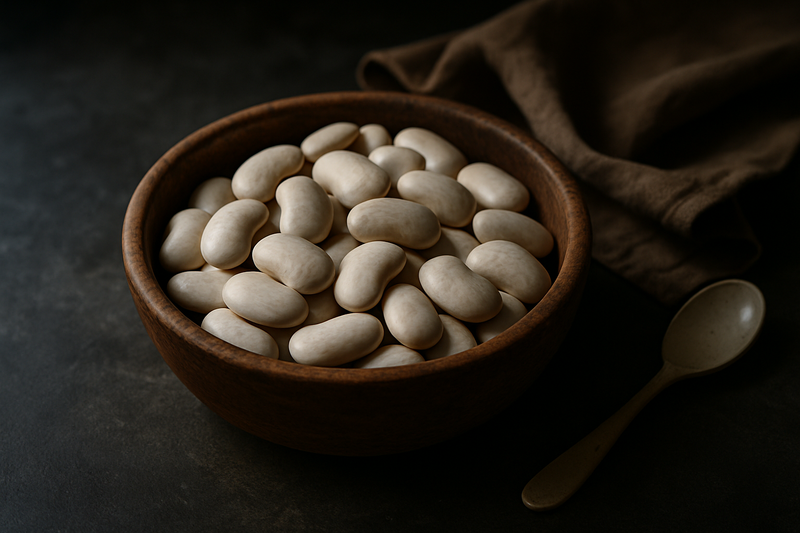
Corona Beans · Photograph
Discover corona beans nutrition and health benefits: fiber, plant protein, folate, and potassium in one giant Italian white bean. Learn how to soak, cook, and serve them safely, plus what the evidence says about heart health, blood sugar, and digestion.
Key Nutrients
% Daily Value based on 2,000 cal diet
Key active compounds
- Resistant starch — a form of starch that bypasses digestion in the small intestine and is fermented by beneficial bacteria in the colon. It acts as a prebiotic and may support blood sugar regulation and colon health.
- Soluble dietary fiber — dissolves in water to form a gel-like substance that slows digestion, helps lower LDL (low-density lipoprotein, often called "bad") cholesterol, and blunts post-meal blood sugar spikes.
- Insoluble dietary fiber — adds bulk to stools and supports regular bowel movements.
- Phenolic compounds (including flavonoids) — plant secondary metabolites with antioxidant and anti-inflammatory properties. Antioxidant means they help neutralize unstable molecules called free radicals that can damage cells.
- Folate (vitamin B9) — a B vitamin essential for DNA synthesis, cell division, and red blood cell formation.
- Phytate — an antinutrient (a compound that can reduce mineral absorption) naturally present in raw beans; substantially reduced by soaking and thorough cooking.
- Lectins — proteins in raw beans that can cause gastrointestinal distress; inactivated by proper cooking.
Are corona beans good for you? Key health benefits
Most of the human evidence reviewed here comes from studies on common beans (Phaseolus vulgaris) and mixed pulses rather than corona beans specifically. Because corona beans are the same species (Phaseolus coccineus, a runner bean) and share a similar nutritional profile, researchers and dietitians consider it reasonable to extend these findings — while acknowledging that direct corona-specific clinical trials have not been conducted.
Heart and circulation
Regular pulse consumption is associated with improvements in several cardiovascular risk factors. Reviews of polyphenol-rich dry beans report favorable effects on LDL cholesterol, blood pressure, and body weight — all established risk markers for heart disease. A 2017 review in Nutrition Reviews found that common bean intake can support cardiometabolic health, likely through the combined action of soluble fiber (which can reduce cholesterol reabsorption), resistant starch, potassium, and phenolic compounds. The evidence here is rated moderate: associations are consistent in observational data, and some controlled trials support lipid improvements, but most studies use common beans rather than runner beans.
Potassium, present at around 350 mg per half-cup serving, is a mineral associated with healthy blood pressure. Dietary guidelines consistently identify beans and pulses as foods that support heart-healthy eating patterns.
Digestive health and microbiome
This is arguably where the evidence is strongest. High fiber intake from whole food sources like beans is consistently linked with better bowel regularity, increased stool bulk, and a more diverse gut microbiome. The resistant starch in corona beans acts as a prebiotic — food for beneficial gut bacteria — which produce short-chain fatty acids (SCFAs) as a byproduct. SCFAs are compounds that help nourish colon cells and may reduce inflammation in the gut.
Gradual introduction matters here. If you are not currently eating many beans, start with a small portion (2–3 tablespoons of cooked beans) and increase slowly over two to three weeks to give your gut bacteria time to adapt and minimize gas and bloating.
Blood sugar and metabolism
Beans have a naturally low glycemic index (GI) — a measure of how quickly a food raises blood sugar. Their combination of fiber, resistant starch, and protein slows gastric emptying (the rate at which food leaves the stomach), which helps flatten the blood sugar curve after a meal. Epidemiological (population-level observational) research suggests that eating dry beans three or more times per week is associated with roughly a 35% lower risk of developing type 2 diabetes, though this figure comes from observational data and should be interpreted cautiously. Controlled trials using bean-rich diets generally support modest improvements in fasting blood sugar and insulin sensitivity, particularly in people at risk for metabolic disorders.
Inflammation and recovery
The phenolic compounds in runner beans, including flavonoids and phenolic acids, show antioxidant and anti-inflammatory activity in laboratory and animal models. Human evidence specifically for anti-inflammatory outcomes is more limited and heterogeneous. The broader picture — that bean-rich diets are associated with lower levels of inflammatory markers in some population studies — is promising but not yet definitive. Consider this area emerging rather than established.
Hormones and cycle health
High-fiber diets that include beans can influence bile acid metabolism and the enterohepatic circulation (the recycling loop between the gut and liver), which in turn affects how hormones are processed and cleared from the body. However, these effects are derived from broader fiber research, not bean-specific trials, and any hormone-related benefit from corona beans should be considered hypothetical at this stage.
Prep and pairing ideas
Corona beans are remarkably versatile. Their large size and creamy texture mean they work as a main event, not just a supporting ingredient.
Classic Italian braise: Simmer soaked, cooked corona beans in low-sodium vegetable broth with garlic, a sprig of rosemary, and a pinch of chili flakes for 15–20 minutes. Finish generously with good-quality extra-virgin olive oil and a squeeze of lemon. Serve warm or at room temperature with crusty bread.
White bean and roasted tomato salad: Toss cooked corona beans with roasted cherry tomatoes, thinly sliced red onion, fresh basil, capers, and a red wine vinegar dressing. The acidity of the tomatoes and vinegar also improves iron absorption from the beans — a practical nutritional pairing.
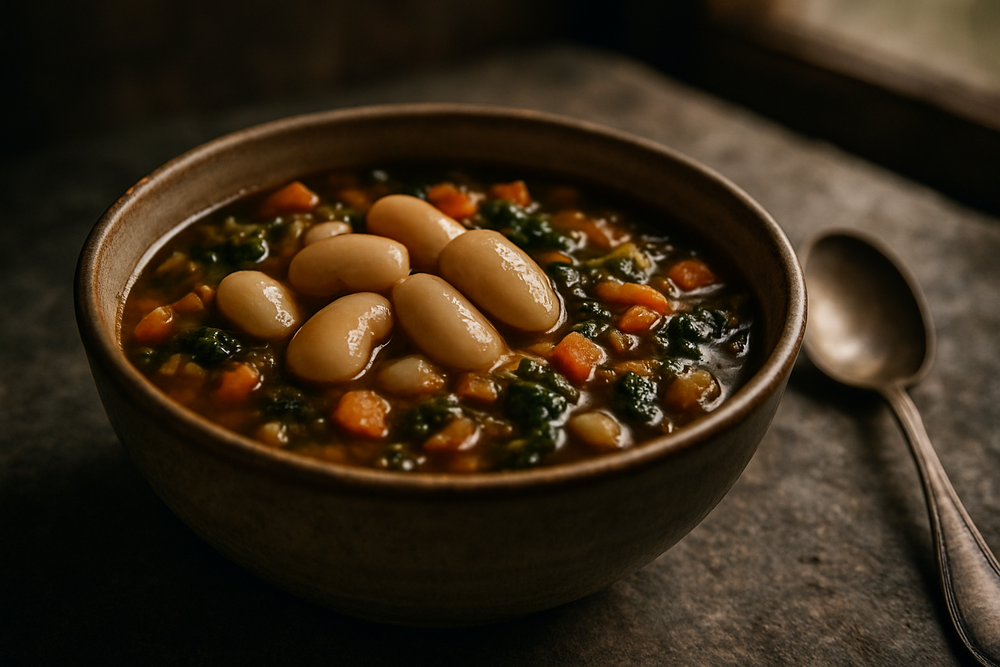
Hearty soup base: Add whole cooked corona beans to a simple soffritto (sautéed onion, celery, carrot) with canned tomatoes and vegetable broth. Their size means they hold their shape even after extended simmering, and they thicken the broth naturally as some beans break down at the edges.
Pairing rationale:
- Olive oil contributes monounsaturated fat that supports the absorption of fat-soluble plant compounds and adds satiety.
- Lemon juice or vinegar provides vitamin C, which enhances non-heme iron (the type of iron found in plants) absorption from the beans.
- Dark leafy greens (kale, chard, spinach) alongside corona beans create a folate-plus-iron combination with complementary fiber profiles.
Bottom line
Corona beans are a nutritionally dense, whole plant food with a standout texture that earns them a permanent place in the kitchen. The evidence supporting regular bean consumption — across fiber, plant protein, folate, potassium, and phytochemical content — is consistent and well-established at the category level. Corona-bean-specific clinical trials are lacking, but their nutritional profile makes the extrapolation from broader bean research reasonable.
The most important practical points: soak them well, cook them fully, introduce them gradually if you're new to high-fiber eating, and be aware of the few but real medication interactions. Beyond that, they are one of the most affordable, versatile, and genuinely delicious whole foods available — a fitting centerpiece of any food-as-medicine approach to eating.
How Corona Beans Compares
| Compared with | What's different |
|---|---|
| Corona Beans vs. Cannellini Beans | Larger size with a creamier, meatier texture and thicker skin. |
| Corona Beans vs. Lima Beans | Actually a different species (Phaseolus coccineus) that grows much larger. |
| Corona Beans vs. Great Northern Beans | Smaller and milder; Corona beans have a more pronounced savory, umami flavor. |
Health Benefits
Things to Know
Never eat raw or undercooked corona beans.: Lectins in undercooked beans cause nausea, vomiting, and diarrhea.
IBS, IBD, and SIBO: Individuals with irritable bowel syndrome, inflammatory bowel disease, or small intestinal bacterial overgrowth may be sensitive to the fermentable fibers in beans. Introduce slowly and consider consulting a dietitian who specializes in gut health.
Kidney disease: Corona beans contribute meaningful potassium (approximately 350 mg per half-cup). People on potassium-restricted diets due to chronic kidney disease (CKD) should discuss legume intake with their nephrologist or dietitian.
Gout: Beans contain purines, though at lower levels than most meat sources. If you are managing gout, discuss total purine load with your doctor.
Diabetes medications: Adding significant amounts of beans to your diet can lower post-meal blood sugar. If you take insulin or sulfonylureas (a class of diabetes medications), this could increase hypoglycemia (low blood sugar) risk. Monitor blood glucose and speak with your prescriber before making large dietary changes.
Blood pressure medications and potassium-sparing diuretics: ACE inhibitors, ARBs, and potassium-sparing diuretics (such as spironolactone) can raise potassium levels in the blood. Adding large amounts of high-potassium foods like beans may require monitoring of serum (blood) potassium.
Pregnancy: Corona beans are a useful folate source during pregnancy, but total diet and prenatal supplement use should be coordinated with a midwife or obstetrician.
Legume allergy: If you have a known allergy to beans, peas, or lentils, avoid corona beans or seek guidance from an allergist.
Prep Ideas
- — Olive oil contributes monounsaturated fat that supports the absorption of fat-soluble plant compounds and adds satiety.
- — Lemon juice or vinegar provides vitamin C, which enhances non-heme iron (the type of iron found in plants) absorption from the beans.
- — Dark leafy greens (kale, chard, spinach) alongside corona beans create a folate-plus-iron combination with complementary fiber profiles.
Glossary
Shop This Ingredient
Stock your pantry with quality corona beans.
Buy on AmazonAs an Amazon Associate, Plantopedia earns from qualifying purchases. This costs you nothing extra and helps us keep the encyclopedia free.
Frequently Asked Questions
Dried whole corona beans are the most economical form and give you full control over texture. Look for large, uniformly white beans with no cracks or discoloration. Italian brands (Del Colle, Rancho Gordo's "Royal Corona") tend to be reliably sized and well-cleaned. Dried beans keep for one to two years in a sealed container in a cool, dark place, though older beans take longer to cook and may never fully soften. Canned or jarred cooked corona beans (common in Italian specialty stores and online) are a practical shortcut. They are already fully cooked and safe to eat after rinsing. Rinsing removes a significant portion of the sodium added during canning. Check the label: the only ingredients should be beans, water, and salt. Avoid versions with added sugar or preservatives. Supplements or extracts of corona beans specifically are not a recognized or standardized product. The research benefits attributed to beans come from eating whole cooked beans as food, not from isolated extracts. Stick with the whole food form. Label tip: For dried beans, "product of Italy" is a reasonable quality signal for corona-type runner beans. For jarred versions, look for "fagioli corona" on Italian-language packaging.
Do corona beans need to be soaked before cooking? Yes — soaking is strongly recommended and, for large beans like coronas, arguably non-negotiable. Here is why: raw and undercooked beans contain lectins and phytates (antinutrients) that can cause significant gastrointestinal distress. Soaking reduces these compounds, shortens cook time, and improves digestibility. Standard soak: Cover dried corona beans with at least three times their volume of cold water. Soak for 8–12 hours (or overnight). Drain and rinse well before cooking. Quick soak: Bring beans and water to a boil, boil for 2 minutes, remove from heat, cover, and let sit for 1 hour. Drain, rinse, then cook. How long to cook corona beans After soaking, simmer corona beans in fresh water (not the soaking water) for 60–90 minutes, or until completely tender throughout. They are done when you can press one between your fingers and it yields with no chalky resistance. Under-seasoned during cooking is fine — salt can be added in the last 15 minutes or after cooking to prevent the skins from toughening. Pressure cooker: 25–30 minutes at high pressure after soaking. Slow cooker: 6–8 hours on low from soaked beans.
There is no single universally agreed daily target for corona beans specifically, but the broader evidence for pulse consumption points to a useful range. Research-supported guidance: Major nutrition reviews suggest that eating at least 100 g (roughly ½ cup) of cooked pulses per day improves nutrient density and is associated with cardiometabolic benefits. Epidemiological data link eating beans three or more times per week with a lower risk of cardiovascular disease and type 2 diabetes. Dietary guidelines in several countries, including the US Dietary Guidelines for Americans 2020–2025, recommend beans and pulses as a regular feature of healthy eating patterns, broadly suggesting 1½ cups per week as a minimum target for adults. Practical range: Somewhere between ½ cup and 1½ cups of cooked corona beans per day, within an otherwise balanced diet, appears to be where most of the research benefit lies. Start low: If you are new to beans, begin with 2–3 tablespoons (about 30–50 g cooked) per meal and increase gradually over two to three weeks. Drink adequate water to support fiber digestion. This approach minimizes gas, bloating, and changes in bowel habits that often deter people from sustaining legume intake.
The time-pressed home cook who wants more plant protein A half-cup of corona beans delivers 7 g of protein with minimal prep if using jarred beans. Their large size means they don't disappear into a dish — they are satisfying and visible as the main component. They require no refrigeration in dried form, making them a practical pantry staple. The person working on heart health or blood sugar management The combination of soluble fiber, resistant starch, and low glycemic index makes corona beans well-suited to diets targeting LDL cholesterol or post-meal blood sugar. Replacing refined carbohydrates (white rice, pasta, bread) with beans at one or two meals per week is a realistic, evidence-aligned dietary shift. Their potassium content supports blood pressure goals, though anyone on potassium-restricted medications should check with their doctor first (see cautions above).
Quick Answers
Common questions, answered in a line.
Corona beans are an excellent source of dietary fiber, plant-based protein, folate (vitamin B9), and potassium. They also contain resistant starch and phenolic compounds like flavonoids, which provide antioxidant and anti-inflammatory properties to support overall health.
Yes, corona beans can support heart health because they contain soluble fiber, which helps lower LDL (bad) cholesterol, and potassium, which supports healthy blood pressure. Their combination of resistant starch and phenolic compounds also targets cardiovascular risk factors.
Corona beans act as a prebiotic by providing resistant starch that feeds beneficial gut bacteria, leading to the production of short-chain fatty acids. This process helps nourish colon cells, reduces gut inflammation, and supports regular bowel movements through high fiber content.
Corona beans have a low glycemic index, meaning they raise blood sugar slowly due to their high fiber, protein, and resistant starch content. These components slow down stomach emptying, which helps flatten the blood sugar curve after meals.
You must never eat raw or undercooked corona beans because they contain lectins and phytates that can cause severe gastrointestinal distress, including nausea and vomiting. Thorough soaking and cooking are required to safely inactivate these compounds.
If you are new to high-fiber foods, start with 2 to 3 tablespoons of cooked corona beans and increase the amount slowly over two to three weeks. This gradual introduction gives your gut bacteria time to adapt, which helps minimize gas and bloating.
People with chronic kidney disease (CKD) on potassium-restricted diets, those with gout due to purine content, and individuals with IBS or SIBO should consult a professional before eating corona beans. They may also interact with blood pressure and diabetes medications.
Pairing corona beans with vitamin C-rich foods like lemon juice or vinegar helps improve the absorption of non-heme iron from the beans. Additionally, serving them with healthy fats like olive oil supports the absorption of fat-soluble plant compounds.
For Readers in the USA
Local context — sourcing, seasonality, and regional notes.
In the United States, you can find dried corona beans at specialty grocers like Whole Foods Market, Italian markets, and through heirloom seed suppliers like Rancho Gordo. While less common in standard supermarkets, they are increasingly available in the organic or bulk sections of regional chains like Wegmans or Central Market.
Corona beans are primarily grown in California's mild coastal climates, where the long growing season allows these large runner beans to mature fully. Because they are a warm-weather crop, domestic harvests typically hit farmers markets and online retailers in the late summer and early autumn.
Yes, the USDA Organic seal ensures corona beans were grown without synthetic fertilizers or prohibited pesticides, which is a common priority for pulse consumers in the US. Additionally, look for "Non-GMO Project Verified" labels if you want third-party confirmation that the beans were produced without genetic engineering.
In US culinary contexts, corona beans are often referred to as "Italian butter beans" or "giant white beans," though they are distinct from the smaller lima beans commonly found in Southern cooking. While they share the "butter bean" nickname in some regions, corona beans are significantly larger and hold their shape better during long braises.
AI Clinical Review
- Corona beans (large white runner beans, Phaseolus coccineus) are nutritionally comparable to other pulses and provide meaningful fiber, plant protein, folate, and potassium per ½-cup cooked serving.
- The emphasis on soaking and thorough cooking is appropriate; proper preparation improves digestibility and inactivates lectins that can cause GI distress.
- The health framing aligns with the broader pulse literature: regular bean intake supports cardiometabolic markers via soluble fiber, resistant starch, potassium, and polyphenols.
- Practical guidance is consumer-friendly (portion suggestions, gradual introduction, pairing with vitamin C–rich foods, and using canned/jarred options with rinsing to reduce sodium).
- Corona-specific human trials are limited; most outcomes are extrapolated from studies on common beans or mixed pulses. Benefits are plausible but not proven for this exact variety.
- Anti-inflammatory and antioxidant claims mainly derive from lab/animal data; human evidence on inflammation endpoints remains mixed.
- Diabetes risk-reduction figures come from observational research and reflect associations, not causation; real-world effects depend on overall diet and portion consistency.
- The amount of resistant starch and glycemic impact can vary with cultivar, storage age, and cooking/cooling methods, so individual responses may differ.
- A practical intake range is ½–1½ cups cooked beans per day, or at minimum ~1½ cups per week as part of healthy patterns; increase gradually over 2–3 weeks with fluids to limit gas/bloating.
- Safety: never eat raw or undercooked beans. Cook soaked corona beans until fully tender (no chalky center); pressure cooking can shorten time and ensure adequate heat.
- Check with a clinician if you have CKD or are on potassium-raising meds (ACE inhibitors, ARBs, spironolactone), use insulin/sulfonylureas (hypoglycemia risk with higher bean intake), have IBS/IBD/SIBO (fiber sensitivity), gout (purine load), are pregnant (coordinate total folate), or have a legume allergy.
- Form matters: dried beans are economical but older beans may cook slowly; canned/jarred are convenient—rinse to lower sodium. Extracts/supplements aren’t standardized or evidence-based; the benefits are from whole cooked beans.
Soak well and cook until fully tender.
References
- USDA FoodData Central — nutrition data for cooked white/runner beans (fdc.nal.usda.gov)
- Harvard T.H. Chan School of Public Health, The Nutrition Source — overview of legumes and pulses (nutritionsource.hsph.harvard.edu)
- Ayocote bean (Phaseolus coccineus) nutraceutical review, Medigraphic/Revista de Salud Pública y Nutrición 2024 — runner bean bioactive compounds and health potential (medigraphic.com)
- Polyphenol-rich dry common beans and cardiometabolic health — review, PubMed PMID 29113066 (pubmed.ncbi.nlm.nih.gov)
- Nutraceutical promise of Phaseolus vulgaris — bioactive compounds review, Nutrition Reviews (academic.oup.com)
- Enhancing nutrition with pulses: defining a recommended serving size for adults — Nutrition Reviews (pdfs.semanticscholar.org)
- Dietary Guidelines for Americans 2020–2025 — treatment of beans and pulses as nutrient-dense foods, PMC reference (pmc.ncbi.nlm.nih.gov)
- Del Colle Corona Beans product nutrition data — Alma Gourmet (almagourmet.com)
- Rancho Gordo alubia blanca nutritional chart — comparable large white runner bean nutritional reference (ranchogordo.com)
- Feasting at Home — practical guide to cooking corona beans (feastingathome.com)
Know Your Numbers
Eating healthy is a start. Now get to know your biomarkers.
Food changes bloodwork — inflammation, lipids, blood sugar and nutrient status all respond to what you eat. 59 markers from $59.
- Results in 7–10 days at 2,000+ Quest sites
- Licensed provider reviews every result
- One flat price, no membership, HSA/FSA eligible
Educational information only, not medical advice. Panels are ordered and reviewed through our licensed partner; Plantopedia may earn a commission.