Heirloom & Regional Legumes: A Complete Guide
How heirloom and landrace beans differ from commodity legumes in texture, cooking time, and pigment — plus a full index of the varieties covered on Plantopedia.
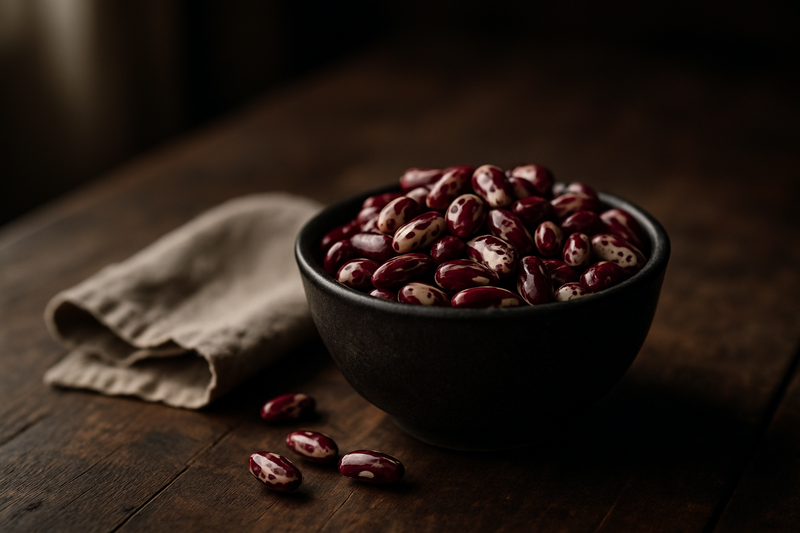
Heirloom legumes are the bean varieties that never made it into the commodity supply chain: landraces kept alive by seed savers, regional farmers, and home gardeners because they cook better, taste better, or simply carry a family's history. Nutritionally they sit in the same band as supermarket beans — roughly 7–9 g of protein and 6–8 g of fiber per half-cup cooked — but they differ in skin thickness, cooking time, starch texture, and the pot liquor they produce.
This guide is the hub for every heirloom and regional legume on Plantopedia. Use it to pick a variety by how you plan to cook it, then follow the link for full nutrition, sourcing, and preparation detail.
Why heirloom varieties cook differently
Three variables explain most of the difference between a commodity pinto and an heirloom bean:
- Skin-to-flesh ratio. Large-format beans such as Corona beans and Gigante beans hold a thin skin around a broad, creamy interior, so they absorb dressing rather than falling apart.
- Starch type. Dense, waxy varieties such as Jacob's Cattle beans and Hutterite soup beans break down into a thick, self-saucing broth — the reason they are traditional soup beans.
- Age of the seed. Heirlooms are usually sold closer to harvest. Fresher dried beans hydrate faster and need less soaking, which is why cooking times printed on generic packaging often overshoot.
The heirloom legume index
- Anasazi beans — full nutrition, cooking time, and sourcing notes
- Appaloosa beans — full nutrition, cooking time, and sourcing notes
- Ayocote beans — full nutrition, cooking time, and sourcing notes
- Bolita beans — full nutrition, cooking time, and sourcing notes
- Borlotti beans — full nutrition, cooking time, and sourcing notes
- Calypso beans — full nutrition, cooking time, and sourcing notes
- Cherokee Trail of Tears beans — full nutrition, cooking time, and sourcing notes
- Christmas lima beans — full nutrition, cooking time, and sourcing notes
- Corona beans — full nutrition, cooking time, and sourcing notes
- Domingo Rojo beans — full nutrition, cooking time, and sourcing notes
- European Soldier beans — full nutrition, cooking time, and sourcing notes
- Eye of the Goat beans — full nutrition, cooking time, and sourcing notes
- Gigante beans — full nutrition, cooking time, and sourcing notes
- Good Mother Stallard beans — full nutrition, cooking time, and sourcing notes
- Hutterite soup beans — full nutrition, cooking time, and sourcing notes
- Jacob's Cattle beans — full nutrition, cooking time, and sourcing notes
How to cook heirloom beans without losing their shape
Soak 8–12 hours in plenty of cold water, discard the soaking water for varieties you find hard to digest, and start the pot cold. Bring to a bare simmer — a rolling boil is what splits skins — and salt early: salted soaking water strengthens pectin in the skin and produces fewer blowouts, not more. Add acidic ingredients such as tomato or vinegar only after the beans are tender, since acid slows softening.
For pot-liquor-forward dishes, choose the soup beans above. For salads and brothy bowls where whole beans matter visually, choose the large-format varieties.
Nutrition, in context
Across the varieties in this hub, a half-cup cooked portion typically supplies 100–140 kcal, 7–9 g protein, 6–8 g fiber, and meaningful folate, iron, magnesium, and potassium. The fiber is largely soluble and fermentable, which is the mechanism behind the cholesterol and post-meal glucose effects observed in legume trials. Pigmented skins — the mottled reds and blacks of Eye of the Goat beans or Good Mother Stallard beans — also carry anthocyanins and proanthocyanidins that plain white varieties lack.
Iron from beans is non-heme, so pair the pot with a vitamin C source (citrus, peppers, tomato) to raise absorption. Our iron absorption calculator estimates the difference.
Frequently asked questions
Are heirloom beans more nutritious than regular beans?
Not dramatically. Macronutrients are similar across varieties, so the protein and fiber you get from an heirloom bean are close to those of a supermarket pinto. The real differences are pigment content in dark-skinned varieties, which adds polyphenols, plus texture, cooking time, and flavor.
Do heirloom beans need to be soaked?
Soaking is optional but helpful. It shortens cooking time, evens out hydration so fewer beans split, and reduces some of the oligosaccharides associated with gas. Fresher heirloom seed hydrates faster than old commodity stock, so check for tenderness earlier than the package suggests.
Why did my heirloom beans stay hard?
Old seed, hard water, and acid added too early are the three usual causes. Beans stored longer than about two years can resist softening no matter how long you cook them. Adding tomato, vinegar, or wine before the beans are tender will also stall softening.
Which heirloom bean is best for soup?
Waxy, quick-collapsing varieties such as Hutterite soup beans and Jacob's Cattle beans produce the thickest broth. For a brothy soup where beans stay whole, use a large-format variety like Corona or Gigante instead.
Can I substitute one heirloom bean for another?
Usually yes, within size class. Swap large formats for large formats and small mottled beans for other small mottled beans; expect cooking times to shift by 15–30 minutes either way.
Know Your Numbers
Eating healthy is a start. Now get to know your biomarkers.
Food changes bloodwork — inflammation, lipids, blood sugar and nutrient status all respond to what you eat. 59 markers from $59.
- Results in 7–10 days at 2,000+ Quest sites
- Licensed provider reviews every result
- One flat price, no membership, HSA/FSA eligible
Educational information only, not medical advice. Panels are ordered and reviewed through our licensed partner; Plantopedia may earn a commission.