Gigante Beans — health benefits and uses
A celebrated Greek taverna bean eaten for hearty, satisfying meals.
The Short Answer
Gigante beans are a large, meaty legume prized for their creamy texture and high nutrient density, providing nearly 15g of protein and 13g of fiber per serving.
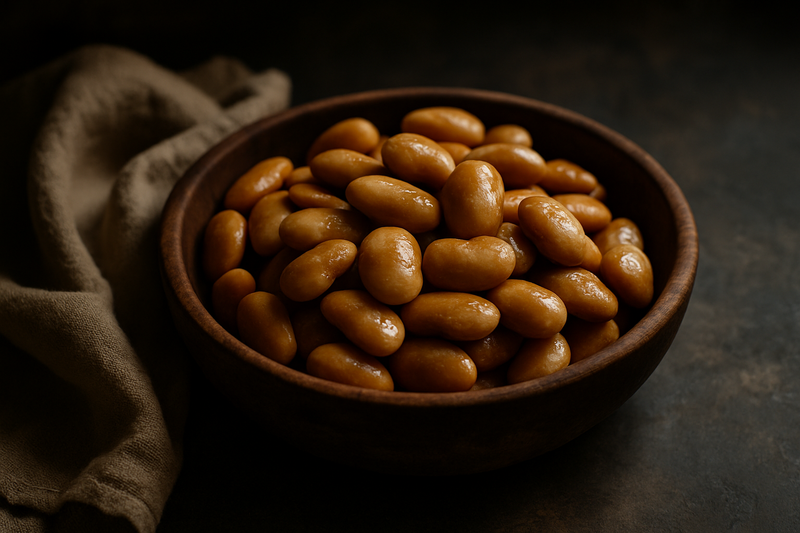
Gigante Beans · Photograph
Discover the gigante beans health benefits backed by research: heart support, better digestion, blood sugar balance, and more. Includes nutrition facts, how to soak and cook gigante beans safely, and easy ways to enjoy Greek gigantes plaki at home.
Key Nutrients
% Daily Value based on 2,000 cal diet
Key active compounds in gigante beans
- Resistant starch — A type of starch that bypasses digestion in the small intestine and arrives intact in the colon, where it feeds beneficial bacteria and helps regulate blood sugar.
- Soluble dietary fiber — Dissolves in water to form a gel-like substance; slows digestion and can help lower blood cholesterol levels.
- Insoluble dietary fiber — Adds bulk to stools and keeps digestion moving; supports bowel regularity.
- Polyphenols (flavonoids and phenolic acids) — Plant compounds with antioxidant properties that may reduce oxidative stress (cell damage from unstable molecules) and modulate inflammation.
- Phytates (phytic acid) — Phosphorus-containing compounds that can mildly reduce absorption of minerals like iron and zinc in a single meal. Soaking and cooking substantially reduce phytate levels, and phytates also show antioxidant effects.
- Saponins — Surface-active plant glycosides (sugar-linked molecules) found in legume skins that show cholesterol-binding and potential anti-inflammatory properties in experimental research.
- Lectins — Proteins found in raw beans that can cause gastrointestinal distress if consumed undercooked. Thorough cooking deactivates them. This is a key safety reason to always fully cook dried beans.
Are gigante beans good for you? Key health benefits
Heart and circulation
The heart-health case for beans is one of the best-supported in legume research. Systematic reviews and meta-analyses of prospective cohort studies — large observational studies that track people's diets and health outcomes over many years — show that people who eat the most legumes have roughly 6–10% lower risk of cardiovascular disease and coronary heart disease compared with those who eat the least (relative risk approximately 0.90–0.94). Dose-response analyses suggest cardiovascular benefits increase up to about 400 g of legumes per week (roughly four one-cup servings), after which the effect plateaus.
Several mechanisms help explain this. Soluble fiber in beans helps the body excrete bile acids, which forces the liver to draw down LDL cholesterol (often called "bad" cholesterol) from the bloodstream. Potassium and magnesium both support healthy blood pressure. Folate plays a role in homocysteine metabolism — elevated homocysteine is considered a risk marker for cardiovascular disease. And because beans are filling and low in saturated fat, eating them regularly tends to displace less favorable foods like processed meats and refined carbohydrates.
It is worth noting that most studies look at legumes as part of an overall healthy dietary pattern rather than as a single magic ingredient. Gigante beans baked in olive oil and tomatoes — as in a traditional gigantes plaki — combine the fiber and protein of the bean with the cardiovascular benefits of extra-virgin olive oil and lycopene-rich tomatoes, which is a naturally synergistic combination.
Digestive health and gut microbiome
A one-cup serving of gigante beans provides roughly 13 g of dietary fiber — nearly half the daily recommended intake for most adults in a single sitting. Both types of fiber matter here. Insoluble fiber adds physical bulk to stools and speeds transit time through the colon, reducing constipation. Soluble fiber and resistant starch act as prebiotics — food for the beneficial bacteria living in your large intestine.
When gut bacteria ferment these fibers, they produce short-chain fatty acids (SCFAs) such as butyrate. Butyrate is the preferred energy source for the cells lining the colon and has been linked to reduced inflammation in the gut wall, improved gut barrier function, and lower risk of colorectal cancer. Meta-analyses of observational studies have associated higher legume intake with roughly 9–18% lower risk of colorectal adenomas (precancerous growths) and colorectal cancer, though these are population-level associations rather than proof of direct cause and effect.
For practical digestion, the main consideration is pace. Adding a full cup of gigante beans overnight when you are used to a low-fiber diet is a reliable way to experience gas and bloating. Start with a quarter-cup serving and build up over two to four weeks as your gut bacteria adjust.
Blood sugar and metabolism
Gigante beans have a low glycemic index (GI) — a measure of how quickly a food raises blood sugar compared with pure glucose. Estimates for large white beans fall in the range of 10–40 on the GI scale, compared with white bread at around 70–75. The combination of resistant starch, soluble fiber, and plant protein means the carbohydrates in gigante beans are digested and absorbed slowly, producing a gentle and sustained energy release rather than a sharp spike.
Controlled dietary trials with pulses consistently demonstrate improvements in post-meal glucose and insulin responses in people with or at risk for type 2 diabetes. Population-level studies are more mixed — the relationship between total legume intake and diabetes incidence is modest in observational data — but the practical benefit of replacing high-GI starchy foods with beans in a meal is well-established.
One real-world consideration: if you are managing blood sugar with insulin or sulfonylureas (a class of diabetes medication that stimulates insulin release), significantly increasing your bean intake may improve your glucose control enough to change how much medication you need. This is a good problem to have, but worth monitoring with your care team.
Inflammation and recovery
The evidence linking beans specifically to lower systemic inflammation (ongoing, low-grade inflammation throughout the body that contributes to many chronic diseases) is emerging rather than definitive. Most data come from mechanistic studies and observational research rather than large randomized controlled trials focused on inflammatory biomarkers.
What is clearer is that the gut-microbiome benefits described above — increased SCFAs, improved gut barrier integrity — translate into reduced intestinal inflammation. Some dietary intervention studies that include legumes as part of high-fiber, plant-rich patterns show reductions in inflammatory markers like C-reactive protein (CRP), though it is difficult to isolate beans' contribution from the overall dietary shift. The polyphenols and saponins in gigante beans contribute an antioxidant layer that may add to this effect.
Prep and pairing ideas
Gigantes plaki (the classic): Soak dried gigante beans overnight. Boil until fork-tender (about 60–90 min). Transfer to a baking dish. Top with a sauce of crushed canned tomatoes, sliced onion, minced garlic, a generous pour of extra-virgin olive oil, fresh flat-leaf parsley, a little sea salt, and black pepper. Bake uncovered at 350°F / 175°C for 45–60 minutes until the sauce thickens and the tops of the beans blush golden. Serve warm with crusty whole-grain bread or as a side to grilled vegetables.
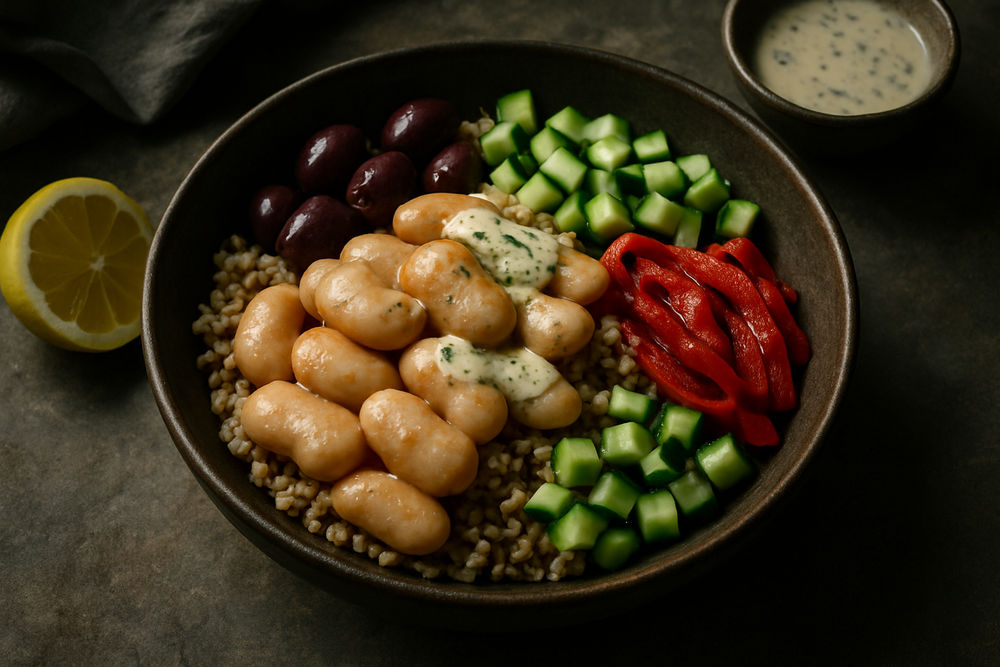
Mediterranean grain bowl: Layer cooked gigante beans over farro or barley with roasted red peppers, Kalamata olives, diced cucumber, and a lemon-herb tahini dressing. The beans and whole grain together provide a complete amino acid profile (all essential protein building blocks).
Creamy white bean dip: Blend cooked gigante beans with roasted garlic, extra-virgin olive oil, lemon juice, smoked paprika, and a pinch of salt until smooth. Serve with raw vegetable sticks or whole-grain pita. Far more fiber-dense than most dips on the market.
White bean and greens soup: Simmer cooked gigante beans in vegetable broth with wilted kale or escarole, tomato, smoked paprika, and a drizzle of olive oil. Ready in 20 minutes using pre-cooked or canned beans; a full meal with roughly 20 g fiber per bowl.
Buying guide: what to look for
- Dried gigante beans: Sold in Greek or Middle Eastern grocery stores, some specialty food shops, and online. Look for uniformly large, cream-white beans with no cracks or discoloration. The fresher the dried bean (check the harvest or packing date when available), the shorter the cooking time and the creamier the texture.
- Canned substitutes: Look for "large lima beans," "butter beans," or "giant white beans." Opt for no-salt-added or low-sodium versions when available, or rinse standard canned beans to reduce sodium.
- Label tip: For canned beans, the only ingredients should be beans, water, and optionally salt. Avoid cans with added sugar, citric acid as a preservative, or stabilizers if you are aiming for a clean whole-food profile.
- Frozen: Frozen gigante or large lima beans exist in some markets. They are fully cooked and retain most nutrients — a convenient option when dried beans require too much planning.
Bottom line
Gigante beans are one of the most nutritionally impressive foods you can add to a plant-forward diet. They bring substantial fiber, quality plant protein, folate, potassium, iron, and a spectrum of beneficial plant compounds in a package that costs little, stores easily as a dried pantry staple, and — when cooked properly — tastes genuinely great.
The research on legumes broadly — and by extension on giant white runner beans like gigantes — consistently points toward benefits for heart health, digestive function, blood sugar regulation, and possibly long-term cancer risk reduction. None of these are guarantees, and beans work best as part of an overall diet rich in whole plant foods rather than as a standalone fix.
The main practical requirements are simple: soak well, cook until completely tender, introduce gradually, and enjoy them in preparations you actually like. Gigantes plaki, the humble Greek baked bean dish that has nourished Mediterranean communities for generations, turns out to be a quietly excellent piece of nutritional engineering — beans, tomatoes, olive oil, and time in the oven doing most of the work for you.
Looking to explore how gigante beans fit into a broader heart-healthy or gut-supporting eating pattern? Browse Plantopedia's health goals hub to find evidence-aligned ingredient combinations and meal strategies.
How Gigante Beans Compares
| Compared with | What's different |
|---|---|
| Gigante Beans vs. Cannellini Beans | Gigante beans are significantly larger with a thicker skin and creamier, buttery interior. |
| Gigante Beans vs. Lima Beans (Butter Beans) | Gigante beans (Phaseolus coccineus) are a distinct species, larger and flatter than standard lima beans. |
Health Benefits
Things to Know
Soak thoroughly.: Dried gigante beans need at least 8 hours of soaking in cold water. Discard the soak water and cook in fresh water to improve digestibility and reduce oligosaccharides (the fermentable sugars responsible for gas).
Cook until fully tender.: Large beans need more time than small ones — often 60–90 minutes at a rolling simmer. They must be easy to mash before being used in baked dishes.
Introduce gradually.: If you are not used to eating beans, start with 2–4 tablespoons per meal and increase over 2–4 weeks to allow your gut microbiome to adapt.
Stay hydrated.: Higher fiber intake works best with adequate water throughout the day.
Kidney disease caution.: Gigante beans are high in potassium (approximately 955 mg per cup). If your healthcare provider has recommended a potassium-restricted diet due to impaired kidney function, discuss portion sizes before significantly increasing your intake.
IBS or sensitive digestion.: Beans are high in FODMAPs (fermentable oligosaccharides, disaccharides, monosaccharides, and polyols — a group of short-chain carbohydrates that can trigger symptoms in sensitive people). If you have irritable bowel syndrome, smaller portions of thoroughly soaked and cooked beans may be tolerated, but check with a dietitian experienced in the low-FODMAP approach before experimenting.
Inflammatory bowel disease (IBD) flares.: During active IBD flares, high-fiber foods including legumes are often temporarily restricted. Reintroduce gradually once symptoms are stable and with clinical guidance.
Medication timing.: Very high-fiber meals can slow the absorption of some oral medications. If you take critical medications (such as thyroid drugs or certain antibiotics) at mealtimes, ask your pharmacist whether timing relative to high-fiber meals matters for your specific drug.
Potassium and blood pressure medications.: If you take ACE inhibitors, ARBs, or potassium-sparing diuretics — common blood pressure and heart failure drugs — and you substantially increase potassium-rich foods like gigante beans, discuss this with your provider, especially if you have any kidney impairment.
Pregnancy.: The high folate content of gigante beans (39% DV per cup) is genuinely beneficial during pregnancy and the preconception period, when folate is critical for preventing neural tube defects. Beans are a safe and recommended food source of folate during pregnancy.
Prep Ideas
- — *Dried gigante beans:* Sold in Greek or Middle Eastern grocery stores, some specialty food shops, and online. Look for uniformly large, cream-white beans with no cracks or discoloration. The fresher the dried bean (check the harvest or packing date when available), the shorter the cooking time and the creamier the texture.
- — *Canned substitutes:* Look for "large lima beans," "butter beans," or "giant white beans." Opt for no-salt-added or low-sodium versions when available, or rinse standard canned beans to reduce sodium.
- — *Label tip:* For canned beans, the only ingredients should be beans, water, and optionally salt. Avoid cans with added sugar, citric acid as a preservative, or stabilizers if you are aiming for a clean whole-food profile.
- — *Frozen:* Frozen gigante or large lima beans exist in some markets. They are fully cooked and retain most nutrients — a convenient option when dried beans require too much planning.
Glossary
Shop This Ingredient
Stock your pantry with quality gigante beans.
Buy on AmazonAs an Amazon Associate, Plantopedia earns from qualifying purchases. This costs you nothing extra and helps us keep the encyclopedia free.
Frequently Asked Questions
Dried whole gigante beans, soaked and fully cooked This is the traditional choice and arguably the best for nutrition and texture. Dried gigante beans need a long overnight soak (at least 8 hours, or a quick-soak: bring to a boil, turn off heat, soak 1–2 hours) followed by a full boil until completely tender — typically 60–90 minutes. They should be easily mashable between two fingers or with a fork before baking. Undercooked large beans cause digestive distress and contain active lectins; thorough cooking removes this concern entirely. Canned large white beans as a substitute When dried gigante beans are unavailable, canned large white beans, butter beans, or large lima beans make a practical substitute with nearly the same nutritional profile. Rinse canned beans before use to reduce sodium by roughly one-third while retaining fiber and minerals. Canned beans are already fully cooked, so they simply need to be warmed through in any dish. Gigantes plaki (baked in tomato and olive oil) The classic Greek preparation is arguably the most enjoyable way to eat these beans. Pre-cooked gigante beans are baked slowly in a sauce of crushed tomatoes, olive oil, onion, garlic, parsley or dill, and sometimes a little honey. The low, slow oven heat (around 350°F / 175°C) allows the beans to absorb the sauce and become incredibly creamy without falling apart. The combination adds the cardiovascular benefits of extra-virgin olive oil and the lycopene from cooked tomatoes to everything the beans already provide. Salads, grain bowls, and purees Cold cooked gigante beans work well in Mediterranean salads with cucumber, olive, and lemon dressing. In grain bowls, their size and creaminess make them a satisfying protein anchor. Pureed with olive oil, lemon, and roasted garlic, they become a high-fiber, high-protein dip that is more nutritionally complete than most hummus.
There is no single official dose for gigante beans, but the broader evidence for pulses gives a clear direction: US Dietary Guidelines (2020–2025) suggest roughly 1.5–3 cup-equivalents of beans, peas, and lentils per week as part of a healthy dietary pattern, depending on total calorie needs. Cardiovascular meta-analyses suggest benefits increase up to about 400 g of legumes per week — roughly four one-cup servings — after which the dose-response curve flattens. Daily pulse research (primarily Canadian and European trials) often uses roughly ½ cup (approximately 100 g) cooked per day as a therapeutic amount for improving lipid and glucose markers. Start low, go slow. If you currently eat beans rarely, begin with 2–3 tablespoons (about 30–40 g cooked) added to a familiar dish two to three times per week. Increase by one small portion every week or two. Most people can reach ½ to 1 cup per day within a month with minimal digestive disruption. There is no established upper limit for healthy adults. Very large portions daily in people unaccustomed to high fiber may cause gastrointestinal discomfort, and those with kidney disease should stick to medically guided portions given the potassium content.
Quick Answers
Common questions, answered in a line.
Gigante beans contain resistant starch, soluble and insoluble fiber, polyphenols, saponins, and phytates. These active compounds work together to support digestive regularity, feed beneficial gut bacteria, and help regulate both blood sugar and cholesterol levels.
Yes, research suggests that eating legumes like gigante beans may lower the risk of cardiovascular and coronary heart disease by 6–10%. Their soluble fiber helps the body excrete bile acids, which prompts the liver to lower "bad" LDL cholesterol levels in the blood.
Gigante beans have a low glycemic index (GI), estimated between 10 and 40, which helps provide sustained energy without sharp blood sugar spikes. Their high fiber and plant protein content slow down the digestion and absorption of carbohydrates.
Gigante beans improve digestion by providing roughly 13g of fiber per cup, which adds bulk to stools and acts as a prebiotic for gut bacteria. The fermentation of these fibers produces short-chain fatty acids like butyrate, which supports the colon lining and reduces inflammation.
Gigante beans should be soaked for at least 8 hours, then boiled in fresh water for 60 to 90 minutes until fork-tender. This process is essential to deactivate lectins, reduce gas-causing oligosaccharides, and ensure they are safe and easy to digest.
People with impaired kidney function or those taking specific blood pressure medications (like ACE inhibitors or potassium-sparing diuretics) should be cautious due to the beans' high potassium content. Those with IBS should also start with small portions due to high FODMAP levels.
Gigante beans are an excellent food during pregnancy because they are high in folate, providing roughly 39% of the Daily Value per cup. Folate is a critical nutrient during the preconception and pregnancy periods for preventing neural tube defects.
For Readers in the USA
Local context — sourcing, seasonality, and regional notes.
You can find gigante beans at specialty grocers like Whole Foods Market, Mediterranean markets, or via online retailers like Rancho Gordo. While they are less common in standard supermarkets than cannellini beans, they are increasingly available in the "Global" or "Natural" aisles of major chains like Kroger and Safeway.
In the U.S., gigante beans are primarily imported from Greece, but they are also grown in limited quantities in the Pacific Northwest and California. These regions provide the cool, temperate climates and long growing seasons necessary for these large runner beans to mature properly before the first frost.
While the USDA does not have a specific grade for "gigante" beans, they are regulated under the general standards for dry edible beans to ensure quality and moisture content. Look for the USDA Organic seal if you want to ensure the beans were grown without synthetic pesticides or fertilizers, which is common for premium heirloom varieties.
In American grocery stores, gigante beans are often sold under the name "Giant Lima Beans" or "Large Lima Beans," though true Greek gigantes are a different species (Phaseolus coccineus). While they look similar to the butter beans common in Southern U.S. cooking, true gigantes have a thicker skin and a sturdier texture that holds up better in baked dishes.
AI Clinical Review
- Clear, evidence-aligned overview of legumes’ benefits for heart, gut, and metabolic health; using large lima beans as a nutrient proxy for gigantes is a reasonable and transparent approach.
- Strong emphasis on soluble fiber, resistant starch, and their fermentation to short-chain fatty acids (like butyrate), which supports bowel regularity and gut barrier health.
- Cardiometabolic framing is balanced: links higher legume intake with modest reductions in LDL cholesterol and cardiovascular risk, and correctly notes that beans work best within overall healthy dietary patterns (e.g., with olive oil and tomatoes).
- Practical cooking guidance (soak well, cook until fully tender, rinse canned beans) and gradual intake increases to reduce GI discomfort are clinically sensible.
- Gigante-specific human trials are limited; most conclusions are extrapolated from broader legume research, so effect sizes for this exact bean may vary.
- Associations with lower colorectal cancer risk come primarily from observational studies; they suggest benefit but do not prove cause and effect.
- Evidence for systemic inflammation reduction from beans alone is mixed; improvements often occur within multi-component, high-fiber dietary patterns rather than from a single food.
- Glycemic index and digestive tolerance can differ by preparation (dry vs. canned, hot vs. cooled) and by individual microbiome—expect some person-to-person variability.
- Typical useful intake: about 1.5–3 cup-equivalents of legumes per week per U.S. guidelines; many trials use ~½ cup cooked daily. Increase gradually, and rinsing canned beans can lower sodium meaningfully.
- High potassium content: people with chronic kidney disease or those on ACE inhibitors, ARBs, or potassium-sparing diuretics should review portions and labs with their clinician.
- If you use insulin or sulfonylureas, larger bean portions may lower glucose more than expected—monitor and discuss medication adjustments to avoid hypoglycemia.
- IBS or sensitive digestion: beans are high in FODMAPs; thorough soaking, full cooking, small test portions, and (for some) rinsed canned beans may improve tolerance. Always ensure beans are fully cooked to inactivate lectins.
Soak well and cook until fully tender; large beans need longer cooking.
References
- USDA FoodData Central – large lima beans, cooked (best nutritional proxy for gigante beans) (tools.myfooddata.com)
- Harvard T.H. Chan School of Public Health – Legumes and Pulses (overview and evidence summary) (nutritionsource.hsph.harvard.edu)
- Harvard Health Publishing – Love those legumes! (practical evidence summary) (health.harvard.edu)
- British Heart Foundation – Pulses: what they are and why they're good for you (public health guidance) (bhf.org.uk)
- PMC – Legume consumption and CVD risk: systematic review and meta-analysis of prospective cohorts (pmc.ncbi.nlm.nih.gov)
- PubMed – Intake of legumes and cardiovascular disease (meta-analysis, 2022) (pubmed.ncbi.nlm.nih.gov)
- PMC – Legume consumption and all-cause and cardiovascular mortality: dose-response meta-analysis (pmc.ncbi.nlm.nih.gov)
- PubMed – Legume consumption reduces risk of colorectal cancer (meta-analysis) (pubmed.ncbi.nlm.nih.gov)
- PMC – Legumes: Health Benefits and Culinary Approaches to Encouraging Consumption (review) (pmc.ncbi.nlm.nih.gov)
- The Lancet – PURE study: Fruit, vegetable, and legume intake and cardiovascular disease in 18 countries (thelancet.com32253-5/fulltext)
Know Your Numbers
Eating healthy is a start. Now get to know your biomarkers.
Food changes bloodwork — inflammation, lipids, blood sugar and nutrient status all respond to what you eat. 59 markers from $59.
- Results in 7–10 days at 2,000+ Quest sites
- Licensed provider reviews every result
- One flat price, no membership, HSA/FSA eligible
Educational information only, not medical advice. Panels are ordered and reviewed through our licensed partner; Plantopedia may earn a commission.