Jacob's Cattle Beans — health benefits and uses
A colonial-era American heirloom passed down for baked-bean suppers.
The Short Answer
Jacob's Cattle beans are a hearty heirloom legume containing 11g of fiber and 6g of protein per cooked cup. They are prized for their firm texture in slow-cooked dishes and provide 115mcg of folate to support heart and metabolic health.

Jacob's Cattle Beans · Photograph
Discover Jacob's Cattle beans health benefits and nutrition: a striking New England heirloom packed with plant protein, fiber, folate, and heart-supportive minerals. Learn how to cook them safely, how much to eat, and what the research really says.
Key Nutrients
% Daily Value based on 2,000 cal diet
Key active compounds
Jacob's Cattle beans, like other dry beans, contain several biologically active compounds beyond the basic macronutrients:
- Polyphenols (including flavonoids and phenolic acids): Plant compounds found mainly in the seed coat that act as antioxidants — molecules that neutralise unstable particles called free radicals — and may support vascular (blood vessel) health.
- Resistant starch: A type of starch that bypasses digestion in the small intestine and travels to the colon, where gut bacteria ferment it to produce short-chain fatty acids (SCFAs), compounds linked to gut lining health and metabolic benefits.
- Phytates (phytic acid): Phosphorus-containing compounds sometimes called "antinutrients" because they can bind minerals like iron and zinc, mildly reducing their absorption. However, they also carry antioxidant properties, and soaking and cooking reduce their levels substantially.
- Saponins: Foam-forming compounds that may have modest cholesterol-lowering and immune-supportive effects within the context of whole-legume eating; evidence is still emerging.
- Unsaturated fatty acids (linoleic and oleic acids): Small amounts of heart-friendly polyunsaturated and monounsaturated fats that support cardiovascular health when they replace saturated fat in the diet.
Prep and pairing ideas
Jacob's Cattle beans are forgiving in the kitchen. Their firm texture makes them well-suited to long, slow cooking without disintegrating.
Classic slow-baked beans: Soak overnight, drain, then slow-bake with diced onion, a spoonful of molasses or maple syrup, dry mustard, a splash of apple cider vinegar, and low-sodium broth. Cook covered at 150°C (300°F) for four to six hours, uncovering for the final hour to concentrate the glaze.
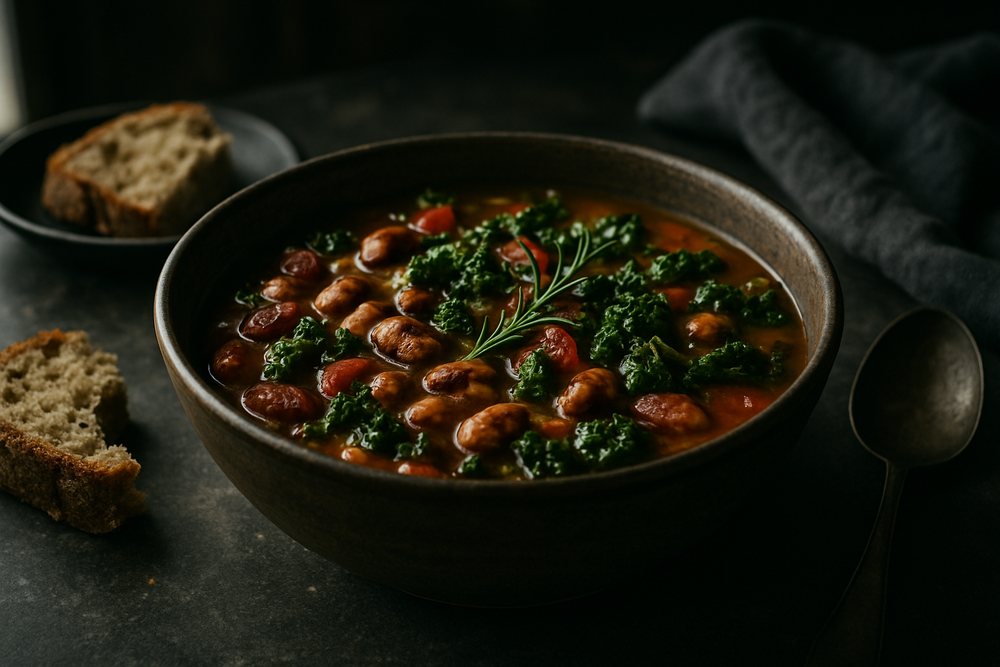
Hearty bean and kale soup: Simmer cooked Jacob's Cattle beans with chopped kale, diced tomatoes, garlic, rosemary, and vegetable broth. The beans add body and protein while the kale (a non-heme-iron and vitamin C source) boosts iron absorption from the beans.
Three-bean chilli: Combine with black beans and kidney beans for a colour-contrast chilli with layered texture. Cumin, smoked paprika, and chipotle complement the earthy, slightly nutty flavour of Jacob's Cattle beans particularly well.
Common pairings and why they work
- Jacob's Cattle beans + tomatoes: Vitamin C in tomatoes significantly enhances absorption of the non-heme iron (the plant form of iron) in beans — a practical nutrition pairing that also tastes great in soups and stews.
- Jacob's Cattle beans + whole grains (brown rice, barley): Beans and whole grains together provide all essential amino acids, making a complete plant protein, and the combination further boosts total fiber intake.
- Jacob's Cattle beans + apple cider vinegar or lemon juice: Acid brightens the earthy bean flavour and may modestly improve mineral bioavailability (the proportion of a nutrient the body can actually absorb and use).
Bottom line
Jacob's Cattle beans are a nutritionally dense, whole-food legume with a compelling heritage and an outstanding fiber and folate profile. The research supporting regular legume consumption for cardiovascular health, blood sugar management, and digestive wellbeing is moderately strong, even if no trials have studied this specific heirloom variety. Their key advantage over many "superfoods" is accessibility: they are affordable, shelf-stable, naturally fat-free, and easy to cook in large batches for the week ahead. The main caution is simple — always cook dry beans fully before eating. Otherwise, enjoy them freely as part of a varied, plant-rich diet.
How Jacob's Cattle Beans Compares
| Compared with | What's different |
|---|---|
| Jacob's Cattle Beans vs. Kidney Beans | Larger, kidney-shaped, and softer texture compared to the firm, nutty Jacob's Cattle bean. |
| Jacob's Cattle Beans vs. Pinto Beans | Significantly smaller with a milder flavour; Jacob's Cattle beans hold their shape better in long stews. |
| Jacob's Cattle Beans vs. Cannellini Beans | Creamier and more delicate; Jacob's Cattle beans are heartier and better for slow-baking. |
Health Benefits
Things to Know
Always fully cook dry beans.: Raw or undercooked dry beans contain high levels of lectins (proteins that can cause significant gastrointestinal illness). Boiling or baking until completely tender deactivates lectins. Do not rely solely on a slow cooker set to low for raw dry beans — it does not reliably reach a safe temperature.
Introduce gradually.: If you are new to high-fiber eating, adding a large portion of beans immediately can cause gas, bloating, and loose stools. Start with a quarter-cup cooked and build up over two to four weeks.
IBS and FODMAP sensitivity: Jacob's Cattle beans are high in fermentable oligosaccharides — a category of carbohydrates that can trigger symptoms in people with irritable bowel syndrome (IBS). If you follow a low-FODMAP diet, speak with a registered dietitian before adding significant amounts of beans.
Kidney disease: People on potassium-restricted diets due to chronic kidney disease (CKD) should check with their healthcare provider, as a half-cup serving provides around 420 mg potassium.
Sodium-restricted diets: Choose dry or no-added-salt canned beans to keep sodium low.
Diabetes medication: Substantially increasing legume intake can improve insulin sensitivity, which may interact with blood-glucose-lowering medications. Monitor blood sugar and discuss with your provider.
Pregnancy: The high folate content is beneficial, but all dietary changes in pregnancy are worth discussing with a midwife or doctor.
Medication absorption: Very high-fiber meals can mildly slow the absorption of some oral medications. A general precaution is to take medications with a glass of water, not alongside a very high-fiber meal if timing is important.
Prep Ideas
- — Jacob's Cattle beans + tomatoes: Vitamin C in tomatoes significantly enhances absorption of the non-heme iron (the plant form of iron) in beans — a practical nutrition pairing that also tastes great in soups and stews.
- — Jacob's Cattle beans + whole grains (brown rice, barley): Beans and whole grains together provide all essential amino acids, making a complete plant protein, and the combination further boosts total fiber intake.
- — Jacob's Cattle beans + apple cider vinegar or lemon juice: Acid brightens the earthy bean flavour and may modestly improve mineral bioavailability (the proportion of a nutrient the body can actually absorb and use).
Shop This Ingredient
Stock your pantry with quality jacob's cattle beans.
Buy on AmazonAs an Amazon Associate, Plantopedia earns from qualifying purchases. This costs you nothing extra and helps us keep the encyclopedia free.
Frequently Asked Questions
No clinical trials have studied Jacob's Cattle beans specifically. However, because their macronutrient and micronutrient profile is closely comparable to other dry beans thoroughly studied in cardiometabolic research, the broad legume evidence base is the most relevant guide. Here is what that evidence shows, by area. Heart and circulation Systematic reviews and meta-analyses — studies that pool data from many trials — consistently find that higher legume intake is associated with around 6–10% lower risk of cardiovascular disease (CVD) and coronary heart disease (CHD). Benefits appear to plateau around approximately 400 g per week of cooked legumes, which is roughly one half-cup to one cup serving per day. A case-control study (a study comparing people who developed a condition with those who did not) in Costa Rica found that eating about one serving of cooked beans daily was associated with approximately 38% lower risk of non-fatal heart attack compared with non-consumers. Randomised controlled trials (RCTs) — where researchers randomly assign people to eat legumes or a comparison diet — show that swapping beans and other legumes for refined grains or animal protein can modestly improve blood pressure and lipid (blood fat) profiles. The key mechanisms appear to include their soluble fiber content, which can reduce LDL cholesterol (often called "bad" cholesterol) by slowing its re-absorption, along with their potassium content and minimal saturated fat. Digestive health and microbiome The fiber case for Jacob's Cattle beans is strong. At approximately 11 g per half-cup cooked, a single serving can meaningfully close the fiber gap most adults experience daily. Harvard's Nutrition Source notes that beans supply both soluble fiber (which dissolves in water and becomes gel-like, slowing digestion and feeding beneficial gut bacteria) and insoluble fiber (which adds bulk to stool and supports regular bowel movements). The resistant starch in cooked beans acts as a prebiotic — food for beneficial gut bacteria — encouraging the production of short-chain fatty acids like butyrate, which may help maintain the health of the intestinal lining. Evidence supporting fiber's role in digestive regularity and gut microbiome diversity is among the most consistent in nutrition science. Blood sugar and metabolism Jacob's Cattle beans have a low glycaemic impact — meaning they raise blood sugar slowly — due to their combination of high fiber, substantial protein, and slowly digested complex carbohydrates. Systematic reviews of RCTs report that including beans and mixed legumes in the diet several times per week can improve glycaemic control (blood sugar management) and insulin sensitivity in both people with and without type 2 diabetes. In intervention trials, legumes typically replace higher glycaemic index (GI) foods, contributing to better post-meal blood sugar peaks and improvements in HbA1c — a three-month average of blood sugar levels. One practical note: traditional New England-style baked beans often include molasses or other sweeteners, which can raise the glycaemic load of the dish. Choosing lightly sweetened or unsweetened preparations, or cooking your own, preserves more of the blood-sugar benefit. Inflammation and recovery Evidence here is emerging rather than definitive. Cardiometabolic intervention trials using mixed legumes report improvements in cardiovascular risk markers — lipids, blood pressure, blood sugar — that collectively reflect a reduction in metabolic inflammation. Whether beans have a direct anti-inflammatory effect or whether benefits arise mainly from replacing less healthy foods in the diet is not yet clear. Either way, the overall effect on inflammatory burden from regularly including beans appears to be positive.
Buying guide: dry, canned, or New England–style baked? Dry beans (best all-round option): Dried Jacob's Cattle beans are the closest to the whole-food ideal. They are sold by small specialty producers and some online retailers. Soaking overnight is optional but shortens cooking time and may reduce some gas-causing compounds. Full boiling until tender is non-negotiable for safety (see below). Look for beans with vivid, consistent maroon-on-white patterning — fading can indicate age. Canned cooked beans: Convenient and pre-cooked. The trade-off is sodium: canned beans with sauce or seasoning can contain 300–500 mg of sodium per half-cup. Choose low-sodium or no-added-salt varieties when possible, or rinse standard canned beans under cold water to reduce sodium by roughly 40%. New England–style baked beans (traditional, but watch the add-ins): Jacob's Cattle beans are a classic choice for slow-baked preparations with molasses, salt pork, or maple syrup. These are flavourful and still fiber-rich, but added sugar and sodium can be significant. If you make your own, you control both. If buying prepared versions, check labels carefully. Supplement form: No bean extract or Jacob's Cattle supplement is established or recommended. Eat them whole. Label tips: For dried beans, check the "packed on" or "best by" date — beans older than two to three years can become very slow to soften. For canned, aim for fewer than 140 mg sodium per half-cup serving.
For general health, most of the supporting research clusters around 3 to 6 servings of legumes per week, equivalent to roughly half a cup to one cup cooked per day on days you eat them, or about 400 g of cooked legumes per week total. A large case-control study observed reduced heart attack risk at approximately one serving of beans daily, with no clear additional protection at higher quantities. For everyday use, the practical sweet spot is: Start: 2–3 times per week, ¼ to ½ cup cooked per serving, if you are new to beans. Maintenance: ½ to 1 cup cooked, 3–6 times per week, once your digestion has adapted. Context matters: These are population-level observations, not individual prescriptions. Your ideal intake may differ based on overall diet, digestive tolerance, and health goals. There is no established upper tolerable limit for bean consumption in healthy adults, but very high intakes are unlikely to provide proportionally greater benefit and may cause more digestive discomfort in some people. Looking to add more legumes across your whole-food eating pattern? Browse the Plantopedia plant-based protein and fiber goals guide for practical strategies.
Quick Answers
Common questions, answered in a line.
Jacob's Cattle beans are rich in fiber, folate, and heart-supportive minerals, offering a nutritionally dense profile that supports cardiovascular and digestive health. These heirloom legumes also contain antioxidants like polyphenols and resistant starch that aids gut bacteria.
To cook Jacob's Cattle beans safely, you must soak them overnight and then boil or bake them until they are completely tender to deactivate harmful lectins. Never rely solely on a slow cooker set to 'low' for raw dry beans, as it may not reach the temperature required to make them safe.
Pairing Jacob's Cattle beans with foods high in vitamin C, such as tomatoes, kale, or lemon juice, significantly enhances the absorption of the beans' non-heme iron. Combining them with whole grains like brown rice also ensures you receive a complete plant protein with all essential amino acids.
If you are new to eating Jacob's Cattle beans, start with a quarter-cup cooked portion and gradually increase the amount over two to four weeks. This slow introduction helps your digestive system adjust to the high fiber content and minimizes gas or bloating.
People with irritable bowel syndrome (IBS), chronic kidney disease (CKD), or those on blood-glucose-lowering medications should consult a healthcare provider before eating Jacob's Cattle beans. These beans are high in fermentable carbohydrates (FODMAPs) and potassium, which can affect these specific conditions.
Jacob's Cattle beans contain polyphenols, resistant starch, phytates, saponins, and heart-friendly unsaturated fatty acids. These active compounds contribute to the beans' antioxidant properties, cholesterol-lowering potential, and support for overall vascular health.
For Readers in the USA
Local context — sourcing, seasonality, and regional notes.
Jacob's Cattle beans are a heritage staple of the Northeast, primarily grown in Maine, Vermont, and New Hampshire where they thrive in cooler climates. While they are a New England classic, you can also find them cultivated by specialty growers in the Pacific Northwest and the Upper Midwest.
In the United States, you can find Jacob's Cattle beans at specialty grocers like Whole Foods, heirloom seed suppliers, and through Northeast-based regional brands like Maine Grains. They are also common at farmers markets throughout New England during the autumn harvest season.
Jacob's Cattle beans are the traditional choice for authentic Maine-style baked beans, a cultural staple at New England community "bean hole" suppers. Unlike modern commercial varieties, these heirloom beans are prized by U.S. chefs for holding their shape during the long, slow baking process common in colonial-style recipes.
The USDA classifies Jacob's Cattle beans as a dry edible bean, and when purchased with the USDA Organic seal, they are guaranteed to be grown without synthetic pesticides or GMOs. For the best quality, look for beans harvested within the current year, as older heirloom beans may require significantly longer soaking and cooking times.
AI Clinical Review
- Solid overview of Jacob’s Cattle beans as a nutrient-dense legume: the fiber, plant protein, folate, potassium, and magnesium figures are in line with typical cooked dry beans.
- Accurately reflects human research that regular legume intake (about 3–6 servings/week) is linked with modest improvements in LDL cholesterol, blood pressure, and glycemic control when legumes replace more refined or animal-based options.
- Appropriately highlights digestive benefits from soluble/insoluble fiber and resistant starch, and suggests a gradual ramp-up to reduce gas and bloating.
- Emphasizes an important safety point: fully cooking dry beans to inactivate lectins; slow-cooker on low alone is not reliable for raw beans.
- No clinical trials have examined Jacob’s Cattle beans specifically; health claims rely on extrapolation from broader legume data, which is reasonable but not variety-specific proof.
- Proposed benefits from polyphenols, saponins, and other bioactives are promising, yet the magnitude of effect at typical dietary intakes remains uncertain in humans.
- The suggested “plateau” of benefit around ~400 g/week comes largely from observational dose–response analyses; individual needs and responses can vary.
- Mineral bioavailability is complex: phytates can reduce absorption, while vitamin C can enhance non‑heme iron uptake; the net effect depends on overall meal composition.
- Practical intake: many adults do well with 1/2–1 cup cooked on bean days (about 3–6 times per week); if you’re new to high‑fiber foods, start with 1/4–1/2 cup and increase over 2–4 weeks.
- Who should check with a clinician: people with chronic kidney disease or on potassium‑restricted diets; those with IBS/low‑FODMAP needs; and anyone using glucose‑lowering medications (monitor for changes in blood sugars as intake rises).
- Form matters: dry beans are sodium‑free but must be fully boiled/pressure‑cooked until tender; canned beans can be high in sodium—choose no‑salt‑added or rinse; traditional baked versions may add significant sugar and salt.
- Iron considerations: beans provide non‑heme iron; pairing with vitamin C‑rich foods can help, but individuals with iron‑deficiency anemia may need additional strategies under medical guidance.
Fully cook before eating.
References
- USDA FoodData Central — dry bean nutrition data (fdc.nal.usda.gov)
- Harvard T.H. Chan School of Public Health: Legumes and Pulses — overview of legumes in healthy dietary patterns (nutritionsource.hsph.harvard.edu)
- Jacob's Cattle beans nutrition facts — myfooddata.com / Faribault Foods — per-serving macro and micronutrient data (tools.myfooddata.com)
- Systematic review and dose-response meta-analysis: legume intake and CVD — Science Direct, 2022 (sciencedirect.com)
- Systematic review and meta-analysis: legume consumption and CVD risk — PMC, 2023 (pmc.ncbi.nlm.nih.gov)
- Systematic review and meta-analysis: legumes, CVD, and type 2 diabetes in cohort studies and RCTs — PMC, 2023 (pmc.ncbi.nlm.nih.gov)
- Legumes and cardiometabolic health — narrative review of RCTs — PMC, 2019 (pmc.ncbi.nlm.nih.gov)
- Case-control study: bean consumption and reduced risk of non-fatal myocardial infarction — Journal of Nutrition, 2005 (academic.oup.com)
- North Bay Trading Co. — Jacob's Cattle (Trout) beans product information (northbaytrading.com)
Know Your Numbers
Eating healthy is a start. Now get to know your biomarkers.
Food changes bloodwork — inflammation, lipids, blood sugar and nutrient status all respond to what you eat. 59 markers from $59.
- Results in 7–10 days at 2,000+ Quest sites
- Licensed provider reviews every result
- One flat price, no membership, HSA/FSA eligible
Educational information only, not medical advice. Panels are ordered and reviewed through our licensed partner; Plantopedia may earn a commission.