Mango Butter — health benefits and uses
Mango kernel fat traditionally used for skin and as a cocoa butter substitute.
The Short Answer
Mango butter is a nutrient-dense fat extracted from the mango kernel, containing 120 calories and 14g of total fat per tablespoon. It is primarily used as a stable, antioxidant-rich alternative to cocoa butter in chocolate and skin care.
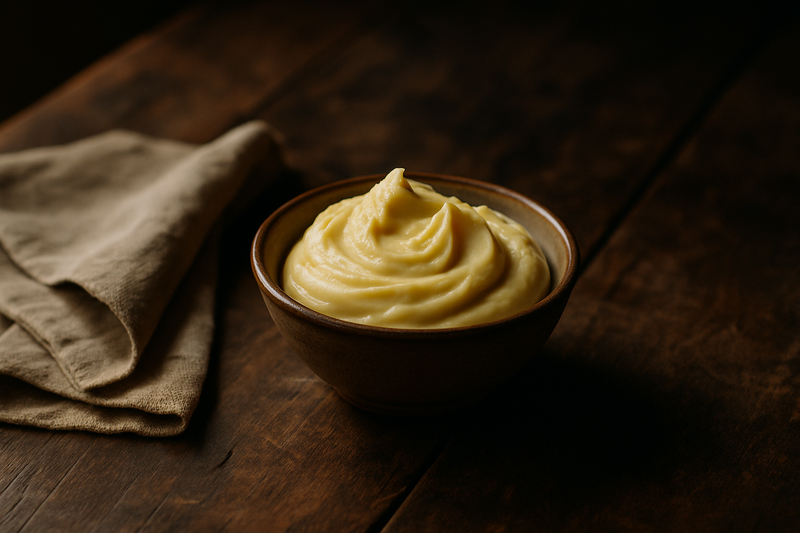
Mango Butter · Photograph
Discover the science-backed mango butter benefits for skin and health, including its fatty acid profile, vitamin E content, antioxidant compounds, and how to choose food-grade vs cosmetic-grade mango butter safely.
Key Nutrients
% Daily Value based on 2,000 cal diet
Key active compounds in mango butter
Mango kernel butter's benefits — to skin especially — come from a cluster of bioactive molecules that survive the pressing and refining process:
- Stearic acid — A saturated fatty acid making up roughly 35–50% of mango butter. Unlike many saturated fats, stearic acid is considered broadly neutral for blood cholesterol because the body quickly converts much of it to oleic acid.
- Oleic acid — A monounsaturated omega-9 fatty acid (35–50%) linked to cell membrane flexibility and skin barrier integrity; the same dominant fat found in olive oil.
- Palmitic acid — A shorter saturated fatty acid (~5–12%) common across most plant and animal fats.
- Linoleic acid — A small amount of omega-6 polyunsaturated fat (~3–8%) that plays a role in maintaining the skin's waterproof barrier layer.
- Tocopherols (vitamin E compounds) — Fat-soluble antioxidants present in trace amounts that help protect lipids in skin cells from oxidative damage (damage caused by unstable molecules called free radicals).
- Phytosterols (beta-sitosterol, campesterol, avenasterol) — Plant sterols structurally similar to cholesterol; they contribute to skin barrier repair and, when eaten in sufficient amounts, can modestly reduce cholesterol absorption in the gut.
- Polyphenols (catechin, epicatechin) — Phenolic antioxidants from the flavonoid family also found in green tea and dark chocolate.
- Triterpenes — A class of 30-carbon plant compounds with reported anti-inflammatory and membrane-stabilizing properties, cited in cosmetic literature as contributing to mango butter's skin-repairing effects.
Buying guide: food-grade vs cosmetic-grade mango butter
This is probably the most practically important section for anyone considering mango butter beyond skin care.
Cosmetic-grade mango butter is the most widely available form. It is deodorized, filtered, and processed specifically for skin products. It may contain cosmetic-only preservatives or processing aids that are not safe to eat. The label will typically say "for external use only."
Food-grade mango kernel fat is produced under food-safety standards and may be marketed as a "cocoa butter equivalent" for confectionery use. It is harder to find in retail, more common in food-manufacturing supply chains, and should carry explicit food-safe certification. If you cannot confirm food-grade status, do not eat it.
Retail "mango butter" fruit spreads are an entirely different product — sweetened fruit preserves made from mango pulp, pectin, and sugar. Their nutrition profile is that of jam, not kernel fat.
Label tips to look for:
- "Food-grade" or "edible" clearly stated
- No mention of "for cosmetic use only" or "external use only"
- Country-of-origin and processing facility certification visible
- USDA Organic or equivalent certification is a quality signal but does not by itself confirm food-grade processing
Prep and pairing ideas
Because edible mango butter is a niche ingredient, practical uses in the kitchen are modest but real:
- Tropical chocolate bark: Melt food-grade mango kernel butter with cacao and a pinch of sea salt. Pour thin and set in the fridge. Its cocoa butter-like melt point gives chocolate a smooth snap.
- Whipped body-to-kitchen crossover: At room temperature, mango butter softens to a spreadable consistency. A very small amount (½ teaspoon) can be used to finish a warm flatbread in place of ghee for a tropical twist.
- Mango kernel fat as a sauté base: Because of its higher saturated fat content and moderate smoke point, food-grade mango butter can be used sparingly for low-to-medium heat cooking in tropical cuisine. It pairs naturally with cardamom, chili, and coconut.
Bottom line
Mango butter is a fascinating fat with a well-earned place in skin care and a promising but largely unproven role as an edible specialty ingredient. Its mix of stearic and oleic acids, tocopherols, phytosterols, and triterpenes gives it genuine antioxidant and barrier-repair credentials for topical use. The skin evidence, while limited to a handful of studies, is the most reliable we have.
For eating, mango butter is best treated as a high-quality, minimally processed specialty fat — interesting in small amounts in confectionery or tropical cooking — not as a health supplement. Always confirm food-grade labeling before consuming, and keep portions within your overall saturated fat budget. If you are managing a health condition, check with your doctor before adding any new fat source to your routine.
Looking to explore other whole-food fats and how they fit a food-as-medicine approach? Browse the Plantopedia healthy fats and oils goal guide for practical, evidence-aligned guidance.
How Mango Butter Compares
| Compared with | What's different |
|---|---|
| Mango Butter vs. Shea Butter | Higher in stearic acid and harder at room temperature, making it a common cocoa butter substitute. |
| Mango Butter vs. Cocoa Butter | Higher in saturated fat and more resistant to oxidation; mango butter has more monounsaturated fat. |
| Mango Butter vs. Coconut Oil | High in MCTs and liquid at lower temperatures, whereas mango butter is a solid, long-chain fat. |
Health Benefits
Things to Know
Mango allergy: People with known mango sensitivity may react to kernel-derived products. The allergens in the kernel differ from those in the fruit pulp, but cross-reactivity is possible. Patch test topical products on a small skin area first.
Latex-fruit syndrome: Cross-reactivity between mango and latex has been reported. If you have a latex allergy, consult a healthcare provider before using mango kernel products.
Gallbladder disease, fat malabsorption, or pancreatitis: Concentrated fats of any kind may worsen these conditions. Speak to your doctor before adding any high-fat ingredient to your diet.
Cardiovascular risk factors: Mango butter is roughly 35–50% saturated fat. People managing high LDL cholesterol or heart disease should count it within their overall saturated fat budget (generally no more than 10% of daily calories from saturated fat per most guidelines).
Pregnancy and breastfeeding: There is no specific safety data on consuming mango kernel butter during pregnancy. Topical use in typical skin-care amounts is generally considered low-risk, but high oral intake has not been studied.
Transdermal medications: Applying an occlusive butter like mango butter over a medicated patch or medicated cream can alter how much drug absorbs through the skin. Keep application areas separate.
Drug absorption: Large oral doses of any high-fat ingredient can theoretically alter absorption of fat-soluble medications and supplements. There are no reported mango-butter-specific drug interactions, but this is a general fat consideration.
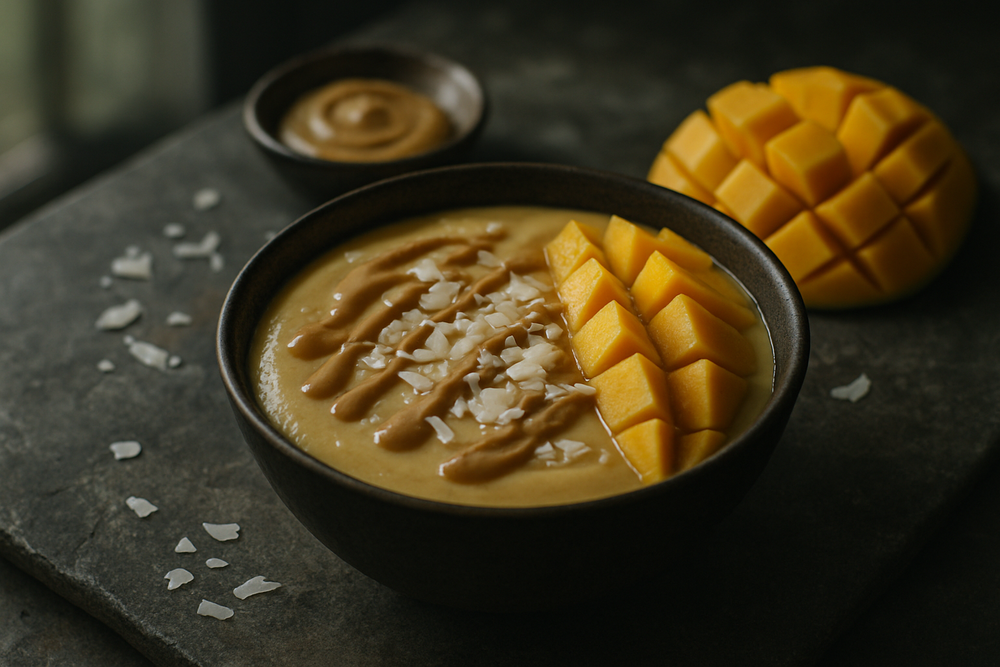
Prep Ideas
- — **Tropical chocolate bark:** Melt food-grade mango kernel butter with cacao and a pinch of sea salt. Pour thin and set in the fridge. Its cocoa butter-like melt point gives chocolate a smooth snap.
- — **Whipped body-to-kitchen crossover:** At room temperature, mango butter softens to a spreadable consistency. A very small amount (½ teaspoon) can be used to finish a warm flatbread in place of ghee for a tropical twist.
- — **Mango kernel fat as a sauté base:** Because of its higher saturated fat content and moderate smoke point, food-grade mango butter can be used sparingly for low-to-medium heat cooking in tropical cuisine. It pairs naturally with cardamom, chili, and coconut.
Glossary
Shop This Ingredient
Stock your pantry with quality mango butter.
Buy on AmazonAs an Amazon Associate, Plantopedia earns from qualifying purchases. This costs you nothing extra and helps us keep the encyclopedia free.
Frequently Asked Questions
Skin barrier repair and emollient effects This is where the best human-level evidence lives. A small clinical study tested an exotic-fat-based foot cream — containing mango butter alongside other plant fats — in volunteers with severely dry and cracked skin. All participants showed complete repair of cracked and worn skin, and the formulation demonstrated significant healing in wound models. The authors attributed barrier-repair and emollient effects in part to mango butter's tocopherols, phytosterols, and triterpenes. Important caveat: the cream contained multiple fats, so the benefit cannot be credited to mango butter alone. Still, these findings align with what we know about oleic acid (keeps skin flexible), stearic acid (forms a protective film), and phytosterols (help rebuild the skin's lipid structure). For mango butter benefits for dry skin — including rough heels, elbows, and chapped lips — the topical evidence is the most credible available. Inflammation and recovery Mechanistic research (lab and cell studies) shows that mango butter's phytosterols, polyphenols, and triterpenes can reduce inflammatory signals in skin tissue. The foot cream study observed reduced local irritation alongside skin healing, which hints at mild anti-inflammatory activity on the surface. However, no human studies have measured systemic inflammation markers — such as C-reactive protein (CRP) — after applying or consuming mango butter, so claims about internal inflammation reduction remain speculative. Heart and circulation No clinical trials have tested mango butter as an edible fat for cardiovascular outcomes. The closest relevant data come from a 2024 review of Mangifera indica by-products, which found that mango fruit and its bioactive compound mangiferin improved plasma lipid profiles and endothelial function (the health of blood vessel linings) in human studies. But those studies used mango fruit or concentrated extracts, not the kernel fat. What we can infer from fatty acid physiology: stearic acid has a neutral effect on LDL ("bad") cholesterol, while oleic acid tends to support healthy cholesterol ratios. This makes mango butter's lipid effect likely similar to that of cocoa butter — neither harmful nor strongly beneficial when used in small amounts within a balanced diet. Until mango-butter-specific trials exist, treat it as a saturated fat to be used sparingly. Blood sugar and metabolism No human studies have examined mango kernel butter's effect on blood glucose or insulin. Being essentially pure fat with zero carbohydrates, it would have minimal direct impact on blood sugar in small servings. Any effect on glycemic control would be indirect — for example, replacing high-glycemic foods with a fat-containing snack can blunt glucose spikes, but that is a general property of dietary fat, not something unique to mango butter. Digestive health and microbiome There are no human trials on mango butter and gut health. As a nearly pure fat with no fiber, it offers no direct prebiotic activity (the feeding of beneficial gut bacteria). Heavy consumption of any concentrated saturated fat can slow stomach emptying and may cause discomfort for people with gallbladder disease or difficulty absorbing fat. This is a general fat caution, not specific to mango butter.
There is no established recommended dose for eating mango kernel butter, because it has not been studied in clinical dietary trials. For topical skin use: Cosmetic literature suggests using formulations containing 5–20% mango butter in a cream or balm, applied in a thin layer once or several times daily as needed. There is no maximum frequency documented in clinical safety reports — common sense and skin tolerance are the guides. For culinary use: Treat mango kernel fat the same as you would cocoa butter or coconut oil — useful in small amounts but not a staple fat to pour liberally. Starting with 1 teaspoon (roughly 5 g, 43 calories) per serving and staying well within your daily saturated fat budget is a reasonable approach. General saturated fat context: Most dietary guidelines recommend keeping saturated fat to under 10% of total daily calories. On a 2,000-calorie diet, that is about 22 g of saturated fat per day. One tablespoon of mango butter contributes roughly 7 g of saturated fat, so it is a meaningful contribution and should be counted alongside other saturated fat sources (cheese, meat, coconut oil, etc.).
Quick Answers
Common questions, answered in a line.
Mango butter is rich in stearic and oleic acids, tocopherols (vitamin E), phytosterols, and triterpenes. These bioactive compounds contribute to its skin-repairing effects, antioxidant properties, and its ability to maintain the skin's moisture barrier.
Yes, you can eat mango butter, but only if it is explicitly labeled as food-grade or edible. While it is often used as a cocoa butter substitute in chocolate, most commercial mango butter is cosmetic-grade and may contain non-edible preservatives or processing aids.
Mango butter contains approximately 35–50% stearic acid and 35–50% oleic acid. It also features smaller amounts of palmitic and linoleic acids, which collectively support skin barrier integrity and cell membrane flexibility.
Food-grade mango butter is processed under food-safety standards, while cosmetic-grade is filtered and deodorized specifically for topical use and may contain unsafe additives. Always check for "external use only" warnings on labels to differentiate between the two.
Food-grade mango butter can be used to make tropical chocolate bark, finish flatbreads like ghee, or serve as a sauté base for low-to-medium heat cooking. Its cocoa butter-like melting point makes it ideal for confectionery uses where a smooth snap is desired.
People with mango allergies or latex-fruit syndrome should exercise caution, as cross-reactivity with mango kernel products is possible. Additionally, those with gallbladder disease or cardiovascular risk factors should limit intake due to its high saturated fat content.
Mango butter fruit spreads are sweetened preserves made from fruit pulp, sugar, and pectin, whereas mango kernel butter is a pure fat extracted from the seed. These two products have entirely different nutritional profiles and culinary uses.
For Readers in the USA
Local context — sourcing, seasonality, and regional notes.
In the United States, pure food-grade mango butter is primarily found through online specialty suppliers, artisanal chocolate-making retailers, and high-end health food stores. While major grocery chains like Whole Foods or Kroger often carry mango fruit spreads or cosmetic-grade mango butter in the beauty aisle, edible kernel fat is rarely stocked on standard shelves.
Most mango butter sold in the U.S. is imported from India or Southeast Asia, though small quantities are produced from mangoes grown in Florida, Hawaii, and California. Because mangoes are a tropical crop, domestic production is limited to USDA plant hardiness zones 10-11, where the fruit is typically harvested between May and September.
When buying mango butter in the U.S., look for the USDA Organic seal to ensure it was produced without synthetic pesticides, but verify a "GRAS" (Generally Recognized As Safe) status or "Food Grade" label for consumption. The FDA regulates mango butter primarily as a cosmetic ingredient or an indirect food additive, so clear labeling is essential to distinguish it from topical-only products.
AI Clinical Review
- Clearly distinguishes mango kernel butter from fruit spreads and emphasizes food‑grade vs cosmetic‑grade — an important safety point for consumers.
- Accurately describes the fatty‑acid profile (stearic and oleic acids) and explains why mango butter works as an emollient and occlusive (a seal that slows water loss) for dry skin.
- Appropriately frames the evidence base: strongest support is for topical moisturizing; oral health claims are speculative due to a lack of clinical trials.
- Provides useful nutrition context (about 120 kcal and ~7 g saturated fat per tablespoon) and advises counting it within a saturated‑fat budget.
- Human studies on topical use are few and often test multi‑ingredient formulas, so benefits can’t be attributed to mango butter alone.
- There are no dietary intervention trials assessing effects on cholesterol, cardiovascular events, glucose, or insulin; inferences come from general fatty‑acid physiology rather than mango butter itself.
- Antioxidant constituents (tocopherols, polyphenols, triterpenes) are present in trace amounts and not well quantified; systemic benefits from eating typical amounts remain unproven.
- Mechanistic signals for anti‑inflammatory or wound‑healing effects are promising but need confirmation in well‑controlled human studies.
- Only consume products labeled explicitly as food‑grade/edible; cosmetic‑grade mango butter and “mango butter” fruit spreads (jam) are not interchangeable.
- No established oral dose: if using culinarily, keep portions small and within saturated‑fat limits (e.g., 1 tsp at a time); individuals with high LDL cholesterol, gallbladder disease, fat‑malabsorption, or pancreatitis should check with a clinician.
- Allergy considerations: people with mango allergy or latex–fruit syndrome may react; patch‑test topically first and stop if irritation occurs. Pregnancy/lactation oral safety data are lacking.
- As a topical occlusive, applying over medicated creams or transdermal patches can alter drug absorption — use on separate areas or times.
Mostly a cosmetic fat; use only food-grade for eating.
References
- USDA FoodData Central — general nutrition reference for fats and oils (fdc.nal.usda.gov)
- Formulation and evaluation of exotic fat-based foot care cream (human clinical study including mango butter) (pmc.ncbi.nlm.nih.gov)
- Mangifera indica by-products and mangiferin on cardio-metabolic health — systematic review, 2024 (pubmed.ncbi.nlm.nih.gov)
- Mango butter fatty acid composition — ingredient tech data sheet (chemistryconnection.com)
- Mango butter refined specification (GC fatty acid profile) (heessoils.com)
- MakingCosmetics USDA Certified Organic mango butter product profile (makingcosmetics.com)
- Typology — mango butter origin, properties, and uses (us.typology.com)
- Madar Corporation mango butter certificate of analysis (fatty acid breakdown) (madarcorporation.com)
- Interchimie mango butter ingredient specification 2025 (interchimie.fr)
Know Your Numbers
Eating healthy is a start. Now get to know your biomarkers.
Food changes bloodwork — inflammation, lipids, blood sugar and nutrient status all respond to what you eat. 59 markers from $59.
- Results in 7–10 days at 2,000+ Quest sites
- Licensed provider reviews every result
- One flat price, no membership, HSA/FSA eligible
Educational information only, not medical advice. Panels are ordered and reviewed through our licensed partner; Plantopedia may earn a commission.