Marula Oil — health benefits and uses
Marula is a sacred African tree; its nuts are a traditional oil source.
The Short Answer
Marula oil is a heart-healthy finishing oil rich in monounsaturated fats (70–78% oleic acid) and vitamin E. Its mild, nutty flavor makes it ideal for drizzling over roasted vegetables, grain bowls, and hummus to enhance nutrient absorption.
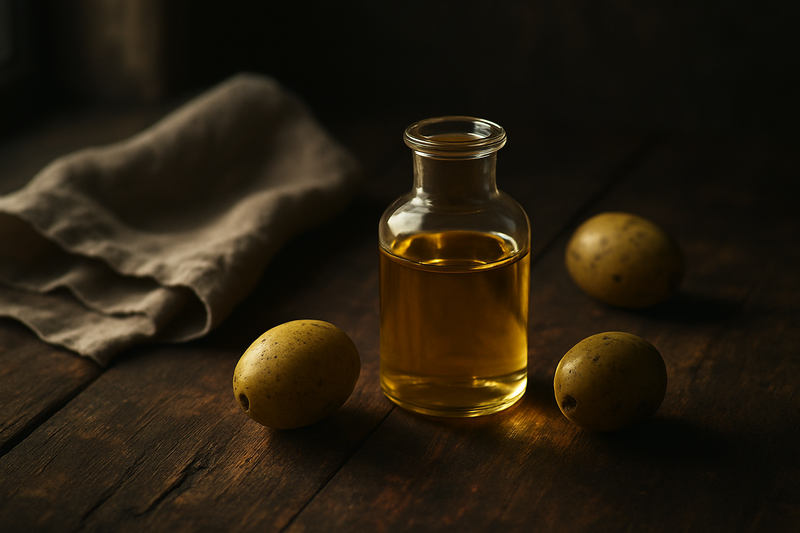
Marula Oil · Photograph
Discover marula oil benefits, uses, and side effects in this evidence-aligned guide. Learn about its monounsaturated fat profile, vitamin E content, how to choose food-grade marula oil, and smart ways to use it for finishing and drizzling in a whole-food, plant-based kitchen.
Key Nutrients
% Daily Value based on 2,000 cal diet
Key active compounds in marula oil
Marula oil's nutritional identity is shaped by its fatty acids and a supporting cast of protective plant compounds.
- Oleic acid (omega-9 monounsaturated fatty acid): The star of the show, making up roughly 70–78% of total fatty acids. Oleic acid is associated with cardiometabolic benefits in the context of diets rich in unsaturated fats, though no human trials have tested marula oil specifically for these outcomes.
- Palmitic acid (saturated fatty acid): About 9–12% of the oil. A 16-carbon saturated fat common to many plant oils; moderate intake is generally considered fine within a balanced diet.
- Stearic acid (saturated fatty acid): Roughly 5–8%. An 18-carbon saturated fat considered metabolically neutral by many researchers compared with shorter-chain saturated fats.
- Linoleic acid (omega-6 polyunsaturated fatty acid): About 4–7%. An essential fatty acid (one the body cannot make on its own) that supports skin barrier function and general cellular health.
- Alpha-linolenic acid (omega-3 polyunsaturated fatty acid): A very small fraction (≈0.1–0.7%). Marula oil is not a meaningful omega-3 source.
- Tocopherols (including gamma-tocopherol): Vitamin E compounds that protect the oil from oxidative damage and contribute antioxidant activity in the body.
- Plant sterols (phytosterols): Cholesterol-like plant compounds that may modestly reduce cholesterol absorption when consumed regularly.
- Flavonoids, procyanidins, and catechins: Polyphenolic antioxidants found in marula oil and other parts of the marula plant; their systemic effects from dietary amounts of the oil remain speculative.
Prep and pairing ideas
Marula oil shines as a finishing oil — added after cooking rather than during, so its delicate flavour and antioxidants are preserved.
Three practical pairings:
- Roasted root vegetables + marula oil drizzle: The mild, slightly nutty flavour of marula oil complements sweet potato, butternut squash, and carrots beautifully. Drizzle 1 teaspoon over roasted vegetables just before serving. The fat also boosts absorption of beta-carotene (a fat-soluble antioxidant, meaning it needs dietary fat present to be absorbed properly).
- Grain bowls + marula oil and citrus dressing: Whisk 1 tablespoon marula oil with lemon or orange juice, a pinch of salt, and fresh herbs. Use over brown rice, farro, or millet bowls. The oil's oleic acid helps keep the dressing stable and gives it a silky body similar to a light olive oil vinaigrette.
- Avocado toast or hummus + marula oil finish: Replace the olive oil drizzle on avocado toast or a hummus plate with a few drops of food-grade marula oil. Pairing two high-monounsaturated-fat sources is common in Mediterranean-style diets; here it is a nod to an African culinary tradition while keeping the flavour profile clean and fresh.
Bottom line
Marula oil is a genuinely interesting Southern African whole-food oil with a fatty acid profile very similar to extra-virgin olive oil — predominantly oleic acid (omega-9), modest saturated fats, and small amounts of essential polyunsaturated fats. Its tocopherols and polyphenols add antioxidant value on top of that. The strongest human evidence for marula oil is actually in the topical domain (skin hydration, barrier repair), while dietary benefits remain well-grounded in nutrition science but not yet tested in controlled human eating trials.
For everyday use, a tablespoon of cold-pressed, food-grade marula oil is a nutritionally sound choice for finishing salads, grain bowls, and roasted vegetables — especially for those who want to diversify beyond olive and avocado oil and support a less-explored agricultural tradition. Just make sure the bottle says food-grade, keep it away from high heat, and store it in a cool, dark spot to protect its tocopherols.
How Marula Oil Compares
| Compared with | What's different |
|---|---|
| Marula Oil vs. Olive Oil | Marula has a milder, lighter flavor than the robust, often peppery profile of extra virgin olive oil. |
| Marula Oil vs. Coconut Oil | Marula contains significantly more monounsaturated fat and Vitamin E than coconut oil. |
| Marula Oil vs. Argan Oil | Marula oil has a much higher concentration of oleic acid (up to 78%) compared to argan oil. |
Health Benefits
Things to Know
Food-grade only: Never ingest cosmetic-grade marula oil. Check the label every time, as cosmetic and food versions can look similar.
Allergy risk: If you have tree nut or seed allergies, introduce marula oil with caution and consult an allergist. Marula is from the same family as mango and cashew (Anacardiaceae) — cross-reactivity is theoretically possible though not well documented.
Fat-restricted diets: Those managing pancreatitis, gallbladder conditions, or liver disease should count marula oil within their total prescribed fat limits (it is calorie-dense at 120 calories per tablespoon).
Pregnancy and breastfeeding: Traditional dietary use is longstanding, but there is no modern safety data on supplemental intake during pregnancy. Stick to modest culinary amounts and check with your care provider.
Diabetes and blood sugar medications: Experimental marula preparations have shown speculative antidiabetic effects in non-human models. Do not use marula oil in place of prescribed medication, and flag any significant dietary fat changes to your prescriber if you are on insulin or oral hypoglycaemics.
Lipid-lowering medications: Excessive total fat intake from any source can work against the goals of LDL-lowering therapy. Use marula oil as part of a balanced diet, not in addition to large amounts of other added fats.
Stability and smoke point: Cold-pressed marula oil is relatively stable due to its high oleic content but is best used for finishing, drizzling, or very low-heat cooking rather than high-temperature frying, which can degrade its tocopherols and create oxidation products.
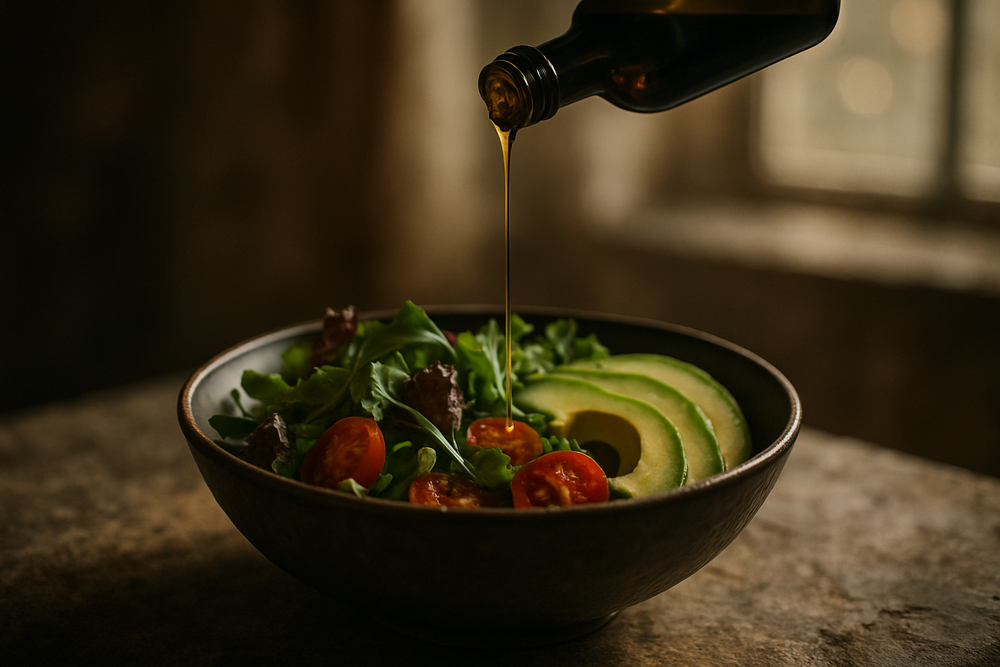
Prep Ideas
- — **Roasted root vegetables + marula oil drizzle:** The mild, slightly nutty flavour of marula oil complements sweet potato, butternut squash, and carrots beautifully. Drizzle 1 teaspoon over roasted vegetables just before serving. The fat also boosts absorption of beta-carotene (a fat-soluble antioxidant, meaning it needs dietary fat present to be absorbed properly).
- — **Grain bowls + marula oil and citrus dressing:** Whisk 1 tablespoon marula oil with lemon or orange juice, a pinch of salt, and fresh herbs. Use over brown rice, farro, or millet bowls. The oil's oleic acid helps keep the dressing stable and gives it a silky body similar to a light olive oil vinaigrette.
- — **Avocado toast or hummus + marula oil finish:** Replace the olive oil drizzle on avocado toast or a hummus plate with a few drops of food-grade marula oil. Pairing two high-monounsaturated-fat sources is common in Mediterranean-style diets; here it is a nod to an African culinary tradition while keeping the flavour profile clean and fresh.
Glossary
Shop This Ingredient
Stock your pantry with quality marula oil.
Buy on AmazonAs an Amazon Associate, Plantopedia earns from qualifying purchases. This costs you nothing extra and helps us keep the encyclopedia free.
Frequently Asked Questions
The honest answer is: most benefits are currently inferred from its composition rather than proven in human dietary trials. Here is what the evidence actually says, area by area. Heart and circulation Marula oil's fatty acid profile — high oleic, low saturated, minimal omega-6 — closely mirrors oils that population studies and clinical trials have linked to healthier lipid profiles (total cholesterol, LDL cholesterol, triglycerides). Plant sterols in the oil may also modestly reduce cholesterol absorption. However, no randomised controlled trial has directly tested marula oil consumption on blood pressure, LDL, or cardiovascular events. Claiming it "protects the heart" goes beyond the available data; saying it fits within a dietary pattern associated with heart health is fair. Digestive health and nutrient absorption Marula oil functions like other culinary fats: it slows gastric emptying (making meals more satisfying), helps the small intestine absorb fat-soluble vitamins A, D, E, and K, and can make vegetables more nutritionally complete when used as a finishing drizzle. There are no specific human trials on marula oil and digestive outcomes such as gut motility or microbiome composition. People with conditions that require fat restriction — pancreatitis, certain liver conditions — should account for its calorie and fat contribution. Blood sugar and metabolism Early preclinical (non-human) research, including work on marula oil nanoemulsions (microscopic droplets used to improve absorption in experimental models), has suggested possible benefits related to diabetes complications. But these findings have not been replicated in controlled human trials. At this stage, marula oil should not be relied on for blood sugar management, and anyone with diabetes should continue standard medical care rather than using this oil as a therapeutic tool. Inflammation and oxidative stress Marula oil contains tocopherols and polyphenols that demonstrate antioxidant activity in laboratory settings — meaning they can neutralise free radicals (unstable molecules that can damage cells). Whether this translates into measurable reductions in systemic inflammatory markers like C-reactive protein (CRP) when the oil is eaten regularly has not been tested in humans. The most robust human data on marula oil's antioxidant action comes from topical studies showing reduced skin damage from UV exposure — relevant context, but not the same as systemic anti-inflammatory evidence. Skin and appearance (topical context) This is actually the area with the strongest human clinical data. In a controlled study with healthy adult women, topical marula oil was found to be non-irritating, significantly improved skin hydration, and reduced transepidermal water loss (the rate at which moisture escapes through the skin). Its high oleic acid content makes it very occlusive — good for dry or mature skin. One caution: because oleic acid can disrupt the skin barrier in some people, those with acne-prone skin may find marula oil comedogenic (pore-clogging). This topical evidence is mentioned here for completeness but is clearly distinct from dietary benefits.
Buying guide The single most important thing to check is whether the product is food-grade. Because the global marula oil market is dominated by cosmetic products, many bottles are formulated with additives, fragrances, or preservatives that are not safe to ingest. Here is how to navigate the options: Cold-pressed, food-grade marula kernel oil This is what you want for eating. Look for these label signals: "Food grade" or "edible" clearly stated "Cold-pressed" or "expeller-pressed" — these methods preserve tocopherols and phytochemicals better than solvent extraction A harvest or best-before date, and dark glass or opaque packaging (light degrades the oil) No added fragrance, silicone, or preservative ingredients Ideally single-origin with a traceable source in Southern Africa Refined or cosmetic-grade marula oil Labelled for skin and hair use. Not intended for ingestion. May contain non-food additives. Marula kernels (whole) The whole kernel contains protein, fibre, magnesium, and phosphorus in addition to the oil — a more complete nutritional profile if you can source them. They are less widely available outside their home region. Label tip: If the ingredient list includes "marula oil" alongside parfum, cyclopentasiloxane, or other cosmetic ingredients, it is not for eating. A food-grade product will look like any other culinary oil label.
No standardised therapeutic dose has been established for marula oil in human clinical trials. For culinary purposes, the conventional guidance that applies to all added oils is a useful reference point. General culinary range: 1–2 tablespoons (15–30 mL) per day, counting marula oil as part of your total daily fat intake rather than on top of it. Start low: If marula oil is new to your diet, begin with ½–1 teaspoon and assess tolerance before building up. Replace, don't stack: Use marula oil instead of another finishing oil rather than in addition to your usual fats. This keeps total calorie and fat load in check. Context matters: Someone following a whole-food, plant-based diet with already generous fat from nuts, seeds, and avocado should factor marula oil into their overall fat budget rather than treat it as a "free" addition. No upper therapeutic limit: Because no oral dosing trials exist, there is no evidence-based upper safe limit beyond general public health guidance on total fat intake (20–35% of daily calories from fat, per most national dietary guidelines).
Quick Answers
Common questions, answered in a line.
Marula oil consists primarily of oleic acid (omega-9 monounsaturated fat), which makes up about 70–78% of its total fatty acids. It also contains saturated fats like palmitic and stearic acid, as well as essential linoleic acid and antioxidant tocopherols (Vitamin E).
Yes, marula oil is an excellent finishing oil for grain bowls, roasted vegetables, and avocado toast when labeled as food-grade. Because it is high in monounsaturated fats, it provides a silky texture similar to olive oil and helps the body absorb fat-soluble nutrients.
Marula oil is a source of Vitamin E (tocopherols), phytosterols, and polyphenolic antioxidants like flavonoids and catechins. These compounds help protect the oil from oxidative damage and may provide antioxidant activity in the body when consumed.
No, you should never ingest cosmetic-grade marula oil; only products explicitly labeled as food-grade are safe for consumption. Cosmetic versions may contain additives or be processed in ways that are not safe for the digestive system.
Individuals with tree nut or seed allergies should use marula oil with caution because the marula tree belongs to the same botanical family as mangoes and cashews. While cross-reactivity is not well-documented, it is theoretically possible.
Marula oil is best used for finishing, drizzling, or very low-heat cooking rather than high-temperature frying. While its high oleic content makes it relatively stable, high heat can degrade its delicate tocopherols and lead to oxidation.
Marula oil contains phytosterols, which are cholesterol-like plant compounds that may modestly reduce the absorption of cholesterol when consumed regularly. Its high monounsaturated fat content also makes it a heart-healthy alternative to saturated cooking fats.
For Readers in the USA
Local context — sourcing, seasonality, and regional notes.
In the United States, you can typically find food-grade marula oil at specialty health food stores like Whole Foods Market or through online retailers like Amazon and Vitacost. Because it is considered a niche specialty oil, it is less common in standard supermarkets like Kroger or Walmart compared to olive or avocado oil.
The USDA does not currently define specific standards for marula oil, so look for the USDA Organic seal to ensure the product meets federal organic production and handling requirements. Ensure the label explicitly states "food grade" or "GRAS" (Generally Recognized as Safe) to distinguish it from the more common cosmetic versions regulated by the FDA.
Marula trees (Sclerocarya birrea) are not commercially grown in the U.S. and are native to sub-Saharan Africa, meaning all marula oil sold in America is imported. While the fruit ripens in Africa between December and March, the shelf-stable oil is available year-round to American consumers through international trade.
AI Clinical Review
- Clearly distinguishes food‑grade from cosmetic marula oil and emphasizes label checks.
- Accurately places marula oil among high‑oleic, mostly monounsaturated oils with good stability for finishing/low‑heat uses.
- Transparently notes that most dietary benefits are inferred from composition; strongest human data are for topical skin outcomes.
- Offers practical serving guidance (about 1–2 tablespoons/day) and sensible storage/heat advice.
- No randomized human trials have tested marula oil on LDL cholesterol, blood pressure, or cardiovascular events; cardiometabolic claims remain extrapolations from fatty‑acid profiles.
- Antioxidant/anti‑inflammatory effects are largely from lab or topical studies; systemic markers (e.g., CRP, oxidative stress) haven’t been confirmed in dietary trials.
- Glucose and metabolic findings come from preclinical models (including nanoemulsions) that don’t reflect everyday culinary use.
- Vitamin E nuance: nutrition labels and Daily Value are based on alpha‑tocopherol; marula oil contains mostly gamma‑tocopherol, so the listed “%DV” may not translate directly to alpha‑tocopherol intake.
- Dose and use: consider 1–2 tbsp (15–30 mL) per day as an upper culinary range, replacing other added fats; start smaller to assess tolerance. Best for drizzling/low heat rather than high‑temperature frying.
- Form matters: choose bottles explicitly labeled food‑grade and cold‑pressed; avoid cosmetic formulations with fragrance/silicones. Store in dark glass, cool place.
- Allergies: introduce cautiously if you have tree‑nut/seed allergies or sensitivity to Anacardiaceae (cashew/mango) due to potential cross‑reactivity.
- Medical considerations: people on fat‑restricted diets (e.g., pancreatitis, gallbladder/liver conditions), those on lipid‑lowering therapy, individuals with diabetes, and those who are pregnant or breastfeeding should keep portions modest and check with their clinician before making significant changes.
Often sold as cosmetic; use only food-grade. Generally safe.
References
- USDA FoodData Central — the primary nutrient database for food composition data (fdc.nal.usda.gov)
- Nutritional and functional properties of marula (Sclerocarya birrea) products — comprehensive PMC review (pmc.ncbi.nlm.nih.gov)
- Chemical profile and potential applications of Sclerocarya birrea — PMC review covering phytochemicals and bioactivity (pmc.ncbi.nlm.nih.gov)
- Safety and efficacy of marula oil in human skin — controlled clinical study, published in the Journal of Ethnopharmacology (pubmed.ncbi.nlm.nih.gov)
- Safety and efficacy of Sclerocarya birrea (Marula) oil — full text via ScienceDirect (sciencedirect.com)
- The role of marula oil in alleviating photoaging — review covering antioxidant and skin ageing evidence (journal.i3l.ac.id)
- Marula oil nanoemulsion and experimental motor/metabolic models — preclinical PMC paper (pmc.ncbi.nlm.nih.gov)
- Physicochemical properties of Sclerocarya birrea seed oil from Northern Ghana — fatty acid composition data (academicjournals.org)
- Marula seed oil profile — ingredient summary (afrinatural.com)
- Marula King nutritional datasheet — kernel proximate composition (marula-king.com)
Know Your Numbers
Eating healthy is a start. Now get to know your biomarkers.
Food changes bloodwork — inflammation, lipids, blood sugar and nutrient status all respond to what you eat. 59 markers from $59.
- Results in 7–10 days at 2,000+ Quest sites
- Licensed provider reviews every result
- One flat price, no membership, HSA/FSA eligible
Educational information only, not medical advice. Panels are ordered and reviewed through our licensed partner; Plantopedia may earn a commission.