Niger Seed Oil — health benefits and uses
Noog (Guizotia) is a traditional Ethiopian oilseed and flavoring.
The Short Answer
Niger seed oil is a nutty, heart-healthy fat rich in linoleic acid (omega-6) and vitamin E, most commonly used in Ethiopian cuisine. It is best suited for low to medium heat cooking or as a finishing oil to preserve its delicate polyunsaturated fats.
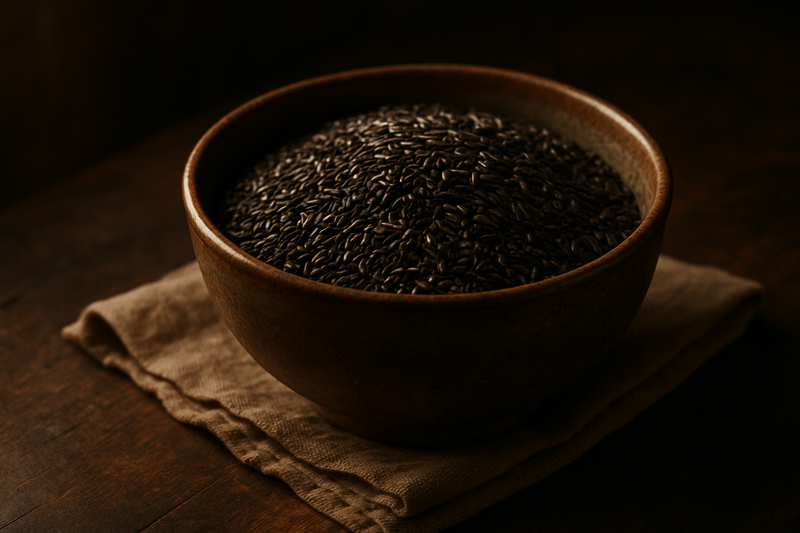
Niger Seed Oil · Photograph
Discover niger seed oil health benefits, nutrition facts, and safe daily use. Learn how this nutty Ethiopian noog oil fits into heart-healthy, plant-based cooking — including injera and stews.
Key Nutrients
% Daily Value based on 2,000 cal diet
Key Active Compounds in Niger Seed Oil
- Linoleic acid (omega-6 PUFA): The dominant fatty acid, making up ~65–75% of total fats. PUFA stands for polyunsaturated fatty acid — a type of fat with multiple double bonds in its carbon chain, which tends to be liquid at room temperature and is considered heart-friendlier than most saturated fats. Linoleic acid is essential, meaning your body cannot make it and must get it from food.
- Oleic acid (omega-9 MUFA): Roughly 5–11% of total fatty acids. MUFA stands for monounsaturated fatty acid — the same class found abundantly in olive oil. Contributes to membrane flexibility and may support cardiometabolic health.
- Palmitic acid (saturated): Around 9–10% of total fatty acids. A common saturated fat present in most plant and animal oils.
- Stearic acid (saturated): Around 7–8% of total fatty acids. Also saturated, but some research suggests stearic acid has a more neutral effect on blood cholesterol than other saturated fats.
- Tocopherols (vitamin E family): Reported at roughly 75–310 mg per kilogram of oil depending on the extraction method. These fat-soluble antioxidants protect the oil's polyunsaturated fats from going rancid and contribute to your dietary vitamin E intake.
- Phenolic compounds and flavonoids: Present in variable amounts. Phenolics and flavonoids are plant-derived antioxidant molecules that may help neutralize free radicals (unstable molecules that can damage cells) in laboratory settings, though their impact at typical dietary intakes has not been measured in human trials.
Prep and Pairing Ideas
Niger seed oil's nutty warmth makes it most at home in Ethiopian and East African-inspired cooking, but it adapts easily to any kitchen. Here are three practical pairings to get started:
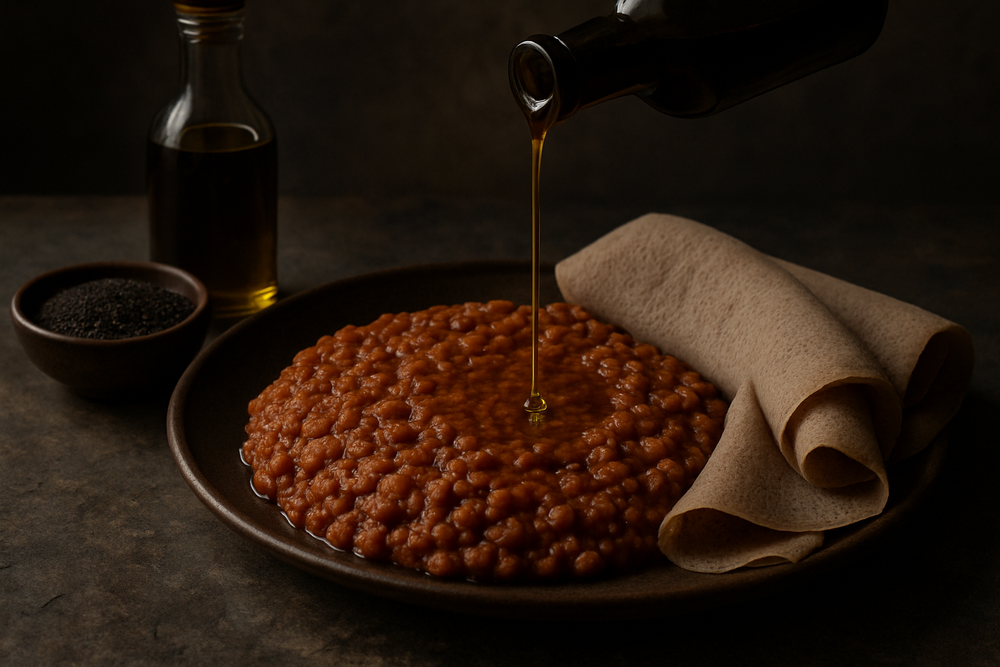
1. Niger seed oil + berbere spice + red lentils (misir wat) The oil's richness carries the fat-soluble compounds in berbere (a complex Ethiopian spice blend) into the lentils beautifully. The lentils provide the fiber and plant protein that the oil lacks, making this a nutritionally complete pairing.
2. Niger seed oil + roasted beets + aged vinegar A drizzle of cold-pressed niger oil over warm roasted beets with a splash of balsamic or red wine vinegar makes a simple salad that showcases the oil's flavour without heat destroying its tocopherols.
3. Niger seed oil + injera + shiro (chickpea flour stew) Used as it is traditionally in Ethiopia — poured over injera or stirred into shiro — the oil provides a flavorful fat source alongside the fermented injera's resistant starch and the chickpea protein. This is the classic application and arguably the best one.
Cooking temperature note: Because of its high polyunsaturated fat content, niger seed oil is best used for low to medium heat cooking or as a finishing oil. Avoid very high-heat frying, which can degrade PUFAs and their antioxidants.
Bottom Line
Niger seed oil is a nutritionally interesting, culturally rich cooking oil with a fatty acid profile dominated by linoleic acid (omega-6), modest amounts of heart-friendly oleic acid (omega-9), and meaningful levels of vitamin E tocopherols. It fits neatly into plant-based cooking and makes an excellent alternative to other high-linoleic seed oils like sunflower or safflower, particularly for anyone exploring Ethiopian cuisine.
The honest caveat: direct human clinical trials on this specific oil are limited. Most of what we can say about its health potential is informed by its composition and the broader evidence base for high-linoleic plant oils. Used as a culinary fat in typical amounts, it is safe for most healthy adults. Ensure you purchase food-grade cold-pressed oil, balance your omega-6 intake with omega-3-rich foods, and don't treat any single oil as a health shortcut.
Explore more: Looking to build a heart-supportive, plant-forward eating pattern? See Plantopedia's plant-based health goals guide for ingredient stacks and meal ideas organized by health outcome.
How Niger Seed Oil Compares
| Compared with | What's different |
|---|---|
| Niger Seed Oil vs. Olive Oil | Niger oil has much higher linoleic acid (70%) compared to olive oil's high oleic acid content. |
| Niger Seed Oil vs. Linseed (Flax) Oil | Niger oil is more stable for cooking and has a distinct nutty, earthy flavor profile. |
Health Benefits
Things to Know
Total fat intake: Like all oils, niger seed oil is energy-dense (~120 kcal per tablespoon). Factor it into your overall daily fat budget.
Omega-6 to omega-3 balance: Niger seed oil is very high in omega-6 linoleic acid. Most Western diets are already skewed toward omega-6; if you use niger seed oil regularly, make sure your diet also includes adequate omega-3 sources (flaxseed, chia, hemp, walnuts, or fatty fish).
Seed or nut allergies: Cross-reactivity to niger seeds or their oil is theoretically possible in people with seed allergies, although specific case reports are scarce. If you have known seed allergies, consult your doctor first.
Gallbladder or fat malabsorption conditions: High-fat foods and oils can exacerbate symptoms in people with gallbladder disease, pancreatitis, or fat malabsorption syndromes.
Medications: No specific drug interactions have been identified for niger seed oil. However, large shifts in dietary fat intake can affect absorption of fat-soluble medications and nutrients. If you take anticoagulants, antiplatelet drugs, or lipid-lowering medications, discuss significant dietary fat changes with your prescriber.
Pregnancy and breastfeeding: Culinary amounts used in cooking are generally considered safe. Large supplemental doses beyond normal cooking use have not been adequately studied in pregnant or breastfeeding individuals.
Storage: Store in a dark, cool place. High linoleic oils are prone to oxidative rancidity. Buy in smaller quantities, keep tightly sealed, and discard if the oil smells sharp or paint-like. Refrigeration extends shelf life.
Glossary
Shop This Ingredient
Stock your pantry with quality niger seed oil.
Buy on AmazonAs an Amazon Associate, Plantopedia earns from qualifying purchases. This costs you nothing extra and helps us keep the encyclopedia free.
Frequently Asked Questions
The benefits outlined below are supported by its composition and by extrapolation from similar high-linoleic plant oils. Where direct human trials on niger seed oil exist, they are noted; where evidence is only preliminary, that is flagged clearly. Heart and Circulation Niger seed oil's most discussed potential benefit relates to cardiovascular health. Research on dietary fat patterns consistently shows that replacing saturated fats with polyunsaturated fats — particularly linoleic acid from plant oils — is associated with improved cholesterol ratios and reduced cardiovascular risk markers. Because niger seed oil is one of the higher-linoleic culinary oils available (comparable to safflower or sunflower oil), it fits within that broader evidence base. One Ethiopian study (PMC5954901) examined a locally manufactured niger seed oil and its effect on lipid profiles, adding some oil-specific data to the picture. That said, there are no large randomized controlled trials (RCTs — gold-standard studies that randomly assign people to different treatments) specifically testing niger seed oil against hard cardiovascular outcomes. The heart-health case is plausible, not proven. Digestive Health and Microbiome As a pure oil, niger seed oil does not provide fiber — the nutrient most directly linked to gut microbiome health and digestive regularity. The whole seeds do contain fiber and protein, but these are largely removed during pressing. Traditional Ethiopian and Indian culinary sources describe niger seeds as generally nourishing and easy on the digestive system, though no controlled human studies have measured gut motility or microbiome changes from niger oil specifically. Using it as a cooking fat can improve the palatability of fiber-rich dishes like lentils and vegetables, which in turn supports overall gut health. Blood Sugar and Metabolism There are currently no human trials examining niger seed oil and blood glucose or insulin sensitivity directly. Dietary fat in general slows the rate at which sugar enters the bloodstream after a meal (postprandial glucose absorption), and replacing saturated fats with polyunsaturated fats is generally associated with better metabolic markers. However, because niger oil contains no fiber, it is unlikely to strongly influence blood sugar on its own beyond these general fat effects. Inflammation and Recovery Niger seed oil contains both tocopherols and phenolic antioxidants that show free-radical-scavenging activity in laboratory assays. This is scientifically interesting but needs an important caveat: high linoleic acid intake, if not balanced with adequate omega-3 fatty acids (found in flaxseed, chia, walnuts, and fatty fish), can potentially tip the body's ratio toward pro-inflammatory signaling pathways. There are no human clinical trials directly testing niger seed oil as an anti-inflammatory intervention, so the net effect on inflammation in real dietary contexts remains uncertain.
The short answer: cold-pressed (mechanically extracted) niger seed oil is generally preferable for both nutrition and flavour. Cold-pressed / mechanically extracted: Higher tocopherol content (up to 310 mg/kg vs. lower in solvent-extracted) Retains more phenolic compounds and natural flavour No solvent residues Darker colour, nuttier aroma — ideal for finishing dishes or low-heat cooking Refined niger seed oil: Lighter colour and more neutral flavour Lower levels of tocopherols and phenolics due to processing heat and filtration May have a slightly higher smoke point Better suited for higher-heat frying Label tip: Look for "cold-pressed" or "expeller-pressed" on the label. Ensure the product is food-grade — niger seed (also called nyjer seed) is sold as birdseed and is sometimes chemically treated to prevent germination; birdseed-grade product is NOT safe to eat. Purchase from a food retailer and check for a food safety certification if in doubt.
There are no formal clinical dosing guidelines for niger seed oil. General dietary guidance for added oils applies: General healthy adult: 1–2 tablespoons (15–30 mL) per day as part of total dietary fat is a reasonable starting point and aligns with how it is used in traditional Ethiopian cooking. Start low if it's new to you: Begin with 1 teaspoon in a dish and build up. Some people experience mild digestive sensitivity when introducing any new fat source to their diet. Context matters: If you already use significant amounts of other high-linoleic oils (sunflower, safflower, corn), substituting niger seed oil for one of those is more sensible than adding it on top of existing oil intake. No supplement capsules are widely available: Niger seed oil is primarily a culinary oil, not a supplement. Stick to food-grade culinary use. If you have a specific health goal — for example, improving lipid profiles or managing cardiovascular risk — speak with a registered dietitian who can tailor recommendations to your full dietary picture.
Quick Answers
Common questions, answered in a line.
Niger seed oil is best used for low to medium heat cooking or as a finishing oil due to its high polyunsaturated fat content. Avoid high-heat frying, as extreme temperatures can degrade the oil's beneficial polyunsaturated fatty acids (PUFAs) and antioxidants.
Niger seed oil consists primarily of linoleic acid (65–75%), an essential omega-6 polyunsaturated fat that the human body cannot produce on its own. It also contains smaller amounts of oleic acid (omega-9), palmitic acid, and stearic acid.
Niger seed oil is a traditional staple in Ethiopian and East African cuisine, frequently used in stews like misir wat or poured over injera. Its nutty flavor also pairs well with roasted beets, aged vinegars, and chickpea-based shiro.
Niger seed oil provides a significant amount of tocopherols (vitamin E family), ranging from 75 to 310 mg per kilogram. These compounds act as fat-soluble antioxidants that help protect the oil from rancidity and contribute to daily vitamin E intake.
To maintain freshness, store niger seed oil in a cool, dark place and keep the container tightly sealed to prevent oxidative rancidity. Because high-linoleic oils are prone to spoiling, buying smaller quantities or using refrigeration can help extend its shelf life.
Individuals with known seed allergies should consult a doctor before using niger seed oil, as cross-reactivity is theoretically possible. Additionally, those with gallbladder disease or fat malabsorption conditions should exercise caution due to the oil's high fat content.
For Readers in the USA
Local context — sourcing, seasonality, and regional notes.
In the United States, food-grade niger seed oil is most commonly found at Ethiopian specialty markets, international grocery stores, and online retailers. While major chains like Whole Foods or Kroger may not stock it regularly, it is becoming more accessible in urban areas with large East African populations like D.C., Minneapolis, and Seattle.
Niger seed oil is often marketed in the U.S. under its traditional Ethiopian name, "Noog" or "Nug" oil. You may also see it labeled as "Guizotia abyssinica" oil in specialty health contexts, though "Niger seed oil" remains the standard commercial name in North America.
The USDA requires that all niger seed imported into the U.S. undergo heat treatment to prevent the germination of noxious weeds, which is why domestic oil production is rare. Consequently, most culinary niger seed oil sold in the US is imported as a finished product from Ethiopia or India to ensure it meets both USDA and FDA food safety standards.
When shopping in the U.S., ensure the bottle is labeled "Food Grade" to distinguish it from niger seed sold in bulk at hardware stores as birdseed (thistle seed). Birdseed varieties are not processed under FDA food-grade sanitation standards and may contain different purity levels or additives not meant for human consumption.
AI Clinical Review
- Accurately describes niger seed oil’s fatty acid profile: predominantly linoleic acid (omega‑6 PUFA) with modest oleic (omega‑9 MUFA) and a small saturated fraction—consistent with analytic studies.
- Notes meaningful tocopherol (vitamin E) content and explains why cold‑pressed oils retain more antioxidants than refined versions.
- Frames heart benefits appropriately: advantages are plausible when replacing saturated fat with high‑linoleic plant oils, without overclaiming disease outcomes.
- Offers practical kitchen guidance—favor low to medium heat and good storage—to limit oxidation of polyunsaturated fats.
- Helpfully distinguishes niger seed oil from black seed (Nigella sativa) oil and stresses purchasing food‑grade oil.
- There are few human randomized trials directly testing niger seed oil on blood lipids or cardiovascular events; much is extrapolated from similar high‑linoleic oils.
- Anti‑inflammatory potential is uncertain and diet‑context dependent; the overall omega‑6:omega‑3 balance matters more than any single oil.
- Human data on glycemic control, gut microbiome effects, and other clinical outcomes are limited or absent.
- Composition (tocopherols, phenolics, even linoleic percentage) can vary by cultivar and processing, so retail products may not match study oils.
- Typical culinary use of 1–2 tablespoons per day is reasonable; include it within your total fat budget and pair with omega‑3 sources (flax, chia, walnuts, fatty fish).
- Choose food‑grade, cold‑pressed or expeller‑pressed oil; birdseed‑grade “nyjer” product is not for human consumption.
- Best for low to medium heat or as a finishing oil; very high‑heat frying increases oxidation of PUFAs.
- Check with a clinician if you have seed allergies, gallbladder or pancreatic disease, are pregnant or breastfeeding, or take anticoagulants/antiplatelet or lipid‑lowering medications.
Niche import; ensure food-grade. Generally safe.
References
- Fatty acid composition and antioxidant properties of niger seed varieties (2024 review) — covers linoleic/oleic content, tocopherols, and phenolics (pmc.ncbi.nlm.nih.gov)
- Fatty acid profile, total phenolic content, and antioxidant activity of Ethiopian niger seed oil (2021, PMC) — analytical study on composition and antioxidant capacity (pmc.ncbi.nlm.nih.gov)
- Effect of locally manufactured niger seed oil on lipid profile (2018, PMC) — one of the few studies providing some human-relevant lipid data (pmc.ncbi.nlm.nih.gov)
- USDA FoodData Central — vegetable oils reference data — used for general per-serving fat and calorie estimates comparable to similar seed oils (fdc.nal.usda.gov)
- Niger (Guizotia abyssinica): an overview of composition and uses (IJPCBS) — broad compositional and traditional-use review (ijpcbs.com)
- Nutritional value and fatty acid profile of Guizotia abyssinica (LRRD) — covers seed and oil macronutrient breakdown (lrrd.cipav.org.co)
- Biological activities and antioxidant properties of niger seed oil (ScienceDirect) — reviews in vitro antioxidant data and potential bioactivities (sciencedirect.com)
- Quality assessment of mechanically extracted niger seed oil (Phytojournal, 2017) — cold-pressed vs. other extraction methods; tocopherol data (phytojournal.com)
- PLOS ONE — niger seed characterization (2024) — recent characterization study relevant to fatty acid profile and stability (journals.plos.org)
- NIH Office of Dietary Supplements — Vitamin E fact sheet — background on tocopherols, daily values, and safety (ods.od.nih.gov)
Know Your Numbers
Eating healthy is a start. Now get to know your biomarkers.
Food changes bloodwork — inflammation, lipids, blood sugar and nutrient status all respond to what you eat. 59 markers from $59.
- Results in 7–10 days at 2,000+ Quest sites
- Licensed provider reviews every result
- One flat price, no membership, HSA/FSA eligible
Educational information only, not medical advice. Panels are ordered and reviewed through our licensed partner; Plantopedia may earn a commission.