Pili Nuts — health benefits and uses
Healthy fats, minerals, and texture; small-amount high-leverage add-in
The Short Answer
Pili nuts are creamy, nutrient-dense kernels from the Canarium ovatum tree, notable for having one of the highest fat contents of any nut. They are excellent sources of vitamin E and magnesium, offering a rich, buttery flavor similar to a cross between a
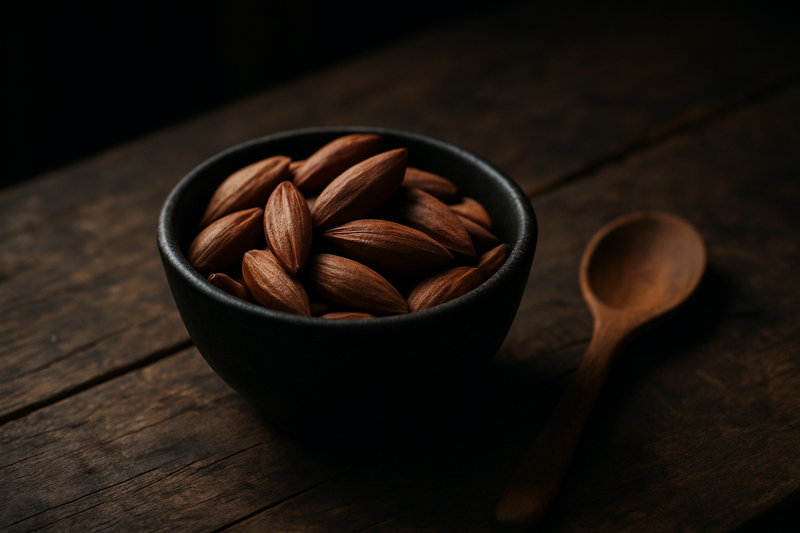
Pili Nuts · Photograph
Pili nuts come from the Canarium ovatum tree, a tropical species native to the Philippines and parts of Southeast Asia and Papua New Guinea. Inside a hard, plum-shaped drupe sits a creamy, ivory kernel with a rich, buttery flavour that sits somewhere between a macadamia and a pine nut. They are one of the fattiest nuts on the planet — in a good way — and carry an impressive mineral payload that most people have never heard of.
Key Nutrients
% Daily Value based on 2,000 cal diet
Key active compounds
Tocopherols (Vitamin E family) Fat-soluble antioxidants concentrated naturally in nuts and seeds. They act as chain-breaking antioxidants in lipid environments, protecting cell membranes and LDL particles (a type of cholesterol-carrying molecule in the blood) from oxidative damage.
Beta-carotene (provitamin A) An orange carotenoid pigment that can be converted to vitamin A and helps neutralise reactive oxygen species — unstable molecules that can damage cells.
Phenolic antioxidants (general) A broad class of plant compounds found in most nuts. Not yet fully characterised in pili nuts specifically, but likely contribute to their overall antioxidant capacity alongside tocopherols and carotenoids.
Monounsaturated oleic acid The dominant fatty acid in pili nuts. In the context of a balanced diet, oleic acid has been associated with improved blood lipid profiles and reduced cardiovascular risk markers in research on olive oil and mixed nuts.
Prep and pairing ideas
Pili nuts are versatile and require no preparation beyond opening the bag. A few practical ideas:
- Morning oats or overnight oats: Scatter a small handful over the top for crunch, healthy fat, and a mineral boost that helps slow the glycaemic rise of the oats.
- Salads with leafy greens: Pair with iron-rich greens like spinach or kale. Add a squeeze of lemon (vitamin C) to improve absorption of the non-haem iron from both the nuts and the greens.
- Pili nut butter on sliced apple or pear: The fibre in the fruit slows digestion; the fat in the butter provides long-lasting satiety. A clean, balanced snack.
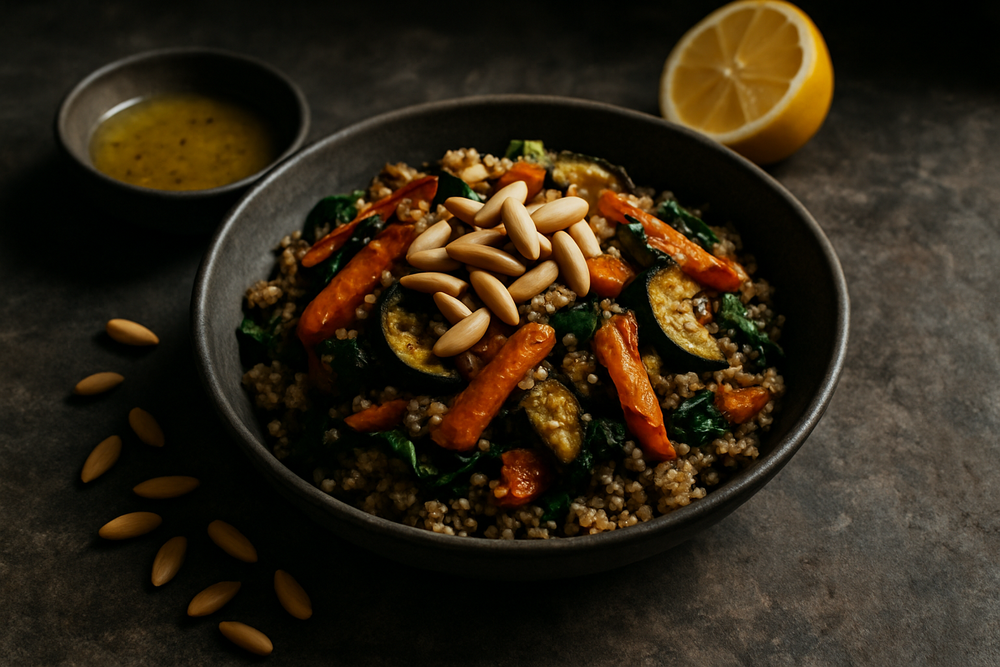
- Savoury rice or grain bowls: Toss a handful of pili nut pieces into a warm grain bowl with roasted vegetables and a citrus dressing — the richness of the nuts acts like a flavour anchor.
- Blended into smoothies: A tablespoon of pili nut butter adds creaminess and fat-soluble vitamins without significantly changing the flavour profile.
How Pili Nuts Compares
| Compared with | What's different |
|---|---|
| Pili Nuts vs. Macadamia Nuts | Pili nuts have a softer, buttery texture and higher fat content than the crunchier macadamia. |
| Pili Nuts vs. Pine Nuts | Pili nuts are larger and richer in vitamin E, while pine nuts have a distinct resinous, savory flavor. |
Health Benefits
Things to Know
Tree nut allergy: Pili nuts are a tree nut. Anyone with a known or suspected allergy to any tree nut (almonds, cashews, walnuts, hazelnuts, pistachios, etc.) should avoid pili nuts entirely. Reactions can range from mild GI symptoms to anaphylaxis (a severe, potentially life-threatening allergic response). Carry an epinephrine auto-injector if you are at risk and accidentally exposed.
Choking hazard in young children: Whole nuts are a choking risk for children under age 4. Use pili nut butter or finely ground forms for this age group.
Calorie density: At roughly 200+ kcal per ounce, pili nuts are very energy-dense. If you are managing weight, one small serving daily or a few times per week is a sensible starting point, not a free-for-all snack.
High-fat GI adjustment: If you are not used to high-fat foods, add pili nuts gradually. Large portions can cause loose stools or digestive discomfort until your gut adapts.
Kidney disease or mineral-restricted diets: Pili nuts provide significant magnesium, phosphorus, and potassium. People with advanced kidney disease or on mineral-restricted diets should factor this in and consult a renal dietitian.
Fat malabsorption or gallbladder conditions: Very high-fat foods can worsen symptoms. Introduce cautiously and under clinical guidance.
Medications and timing: No well-documented pili-specific drug interactions exist. However, large high-fat meals can theoretically alter absorption of medications that require a fasting state (some thyroid and osteoporosis drugs, for example). Follow your prescriber's food-timing instructions.
Mineral supplement stacking: If you already take high-dose magnesium or other mineral supplements, account for pili nuts as part of your total daily intake to avoid overshooting.
Prep Ideas
- — Morning oats or overnight oats: Scatter a small handful over the top for crunch, healthy fat, and a mineral boost that helps slow the glycaemic rise of the oats.
- — Salads with leafy greens: Pair with iron-rich greens like spinach or kale. Add a squeeze of lemon (vitamin C) to improve absorption of the non-haem iron from both the nuts and the greens.
- — Pili nut butter on sliced apple or pear: The fibre in the fruit slows digestion; the fat in the butter provides long-lasting satiety. A clean, balanced snack.
- — Savoury rice or grain bowls: Toss a handful of pili nut pieces into a warm grain bowl with roasted vegetables and a citrus dressing — the richness of the nuts acts like a flavour anchor.
- — Blended into smoothies: A tablespoon of pili nut butter adds creaminess and fat-soluble vitamins without significantly changing the flavour profile.
Shop This Ingredient
Stock your pantry with quality pili nuts.
Buy on AmazonAs an Amazon Associate, Plantopedia earns from qualifying purchases. This costs you nothing extra and helps us keep the encyclopedia free.
Frequently Asked Questions
The honest summary: pili-specific human clinical trials are still sparse. Most evidence is based on their nutrient composition and extrapolated from robust research on other nuts. Here is what the science supports, graded honestly. Heart health and circulation Pili nuts are rich in monounsaturated fats — the same oleic acid profile that gives olive oil its heart-health reputation. They also contain vitamin E, beta-carotene, magnesium, and potassium, all of which play roles in vascular function and blood pressure regulation. A scientific overview published by News-Medical notes that these components align closely with nutrients that, across broader nut research, are associated with improved lipid profiles and reduced cardiovascular disease risk. Importantly, the same review flags that no direct randomised controlled trials on pili nuts and heart outcomes exist yet — so claims for this specific nut remain extrapolated rather than proven. General nut literature consistently shows that about 1 oz of nuts daily is associated with lower LDL cholesterol and reduced cardiovascular risk; pili nuts share the nutritional profile that likely drives those effects. Digestive health and satiety Pili nuts provide dietary fibre (roughly 3–10% of the nut by weight depending on analysis), alongside fat and protein — a combination that slows gastric emptying and promotes fullness. Mixed-nut research supports better satiety and, in some studies, bowel regularity. There are no published pili-specific digestion or microbiome trials. One practical caution: their very high fat content can cause loose stools or GI discomfort if you suddenly add large portions, particularly if your current diet is low in fat. Blood sugar and metabolism With roughly 1 g of carbohydrate per ounce and up to 93% of calories from fat in some analyses, pili nuts are about as low-glycaemic as a whole food gets. High-fat, low-carb foods naturally slow gastric emptying and blunt post-meal blood glucose rises — a pattern consistent with how other nuts affect blood sugar. No human intervention trials have measured glucose, insulin, or HbA1c (a long-term blood sugar marker) responses to pili nuts specifically. The inference from their macro profile is strong, but the direct evidence is not yet there. Inflammation and recovery Monounsaturated fats and vitamin E have both been linked to lower inflammatory markers in broader research. Pili nuts provide both in meaningful amounts. The News-Medical review highlights their antioxidant capacity and positions it as a potential contributor to reduced oxidative stress. The evidence is currently mechanistic and indirect — based on what these nutrients do in other contexts — rather than from trials isolating pili nuts. Bone health and minerals This is arguably the most underappreciated angle. A single ounce of pili nuts covers roughly a third of the daily manganese target and around a fifth of magnesium — two minerals central to bone metabolism and enzymatic antioxidant defence. Phosphorus and copper also contribute to bone matrix integrity. This makes pili nuts a quietly useful tool for anyone focused on mineral density, particularly in a whole-food, plant-based context.
All three retain the core nutritional profile reasonably well. Here is a quick breakdown: Whole raw pili nuts Most minimally processed. All fat, minerals, and antioxidants are intact. Flavour is mild and buttery. Dry-roasted pili nuts Roasting enhances flavour and crunch. Some heat-sensitive compounds (like vitamin C, though pili has little) may reduce slightly, but the fat-soluble vitamins and minerals hold up well. This is the most widely available commercial form. Sprouted or soaked pili nuts Some specialty producers soak or sprout nuts before drying to improve digestibility and reduce compounds called antinutrients (plant substances that can mildly interfere with mineral absorption). Human data specific to sprouted pili nuts are lacking, but the process is common in premium products and is unlikely to harm nutritional value. Pili nut butter Nutritionally equivalent per gram to whole nuts. The main risk is portion creep — it is easy to eat two tablespoons without noticing. Stick to 1–2 tablespoons and check labels for added sugars or palm oil. Pili nut pieces, flours, and inclusions in snack products Nutritionally similar per gram, but always read the full label. Added sugars, seed oils, or refined flours in the surrounding product can change the overall health picture significantly.
The mineral-focused whole-food eater Eating plant-based and want more magnesium and manganese without supplements Already eating a variety of nuts but want to rotate in something with a stronger mineral profile Trying to support bone density through food rather than relying solely on dairy The low-carb or keto-aligned snacker Looking for a satisfying, near-zero-carb nut option with a rich texture Finding macadamia nuts too expensive or wanting variety in a high-fat eating pattern Needs a portable, shelf-stable snack that won't spike blood sugar
A practical starting range: 1 oz (28 g), roughly 10–15 whole nuts, once daily or several times per week. This aligns with the portion size used in most nut-and-cardiometabolic research, where about 1 oz per day is consistently associated with health benefits without excess calorie burden. There are no dose-finding trials specific to pili nuts, so this recommendation is borrowed from the broader nut literature. Start lower if: You are new to high-fat foods (try half a serving for
Quick Answers
Common questions, answered in a line.
Pili nuts originate from the Canarium ovatum tree, a tropical species native to the Philippines, Southeast Asia, and parts of Papua New Guinea. The nut itself is found inside a hard, plum-shaped drupe.
Pili nuts have a rich, buttery flavor and a creamy texture that is described as being between a macadamia nut and a pine nut. They are known for being one of the fattiest nuts naturally available.
Pili nuts contain high levels of monounsaturated oleic acid, tocopherols (Vitamin E), beta-carotene (provitamin A), and various phenolic antioxidants. These compounds help protect cell membranes and neutralize unstable molecules that can damage cells.
Yes, you can eat pili nuts if you have a tree nut allergy. Pili nuts are classified as tree nuts, and anyone with an allergy to nuts like almonds or walnuts must avoid them to prevent reactions ranging from mild symptoms to anaphylaxis.
Pili nuts provide a significant mineral payload including magnesium, phosphorus, and potassium. People with advanced kidney disease or those on mineral-restricted diets should consult a professional before adding them to their diet.
Pili nuts are very energy-dense, containing approximately 200+ kcal per ounce. Because of this calorie density, those managing weight should limit intake to one small serving daily or a few times per week.
You can add pili nuts to morning oats, toss them into leafy green salads, or blend pili nut butter into smoothies for added creaminess. They also work well as a topping for savory grain bowls or paired with sliced fruit like apples and pears.
Pili nuts may cause loose stools or digestive discomfort if you are not used to high-fat foods or if you consume large portions too quickly. It is recommended to introduce them gradually to allow your gut to adapt to the high fat content.
For Readers in the USA
Local context — sourcing, seasonality, and regional notes.
Because they rely on a tropical climate found in the Philippines, pili nuts are not commercially grown in the United States and must be imported. You will typically find them in the U.S. market as premium, wild-harvested exports rather than domestic crops from states like California or Florida.
You can find pili nuts at major health-focused retailers like Whole Foods Market, through online merchants like Amazon, and at many specialty Asian grocery stores. Because they are a niche snack, they are often located in the "superfood" or keto-friendly snack aisle rather than the standard baking nut section.
Pili nuts are highly popular in the U.S. within the ketogenic (Keto) and Paleo communities due to their high fat-to-carb ratio. They are frequently marketed in the US as "the world's lowest carb nut," making them a staple for those following strict low-carbohydrate lifestyles.
Look for the USDA Organic seal on pili nut packaging to ensure the product meets strict federal standards for organic farming and processing. Since pili nuts are imported, the USDA Organic certification provides an extra layer of verification regarding the pesticide and chemical use during cultivation in the Philippines.
AI Clinical Review
- Clear on nutrient profile: pili nuts are very high in monounsaturated fat (oleic acid), low in carbohydrate, and provide notable magnesium and manganese—consistent with analyses of tree nuts and their cardiometabolic benefits when eaten in standard portions.
- Appropriately cautious about evidence: it distinguishes pili-specific data from broader “mixed nuts” research and avoids overstating disease claims.
- Practical serving guidance: recommending about 1 oz (28 g) aligns with portions commonly used in nut studies and helps balance benefits with calorie density.
- Helpful on forms and labels: noting that raw, roasted, or butter forms are nutritionally comparable per gram and that added sugars/oils can change the health profile is consumer-relevant.
- Pili-specific randomized trials are sparse: effects on LDL cholesterol, blood pressure, glucose/insulin, and inflammation are inferred from other nuts rather than tested directly in pili nuts.
- Antioxidant details are not fully characterized: tocopherols and carotenoids are present, but the specific phenolic compounds and their bioavailability (how well they are absorbed/used) need more study.
- Digestive and glycemic impacts likely vary by processing: fiber content and particle size (whole vs. butter/flour) can alter satiety and post-meal responses, but pili-focused trials are lacking.
- Claims around bone health are plausible based on mineral content, yet direct outcomes (bone density, fracture risk) have not been evaluated for pili nuts.
- Allergy and age: pili nuts are tree nuts—avoid if you have a tree nut allergy; whole nuts are a choking risk for children under 4 (use butter or finely ground forms instead).
- Portion and calories: ~200 kcal per 1 oz; stick to about a small handful (10–15 nuts) to capture benefits without excess energy intake.
- Kidney or mineral-restricted diets: meaningful magnesium, phosphorus, and potassium warrant caution for those with advanced kidney disease—check with a clinician or renal dietitian.
- High-fat tolerance and GI issues: introduce gradually if you’re not used to high‑fat foods, and be cautious with gallbladder disease or fat malabsorption, as large portions may trigger symptoms.
Mention allergy context where appropriate; keep serving size realistic.
References
- PubMed — First reported allergic reaction in the United States to pili nut (Canarium ovatum) (pubmed.ncbi.nlm.nih.gov)
- PMC, National Library of Medicine — Acute effects of thermally processed pili (Canarium ovatum, Engl.) pomace drink on plasma antioxidant and polyphenol status in humans (pmc.ncbi.nlm.nih.gov)
- PubMed — Brazil nuts: Nutritional composition, health benefits and safety aspects (pubmed.ncbi.nlm.nih.gov)
- Taylor & Francis — 23311932.2025.2546990 (tandfonline.com)
- USDA FoodData Central — USDA FoodData Central (fdc.nal.usda.gov)
- ScienceDirect — S1081120622016192 (sciencedirect.com)
Know Your Numbers
Eating healthy is a start. Now get to know your biomarkers.
Food changes bloodwork — inflammation, lipids, blood sugar and nutrient status all respond to what you eat. 59 markers from $59.
- Results in 7–10 days at 2,000+ Quest sites
- Licensed provider reviews every result
- One flat price, no membership, HSA/FSA eligible
Educational information only, not medical advice. Panels are ordered and reviewed through our licensed partner; Plantopedia may earn a commission.