Poppy Seeds — health benefits and uses
Healthy fats, minerals, and texture; small-amount high-leverage add-in
The Short Answer
Poppy seeds provide 126 mg of calcium and 2.5 grams of fiber per tablespoon, making them a mineral-dense addition to baked goods and salads. While they come from the opium poppy, food-grade seeds are washed to remove trace alkaloids and are safe for normal
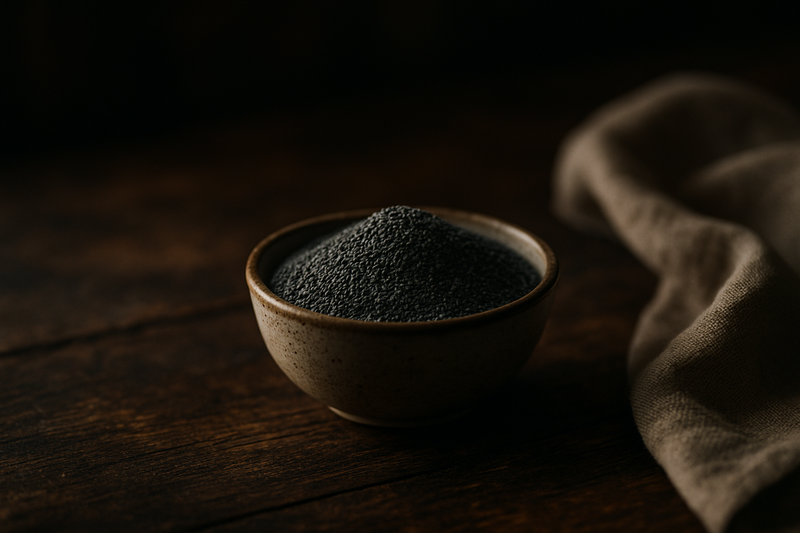
Poppy Seeds · Photograph
Poppy seeds come from Papaver somniferum, the opium poppy — a name that raises eyebrows, but the seeds themselves have been a staple of kitchens across Central Europe, the Middle East, and South Asia for centuries. You find them dusted on bagels, baked into lemon loaves, stirred into curries, and tossed through noodles. Small, slate-blue, and mildly nutty, they add far more than texture: a single tablespoon delivers a surprisingly dense hit of minerals, fiber, and unsaturated fat.
Key Nutrients
% Daily Value based on 2,000 cal diet
Key active compounds (phytochemicals)
- Linoleic acid (omega-6 polyunsaturated fatty acid): An essential fatty acid — meaning the body cannot make it, so it must come from food. Supports cell membranes and skin health; linked to modest LDL cholesterol reductions when it replaces saturated fat in the diet.
- Oleic acid (omega-9 monounsaturated fatty acid): A non-essential fat found in many plant oils. Associated with improved lipid profiles in studies of oleic-rich oils like olive oil.
- Phytosterols: Plant compounds structurally similar to cholesterol. They compete with dietary cholesterol for absorption in the gut and can modestly lower LDL when consumed regularly as part of a seed- and nut-rich diet.
- Polyphenols and flavonoids: Broad class of plant antioxidants that can neutralize free radicals (unstable molecules that can damage cells). Specific types and amounts in poppy seeds are less well characterized than in more-studied seeds.
- Tocopherols (vitamin E compounds): Fat-soluble antioxidants that protect cell membranes and fats in circulation from oxidative damage; present in the seed oil.
- Trace opium alkaloids (morphine, codeine — surface contaminants only): These are not produced inside the seed; they are residues from the plant's latex sap that can remain on the seed coat. In washed, food-grade seeds they are present only at trace levels and do not cause intoxication at normal serving sizes. See the safety section for detail.
Prep and pairing ideas
Poppy seeds are one of the more effortless ways to add mineral density to everyday food. Here are three practical pairings:
1. Poppy seeds + lemon + plain yogurt (or plant-based yogurt) The lemon provides vitamin C, which enhances absorption of the non-heme (plant) iron in the seeds. The yogurt adds more calcium and protein for a snack or dressing base that covers multiple nutrients at once. Use 1–
How Poppy Seeds Compares
| Compared with | What's different |
|---|---|
| Poppy Seeds vs. Chia Seeds | Smaller and crunchier with a nuttier flavor, whereas chia forms a gel when soaked. |
| Poppy Seeds vs. Sesame Seeds | Higher in calcium per gram and have a distinct citrusy-earthy aroma when baked. |
Health Benefits
Things to Know
Use only washed, food-grade poppy seeds sold for culinary use.
Typical safe range for most healthy adults: 1 teaspoon to 2 tablespoons per day as part of meals.
Very large amounts of raw or unwashed seeds can cause opioid-like effects; do not exceed reasonable food-use amounts.
Store in an airtight container away from heat and light; the high fat content means they can go rancid. Refrigerate after opening, especially if ground.
Drug testing: Food-grade poppy seeds can produce a positive urine opioid test for up to 24–48 hours after eating even a moderate serving. If you are in a workplace, athletic, legal, or clinical testing program, be aware and discuss this with whoever administers the tests.
Pregnancy and breastfeeding: Standard culinary amounts of washed seeds are considered low risk. Excessive intake and non-food preparations (tea) should be avoided due to limited data on chronic trace opiate exposure. Check with your healthcare provider.
Opioid use disorder history: Avoid unwashed seeds and poppy seed tea entirely due to relapse and overdose risk.
Seed or nut allergy: IgE-mediated poppy seed allergy is possible. Individuals with a history of severe seed or nut reactions — particularly sesame or sunflower — should introduce poppy seeds cautiously and under medical guidance, as cross-reactivity is possible.
Gastrointestinal conditions: People with active diverticulitis flares, severe IBD (inflammatory bowel disease) flares, intestinal strictures, or recent bowel surgery may be advised to limit small hard seeds temporarily based on individual clinical guidance.
Opioid medications or substitution therapy: Large amounts of unwashed seeds or poppy seed tea can add unpredictable opioid load and affect the interpretation of urine screens. Even food-grade seeds in normal amounts can occasionally affect opioid test results.
CNS depressants (benzodiazepines, sedatives, alcohol): Relevant primarily at non-food-grade exposures; culinary amounts are not a meaningful concern, but avoid combining with any non-food poppy preparation.
Anticoagulants (warfarin, DOACs): No strong evidence that culinary amounts significantly affect bleeding risk.
Blood sugar medications: Poppy seeds are low in digestible carbs and unlikely to cause blood sugar problems; the fiber and fat content may slightly blunt postprandial glucose rises, which is generally favorable.

Shop This Ingredient
Stock your pantry with quality poppy seeds.
Buy on AmazonAs an Amazon Associate, Plantopedia earns from qualifying purchases. This costs you nothing extra and helps us keep the encyclopedia free.
Frequently Asked Questions
Evidence ranges from moderate (well-supported by nutrition data and broader seed research) to emerging (plausible but not yet tested in poppy-specific human trials). The ratings below reflect that honestly. Heart health and circulation (moderate evidence) Poppy seeds are roughly 40–50% oil by weight, and the fat profile leans strongly unsaturated — primarily linoleic acid (omega-6) and oleic acid (omega-9). The broader human literature on diets rich in polyunsaturated fats from nuts and seeds consistently shows modest reductions in LDL cholesterol (often called "bad" cholesterol) and cardiovascular disease risk when these fats replace saturated fats. Phytosterols in the seeds add to this effect by competing with cholesterol for gut absorption. There are no randomized controlled trials (RCTs — the gold standard study design) specifically testing poppy seeds on heart outcomes. The heart-health case rests on their fat and phytosterol profile, not poppy-specific data. The practical leverage is greatest when you use poppy seeds instead of higher saturated-fat toppings — think a sprinkle on a salad instead of a creamy, butter-based dressing. Digestive health and microbiome (moderate evidence) One tablespoon of poppy seeds delivers roughly 1.7 g of dietary fiber, and per 100 g the fiber content sits around 19–20 g — comparable to many other seeds. The human evidence on high-fiber diets is robust: adequate fiber intake supports bowel regularity, stool bulk, and a diverse gut microbiome, and is associated with lower risk of constipation and certain digestive disorders. There are no controlled trials specifically on poppy seeds and digestion. Benefits are inferred from their fiber contribution within the well-established fiber literature. Adding a tablespoon to your morning oats or a baked good is a low-effort way to nudge your daily fiber toward the 25–38 g recommended by most guidelines. Blood sugar and metabolism (emerging evidence) Poppy seeds are low in digestible carbohydrate per serving, and their combination of fiber, protein, and fat slows gastric emptying — meaning food leaves the stomach more slowly, which blunts the spike in blood glucose after a meal. This mechanism is well-documented in the broader nutrition science for mixed meals high in fiber and unsaturated fat. No direct trials have tested poppy seeds alone for fasting glucose, insulin, or HbA1c (a marker of long-term blood sugar control). The benefit is largely a substitution effect: using seeds as a topping instead of refined, low-fiber options. Inflammation and oxidative stress (emerging evidence) The polyphenols, flavonoids, and vitamin E compounds in poppy seeds have antioxidant activity in lab settings, and these compound classes in other foods are associated with reduced oxidative stress and lower inflammatory markers in human studies. No rigorous clinical trials have tested poppy seeds specifically for inflammatory outcomes. Any anti-inflammatory effect at normal culinary doses should be considered plausible but not proven. Bone, mineral, and hormonal health (moderate for minerals; emerging for hormones) This is arguably the strongest, most direct nutritional story for poppy seeds. Calcium and phosphorus are structural building blocks of bone; magnesium supports vitamin D metabolism (which in turn regulates calcium absorption); and manganese is involved in bone matrix formation and antioxidant enzymes. Poppy seeds deliver meaningful amounts of all four in a small volume. For hormonal and reproductive health, zinc and manganese both play roles in enzyme systems relevant to hormone metabolism. Some traditional uses and popular sources attribute libido or fertility benefits to poppy seeds, but these claims have no support from high-quality human trials and are extrapolations from their micronutrient content. The honest takeaway: poppy seeds can contribute to the overall mineral and healthy-fat intake that underpins hormonal health — they are not a targeted hormone therapy.
Each form has genuine uses; the best choice depends on what you are making and what nutrients you want. Whole seeds (most common culinary form): The default choice for baking, salads, noodle dishes, and yogurt. They retain full fiber, protein, minerals, and fats. Light toasting enhances flavor and may further reduce surface opiate residues. Minerals and fiber are best preserved in whole seeds, though the small, hard exterior means some people absorb nutrients slightly less completely than from ground seeds. Ground seeds or paste: Grinding breaks open the seed and makes the interior nutrients — particularly fats — more accessible. It is commonly used in pastry fillings (Eastern European makówki, for example) and some South Asian dishes. The nutrient profile is essentially the same as whole seeds when nothing is added, but ground seeds oxidize faster, so use them fresh or store the ground product in the refrigerator. Poppy seed oil (cold-pressed): Rich in linoleic acid, oleic acid, and tocopherols. Useful as a salad dressing oil or for light finishing. It contains no fiber and negligible protein, so it delivers the fat-soluble benefits only. Opioid contamination risk is low because alkaloids are mostly on the seed surface and are not highly oil-soluble. Minimal human clinical data exist specifically on poppy seed oil compared with better-studied oils like flaxseed or olive. Poppy seed tea (unwashed or non-food-grade seeds): Not a culinary food. Brewing unwashed seeds extracts significant concentrations of morphine and related alkaloids. This practice has caused opioid dependence, overdose, and death. It is not relevant to the cooking and nutrition context of this guide and should be explicitly avoided.
Quick Answers
Common questions, answered in a line.
Poppy seeds provide a dense supply of essential minerals, fiber, and healthy unsaturated fats like linoleic and oleic acids. A single tablespoon offers a concentrated hit of nutrients that support cell membranes, skin health, and improved lipid profiles.
Yes, eating food-grade poppy seeds can result in a positive urine opioid test for 24 to 48 hours after consumption. Even moderate culinary servings can trigger a positive result, so individuals facing workplace or athletic drug testing should be aware of this effect.
Poppy seeds contain phytosterols and linoleic acid, which can help lower LDL cholesterol when they replace saturated fats in your diet. These plant compounds compete with dietary cholesterol for absorption in the gut, supporting overall heart health.
For most healthy adults, a safe daily amount of poppy seeds ranges from 1 teaspoon to 2 tablespoons as part of regular meals. It is important to use only washed, food-grade seeds and avoid excessive amounts to prevent potential opioid-like effects.
Poppy seeds are naturally low in digestible carbohydrates and contain fiber and fats that may help blunt blood sugar rises after eating. This nutritional profile makes them a favorable addition to a diet focused on managing glucose levels.
Poppy seeds contain tocopherols (vitamin E), polyphenols, and flavonoids that act as antioxidants to neutralize harmful free radicals. These compounds help protect your cell membranes and fats in circulation from oxidative damage.
Pairing poppy seeds with lemon and yogurt is highly effective because the vitamin C in lemon enhances the absorption of the plant-based iron found in the seeds. This combination also provides a balanced mix of calcium, protein, and minerals.
For Readers in the USA
Local context — sourcing, seasonality, and regional notes.
While most poppy seeds sold in the U.S. are imported from Europe or Australia, the flowers are often grown in American home gardens as annuals in USDA Hardiness Zones 3 through 9. Most commercial culinary seeds are harvested in late summer once the seed pods have dried and turned brown.
You can find poppy seeds in the spice aisle of major U.S. grocery chains like Kroger, Safeway, and Whole Foods, or in the bulk sections of natural food stores. For larger quantities used in traditional baking, many Americans visit Eastern European or Jewish delis and specialty markets.
The FDA does not prohibit the sale of poppy seeds, but it does monitor the industry to ensure that seeds are properly cleaned to minimize levels of opium alkaloid residue. To ensure the highest quality and safety standards, look for reputable brands that specify their seeds are food-grade and thoroughly washed.
In the United States, poppy seeds are a cultural staple in Ashkenazi Jewish cuisine, specifically in Hamantaschen, and are iconic toppers for "everything" bagels and Chicago-style hot dog buns. They are also widely popularized in "Lemon Poppy Seed" muffins and loaves, which are ubiquitous in American cafes and bakeries.
AI Clinical Review
- Accurately explains that poppy seeds are mineral‑dense (notably calcium, magnesium, and manganese) and provide mostly unsaturated fats, aligning with broader nuts‑and‑seeds research on heart health when these fats replace saturated fats.
- Correctly frames benefits as nutrient‑driven and acknowledges the lack of poppy‑specific randomized trials—an honest, evidence‑based stance.
- Appropriately highlights fiber content and the likely contribution to digestive regularity and gentler post‑meal blood sugar rises within mixed meals.
- Provides clear safety context about trace opium alkaloids being surface residues on food‑grade seeds and emphasizes the real risks of non‑culinary preparations (e.g., “poppy seed tea”).
- Useful comparison of forms (whole vs. ground vs. oil), including oxidation concerns with ground seeds and the fiber trade‑off with oils.
- Direct human trials testing poppy seeds on cholesterol, glycemic control, inflammatory markers, or clinical outcomes are limited; most conclusions are extrapolated from their nutrient profile and research on other seeds.
- The specific polyphenol/flavonoid profile, bioavailability, and clinically meaningful antioxidant effects of poppy seeds are not well characterized.
- Claims related to libido, fertility, or broader hormonal effects remain speculative and are not supported by high‑quality human studies.
- Alkaloid contamination can vary by seed source and processing; more standardized data would help quantify real‑world variability and testing implications.
- Culinary amounts of washed, food‑grade seeds (about 1 teaspoon to 2 tablespoons per day) are generally reasonable for healthy adults; store airtight and cool to prevent rancidity, and use ground seeds promptly.
- Drug testing: normal portions can lead to a positive opioid urine screen for up to 24–48 hours. If you are subject to testing, discuss timing and documentation with your program.
- Avoid unwashed seeds and all “poppy seed tea” products; these can deliver unpredictable—and dangerous—opioid doses.
- Check with a clinician first if you are pregnant or breastfeeding, have a history of opioid use disorder, severe seed/nut allergies, or active GI conditions with strictures/flares. People on opioid medications or substitution therapy should be especially cautious due to testing and exposure concerns.
Mention allergy context where appropriate; keep serving size realistic.
References
- PMC, National Library of Medicine — Nutritional and Chemical Characterization of Poppy Seeds, Cold-Pressed Oil, and Cake: Poppy Cake as a High-Fibre and High-Protein Ingredient for Novel Food Production (pmc.ncbi.nlm.nih.gov)
- PubMed — Poppy seed foods and opiate drug testing--where are we today? (pubmed.ncbi.nlm.nih.gov)
- PubMed — Opioid exposure associated with poppy consumption reported to poison control centers and the U.S. Food and Drug Administration (pubmed.ncbi.nlm.nih.gov)
- University of Rochester Medical Center — Content - Health Encyclopedia - URochester Medicine (urmc.rochester.edu)
- USDA FoodData Central — USDA FoodData Central (fdc.nal.usda.gov)
- PubMed — What do we know about health risks related to thebaine in food? (pubmed.ncbi.nlm.nih.gov)
Know Your Numbers
Eating healthy is a start. Now get to know your biomarkers.
Food changes bloodwork — inflammation, lipids, blood sugar and nutrient status all respond to what you eat. 59 markers from $59.
- Results in 7–10 days at 2,000+ Quest sites
- Licensed provider reviews every result
- One flat price, no membership, HSA/FSA eligible
Educational information only, not medical advice. Panels are ordered and reviewed through our licensed partner; Plantopedia may earn a commission.