Sunflower Seed Flour — health benefits and uses
Healthy fats, minerals, and texture; small-amount high-leverage add-in
The Short Answer
Sunflower seed flour is a nutrient-dense, grain-free flour that provides 15g of protein and over 50% of the daily value for magnesium and copper per quarter-cup serving.

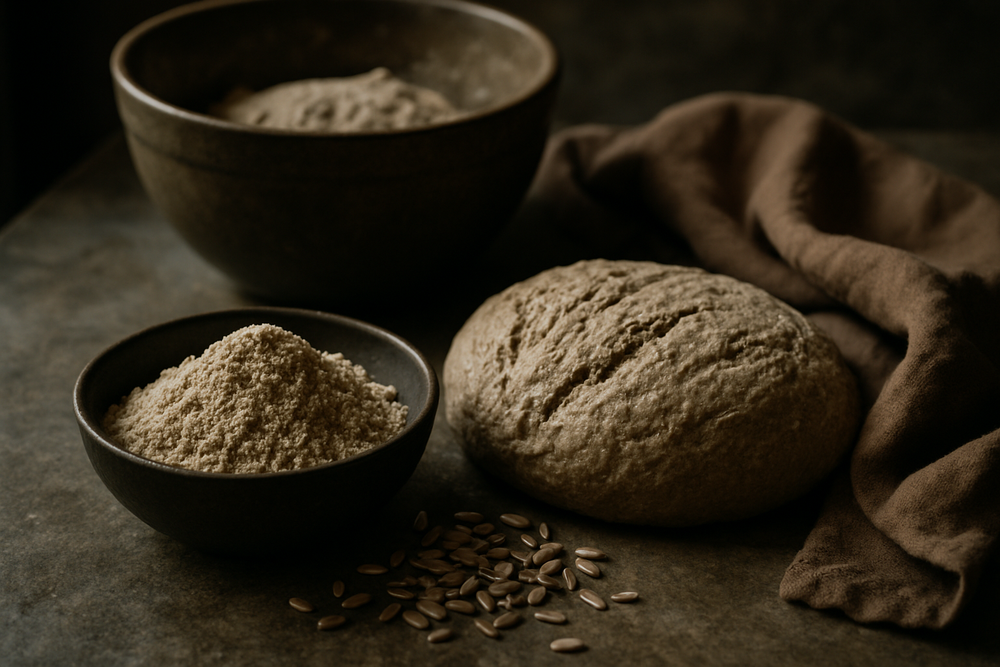
Sunflower Seed Flour · Photograph
Sunflower seed flour is exactly what it sounds like: hulled sunflower seeds (Helianthus annuus) ground into a fine, pale powder. It comes in two main forms — a full-fat version made by blitzing whole seeds at home, and a partially defatted version produced as a by-product when sunflower oil is pressed commercially. The defatted type is especially dense in protein, minerals, and the antioxidant compound chlorogenic acid, and it is the form most studied in food science research.
Key Nutrients
% Daily Value based on 2,000 cal diet
Key active compounds
- Chlorogenic acid — a phenolic antioxidant especially concentrated in partially defatted sunflower seed flour; linked in experimental research to anti-inflammatory and blood-sugar-moderating effects
- Mixed phenolic acids — a broad family of plant antioxidants that help neutralize free radicals and may reduce oxidative stress over time
- Flavonoids — polyphenolic compounds that contribute anti-inflammatory activity; present in sunflower seeds and retained to varying degrees in flour
- Phytosterols — plant sterols structurally similar to cholesterol; they compete with dietary cholesterol for absorption in the gut and may modestly lower LDL cholesterol
- Bioactive peptides — short protein fragments released during digestion; some sunflower peptides appear to help blood vessels relax by inhibiting enzymes that cause narrowing, contributing to blood-pressure support
- Linoleic acid — the primary fatty acid in full-fat sunflower seed flour; an omega-6 polyunsaturated fat associated with heart-healthy diets in appropriate amounts
Buying guide
Fresh vs. pre-ground vs. home-milled:
- Pre-ground (store-bought): Look for bags labelled "sunflower seed flour" or "sunflower flour" with a single ingredient — sunflower seeds, possibly with a note about fat content. Partially defatted versions will be lighter in colour and lower in total fat.
- Home-milled: Buy raw, hulled sunflower seeds (unsalted, no added oils) and process in short pulses in a high-speed blender or food processor. Stop before the seeds turn into butter. Best used fresh within a week.
- Canned or jarred: Not applicable for flour, but sunflower seed butters are a related option for different uses.
Label tips:
- Check that sunflower seeds are the only ingredient — no added salt, sugar, or hydrogenated oils
- For the partially defatted variety, look for protein content above 35 g per 100 g as a quality indicator
- Store in an airtight container in the fridge or freezer to prevent the natural oils from going rancid, especially for full-fat flour
How Sunflower Seed Flour Compares
| Compared with | What's different |
|---|---|
| Sunflower Seed Flour vs. Almond Flour | Higher in protein and lower in fat, but can turn green when baked with baking soda. |
| Sunflower Seed Flour vs. Sunflower Seed Butter | A thicker, buttery paste rather than a dry powder; used for spreads rather than baking. |
| Sunflower Seed Flour vs. Wheat Flour | Contains gluten and significantly less protein and minerals than sunflower flour. |
Health Benefits
Things to Know
Allergy: Sunflower seed allergy is uncommon but real. Reactions can include oral itching, skin rashes, asthma-like symptoms, and, rarely, anaphylaxis. Sunflower is a seed, not a tree nut, so it is often tolerated by people with tree nut allergies — but individual sensitivity varies. Introduce cautiously if you have other seed allergies.
Cross-reactivity: People with multiple food allergies or hay fever (especially to plants in the Asteraceae family, which includes sunflowers and ragweed) may have a higher likelihood of cross-reactivity. Check with an allergist if uncertain.
Cadmium: Sunflower plants can absorb cadmium from soil. The World Health Organization sets a weekly cadmium limit; at realistic serving sizes (around 30 g per day), exposure is not considered a concern for most people. Individuals with chronic kidney disease and those already consuming multiple high-cadmium foods should keep portions moderate.
Digestive sensitivity: Although ground flour carries less impaction risk than large quantities of whole seeds with their hulls, those with prior bowel strictures, severe constipation, or a history of fecal impaction should increase high-fiber seed foods gradually and stay well hydrated.
Calorie density: Full-fat sunflower seed flour is energy-dense. If you are managing weight or on a calorie-controlled plan, measure portions rather than free-pouring.
Blood pressure medications: Magnesium, bioactive peptides, and linoleic acid in sunflower seed products can support blood pressure reduction; if you are already on antihypertensive drugs, monitor blood pressure during significant dietary changes.
Blood sugar medications: Regular consumption of sunflower-enriched foods may modestly improve glycemic control; people on insulin, sulfonylureas, or GLP-1 agonists should monitor for incremental changes and discuss with their prescriber.
Vitamin E note: Vitamin E at very high supplemental doses can influence bleeding time, but culinary amounts from sunflower seed flour are far below supplement levels and are unlikely to cause issues for most people.
Pregnancy: Sunflower seeds are a good source of folate, magnesium, and iron — all important during pregnancy — but
Shop This Ingredient
Stock your pantry with quality sunflower seed flour.
Buy on AmazonAs an Amazon Associate, Plantopedia earns from qualifying purchases. This costs you nothing extra and helps us keep the encyclopedia free.
Frequently Asked Questions
Most direct evidence comes from studies on whole sunflower seeds and from bread-enrichment trials using sunflower seed flour. Dedicated long-term clinical trials on the flour alone are still limited, so the guidance below draws on that broader evidence base and is labelled accordingly. Heart and circulation Sunflower seeds are rich in unsaturated fats, magnesium, bioactive peptides, and phytosterols — a combination associated with lower blood pressure and improved blood lipid profiles in observational research. One dietary study cited by Healthline found that eating approximately 30 g of sunflower seeds daily as part of a healthy diet improved fasting blood sugar and cardiometabolic markers over six months compared with diet alone. When sunflower seed flour replaces refined wheat flour in bread, the finished product delivers more protein, antioxidants, and minerals — all factors linked with better cardiometabolic health — though direct cardiovascular outcome trials on the flour itself are not yet available. Evidence is moderate for seeds; emerging for the flour specifically. Digestive health and microbiome Sunflower seed flour increases the fiber content of baked goods compared with refined white flour, which can support regularity and gentle satiety. A study published in PMC found that gluten-free breads enriched with sunflower seed cake (a close relative of the flour) contained significantly higher crude fiber and pro-health compounds than control breads. Lab studies on sunflower flour-enriched bread also showed strong inhibition of alpha-amylase (an enzyme that breaks down starch) and pancreatic lipase (a fat-digesting enzyme), suggesting that digestion of carbohydrates and fats may be somewhat slower — a pattern often associated with better satiety and more stable energy. Human studies measuring microbiome or GI outcomes specifically for the flour are not yet available. Blood sugar and metabolism This is one of the most researched areas for sunflower seeds. Human data shows roughly a 10 percent reduction in fasting blood sugar over six months with daily consumption of about 30 g of sunflower seeds as part of a healthy diet. The seeds' combination of protein, healthy fat, fiber, magnesium, and chlorogenic acid all contribute to slowing carbohydrate absorption and moderating post-meal glucose rises. Lab studies on sunflower flour-enriched bread reported 92.81 percent inhibition of alpha-amylase, pointing toward meaningful slowing of starch digestion in food that contains the flour. People on glucose-lowering medications should monitor their response when significantly increasing intake of sunflower-enriched foods. Inflammation and recovery Sunflower seeds and their flour are notably rich in vitamin E (especially full-fat flour), selenium, and phenolic compounds including chlorogenic acid. These act as antioxidants — molecules that neutralize free radicals (unstable molecules that can damage cells). Research on bread enriched with sunflower seed flour found antioxidant activity increased in proportion to the percentage of flour incorporated. While no direct human trials have yet measured inflammatory biomarkers specifically after sunflower seed flour consumption, the antioxidant density of the flour is well-established and suggests a meaningful contribution to a generally anti-inflammatory, plant-forward diet. Hormones and cycle health Direct human research on hormonal effects of sunflower seed flour is minimal. Sunflower seeds supply vitamin E, B vitamins, and essential fatty acids that support general endocrine function and reproductive health. Linoleic acid-rich diets can influence eicosanoid production — hormone-like signalling molecules that affect vascular tone and inflammation. Any hormonal support from sunflower seed flour is best understood as indirect, via overall diet quality, healthy fats, and micronutrient density, rather than as a targeted hormone intervention.
Partially defatted flour (from oil pressing) is the most protein-dense and antioxidant-rich option, with roughly 40 to 66 percent protein. It works well as a partial replacement for wheat flour in breads (research has used 10 to 60 percent substitution), boosting protein and antioxidant content without making the loaf inedible. It is also the form most readily available in health food stores and online. The trade-off is lower fat, which means less vitamin E compared with the whole-seed version. Full-fat home-milled flour retains all the seed's natural fat, including vitamin E and linoleic acid. It has a richer flavour and a slightly oilier texture. It performs well in low-carb pancakes, energy balls, crackers, and flatbreads, but can make dense or greasy baked goods if used at high ratios. Think of it as a closer substitute for almond flour than for wheat flour. Sunflower seed cake flour — the solid fraction after oil extraction, ground into flour — is used similarly to partially defatted flour in gluten-free and enriched bread research, typically at up to 15 percent of total flour weight. It is a cost-effective, sustainable option where available. For everyday home use: partially defatted flour for protein-forward baking and enrichment; full-fat home-milled flour for grain-free and nut-free recipes.
Quick Answers
Common questions, answered in a line.
Sunflower seed flour is made by grinding hulled sunflower seeds (Helianthus annuus) into a fine, pale powder. It is available in two forms: a full-fat version made from whole seeds and a partially defatted version created as a byproduct of commercial oil pressing.
Sunflower seed flour is generally safe for those with tree nut allergies because it is a seed, not a nut, though individual sensitivity varies. It is often used as a nut-free alternative, but people with allergies to the Asteraceae plant family should use caution due to potential cross-reactivity.
Sunflower seed flour contains bioactive peptides that may help blood vessels relax and phytosterols that compete with dietary cholesterol absorption. These compounds, along with linoleic acid, support heart health by helping to manage blood pressure and potentially lowering LDL cholesterol.
To make sunflower seed flour at home, process raw, hulled, unsalted sunflower seeds in a high-speed blender or food processor using short pulses. It is important to stop pulsing before the seeds turn into butter, and the finished flour should be used within one week.
Sunflower seed flour should be stored in an airtight container in the refrigerator or freezer to prevent its natural oils from going rancid. This is especially important for full-fat, home-milled versions which are more prone to spoilage than defatted varieties.
Sunflower seed flour may help moderate blood sugar due to the presence of chlorogenic acid, a phenolic antioxidant linked to glycemic control. People taking insulin or blood sugar medications should monitor their levels, as regular consumption may lead to modest improvements in glucose management.
For Readers in the USA
Local context — sourcing, seasonality, and regional notes.
In the U.S., you can find sunflower seed flour at health food stores like Whole Foods Market, through online retailers like Amazon, or by milling raw seeds found in the bulk bins of local grocers. While not as ubiquitous as almond flour, specialized brands like SunFlour are increasingly available in the baking aisles of major regional chains.
Purchasing sunflower seed flour with the USDA Organic seal ensures the seeds were grown without synthetic pesticides or fertilizers, which is a common priority for health-conscious American consumers. Look for the "Certified Organic" label on brands like Think.Eat.Live. to guarantee compliance with federal organic standards.
While sunflowers are grown across the U.S., the majority of commercial production is concentrated in the Northern Great Plains, particularly North Dakota and South Dakota. These states provide the bulk of the domestic supply used for oil, snacking seeds, and the flour found in American markets.
Sunflower seed flour often turns green when baked with baking soda or powder due to a natural reaction between chlorogenic acid and alkaline leavening agents. This is a harmless chemical reaction common in American "sun-flour" recipes, but it can be neutralized by adding an acid like lemon juice or cream of tartar.
AI Clinical Review
- Clearly distinguishes full‑fat vs. partially defatted sunflower seed flour and how that changes protein, fat, vitamin E, and antioxidant content.
- Accurately notes that most health data come from whole sunflower seeds and from bread-enrichment studies, with flour-specific clinical trials still limited.
- Highlights chlorogenic acid and other phenolics as notable antioxidants and explains plausible links to glycemic and cardiometabolic support.
- Provides practical guidance on buying, storing, and basic substitution in baking while flagging allergy and cadmium considerations.
- Direct human trials testing sunflower seed flour (not whole seeds) on blood sugar, blood pressure, or lipids are scarce; most effects are inferred from small studies or in‑vitro assays.
- Reported enzyme inhibition (e.g., alpha‑amylase, lipase) and antioxidant activity in sunflower‑enriched breads may not translate to meaningful changes in real‑world glycemia or weight without clinical confirmation.
- Claims about bioactive peptides and phytosterols are biologically plausible, but data on bioavailability after milling, oil pressing, and baking are limited.
- Microbiome and anti‑inflammatory outcomes specific to sunflower seed flour have not been demonstrated in controlled human studies.
- Typical food-use context: whole-seed studies often use around 30 g/day; in baking, research substitutions of partially defatted flour range roughly 10–25% of total flour by weight. Increase gradually to gauge tolerance.
- Choose the form to match goals: partially defatted flour for higher protein and lower fat; full‑fat flour for vitamin E and healthy fats. If using full‑fat forms regularly, balance overall dietary omega‑6 with omega‑3 sources (e.g., fish, flax, chia).
- Safety: sunflower allergy is uncommon but real; cadmium can accumulate in seeds—moderate portions are prudent, especially for people with chronic kidney disease and during pregnancy. Check labels for potential cross‑contact with nuts/peanuts.
- Medications and conditions: those on glucose‑ or blood‑pressure‑lowering therapies should monitor readings when adding sunflower‑enriched foods; culinary vitamin E is unlikely to affect bleeding, but anyone on anticoagulants or with bleeding disorders should consult their clinician if intake rises substantially.
Mention allergy context where appropriate; keep serving size realistic.
References
- PubMed — [Use of sunflower (Helianthus annus, L.) in human foods. I. Preparation of sunflower flour, protein concentrate and supplementation of this flour with the amino acids lysine and methionine] (pubmed.ncbi.nlm.nih.gov)
- PMC, National Library of Medicine — Lipid profile of hyperlipidemic males after supplementation of multigrain bread containing sunflower (Helianthus annuus) seed flour (pmc.ncbi.nlm.nih.gov)
- PMC, National Library of Medicine — Sunflower seed cake as a source of nutrients in gluten-free bread (pmc.ncbi.nlm.nih.gov)
- PMC, National Library of Medicine — The Use of Upcycled Defatted Sunflower Seed Flour as a Functional Ingredient in Biscuits (pmc.ncbi.nlm.nih.gov)
- University of Rochester Medical Center — Content - Health Encyclopedia - URochester Medicine (urmc.rochester.edu)
- USDA FoodData Central — USDA FoodData Central (fdc.nal.usda.gov)
Know Your Numbers
Eating healthy is a start. Now get to know your biomarkers.
Food changes bloodwork — inflammation, lipids, blood sugar and nutrient status all respond to what you eat. 59 markers from $59.
- Results in 7–10 days at 2,000+ Quest sites
- Licensed provider reviews every result
- One flat price, no membership, HSA/FSA eligible
Educational information only, not medical advice. Panels are ordered and reviewed through our licensed partner; Plantopedia may earn a commission.