Sesame Seeds — health benefits and uses
Healthy fats, minerals, and texture; small-amount high-leverage add-in
The Short Answer
Sesame seeds are a mineral-dense food providing 281mg of calcium and 126mg of magnesium per ounce. They are best consumed toasted or ground into tahini to improve the absorption of their heart-healthy lignans and plant-based proteins.
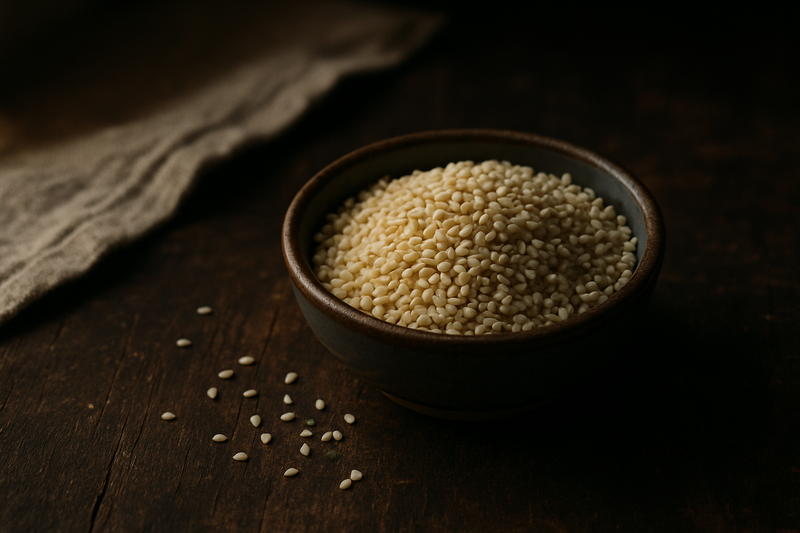
Sesame Seeds · Photograph
Sesame seeds (Sesamum indicum) are tiny powerhouses packed with heart-healthy fats, plant-based calcium, and unique compounds called lignans. These ancient seeds have been cultivated for over 3,000 years and remain one of the richest plant sources of several essential minerals. While they're often sprinkled as a garnish, eating sesame seeds in meaningful amounts may support heart health, bone strength, and blood sugar regulation.
Key Nutrients
% Daily Value based on 2,000 cal diet
Key active compounds
- Sesamin and sesamolin - Major lignans that act as antioxidants and may help lower cholesterol and blood pressure
- Sesamol - A phenolic compound formed during roasting with strong antioxidant properties
- Phytosterols - Plant sterols that compete with cholesterol absorption; sesame has among the highest levels of any nut or seed (~202 mg per ounce)
- Vitamin E compounds - Tocopherols that protect cell membranes from oxidative damage
- Flavonoids and polyphenols - Especially abundant in black sesame seeds, contributing to anti-inflammatory effects
Buying guide: choosing the right sesame for you
Whole sesame seeds (white/tan): Most common variety, available hulled (outer shell removed) or unhulled. Hulled seeds are milder and softer, while unhulled retain more calcium and fiber but may be harder to digest.
Black sesame seeds: Contain higher levels of calcium, magnesium, and antioxidants. Popular in East Asian cuisines with a nuttier, more intense flavor. Slightly more expensive but nutritionally superior.
Ground sesame/sesame meal: Better absorption of minerals and easier digestion. Look for products ground fresh or store whole seeds in the freezer and grind as needed.
Tahini (sesame paste): Convenient way to consume larger amounts daily. Choose natural varieties without added oils or sugars. Raw tahini preserves more nutrients, while roasted versions offer deeper flavor.
Sesame oil: Use unrefined, cold-pressed versions for maximum lignans. Toasted sesame oil is more flavorful but use sparingly as a finishing oil rather than for cooking.
Common pairings that boost benefits
Sesame + citrus or vitamin C foods: Iron absorption from sesame seeds improves significantly when paired with vitamin C sources like lemon juice, orange segments, or bell peppers.
Sesame + leafy greens: The calcium in sesame complements the magnesium in spinach, kale, and other greens for optimal bone health support.
Sesame + fermented foods: Combining tahini with miso, yogurt, or kefir may enhance the probiotic benefits while the healthy fats in sesame support absorption of fat-soluble vitamins.
Bottom line
Sesame seeds offer impressive nutritional density in a small package, providing exceptional amounts of calcium, magnesium, and heart-healthy compounds. Research supports their role in cardiovascular health and blood sugar management when consumed regularly in realistic portions. While they're not a magic bullet, incorporating 1-3 tablespoons daily can meaningfully contribute to mineral intake and may offer modest health benefits. Just remember that sesame is a common allergen, so introduce carefully if you have other food sensitivities.
How Sesame Seeds Compares
| Compared with | What's different |
|---|---|
| Sesame Seeds vs. Flaxseeds | Contain significantly more calcium (22% DV) and magnesium than flax, with a nuttier flavor profile. |
| Sesame Seeds vs. Chia Seeds | Higher in iron and copper, but chia provides significantly more omega-3 fatty acids and fiber. |
| Sesame Seeds vs. Black Sesame Seeds | Black varieties have a more intense, bitter flavor and higher antioxidant levels than white seeds. |
Health Benefits
Things to Know
Allergy risk: Sesame is a major food allergen that can cause severe reactions including anaphylaxis - avoid completely if allergic
Start small: Begin with 1 tablespoon daily to assess tolerance, as large amounts may cause digestive upset
Medication interactions: May enhance effects of blood pressure and diabetes medications - monitor closely if taking these drugs
Pregnancy and nursing: Generally safe in food amounts, but consult your healthcare provider about optimal intake
Kidney disease: High in phosphorus and other minerals that may need restriction in advanced kidney disease
Storage: Store in airtight containers in a cool, dry place; refrigerate or freeze ground varieties to prevent rancidity

Shop This Ingredient
Stock your pantry with quality sesame seeds.
Buy on AmazonAs an Amazon Associate, Plantopedia earns from qualifying purchases. This costs you nothing extra and helps us keep the encyclopedia free.
Frequently Asked Questions
Heart and circulation Clinical studies show that sesame seeds and sesame oil can help lower total and LDL cholesterol levels, likely through their unsaturated fats, lignans, and high phytosterol content. Research indicates that using sesame oil as the main cooking fat may reduce blood pressure in people with hypertension. The lignan compounds sesamin and sesamolin appear to support cardiovascular health by reducing inflammation and oxidative stress in blood vessels. Digestive health and microbiome The fiber in sesame seeds supports beneficial gut bacteria and promotes regular bowel movements. Ground sesame or tahini may be easier to digest than whole seeds while still providing prebiotic fiber. Some people find that the natural oils in sesame seeds help with regularity, though very large amounts may cause digestive discomfort. Blood sugar and metabolism Human trials suggest that sesame oil can improve blood sugar control in people with type 2 diabetes, particularly when used alongside standard diabetes medications. The combination of fiber, healthy fats, and minerals in sesame seeds may help slow carbohydrate absorption and support insulin sensitivity, though most direct research has focused on sesame oil rather than whole seeds. Inflammation and recovery Small human studies indicate that regular sesame intake may reduce inflammatory markers and oxidative stress. Some research suggests sesame consumption might help decrease arthritis pain and joint inflammation, though larger trials are needed. The antioxidant lignans and vitamin E compounds likely contribute to these anti-inflammatory effects.
For general health benefits, aim for 1-3 tablespoons (9-27 grams) daily. Clinical studies showing cardiovascular and blood sugar benefits typically used 25-50 grams per day, but this amount should be built up gradually. Start with 1 tablespoon daily for the first week, then increase to 2-3 tablespoons if well-tolerated. This provides meaningful amounts of calcium, magnesium, and healthy fats without excessive calories (about 160-480 calories from seeds alone). Timing doesn't matter much - sprinkle on salads, blend into smoothies, or use tahini as a dip or sauce ingredient throughout the day.
Quick Answers
Common questions, answered in a line.
Black sesame seeds are nutritionally superior because they contain higher levels of calcium, magnesium, and antioxidants compared to white varieties. They are popular in East Asian cuisine and offer a more intense, nuttier flavor profile than the milder white or tan seeds.
To maximize nutrients, choose unhulled sesame seeds for more fiber and calcium, or select black sesame seeds for higher antioxidant content. Look for ground sesame or tahini for better mineral absorption, and ensure sesame oil is unrefined and cold-pressed to preserve lignans.
Eating unhulled sesame seeds provides more fiber and calcium, though they may be slightly more difficult for some people to digest. In contrast, hulled seeds have the outer shell removed, resulting in a milder flavor and softer texture but lower mineral content.
Pairing sesame seeds with foods high in vitamin C, such as lemon juice, orange segments, or bell peppers, significantly improves the absorption of the iron found in the seeds. You can also combine them with leafy greens to provide a synergistic boost for bone health.
Sesame seeds may enhance the effects of medications used to manage blood pressure and diabetes. If you are taking these drugs, you should monitor your levels closely and consult a healthcare provider when consuming sesame seeds regularly.
Store sesame seeds in airtight containers in a cool, dry place to maintain freshness and prevent them from going rancid. For ground sesame varieties or sesame meal, it is recommended to store them in the refrigerator or freezer.
People with advanced kidney disease may need to limit their intake of sesame seeds because they are high in phosphorus and other minerals. Always consult with a medical professional regarding mineral restrictions for kidney health.
For Readers in the USA
Local context — sourcing, seasonality, and regional notes.
Sesame is primarily grown in the southern United States, specifically in Texas and Oklahoma, due to the crop's high heat tolerance. While U.S. production is growing to meet domestic demand, the majority of the sesame consumed in America is imported from countries like India and Ethiopia.
You can find sesame seeds and tahini at major U.S. retailers like Whole Foods, Trader Joe’s, Kroger, and Walmart, typically in the baking or international food aisles. For black sesame seeds or bulk quantities, Asian grocery stores like H-Mart and natural food cooperatives often offer the best selection and value.
The FDA officially added sesame to the list of major food allergens in 2023, requiring all packaged food in the U.S. to clearly label it as an ingredient. This federal mandate, established by the FASTER Act, helps consumers identify sesame which was previously hidden under terms like "spices" or "natural flavors."
In the U.S., sesame is often associated with "everything" bagels or as a garnish on hamburger buns, but it is also a staple ingredient in Middle Eastern and Asian-American dishes. Cultural classics like hummus and halvah have become mainstream American health snacks, while toasted sesame oil is a pantry essential for stir-frying.
AI Clinical Review
- Sesame seeds are nutrient-dense, providing meaningful amounts of calcium, magnesium, copper, fiber, and unsaturated fats—useful for plant-forward or dairy-free diets.
- Lignans (sesamin, sesamolin) and vitamin E compounds contribute antioxidant and anti-inflammatory activity; phytosterols can modestly help lower LDL cholesterol when part of a heart-healthy pattern.
- Practical forms and uses are covered well: whole, ground, tahini, and oils each offer accessible ways to eat sesame regularly.
- A daily intake of roughly 1–3 tablespoons is a realistic range for most people and aligns with portions used in everyday cooking.
- Many cardiometabolic findings come from small trials using sesame oil or lignan-rich extracts; fewer high-quality studies assess whole seeds at typical food doses.
- Reported blood pressure and blood sugar benefits often occur alongside standard medications and over short durations; long-term, independent effects remain uncertain.
- Unhulled seeds contain more calcium, but some is bound to oxalates/phytates, which can limit absorption; actual bioavailability varies by processing (hulled vs unhulled, ground, toasted) and individual factors.
- Black sesame may have higher antioxidant levels, but the advantage over white/tan seeds appears modest and not clearly linked to better clinical outcomes.
- Sesame is a major allergen; anyone with known seed/nut allergies should avoid it or introduce only under medical guidance.
- Portion and form matter: 1–3 tablespoons per day is a common food-use range, but seeds and tahini are calorie-dense; adjust to your energy needs. Grinding or using tahini can improve digestibility and nutrient availability; toasting boosts flavor but changes some heat-sensitive compounds.
- If you have hypertension or diabetes and add sesame seeds or oil regularly, monitor blood pressure and glucose; effects may be additive with medications—check in with your clinician.
- People with advanced kidney disease or those restricting phosphorus/oxalates should review sesame intake with a dietitian, as seeds are mineral-rich and may require portion limits.
Mention allergy context where appropriate; keep serving size realistic.
References
- USDA FoodData Central: Sesame seeds nutrition data (fdc.nal.usda.gov)
- Health benefits and nutrition profile of sesame seeds - PMC review (pmc.ncbi.nlm.nih.gov)
- Healthline: 15 Health and Nutrition Benefits of Sesame Seeds (healthline.com)
- WebMD: Health Benefits of Sesame Seeds (webmd.com)
- GoodRx: Are Sesame Seeds Good for You? (goodrx.com)
- Harvard T.H. Chan School of Public Health: Protein sources (nutritionsource.hsph.harvard.edu)
- Mayo Clinic: Food allergies including sesame
- Clinical trials on sesame oil and blood pressure in hypertensive patients
- Research on sesame lignans and cholesterol metabolism
Know Your Numbers
Eating healthy is a start. Now get to know your biomarkers.
Food changes bloodwork — inflammation, lipids, blood sugar and nutrient status all respond to what you eat. 59 markers from $59.
- Results in 7–10 days at 2,000+ Quest sites
- Licensed provider reviews every result
- One flat price, no membership, HSA/FSA eligible
Educational information only, not medical advice. Panels are ordered and reviewed through our licensed partner; Plantopedia may earn a commission.