Discover the full science of watermelon nutrition with our comprehensive guide. From the heart-healthy lycopene that exceeds tomato levels t
Fiber + phytonutrients; use as a whole-food sweet, snack, or smoothie base
The Short Answer
Watermelon is a hydrating fruit providing 6,890 mcg of lycopene and 13% of the Daily Value for Vitamin C per cup. It is unique for its high concentration of citrulline, an amino acid that supports cardiovascular health and nitric oxide production.

Watermelon · Photograph
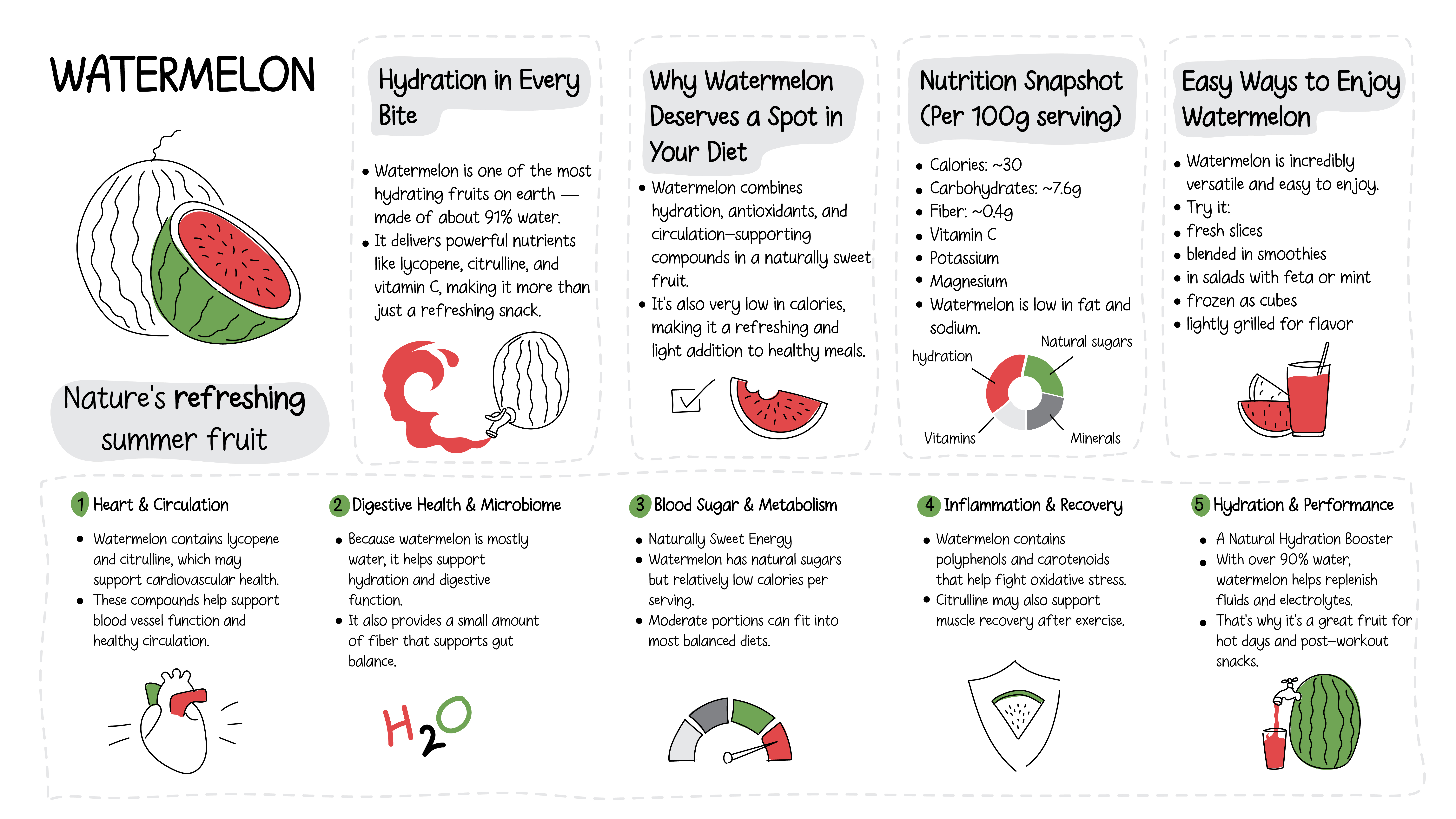
Watermelon offers a unique combination of hydration and bioactive compounds. Unlike many fruits that primarily offer Vitamin C and fiber, watermelon delivers two standout "performance" compounds: lycopene, for cellular antioxidant protection, and citrulline, for circulatory support.
Key Nutrients
% Daily Value based on 2,000 cal diet
Why Watermelon Health Benefits Matter for Your Daily Nutrition
Watermelon offers a unique combination of hydration and bioactive compounds. Unlike many fruits that primarily offer Vitamin C and fiber, watermelon delivers two standout "performance" compounds: lycopene, for cellular antioxidant protection, and citrulline, for circulatory support.
With only 30 calories per 100 grams, it provides concentrated nutrition without an excess caloric load. The high water content makes it an essential tool for maintaining hydration during hot weather or high-intensity activity, while its nutrients support the body’s internal repair systems.
Key Active Compounds
Specialized plant chemicals that target cardiovascular and metabolic pathways confer watermelon's "powerhouse" status.
- Lycopene: A potent carotenoid pigment that provides the red color and protects cells from oxidative damage.
- Citrulline: An amino acid that the body converts into L-arginine, a precursor for nitric oxide.
- Beta-carotene: Supports immune function and eye health by converting into Vitamin A.
- Potassium & Magnesium: Electrolytes essential for heart rhythm and muscle contraction.
- Vitamin C: A foundational antioxidant that supports skin health and collagen synthesis.
Conclusion
Watermelon is far more than a simple summer treat; it is a clinical powerhouse for hydration and cardiovascular health. By providing the body with a high concentration of lycopene and the circulation-boosting power of citrulline, it helps protect the heart while supporting physical recovery. While its high glycemic index requires mindfulness for those managing blood sugar, its low calorie density and massive water content make it a superior choice for staying hydrated and nourished.
Integrating fresh watermelon into your diet—especially the nutrient-dense rind—is a science-backed way to support your heart, muscles, and cellular health. Ready to incorporate more nutrient-dense foods like watermelon into your routine? Our meal planner can help you balance hydrating fruits with other beneficial ingredients for optimal nutrition.
How Watermelon Compares
| Compared with | What's different |
|---|---|
| Watermelon vs. Cantaloupe | Higher water and lycopene content with a crunchier, granular texture. |
| Watermelon vs. Tomato | Contains citrulline for circulation, whereas tomatoes have more fiber and less sugar. |
Health Benefits
Things to Know
Sugar Timing: Because of its high glycemic index, eating watermelon with healthy fats (like nuts or seeds) can help slow the absorption of sugar.
Digestive Sensitivity: Watermelon is high in fructose (a FODMAP), which may cause bloating in people with IBS.
The Rind: Don't toss the white rind! It actually contains higher concentrations of citrulline than the red flesh.

Common Uses
- —Consuming watermelon juice or fresh slices after intense exercise to replenish glycogen and reduce muscle pain.
- —Using watermelon during high-heat conditions as a high-water-content food to prevent dehydration.
- —Blending the white watermelon rind into smoothies to access the highest concentrations of blood-vessel-relaxing citrulline.
- —Pairing watermelon with feta cheese or nuts; the healthy fats in these pairings are required to absorb the fruit’s fat-soluble lycopene.
- —Eaten in 1-cup portions alongside protein or fat to manage the watermelon’s high glycemic index.
- —Regular consumption to build systemic lycopene levels, which provide a mild internal defense against UV-induced oxidative damage.
Glossary
Shop This Ingredient
Stock your pantry with quality watermelon.
Buy on AmazonAs an Amazon Associate, Plantopedia earns from qualifying purchases. This costs you nothing extra and helps us keep the encyclopedia free.
Frequently Asked Questions
Yes, in moderation. While watermelon has a high glycemic index (72-80), its glycemic load is low (5 per 100g) because it is 91% water. Most individuals with diabetes can safely consume a 1-cup serving without a massive glucose spike, provided it is balanced within their overall daily carbohydrate and fiber goals.
Fresh watermelon juice maintains excellent bioavailability of lycopene and citrulline, as confirmed in the Journal of Nutrition. However, juicing removes the fiber found in the flesh, which is necessary for slowing sugar absorption. For the best metabolic results, blending the fruit (including some of the white rind) is superior to using a traditional centrifugal juicer.
Research suggests that the citrulline in watermelon converts to arginine, which facilitates nitric oxide production. This molecule signals blood vessels to dilate and relax, which can help support healthy blood pressure levels. While effective as a dietary aid, it should supplement—not replace—prescribed medical protocols or hypertension medications recommended by your doctor.
Watermelon is the richest raw source of lycopene, containing significantly more per 100g than raw tomatoes. However, because lycopene is a fat-soluble carotenoid, your body requires a small amount of dietary fat (like avocado, feta cheese, or nuts) paired with the watermelon to absorb and utilize this heart-healthy antioxidant effectively.
Yes. The white rind contains the highest concentration of citrulline in the entire fruit, which is often discarded. To maximize the cardiovascular and health benefits of watermelon, consider blending the rind into smoothies, pickling it, or juicing the white portion along with the red flesh to ensure no nutrients go to waste.
Quick Answers
Common questions, answered in a line.
Watermelon is a low-calorie food that provides only 30 calories per 100 grams. This low calorie density allows it to deliver concentrated nutrition, including bioactive compounds like lycopene and citrulline, without adding an excess caloric load back into your daily diet.
Watermelon is considered a physical recovery aid because it contains citrulline, an amino acid that supports circulation and helps reduce muscle pain. Consuming watermelon juice or fresh slices after intense exercise helps replenish glycogen while supporting the body's repair systems.
Watermelon contains high levels of lycopene and vitamin C, both of which serve as foundational antioxidants that support skin health. Regular consumption can help build systemic lycopene levels, which provide a mild internal defense against oxidative damage caused by UV rays.
You should pair watermelon with healthy fats like nuts, seeds, or feta cheese to ensure your body can properly absorb its fat-soluble lycopene. Additionally, eating watermelon with fats or proteins helps slow the absorption of sugar due to the fruit's high glycemic index.
Watermelon can cause digestive issues like bloating for individuals with IBS because it is high in fructose, which is a FODMAP. Those with digestive sensitivities should be mindful of their intake to avoid discomfort.
Watermelon supports heart health by providing citrulline, which the body converts into L-arginine to produce nitric oxide for circulatory support. It also contains essential electrolytes like potassium and magnesium, which are vital for maintaining a steady heart rhythm.
Watermelon is an essential tool for hydration because of its massive water content and the presence of key electrolytes like potassium and magnesium. It is specifically recommended for maintaining fluid balance during high-heat conditions or periods of high-intensity activity.
For Readers in the USA
Local context — sourcing, seasonality, and regional notes.
Major U.S. watermelon production is concentrated in Florida, Texas, California, and Georgia, which together account for about two-thirds of the domestic crop. These states provide a staggered harvest schedule that ensures fresh domestic watermelon is available from spring through autumn.
While watermelons are available year-round in U.S. grocery stores due to imports, the peak domestic season for the freshest fruit runs from May through September. During these months, you will find the highest quality and most affordable prices at major retailers like Kroger, Walmart, and Whole Foods.
The most common types found in U.S. markets are the large seedless varieties, though smaller 'personal-sized' mini melons and heirloom 'Allsweet' types are increasingly popular at local farmers markets. While red-fleshed melons are the standard, specialty yellow-fleshed varieties are also seasonally available in certain regions.
The USDA maintains strict grading standards for watermelon quality, and consumers can look for the USDA Organic seal to ensure the fruit was grown without synthetic pesticides or fertilizers. Additionally, the FDA provides specific food safety guidelines for washing the thick rind of the watermelon before slicing to prevent cross-contamination.
AI Clinical Review
- Citrulline-Arginine Pathway: Correctly explains how watermelon citrulline bypasses liver metabolism to effectively increase systemic arginine and nitric oxide.
- Lycopene Bioavailability: Accurately notes that watermelon lycopene is as bioavailable as that in heat-processed tomatoes, which is rare for raw produce.
- Glycemic Load vs. Index: Properly distinguishes that while the watermelon has a high GI (72-80), its low GL (approx. 5) makes it manageable for most metabolic profiles in standard portions.
- Rind Utilization: Correctly identifies the white watermelon rind as the site of peak citrulline concentration, a detail often missed in culinary guides.
- Electrolyte Balance: Rightly highlights the role of watermelon potassium and magnesium in supporting heart rhythm and muscle contraction.
- Photoprotection Scale: While watermelon lycopene supports skin health, the exact "SPF equivalent" or the amount needed for significant UV protection is still being researched.
- Ammonia Clearance: The speed and efficiency at which watermelon citrulline clears metabolic waste like ammonia from human muscle tissue require more real-time athletic studies.
- Renal Intervention: Research into watermelon's role in protecting kidneys against oxidative stress is promising but remains largely in the realm of antioxidant modeling and early-stage trials.
- Erectile Dysfunction: Some evidence suggests citrulline may help mild ED due to its vasodilatory effects, but watermelon is not a clinical substitute for targeted medical treatments.
- Fructose & IBS: Watermelon is high in fructose. Patients with IBS or fructose malabsorption may experience significant bloating and should limit intake.
- Fat Pairing Necessity: Because lycopene is fat-soluble, clinical benefits for heart health are significantly reduced if the watermelon is eaten without a source of dietary fat.
- Potassium Sensitivity: Like other high-potassium fruits, watermelon intake should be monitored in patients with advanced Chronic Kidney Disease (CKD).
- Portion Control: Due to the high water content, it is easy to overconsume watermelon sugars. A 1-cup (150g) serving is the recommended clinical standard.
- Seed Safety: Watermelon seeds are edible and rich in magnesium and protein, though they should be chewed or sprouted to unlock their full nutritional value.
Frame as food education, not disease treatment.
References
- USDA FoodData Central - Watermelon Nutritional Profile: Standard source for vitamins, minerals, and water content.
- Nutrients (MDPI) - Watermelon Consumption and Cardiovascular Health: A review of how citrulline and lycopene impact blood pressure and arterial health.
- Journal of Agricultural and Food Chemistry - Citrulline Bioavailability: Clinical study on how watermelon juice reduces muscle soreness in athletes.
- American Journal of Hypertension - Watermelon Extract and Blood Pressure: A Trial showing significant improvements in aortic blood pressure.
- International Journal of Food Sciences and Nutrition - Lycopene and Skin Protection: Evidence regarding carotenoids like lycopene in providing systemic photoprotection against UV damage.
- Current Opinion in Clinical Nutrition & Metabolic Care - Citrulline in the Urea Cycle: Analysis of how L-citrulline bypasses liver metabolism to effectively increase systemic arginine.
- The Journal of Nutrition - Lycopene Absorption from Watermelon: A study confirming that lycopene from watermelon is as bioavailable as that from heat-processed tomatoes.
- Evidence-Based Complementary and Alternative Medicine - Renal Protection: Research into the antioxidant role of watermelon pulp in protecting kidneys against oxidative stress.
Know Your Numbers
Eating healthy is a start. Now get to know your biomarkers.
Food changes bloodwork — inflammation, lipids, blood sugar and nutrient status all respond to what you eat. 59 markers from $59.
- Results in 7–10 days at 2,000+ Quest sites
- Licensed provider reviews every result
- One flat price, no membership, HSA/FSA eligible
Educational information only, not medical advice. Panels are ordered and reviewed through our licensed partner; Plantopedia may earn a commission.