Watermelon Seed Oil — health benefits and uses
Traditionally valued in parts of Africa.
The Short Answer
Watermelon seed oil is a nutrient-dense finishing oil high in linoleic acid (omega-6) and vitamin E, best used raw to preserve its delicate antioxidants. It features a light, nutty flavor that excels in salad dressings, grain bowls, and dips rather than
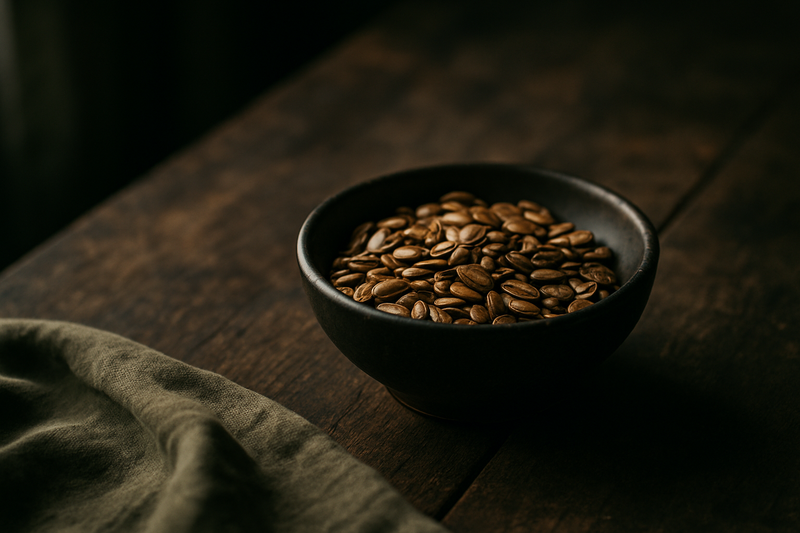
Watermelon Seed Oil · Photograph
Discover watermelon seed oil benefits and how to use it in dressings, drizzles, and skincare. Learn about its omega-6 and vitamin E content, nutrition facts, safety tips, and what the evidence actually says.
Key Nutrients
% Daily Value based on 2,000 cal diet
Key active compounds
- Linoleic acid (omega-6) — The dominant fatty acid, making up roughly 45–64% of the oil. An essential fat humans cannot make themselves; involved in cell membranes, skin barrier maintenance, and the production of hormone-like signaling molecules called eicosanoids.
- Oleic acid (omega-9) — A monounsaturated fatty acid (meaning one double bond in its carbon chain) comprising about 17–18% of the oil. Associated with heart-friendly dietary patterns, such as the Mediterranean diet.
- Palmitic acid — A saturated fatty acid at around 12% of the oil. Modest compared with the high proportion of unsaturated fats.
- Tocopherols (vitamin E) — Fat-soluble antioxidants that protect cell membranes and polyunsaturated fats themselves from oxidative damage (damage caused by unstable molecules called free radicals).
- Carotenoids — Pigmented antioxidants linked to eye and skin health; present in the oil, though amounts per serving are not yet well-characterized.
- Phenolic compounds, flavonoids, and tannins — Plant-derived antioxidant molecules that contribute to the oil's oxidative stability. They are also sometimes called anti-nutritional factors at very high doses, though their relevance at typical culinary amounts is unclear.
- Phytosterols (plant sterols) — Lipid molecules structurally similar to cholesterol; may help reduce cholesterol absorption in the gut when consumed regularly from plant foods.
Buying guide: what to look for
Choosing a good watermelon seed oil is straightforward if you know what to check.
- "Cold-pressed" or "expeller-pressed" on the label — This indicates mechanical extraction without chemical solvents, which preserves more antioxidants and flavor.
- Dark glass bottle — Polyunsaturated-rich oils oxidize (go rancid) more quickly than saturated fats. Dark glass protects from light degradation.
- Short ingredient list — The only ingredient should be watermelon seed oil. Blends are fine for skincare, but culinary oil should be pure.
- Check the best-before date — Unlike olive oil, high-linoleic oils have a shorter shelf life. Aim to use within 6–12 months of pressing.
- Refrigerate after opening — This slows oxidation significantly. A fresh bottle should smell nutty and clean, not fishy or paint-like (signs of rancidity).
- Food-grade vs cosmetic-grade — Make sure the product is labeled food-safe if you plan to cook or dress with it.
Prep and pairing ideas
Watermelon seed oil shines as a finishing oil — something you add after cooking, not during.
Salad dressing base: Whisk 1 tablespoon watermelon seed oil with 1 teaspoon apple cider vinegar, a pinch of sea salt, and a teaspoon of Dijon mustard. The oil's nuttiness pairs especially well with bitter greens like arugula or radicchio.
Drizzle over grains: A small pour over warm quinoa, farro, or brown rice adds flavor and healthy fats without overwhelming the dish.
Dip finishing oil: Swirl a half-teaspoon over hummus or white bean dip just before serving for an elegant nutty note.
Common pairings and why they work:
- Watermelon seed oil + citrus juice — The slight bitterness of the oil is brightened by lemon or lime; the acid also helps stabilize the emulsion in a vinaigrette.
- Watermelon seed oil + fresh herbs (mint, basil, parsley) — Both the oil and fresh herbs contain antioxidants, and the oil acts as a carrier that helps your body absorb fat-soluble plant pigments from the herbs.
- Watermelon seed oil + roasted vegetables — Drizzled over warm (not hot) roasted beets, sweet potato, or carrots just before serving, the oil adds depth without the oxidation risk of high-heat cooking.
Bottom line
Watermelon seed oil is a genuinely interesting plant oil with a favorable fatty acid profile — high in linoleic acid and oleic acid, relatively low in saturated fat — plus a suite of antioxidants including vitamin E, carotenoids, and phenolic compounds. Its nutty flavor makes it a pleasant alternative or addition to other finishing oils in a plant-based kitchen.
The honest caveat is that direct human clinical evidence is still sparse. Most of the health benefits attributed to this oil are plausible based on its composition and on general research about similar oils, but they have not yet been confirmed by large, rigorous human trials focused on watermelon seed oil specifically. Use it as a flavorful, nutritious part of a varied whole-food diet — not as a therapeutic treatment.
Keep it cold or room temperature, store it well, use it within its shelf life, and enjoy the fact that you are making use of a part of the watermelon that most people throw away.
Looking to explore more plant-based fat and oil choices? Browse the Plantopedia oils and fats section for ingredient guides tailored to your health goals.
How Watermelon Seed Oil Compares
| Compared with | What's different |
|---|---|
| Watermelon Seed Oil vs. Olive Oil | Contains significantly more monounsaturated fat (oleic acid) and has a higher smoke point for cooking. |
| Watermelon Seed Oil vs. Coconut Oil | Higher in saturated fat and has a solid consistency at room temperature. |
| Watermelon Seed Oil vs. Grape Seed Oil | Higher in omega-6 linoleic acid (9g per tbsp) and offers a lighter, nuttier flavor profile. |
Health Benefits
Things to Know
Not for high-heat cooking.: Watermelon seed oil's high polyunsaturated fat content makes it vulnerable to oxidation at high temperatures, which can produce harmful degradation compounds. Reserve it for cold applications, dressings, and low-heat finishing.
Allergy consideration.: If you have a known allergy to watermelon, other members of the gourd family (Cucurbitaceae), or seeds in general, avoid this oil until you speak with an allergist.
Patch-test topically.: Even non-comedogenic oils can cause reactions in sensitive individuals. Apply a small amount to the inner forearm and wait 24 hours before using on your face.
Omega-6 balance.: Watermelon seed oil is very high in linoleic acid (omega-6). Most people in Western diets already consume more omega-6 than omega-3 fats. Use watermelon seed oil in rotation with omega-3-rich options (flaxseed oil, walnuts, hemp seeds) rather than as your sole oil.
Blood thinners and anticoagulants.: Very high intakes of vitamin E–rich oils theoretically may influence blood clotting. Culinary amounts are very unlikely to cause issues, but if you take anticoagulant medications (such as warfarin), discuss any significant dietary oil changes with your healthcare provider.
Pregnancy and breastfeeding.: Culinary amounts are generally considered safe, but there is limited specific safety data for concentrated supplemental use. When in doubt, consult a midwife or doctor.
Anti-nutritional factors.: The oil contains saponins, tannins, and alkaloids — natural plant compounds sometimes called anti-nutritional at high doses. Their clinical impact at typical salad-dressing amounts is not established and is unlikely to be significant.

Prep Ideas
- — **Watermelon seed oil + citrus juice** — The slight bitterness of the oil is brightened by lemon or lime; the acid also helps stabilize the emulsion in a vinaigrette.
- — **Watermelon seed oil + fresh herbs (mint, basil, parsley)** — Both the oil and fresh herbs contain antioxidants, and the oil acts as a carrier that helps your body absorb fat-soluble plant pigments from the herbs.
- — **Watermelon seed oil + roasted vegetables** — Drizzled over warm (not hot) roasted beets, sweet potato, or carrots just before serving, the oil adds depth without the oxidation risk of high-heat cooking.
Shop This Ingredient
Stock your pantry with quality watermelon seed oil.
Buy on AmazonAs an Amazon Associate, Plantopedia earns from qualifying purchases. This costs you nothing extra and helps us keep the encyclopedia free.
Frequently Asked Questions
A note upfront: watermelon seed oil is still a relatively understudied ingredient. The benefits below are supported by its known composition and general research on similar fatty acid profiles — not by large, gold-standard human trials specifically testing this oil. Heart and circulation Watermelon seed oil's fatty acid profile — roughly 80% unsaturated fats — resembles the profiles of other plant oils linked to cardiovascular health in population studies. Replacing saturated fats with polyunsaturated fats like linoleic acid is associated with lower LDL ("bad") cholesterol in broader nutritional research. The oil also contains phytosterols, which may modestly reduce cholesterol absorption in the gut. However, no controlled human trials have tested watermelon seed oil directly for outcomes like blood pressure, blood lipids, or heart events. Benefits are inferred from its composition, not confirmed by this oil specifically. Digestive health and microbiome There is currently no direct human evidence that watermelon seed oil improves digestion or gut microbiota (the community of microorganisms living in the digestive tract). As a pure fat, it adds no fiber. Where whole watermelon seeds are consumed — a traditional practice in parts of Africa and the Middle East — the seeds themselves contribute protein, magnesium, and zinc. The extracted oil does not carry most of these seed nutrients. At culinary amounts, digestive side effects are unlikely for most people. Blood sugar and metabolism Watermelon seed oil contains no carbohydrate and will not directly raise blood glucose. Some animal studies have explored metabolic parameters of watermelon seed and oil, but these findings have not been tested in human clinical trials. There is no current evidence that watermelon seed oil improves insulin sensitivity or diabetes risk beyond the general advantage of replacing refined fats with unsaturated plant fats. Inflammation and recovery The oil contains tocopherols, carotenoids, and phenolic compounds — all recognized antioxidants that can neutralize free radicals, which are linked to chronic inflammation. A published review on watermelon seed and seed oil highlights anti-carcinogenic and antioxidant factors based largely on preclinical (cell and animal) data. No human trials have measured inflammatory biomarkers specifically from watermelon seed oil intake. The anti-inflammatory story is biologically plausible but not yet human-confirmed. Skin and topical benefits This is where watermelon seed oil has some of its most tangible, evidence-adjacent support. Studies on skin formulations describe it as lightweight and non-comedogenic (unlikely to clog pores), making it a good match for oily or combination skin. One study explored it as an alternative to petroleum jelly for oily skin types, noting its favorable fatty acid composition and mineral content. Its linoleic acid content is also relevant: skin that is deficient in linoleic acid tends to produce thicker sebum (skin oil), which may contribute to breakouts, and applying linoleic-acid-rich oils topically is a recognized approach in dermatology. That said, large randomized skin trials are still lacking, so most topical claims rest on formulation science and early-stage work rather than definitive proof.
Cold-pressed or expeller-pressed culinary oil This is the best choice for kitchen use. Mechanical pressing without chemical solvents preserves the oil's nutty flavor, tocopherols, and carotenoids better than refining. Look for a golden to pale-yellow color and a light, slightly nutty aroma. Use it within the best-before date and store away from heat and light. Refined cosmetic oil Cosmetic-grade watermelon seed oil is further processed to remove color and odor, creating a more neutral product suitable for facial serums, body oils, and hair treatments. It is not intended for eating. If you want to use it in the kitchen, choose food-grade cold-pressed oil. Blended serums and oils Many skincare products combine watermelon seed oil with other plant oils (such as rosehip, jojoba, or squalane) and botanical extracts. These blends can be useful if you want a ready-formulated product, but it can be harder to tell how much watermelon seed oil is actually present.
There is no established clinical dose for watermelon seed oil specifically. In practice, treating it like any other flavorful finishing oil works well: 1 to 2 teaspoons (5–10 mL) per serving is typical in dressings and drizzles, and up to 1 tablespoon (15 mL) per serving is reasonable for a full salad dressing or a grain bowl. At around 120 calories per tablespoon, watermelon seed oil contributes meaningful calorie-dense fat to a meal. This is not a concern in the context of a balanced diet, but those tracking energy intake should keep it in mind. Start low and adjust. If you are new to this oil, begin with a teaspoon per day, taste how it works in your recipes, and observe how your body responds. There is no evidence that amounts beyond typical culinary use provide extra benefit — and any oil consumed in large amounts adds significant calories. If you are using watermelon seed oil as a supplement in capsule form (uncommon but available), always follow the manufacturer's guidance and speak with a healthcare provider before exceeding food-equivalent amounts.
Quick Answers
Common questions, answered in a line.
Watermelon seed oil is rich in linoleic acid (omega-6), oleic acid (omega-9), and vitamin E (tocopherols). These components support cell membranes and provide fat-soluble antioxidants that protect against oxidative damage from free radicals.
No, you should not use watermelon seed oil for high-heat cooking because its high polyunsaturated fat content makes it vulnerable to oxidation. At high temperatures, the oil can degrade into harmful compounds, so it is best reserved for dressings and finishing dishes.
Watermelon seed oil should be stored in a dark glass bottle and refrigerated after opening to slow down oxidation. Because it is high in linoleic acid, it has a shorter shelf life than olive oil and should ideally be used within 6 to 12 months of pressing.
You can use watermelon seed oil as a salad dressing base, a drizzle over warm grains like quinoa, or as a finishing touch for dips like hummus. It pairs exceptionally well with bitter greens, citrus juices, and fresh herbs like mint or basil.
Watermelon seed oil contains phytosterols, which are plant sterols that may help reduce cholesterol absorption in the gut. Additionally, its oleic acid content is associated with heart-friendly dietary patterns like the Mediterranean diet.
Watermelon seed oil is considered non-comedogenic, but sensitive individuals should perform a patch test on their inner forearm for 24 hours before facial use. If you have an allergy to the gourd family (Cucurbitaceae) or seeds, you should avoid using the oil.
For Readers in the USA
Local context — sourcing, seasonality, and regional notes.
Most watermelon seed oil sold in the U.S. comes from melons grown in the "Sun Belt" states, primarily Texas, Florida, Georgia, and California. While the fruit is harvested in summer, the oil is processed year-round and available via specialty retailers and online marketplaces.
In the U.S., you can find culinary watermelon seed oil at high-end grocery chains like Whole Foods Market, specialty health food stores, and through online retailers. If purchasing for cooking, ensure the label specifies "food grade" to meet FDA safety standards for consumption.
To ensure your watermelon seed oil is free from synthetic pesticides, look for the USDA Organic seal on the bottle. Because this oil is a niche product, the USDA Organic certification provides a reliable standard for U.S. consumers concerned about agricultural chemical residues.
AI Clinical Review
- Accurately describes watermelon seed oil as high in unsaturated fats, especially linoleic (omega‑6) with some oleic (omega‑9), and relatively low in saturated fat—consistent with seed-oil profiles linked to heart‑healthy patterns when used in place of saturated fats.
- Sensibly recommends using it as a finishing oil and avoiding high‑heat cooking due to polyunsaturated fat instability; storage advice (dark bottle, cool location) aligns with best practices to limit oxidation.
- Notes the presence of vitamin E (tocopherols) and other antioxidants while being honest that exact per‑serving amounts are not well characterized.
- Provides practical culinary amounts (about 1–2 teaspoons up to 1 tablespoon per serving) and acknowledges the calorie density typical of all oils.
- Summarizes topical use well: lightweight feel, generally non‑comedogenic, and plausibly helpful for oily/combination skin because of its linoleic acid content.
- Direct human trials on cardiovascular risk factors, inflammatory markers, metabolic health, or clinical skin outcomes with watermelon seed oil are limited; most benefits are inferred from composition or studies of similar oils.
- Quantitative data for micronutrients (e.g., tocopherol isomers, carotenoids, phytosterols) per tablespoon are not standardized, making precise comparisons to other oils difficult.
- “Non‑comedogenic” is not a tightly defined, universally validated label; high‑quality randomized studies on acne or barrier repair with this specific oil are sparse.
- Evidence for digestive or microbiome benefits is minimal for the oil itself (separate from whole seeds, which contain fiber and minerals).
- Typical culinary use is small: 1–2 tsp (5–10 mL) as a drizzle or up to 1 Tbsp (15 mL) in a dressing—about 120 kcal per tablespoon. More isn’t necessarily better.
- Balance your fats: this oil is rich in omega‑6; aim to include omega‑3 sources (e.g., flaxseed, chia, walnuts) elsewhere in the diet to support a favorable omega‑6:omega‑3 pattern.
- Safety considerations: avoid if you have known allergies to watermelon or other Cucurbitaceae; patch‑test before facial use if you have sensitive or acne‑prone skin; discuss significant increases in vitamin E–rich oils with your clinician if you use anticoagulants.
- Form matters: choose food‑grade cold‑pressed oil for eating; cosmetic‑grade is for skin/hair only. Keep away from high heat, and store in a dark container; refrigeration after opening can slow rancidity.
Not for high-heat cooking.
References
- USDA FoodData Central — Reference data for vegetable oils and seed nutrition (fdc.nal.usda.gov)
- Anti-Carcinogenic Factors of Watermelon Seed and Seed Oil: A Review — Compositional analysis and antioxidant properties (scienceletters.researchfloor.org)
- Comprehensive Review on Watermelon Seed Oil (IOSR Pharmacy) — Fatty acid profile, tocopherols, and traditional uses (iosrphr.org)
- Nutritional Composition and Bioactive Potential of Watermelon Seeds (RSC Food & Function, 2025) — Recent review of seed bioactives including oil composition (pubs.rsc.org)
- Watermelon Seeds and Peels: Fatty Acid Composition (OCL Journal, 2020) — Analysis of linoleic acid, oleic acid, and minor lipid fractions (ocl-journal.org)
- Watermelon Seed Oil as Petroleum Jelly Alternative for Oily Skin (WJBPHS, 2024) — Small formulation study; emollient and skin properties (wjbphs.com)
- Watermelon (Citrullus lanatus) Oil — Springer book chapter — Overview of properties and culinary and industrial uses (link.springer.com)
- Nutritional Composition of Citrullus lanatus Seed and Biochemical Assessment in Rats (Journal of Food Biochemistry) — Animal-model study; metabolic and compositional data (onlinelibrary.wiley.com)
- Pros and Cons of Watermelon Seed Oil in Skin and Hair Care (Clinikally) — Dermatology-oriented overview of topical use and cautions (clinikally.com)
Know Your Numbers
Eating healthy is a start. Now get to know your biomarkers.
Food changes bloodwork — inflammation, lipids, blood sugar and nutrient status all respond to what you eat. 59 markers from $59.
- Results in 7–10 days at 2,000+ Quest sites
- Licensed provider reviews every result
- One flat price, no membership, HSA/FSA eligible
Educational information only, not medical advice. Panels are ordered and reviewed through our licensed partner; Plantopedia may earn a commission.