Watermelon Seeds — health benefits and uses
Healthy fats, minerals, and texture; small-amount high-leverage add-in
The Short Answer
Watermelon seeds are edible and highly nutritious, providing 8 grams of protein and 35% of your daily magnesium per ounce when dried or roasted. They are rich in heart-healthy linoleic acid and essential minerals like zinc and phosphorus.

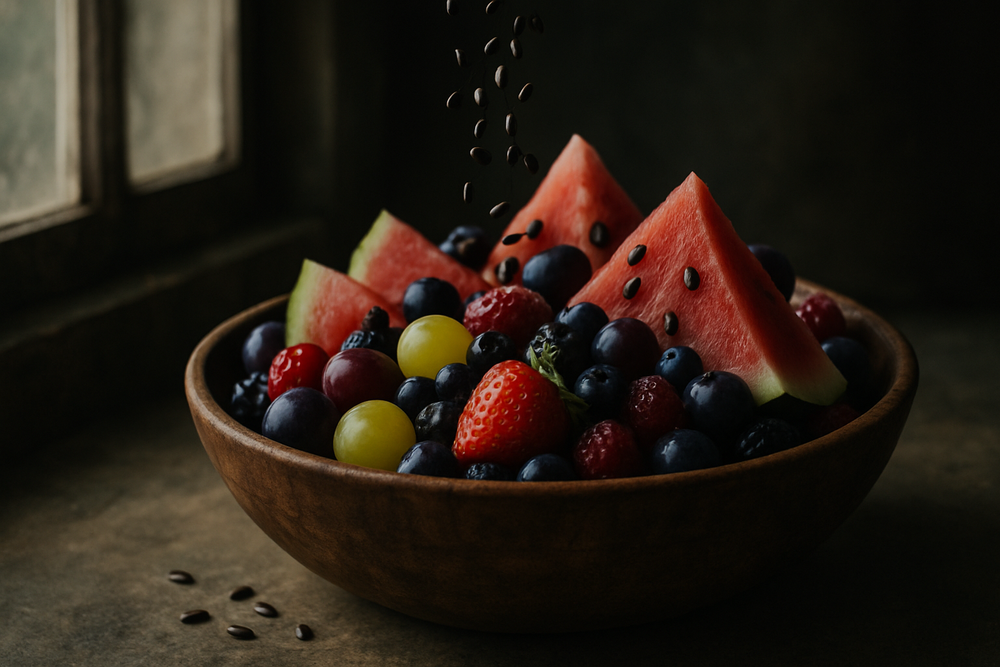
Watermelon Seeds · Photograph
Most people spit them out or ignore them entirely. But the small, flat seeds inside a watermelon (Citrullus lanatus) are fully edible, surprisingly nutritious, and a fixture in snack cultures across Africa, Asia, and the Middle East. Dried or roasted, they deliver a satisfying crunch alongside plant protein, unsaturated fats, and a mineral line-up that rivals better-known seeds like pumpkin or hemp.
Key Nutrients
% Daily Value based on 2,000 cal diet
Key active compounds
- Linoleic acid (omega-6) — the dominant fatty acid in watermelon seed oil; an essential polyunsaturated fat linked to healthier cholesterol profiles when it replaces saturated fat in the diet.
- Oleic acid (omega-9) — a monounsaturated fat also found in olive oil; associated with cardiovascular and anti-inflammatory benefits.
- Arginine — a semi-essential amino acid that acts as a building block for nitric oxide, a molecule that helps blood vessels relax. Some traditional uses of watermelon seed preparations for blood pressure are attributed partly to arginine, though this has not been confirmed in controlled human trials.
- Phenolic compounds and vitamin E — a broad group of antioxidants found in seeds that help protect cells from oxidative stress (damage caused by unstable molecules called free radicals). Detailed profiling of watermelon seed phenolics is still limited in the published literature.
- Complete-ish plant protein — watermelon seed protein contains a range of essential amino acids (the ones the body cannot make itself), supporting muscle repair, enzyme production, and tissue maintenance.
Buying guide: what to look for
Shelled kernels vs. whole seeds
- Shelled kernels are easier to measure, eat, and digest; choose these for consistent nutrition
- Whole seeds work as a textured snack but the shell is mostly indigestible fibre
Roasted vs. raw
- Either works; roasting improves flavour and reduces moisture for longer shelf life
- Avoid heavily salted products (check the label: aim for under 140 mg sodium per serving)
Label tips
- Ingredients should be simple: seeds (and salt if salted) — no artificial dyes, no hydrogenated oils
- In some markets, commercially dyed seeds have been reported; choose brands with transparent ingredient lists
- Organic options exist but are not required for a nutritional benefit
- Store in an airtight container in a cool, dark place; refrigerate after opening to prevent the unsaturated fats from going rancid (off-smelling or bitter)
Supplements vs. whole food
- Whole kernels are preferred; they deliver the complete matrix of protein, fat, minerals, and fibre together
- Watermelon seed protein powders exist but are a more processed option with limited evidence; whole food is consistent with a WFPB (whole-food, plant-based) approach
How Watermelon Seeds Compares
| Compared with | What's different |
|---|---|
| Watermelon Seeds vs. Pumpkin Seeds | Watermelon seeds have more magnesium (35% DV) and a milder, nutty flavor compared to pumpkin seeds. |
| Watermelon Seeds vs. Sunflower Seeds | Watermelon seeds are higher in protein per ounce and have a firmer, crunchier texture when roasted. |
Health Benefits
Things to Know
Allergy awareness: Watermelon is a member of the Cucurbitaceae family (which includes melon, cucumber, and pumpkin). Cross-reactivity is possible if you have a known allergy to other family members; consult an allergist if unsure.
Choking hazard: Whole unshelled seeds are not appropriate for young children; use ground kernels or seed butter as an age-appropriate alternative under supervision.
Calorie density: At ~156 kcal per ounce, watermelon seeds are energy-dense. A 2-tablespoon serving fits most calorie budgets; mindlessly eating from the bag can add up quickly.
Kidney disease and electrolyte-restricted diets: The high magnesium and potassium content means people with chronic kidney disease (CKD) or those on medications requiring tight electrolyte control (such as certain heart or kidney drugs) should discuss overall dietary mineral intake with their healthcare provider before adding large amounts.
Blood pressure medications and diuretics: Traditional sources attribute mild blood-pressure-lowering and mild diuretic (water-expelling) effects to watermelon seed preparations via arginine and minerals. At typical food portions, the interaction risk is low, but if you take antihypertensives or diuretics and plan to consume seeds regularly, mention it to your doctor.
Digestive conditions: Active diarrhoea, IBS with seed sensitivity, or IBD during a flare — moderate or avoid whole seeds; ground forms may be tolerated better.
Pregnancy: The folate content is a positive; iron and magnesium are also needed in higher amounts during pregnancy. Standard serving sizes are appropriate; large supplemental amounts of any single food are not recommended without medical guidance.
No well-documented drug interactions: have been identified in the clinical literature for watermelon seeds at normal food amounts; concerns
Shop This Ingredient
Stock your pantry with quality watermelon seeds.
Buy on AmazonAs an Amazon Associate, Plantopedia earns from qualifying purchases. This costs you nothing extra and helps us keep the encyclopedia free.
Frequently Asked Questions
The honest answer: most benefits are well-supported in principle based on what watermelon seeds contain, but direct clinical trials testing watermelon seeds in humans are sparse. Here is what is known area by area. Heart and circulation Watermelon seeds provide magnesium, folate, and a favourable fat profile — three nutrient factors consistently associated with cardiovascular health in large human dietary studies. Adequate magnesium intake is linked to lower blood pressure and reduced arrhythmia (irregular heartbeat) risk. The unsaturated fats in the seeds may help lower LDL ("bad") cholesterol when they replace saturated fat in the diet, consistent with what broader nut and seed research shows. Arginine's role as a nitric oxide precursor offers a plausible mechanism for blood pressure support, but no watermelon-seed-specific randomised controlled trial (RCT — a gold-standard study that randomly assigns people to treatments) has tested this. Bottom line: Watermelon seeds for heart health fit logically into a heart-supportive dietary pattern; they should not be positioned as a stand-alone treatment. Digestive health and microbiome Watermelon seeds contain small amounts of fibre alongside their seed oils, which can have a gentle laxative-like effect similar to other edible seeds. Traditional medicine across several cultures has used preparations of melon-family seeds to support digestion and relieve constipation. In a modern context, the most meaningful digestive benefit is probably displacement: swapping a bag of ultra-processed crisps for a handful of roasted seed kernels improves the overall fibre and fat quality of a snack without adding refined carbohydrates. People with active diarrhoea, irritable bowel syndrome (IBS) with known seed sensitivity, or inflammatory bowel disease (IBD) during a flare should be cautious, as whole seeds may irritate an already-sensitive gut. Blood sugar and metabolism Watermelon seeds are low in carbohydrates and deliver protein, fat, and magnesium — a trio that, as part of a balanced diet, is broadly associated with better glycaemic control (how steadily blood sugar rises and falls after eating). Magnesium is involved in insulin signalling, and diets adequate in magnesium are associated with lower risk of type 2 diabetes in observational studies. There are no RCTs specifically testing watermelon seeds on fasting glucose, HbA1c (a 3-month blood sugar average), or insulin resistance. People managing diabetes can include a modest portion of watermelon seeds as part of their overall nut and seed intake, but they are not a substitute for prescribed diabetes management. Inflammation and recovery The polyunsaturated fats, phenolic antioxidants, vitamin E, zinc, and magnesium in watermelon seeds are all involved in the body's inflammatory response. Diets rich in nuts and seeds as a group are associated with lower levels of inflammatory markers such as C-reactive protein (CRP) in population studies. No controlled study has measured specific inflammatory markers in response to watermelon seed intake. Any anti-inflammatory framing should be positioned as part of an overall dietary pattern, not a targeted therapy. Hormones, minerals, and broader vitality Zinc and magnesium are involved in hundreds of enzymatic reactions, including those related to hormone synthesis, reproductive health, and stress response. Folate is critical during pregnancy for preventing neural tube defects. Iron supports oxygen delivery and reduces fatigue associated with deficiency. For people eating primarily plant-based diets — where zinc, iron, and magnesium can sometimes fall short — watermelon seeds offer a convenient, multi-mineral top-up. No studies have tested watermelon seeds directly on hormonal outcomes, but their nutrient profile makes them a sensible mineral-gap filler.
The plant-forward eater looking to fill mineral gaps Zinc, iron, and magnesium can be harder to obtain in adequate amounts on a vegan or mostly plant-based diet One ounce of shelled kernels provides meaningful amounts of all three in one snack Pairs well with vitamin C-rich foods to boost non-haem iron absorption The active person needing portable, calorie-efficient protein Roughly 8 g of protein per ounce with minimal prep — no refrigeration needed Magnesium supports muscle function and post-exercise recovery Easy to add to trail mix, grain bowls, or pre-workout snacks without cooking
Shelled kernels (dried or roasted) — most practical Hulled kernels are the form used in most nutrition analyses. They are easier to chew, digest, and measure. Look for kernels with no added salt, or at least low-sodium options, to avoid spiking daily sodium intake. Roasted whole seeds (with shell) A popular street-food snack across much of Africa and Asia. The shell adds crunch but reduces digestibility and can be a choking hazard for young children. Commercial versions are often salted or dyed — choose minimally processed, food-grade products and rinse or check labels. Sprouted or soaked kernels Soaking seeds overnight (and discarding the water) may modestly reduce phytic acid — an antinutrient (a compound that can bind minerals and reduce their absorption). Watermelon-seed-specific sprouting data are limited, but the principle is the same as with other seeds. Watermelon seed oil Cold-pressed from kernels; rich in unsaturated fatty acids and used in culinary and cosmetic applications. Provides concentrated healthy fats but removes protein, fibre, and minerals. Minimal human health trials exist for the oil specifically. Watermelon seed tea or decoction Boiling crushed or whole seeds and drinking the liquid is a traditional practice in several cultures, used for perceived blood pressure, blood sugar, and kidney benefits. No standardised clinical protocols exist; these uses remain in the realm of traditional practice. For everyday nutrition, shelled roasted kernels — plain or lightly seasoned — offer the best balance of convenience, taste, and measurable nutrient value.
Quick Answers
Common questions, answered in a line.
Yes, watermelon seeds are fully edible and highly nutritious, especially when dried or roasted. While most people discard them, these seeds are common snacks in Africa, Asia, and the Middle East, offering a rich source of plant protein, healthy fats, and minerals.
Watermelon seeds are excellent sources of protein, heart-healthy unsaturated fats like omega-6 and omega-9, and essential minerals. They also contain arginine, an amino acid that helps relax blood vessels, and antioxidants like vitamin E that protect cells from oxidative stress.
Watermelon seeds may support heart health through their high content of linoleic acid and arginine, which are associated with healthier cholesterol levels and relaxed blood vessels. Their monounsaturated fats also provide anti-inflammatory benefits similar to those found in olive oil.
People with chronic kidney disease or those on electrolyte-restricted diets should consult a doctor before eating large amounts of watermelon seeds. Because the seeds are high in magnesium and potassium, they may impact individuals who need to strictly monitor their mineral intake.
When buying watermelon seeds, look for simple ingredient lists without artificial dyes or hydrogenated oils and aim for less than 140 mg of sodium per serving. Shelled kernels are generally easier to digest and provide more consistent nutrition than whole, unshelled seeds.
To keep watermelon seeds fresh and prevent their unsaturated fats from going rancid, store them in an airtight container in a cool, dark place. Once the package is opened, refrigeration is recommended to maintain their flavor and prevent them from becoming bitter.
For Readers in the USA
Local context — sourcing, seasonality, and regional notes.
Watermelon seeds are most abundant in the U.S. during the peak domestic harvest season, which runs from May through September. While major producers like Florida, Texas, and Georgia ensure a summer surge, you can find seeds year-round in dried format or imported from warmer climates.
In the United States, you can find roasted watermelon seeds at health food stores like Whole Foods Market, international grocers, or via major online retailers like Amazon. Specialty brands like Go Raw have popularized sprouted and shelled varieties, often shelving them near pumpkin and sunflower seeds.
Most watermelons sold in U.S. supermarkets are 'seedless' hybrids, which actually contain small, soft, white integuments rather than the mature black seeds used for roasting. To harvest your own seeds for snacking, look for 'seeded' heirloom varieties like Moon and Stars at local farmers markets.
The USDA organic seal ensures that watermelon seeds were grown without synthetic fertilizers or prohibited pesticides, which is a priority for many U.S. consumers following a WFPB diet. While not nutritionally 'superior' in mineral content, organic seeds avoid the chemical residues sometimes found in conventional large-scale farming.
AI Clinical Review
- Clear on the basic nutrition: watermelon seed kernels are calorie‑dense but provide meaningful protein, mostly unsaturated fats, and notable minerals (especially magnesium, plus zinc and iron).
- Appropriately cautious about evidence: most proposed benefits are inferred from nutrient profile and broader nut/seed research, not from watermelon‑seed–specific clinical trials.
- Sensible practical advice: shelled (hulled) kernels are easiest to digest and track for portions; watch added salt; store to prevent rancidity.
- Fair framing of potential heart and metabolic support via replacement effects—using seeds instead of more processed snacks—rather than as a stand‑alone “treatment.”
- Cardiovascular and blood‑pressure claims remain indirect. There are no randomized controlled trials (RCTs—studies that randomly assign people to treatments) testing watermelon seeds on LDL cholesterol, blood pressure, or clinical outcomes.
- Glycemic control and anti‑inflammatory effects are plausible based on magnesium, fats, and antioxidants, but human trials specific to these seeds are lacking; effect sizes are unknown.
- Data on phenolic compounds, sprouting/soaking effects on antinutrients (like phytic acid, which can bind minerals), and bioavailability of minerals from these seeds are limited.
- Traditional forms (teas/decoctions) and seed oil have minimal standardized human research, so health claims for these preparations should be viewed as preliminary.
- Portion guidance: a small handful (~1 oz/28 g of shelled kernels, about 2 tablespoons) is a reasonable snack-sized serving that delivers meaningful minerals without overdoing calories.
- Sodium and additives: many roasted products are salted or dyed; choose plain or low‑sodium options and check simple ingredient lists.
- Who should be cautious: people with chronic kidney disease or on medications requiring electrolyte control (e.g., certain heart/kidney drugs) should discuss regular intake due to magnesium and potassium; those with IBS/IBD flares may tolerate ground kernels better than whole seeds; young children should avoid whole unshelled seeds due to choking risk; consider potential cross‑reactivity if allergic to other Cucurbitaceae (pumpkin, melon, cucumber).
- Iron and absorption: the iron is non‑heme (plant‑based). Pairing seeds with vitamin C–rich foods (citrus, berries, peppers) can improve uptake.
- Medications: no well‑documented drug interactions at food‑level intakes, but if you use antihypertensives or diuretics and plan regular consumption, mention it to your clinician and monitor blood pressure as usual.
Mention allergy context where appropriate; keep serving size realistic.
References
- PubMed — Preliminary Data of the Nutritive, Antioxidative, and Functional Properties of Watermelon (Citrullus lanatus L.) Flour and Seed Protein Concentrate (pubmed.ncbi.nlm.nih.gov)
- PMC, National Library of Medicine — Preliminary Data of the Nutritive, Antioxidative, and Functional Properties of Watermelon (Citrullus lanatus L.) Flour and Seed Protein Concentrate (pmc.ncbi.nlm.nih.gov)
- PMC, National Library of Medicine — Comparative Evaluation of the Phytochemicals and Nutritional Compositions of Fresh, Sprouted and Toasted Citrullus Lanatus (Watermelon) Seeds (P04-033-19) (pmc.ncbi.nlm.nih.gov)
- PubMed — Toxicity assessment of watermelon seed supplemented diet in rats (pubmed.ncbi.nlm.nih.gov)
- PubMed — Evaluation of nutritional composition of Citrullus lanatus Linn. (watermelon) seed and biochemical assessment of the seed oil in rats (pubmed.ncbi.nlm.nih.gov)
- ScienceDirect — B9780443155352000049 (sciencedirect.com)
- USDA FoodData Central — USDA FoodData Central (fdc.nal.usda.gov)
- ScienceDirect — S002364381100123X (sciencedirect.com)
Know Your Numbers
Eating healthy is a start. Now get to know your biomarkers.
Food changes bloodwork — inflammation, lipids, blood sugar and nutrient status all respond to what you eat. 59 markers from $59.
- Results in 7–10 days at 2,000+ Quest sites
- Licensed provider reviews every result
- One flat price, no membership, HSA/FSA eligible
Educational information only, not medical advice. Panels are ordered and reviewed through our licensed partner; Plantopedia may earn a commission.