White Rice — health benefits and uses
In macrobiotic and Ayurvedic traditions, plain white rice is considered gentle and soothing for a recovering or irritated gut.
The Short Answer
White rice is a refined grain that provides 205 calories and 4.3g of protein per cooked cup. It is easily digested and often enriched with B vitamins and iron, though it has a high glycemic index unless paired with fibre, fats, or protein.
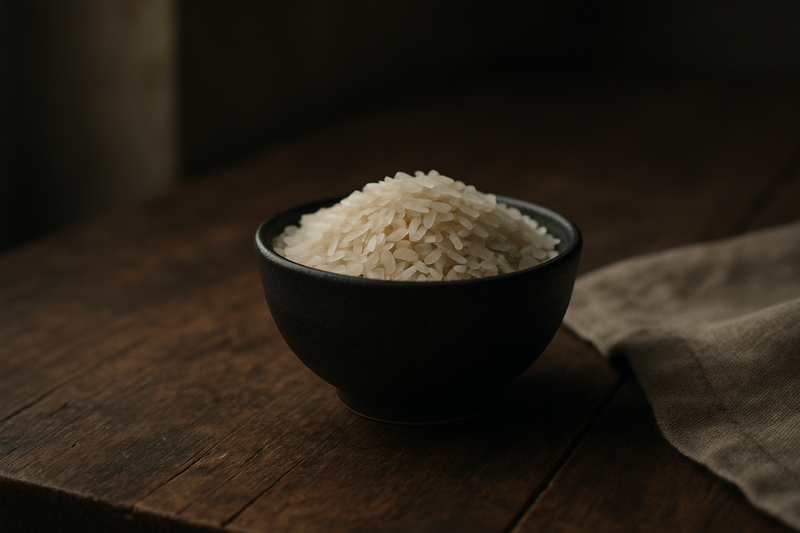
White Rice · Photograph
Discover everything you need to know about white rice nutrition, benefits and side effects — from calories and glycemic index to how it affects blood sugar, digestion, and everyday health. Includes practical tips on pairing, portions, and who needs to be cautious.
Key Nutrients
% Daily Value based on 2,000 cal diet
Key active compounds and phytochemicals
White rice is not rich in phytochemicals (beneficial plant compounds) the way that colourful fruits and vegetables are — most of those compounds sit in the bran and germ that are removed during milling. What white rice does contain is worth understanding:
- Amylopectin (rapidly digestible starch): The dominant carbohydrate in white rice. This highly branched starch structure is broken down quickly by digestive enzymes, which is the main reason for white rice's high glycaemic index. In sports nutrition, this rapid digestion is actually useful for quick glycogen (stored glucose) replenishment.
- Resistant starch (small amounts, increased by cooling): When cooked white rice is cooled and then reheated, some of its starch converts to resistant starch — a form that behaves more like fibre and feeds beneficial gut bacteria. The effect is modest but real.
- Residual phenolic compounds: Tiny amounts of plant-derived antioxidants (polyphenols) remain in the endosperm after milling. Their health contribution is minimal compared with whole grains, but they are present.
- Enrichment nutrients (added): Folic acid, thiamin, niacin, and iron are added back to enriched white rice after milling, making these functionally important even though they are not naturally occurring at those levels.
Prep and pairing ideas
White rice's mild, neutral flavour is its greatest culinary asset. Here are three practical pairing strategies backed by nutritional logic:
1. White rice + legumes (lentils, black beans, chickpeas) Combining rice with legumes creates a complementary amino acid profile (both provide plant protein that covers each other's gaps) and the legumes add fibre and protein that slow glucose absorption, meaningfully reducing the meal's overall glycaemic impact. This pairing is foundational in Latin American, South Asian, and Middle Eastern cuisines for good reason.
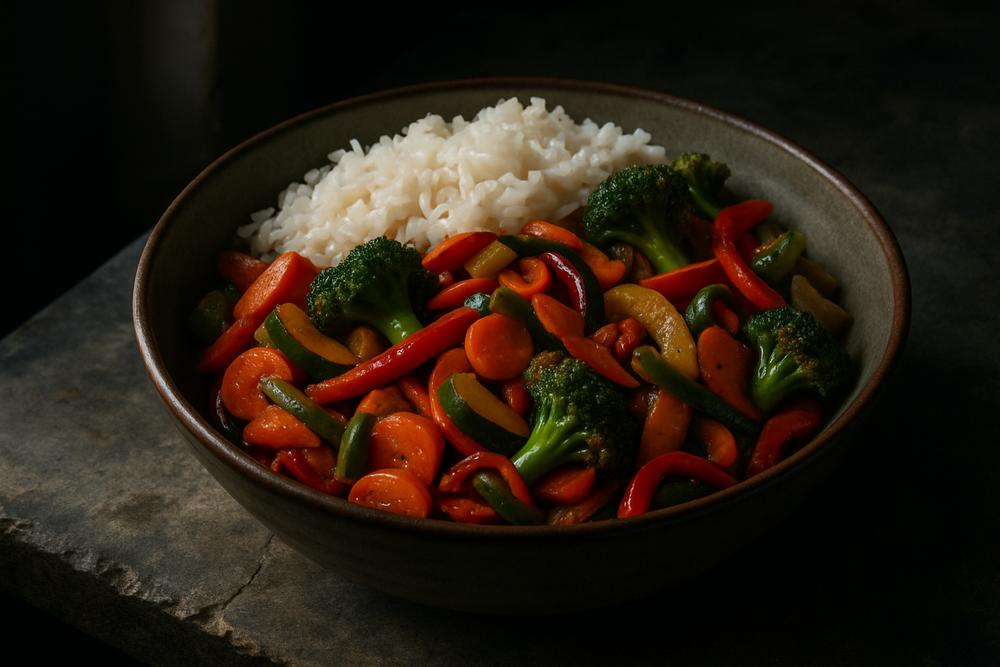
2. White rice + non-starchy vegetables (broccoli, spinach, peppers, courgette) Adding a generous volume of non-starchy vegetables to a rice bowl or stir-fry increases the meal's fibre, vitamins, minerals, and phytochemicals with minimal extra calories. Visually, aim for the rice to take up no more than a quarter of your plate and fill the rest with vegetables and a protein source.
3. White rice + healthy fat (avocado, olive oil, sesame oil drizzle, eggs) Adding a source of healthy fat slows gastric emptying (how quickly food leaves the stomach), which in turn slows the rate at which rice starch enters the bloodstream. A drizzle of sesame oil in a stir-fry, a few slices of avocado, or a fried egg on top of a rice bowl are all practical ways to do this without significantly increasing calorie density.
Simple prep tip: Cook a larger batch of white rice, spread it on a tray to cool quickly, and refrigerate. Reheating cooled rice increases its resistant starch content slightly, modestly lowering its glycaemic impact — and you have a ready base for quick weeknight meals.
Bottom line
White rice is not a superfood, and it is not a health villain. It is a refined, easily digested, naturally gluten-free grain that provides quick energy and — when enriched — meaningful amounts of B vitamins, selenium, and iron. Its high glycaemic index is a real and documented consideration, particularly for people managing blood sugar, but its effects are strongly modified by portion size and what you pair it with.
For most healthy people, white rice in moderate portions as part of a varied diet that includes plenty of vegetables, legumes, and some whole grains is a perfectly reasonable everyday food. For those with diabetes, prediabetes, or metabolic concerns, portion mindfulness and strategic pairing matter — but outright avoidance is rarely necessary unless your healthcare team advises otherwise.
Choose enriched white rice, avoid rinsing it before cooking to preserve added B vitamins, fill most of your plate with vegetables and protein, and treat rice as the base it is best suited to be — a neutral, versatile foundation for a colourful, varied meal.
Looking to explore how grains and other foods can support specific health goals? Browse Plantopedia's food-as-medicine goals hub for curated guides by health area.
How White Rice Compares
| Compared with | What's different |
|---|---|
| White Rice vs. Brown Rice | Retains the bran and germ, providing significantly higher fibre and a lower glycemic index. |
| White Rice vs. Wild Rice | Distinctly nutty flavour with a firm, chewy texture and higher protein content per cup. |
| White Rice vs. Quinoa | Lower carbohydrate count and higher protein, though it is technically a seed rather than a grain. |
Health Benefits
Things to Know
Blood sugar management: White rice has a high glycaemic index and load. If you have type 1 or type 2 diabetes, prediabetes, or insulin resistance, discuss portion size and meal composition with your healthcare team. High-GI meals can cause rapid blood sugar spikes or — if you are on insulin or sulfonylureas — unexpected hypoglycaemia (low blood sugar) if medication doses are not matched to carbohydrate intake.
Medication interactions: Insulin (rapid-acting and basal), oral hypoglycaemics (sulfonylureas, meglitinides), SGLT2 inhibitors, GLP-1 receptor agonists, and DPP-4 inhibitors can all be affected by high-glycaemic meals. Large portions of white rice may require dose adjustment — talk to your prescriber.
Pregnancy: Enriched white rice provides folic acid, which is valuable in pregnancy. However, gestational diabetes is a real concern; if you have been diagnosed with gestational diabetes or glucose intolerance in pregnancy, a dietitian can help you balance rice intake within a lower-GL meal pattern.
Kidney disease: White rice is relatively low in potassium and phosphorus, which can make it a useful energy staple in renal diets — but coordinate with your renal dietitian, as total mineral limits depend on your individual lab values and overall diet.
Long-term low-fibre diets: Relying heavily on white rice without other high-fibre foods (vegetables, legumes, fruit, whole grains) can contribute to constipation and reduce the prebiotic benefits of dietary fibre for gut health and the microbiome.
Arsenic: Rice can contain inorganic arsenic (a naturally occurring contaminant in soil and water), with white rice generally containing less than brown rice because milling removes the bran where arsenic concentrates. Varying your grain choices is a practical way to limit exposure.
Enriched vs non-enriched: If white rice is a major part of your diet, choose enriched varieties to avoid potential B-vitamin gaps from milling.
Shop This Ingredient
Stock your pantry with quality white rice.
Buy on AmazonAs an Amazon Associate, Plantopedia earns from qualifying purchases. This costs you nothing extra and helps us keep the encyclopedia free.
Frequently Asked Questions
For most healthy adults, moderate daily portions of white rice — especially enriched varieties — can fit into a balanced diet without causing harm. The key qualifiers are "moderate" (roughly half a cup to one cup cooked per meal) and "balanced" (meaning the overall diet also includes plenty of vegetables, legumes, whole grains, and protein). Research suggests problems arise mainly when large portions of white rice crowd out higher-fibre, higher-nutrient foods across the whole diet, rather than from moderate, regular inclusion.
Yes, research consistently shows that white rice has a higher glycaemic index (typically 65–73) than brown rice (around 50–55). Brown rice retains its bran layer, which contains fibre that slows digestion and the absorption of glucose into the bloodstream. That said, pairing white rice with fibre-rich vegetables, legumes, or protein can significantly reduce its blood sugar impact in a real meal — so context matters as much as the GI number itself.
Many people with type 1 or type 2 diabetes do eat white rice — but portion size and meal composition are important factors to manage. A small-to-moderate portion of white rice paired with non-starchy vegetables, legumes, and protein is a very different blood sugar event than a large bowl of plain white rice eaten alone. If you are on insulin or blood-sugar-lowering medication, your healthcare team can help you count carbohydrates and adjust doses so that rice-containing meals do not cause significant hypo- or hyperglycaemia. Evidence is mixed on whether occasional rice consumption is harmful for people with well-managed diabetes when it is part of an otherwise healthy dietary pattern.
Yes — this is one of the clearest practical strengths of white rice. Its low fibre content and soft, easily digested starch make it gentle on an irritated gut. It is a standard recommendation in low-residue and bland diets for nausea, diarrhoea, or post-surgical recovery, and it features in the classic BRAT approach (bananas, rice, applesauce, toast) for gastrointestinal upset. For people with coeliac disease, it is also a safe, naturally gluten-free option that avoids immune reactions triggered by wheat, barley, and rye.
The most evidence-backed strategies are: (1) keep portions to about half a cup to one cup cooked; (2) pair the rice with a generous serving of non-starchy vegetables, a source of protein (legumes, eggs, fish, tofu, poultry), and a small amount of healthy fat; (3) cook rice in advance, refrigerate it, and reheat before eating — this increases resistant starch content modestly; and (4) choose enriched white rice and avoid rinsing before cooking to preserve the added B vitamins. Replacing some white rice with brown rice or other whole grains across the week is also a practical way to increase overall fibre and micronutrient intake.
Brown rice retains the bran and germ that are removed in milling white rice, making it higher in fibre, magnesium, B vitamins, and phytochemicals, and lower on the glycaemic index. Large observational studies suggest that replacing refined grains like white rice with whole grains like brown rice is associated with lower long-term risk of type 2 diabetes and cardiovascular disease. However, brown rice is not inherently "better" in every situation: it takes longer to cook, has a stronger flavour some people dislike, and contains more arsenic (concentrated in the bran) and more potassium and phosphorus — which matters for people on renal diets. The practical answer for most people is to include both across the week rather than treating one as forbidden.
Quick Answers
Common questions, answered in a line.
Cooking and then cooling white rice increases its content of resistant starch, which feeds beneficial gut bacteria and slightly lowers its glycemic impact. Reheating the cooled rice maintains these benefits, making it a practical strategy for weeknight meals.
Enriched white rice is fortified with folic acid, thiamin, niacin, and iron to replace nutrients lost during the milling process. To preserve these added B vitamins, the article recommends avoiding rinsing the rice before you cook it.
White rice contains amylopectin, a rapidly digestible starch that provides quick energy and helps replenish glycogen stores. This makes it a useful carbohydrate source in sports nutrition for fast recovery after physical activity.
White rice is generally lower in inorganic arsenic than brown rice because the milling process removes the outer bran where this contaminant tends to concentrate. To further limit exposure, the article suggests varying your grain choices rather than relying solely on rice.
White rice is naturally gluten-free and relatively low in potassium and phosphorus, which can make it a suitable energy staple for those on specific renal (kidney) diets. However, patients should coordinate with a dietitian to match intake with individual lab values.
White rice is a refined carbohydrate primarily composed of amylopectin, a highly branched starch that is broken down quickly by digestive enzymes. Because it lacks the fiber-rich bran and germ, it has a higher glycemic index than whole grains.
Adding healthy fats like avocado, olive oil, or eggs slows gastric emptying, which reduces the rate at which rice starch enters the bloodstream. Pairing rice with fiber-rich legumes or non-starchy vegetables also helps mitigate its overall glycemic impact.
For Readers in the USA
Local context — sourcing, seasonality, and regional notes.
In the U.S., white rice is primarily grown in the Mississippi River Delta (Arkansas, Louisiana, Mississippi, Missouri) and California’s Sacramento Valley. These regions produce diverse varieties, including long-grain in the South and medium- or short-grain in California, ensuring a year-round supply for domestic consumers.
White rice is a staple available at every major U.S. grocery chain like Walmart, Kroger, and Costco, as well as specialty Asian markets for bulk varieties. It is also a core item at farmers markets in rice-producing states like Louisiana or South Carolina, where heirloom varieties may be sold.
The FDA mandates that rice labeled as "enriched" must contain specific levels of thiamin, niacin, iron, and folic acid to replace nutrients lost during milling. Most white rice sold in U.S. supermarkets is enriched, though some imported specialty or organic varieties may not follow these specific fortification standards.
American consumers typically categorize white rice by grain length: long-grain (like Carolina Gold or Jasmine) for fluffy pilafs, and medium or short-grain (like Calrose) for sticky textures or sushi. Southern food culture specifically prizes "converted" or parboiled rice for its ability to stay separate in dishes like jambalaya.
AI Clinical Review
- Presents a balanced view: white rice is an easily digested, affordable energy source, yet higher on the glycaemic index than whole grains.
- Accurately explains enrichment (folate, thiamin, niacin, iron) and why not rinsing enriched rice preserves water‑soluble B vitamins.
- Clearly describes who may benefit: athletes needing quick carbs, people on low‑residue diets, those with coeliac disease, and some individuals with kidney disease.
- Notes practical ways to blunt glucose spikes (pairing with protein, vegetables, or fat; cooling/reheating to modestly raise resistant starch).
- Distinguishes forms (standard, parboiled, instant) and correctly notes parboiled rice tends to have a slightly lower glycaemic impact.
- Diabetes risk data are largely observational; high white‑rice intake tracks with greater type 2 diabetes risk in some populations, but diet patterns and lifestyle factors can confound causality.
- Glycaemic index for white rice varies by variety (amylose content), preparation, and cooling—so individual post‑meal responses can differ more than a single GI number suggests.
- The clinical impact of increased resistant starch after cooling/reheating appears modest and inconsistent; benefits may be small at typical portion sizes.
- Links between refined‑grain patterns and inflammation exist, but isolating white rice’s independent effect remains uncertain.
- Portion guide: about 1/2–1 cup cooked per meal works for many adults. People with diabetes or gestational diabetes should pair rice with protein/veg and coordinate carb counting and medications with their clinician; those with chronic kidney disease may use white rice but should individualize mineral targets with a renal dietitian.
- Prefer enriched white rice if it’s a staple. Rinsing or cooking in excess water can lower arsenic somewhat but also washes away added B vitamins—consider the trade‑off if intake is high.
- Arsenic: rotate grains (e.g., oats, quinoa, corn, barley) and avoid relying on rice‑based products for infants/toddlers; variety reduces cumulative exposure.
- Food safety: cool cooked rice quickly, refrigerate promptly, and reheat until steaming hot to reduce Bacillus cereus risk from improperly stored leftovers.
Higher glycemic load than whole grains; pair with legumes or vegetables and portion mindfully if managing blood sugar.
References
- USDA FoodData Central — cooked enriched white rice nutrient data (fdc.nal.usda.gov)
- USDA MyPlate — Grains Group guidance ("make half your grains whole") (myplate.gov)
- White rice glycaemic index values and blood sugar review (scienceinsights.org)
- Glycaemic index and glycaemic load data for white rice — GlycaemicList (glycemiclist.com)
- Wikipedia overview — white rice composition and milling process (en.wikipedia.org)
- DaVita kidney diet guidance on white rice (potassium, phosphorus content) (davita.com)
- Healthline evidence summary — is white rice bad for you? (white rice vs brown rice and diabetes risk review) (healthline.com)
- Health.com — is white rice healthy? Nutrition, benefits, and risks (health.com)
- VeryWell Health — what happens to your blood sugar when you eat white rice (verywellhealth.com)
- URMC nutrition table — rice, white, long-grain, parboiled, enriched, cooked (urmc.rochester.edu)
Know Your Numbers
Eating healthy is a start. Now get to know your biomarkers.
Food changes bloodwork — inflammation, lipids, blood sugar and nutrient status all respond to what you eat. 59 markers from $59.
- Results in 7–10 days at 2,000+ Quest sites
- Licensed provider reviews every result
- One flat price, no membership, HSA/FSA eligible
Educational information only, not medical advice. Panels are ordered and reviewed through our licensed partner; Plantopedia may earn a commission.