Barley — health benefits and uses
Plant-based energy base; pair with legumes/vegetables for a complete meal
The Short Answer
Barley is a nutrient-dense whole grain containing 6 grams of fiber and 3.5 grams of protein per half-cup serving. It is best known for its high beta-glucan content, which helps regulate cholesterol and blood sugar levels.
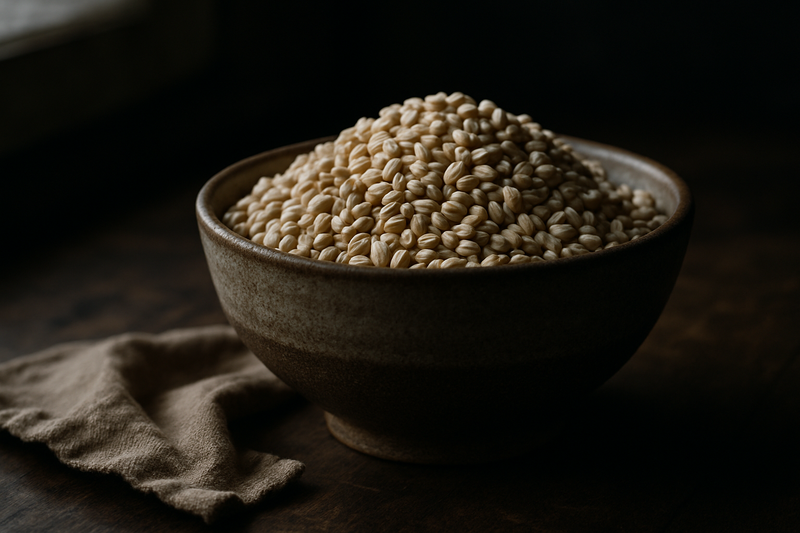
Barley · Photograph
Barley (Hordeum vulgare) is an ancient whole grain that's been nourishing humans for over 10,000 years. This versatile cereal grain packs impressive nutritional value, with particularly high levels of soluble fiber called beta-glucans, along with a rich array of antioxidant compounds and essential minerals.
Key Nutrients
% Daily Value based on 2,000 cal diet
Key active compounds in barley
Barley's health potential comes from several bioactive compounds working together:
• Beta-glucans - Soluble fiber that forms gel-like substances in the digestive tract, helping slow glucose absorption and support healthy cholesterol levels • Phenolic acids - Antioxidant compounds including ferulic acid and p-coumaric acid that help protect cells from oxidative damage • Lignans - Plant compounds that gut bacteria convert into enterolactones, which may help regulate hormone levels • Tocopherols and tocotrienols - Eight different forms of vitamin E that provide cellular protection • Phytosterols - Plant sterols that compete with cholesterol for absorption in the intestines • Flavonoids - Including quercetin and catechins that contribute anti-inflammatory effects
Buying guide: Choosing quality barley
When shopping for barley, consider these factors:
Fresh vs. processed: Choose hulled barley over pearled when possible for maximum nutrition. Look for grains that appear uniform in size and color without excessive broken pieces.
Storage considerations: Whole grain barley contains natural oils that can become rancid. Buy from stores with good turnover, store in airtight containers, and use within 6-12 months for best quality.
Label reading: For barley products like flour or cereals, check that "whole grain barley" or "hulled barley" appears as the first ingredient rather than "pearled barley" or "barley flour" without specification.
Prep and pairing ideas
Barley's nutty, chewy texture makes it versatile in many dishes:
Cooking basics: Hulled barley typically requires 45-60 minutes of cooking in a 3:1 water-to-grain ratio. Pearled barley cooks faster, usually in 25-30 minutes.
Savory applications: Use cooked barley as a base for grain bowls, add to soups and stews, or substitute for rice in pilafs and stuffings.
Breakfast options: Cook barley porridge-style with milk or plant milk, add to overnight oats, or use barley flour in pancakes and muffins.
Salad additions: Cooled cooked barley adds substance and nutrition to green salads, grain salads, or Buddha bowls.
Common pairings that enhance barley's benefits
Barley + vegetables: The fiber in barley helps slow the absorption of sugars from vegetables, while vegetables provide additional antioxidants and minerals that work synergistically with barley's phytochemicals.
Barley + lean proteins: Combining barley with protein sources like legumes, fish, or poultry creates complete, satisfying meals that help stabilize blood sugar levels throughout the day.
Barley + healthy fats: Adding sources like olive oil, nuts, or avocado helps with the absorption of barley's fat-soluble vitamins (like vitamin E) while creating more satisfying, balanced meals.
Bottom line
Barley stands out among whole grains for its impressive combination of soluble fiber, antioxidant compounds, and essential minerals. Research suggests it may help support heart health, blood sugar regulation, and digestive function, though it's not a treatment for medical conditions.
The key to getting barley's benefits is choosing less processed forms like hulled barley and incorporating it regularly into a balanced diet. While generally safe for most people, those with gluten sensitivity should avoid barley, and anyone taking medications should discuss dietary changes with their healthcare provider.
How Barley Compares
| Compared with | What's different |
|---|---|
| Barley vs. Brown Rice | Higher in soluble fiber (beta-glucans) with a chewier, bouncy texture when cooked. |
| Barley vs. Farro | Requires longer cooking times but offers a denser, heartier crumb in baked goods. |
| Barley vs. Steel Cut Oats | Larger, rounder grains that remain distinct in soups rather than becoming creamy. |
Health Benefits
Things to Know
Contains gluten: - Barley is not suitable for people with celiac disease, non-celiac gluten sensitivity, or wheat allergies
High fiber content - Start with smaller amounts (1-2 tablespoons cooked) and increase gradually to avoid digestive discomfort
Blood sugar medications - The fiber in barley may slow glucose absorption, potentially affecting blood sugar control if you take diabetes medications
Cholesterol medications - Barley's natural cholesterol-lowering compounds might have additive effects with statin drugs
Pregnancy and breastfeeding - Generally considered safe in food amounts, but consult your healthcare provider
Digestive conditions - Those with IBS or sensitive digestion should introduce barley slowly

Shop This Ingredient
Stock your pantry with quality barley.
Buy on AmazonAs an Amazon Associate, Plantopedia earns from qualifying purchases. This costs you nothing extra and helps us keep the encyclopedia free.
Frequently Asked Questions
Heart and circulation Research suggests barley's combination of soluble fiber and phytochemicals may help support cardiovascular health in several ways. Studies have found that barley sprout extract containing concentrated polyphenols reduced cholesterol levels in laboratory models by up to 24%. The lignans in barley appear to have antioxidant effects comparable to ferulic acid and stronger than vitamin E. The beta-glucans in barley form a gel-like substance that can help slow cholesterol absorption, while phytosterols compete with dietary cholesterol for uptake in the intestines. Blood sugar and metabolism Barley's high fiber content, particularly beta-glucans and arabinoxylans, may help moderate blood sugar responses after meals. The soluble fiber slows glucose absorption, potentially leading to more gradual rises in blood sugar levels rather than sharp spikes. Research indicates that barley-based functional foods rich in these fiber compounds show promise for glucose regulation, though more human clinical trials are needed to establish optimal dosing for metabolic benefits. Digestive health and microbiome With 8 grams of fiber per quarter cup of uncooked grain, barley provides both soluble and insoluble fiber types. The soluble beta-glucans ferment in the colon, serving as food for beneficial bacteria and potentially supporting a healthy gut microbiome balance. The lignans in barley may also help support healthy gut bacteria ratios, which can influence both digestive health and systemic inflammation levels. Inflammation and recovery Barley's diverse array of antioxidant compounds - including phenolic acids, flavonoids, lignans, and vitamin E compounds - may help the body manage oxidative stress and inflammation. The selenium content acts as a cofactor for antioxidant enzymes, providing additional cellular protection. These anti-inflammatory effects appear to work through multiple pathways: direct antioxidant activity, beneficial changes in gut microbiota, and cellular signaling through phytochemicals.
The form of barley you choose significantly impacts its nutritional value: Hulled barley retains the bran and germ layers, providing the highest fiber content (8g per quarter cup uncooked) and maximum phytochemical density. This form requires longer cooking time but delivers the most complete nutritional profile. Pearled barley has had some outer layers polished away, making it quicker to cook and more shelf-stable. While it contains less fiber than hulled barley, it still provides significant beta-glucans and other beneficial compounds. Barley flour made from whole grains maintains the nutritional profile while offering convenience for baking and food preparation. Choose stone-ground varieties when possible to preserve more nutrients. Barley water or tea provides some solubilized polyphenols and beta-glucans but in lower concentrations than whole grain forms.
For general health benefits, research suggests: Typical range: 1/4 to 1/2 cup (45-100g) of uncooked barley daily, which provides approximately 6-12g of beneficial fiber and significant amounts of bioactive compounds. Start gradually: Begin with 2-3 tablespoons of cooked barley daily and increase slowly over 1-2 weeks to allow your digestive system to adjust to the higher fiber content. Timing considerations: Barley can be eaten at any time of day. Having it earlier in the day may help with blood sugar management for subsequent meals. Individual variation: Your optimal amount may vary based on your overall diet, digestive tolerance, and health goals. People with diabetes should monitor blood sugar responses when adding barley to their routine.
Quick Answers
Common questions, answered in a line.
Barley is a cereal grain that naturally contains gluten, meaning it is not safe for individuals with celiac disease or non-celiac gluten sensitivity. People with wheat allergies should also avoid barley to prevent adverse reactions.
Hulled barley takes about 45 to 60 minutes to cook, while pearled barley is faster, typically requiring only 25 to 30 minutes. The standard preparation involves using a 3:1 ratio of water to grain.
Barley contains beta-glucans, which are soluble fibers that help slow glucose absorption and support healthy cholesterol levels. These fibers form a gel-like substance in the digestive tract to provide these metabolic benefits.
Hulled barley is the more nutritious choice because it is less processed than pearled barley and retains more of its original nutritional value. When shopping, you should look for grains that are uniform in color and size.
You should store barley in an airtight container and use it within 6 to 12 months to ensure the best quality. Because the grain contains natural oils, it can eventually become rancid if not stored properly or used in a timely manner.
Barley contains eight different forms of vitamin E, including tocopherols and tocotrienols, which provide essential cellular protection. It also features antioxidant compounds like phenolic acids and flavonoids that help protect cells from oxidative damage.
Pairing barley with healthy fats like olive oil, nuts, or avocado helps your body better absorb its fat-soluble vitamins, such as vitamin E. This combination also creates more balanced and satisfying meals.
For Readers in the USA
Local context — sourcing, seasonality, and regional notes.
In the United States, you can find pearled and hulled barley at major grocery chains like Kroger, Whole Foods Market, and Safeway, typically in the baking or bulk grains aisle. Many American shoppers also find unique heirloom varieties or sprouted barley at local farmers markets and natural food co-ops.
North Dakota, Montana, and Idaho are the leading producers of barley in the U.S., accounting for the vast majority of the nation's domestic supply. While it is harvested in late summer or early fall, dried barley is available year-round in every region from New England to the Pacific Northwest.
When buying barley in the U.S., look for the USDA Organic seal to ensure the grain was grown without synthetic pesticides, and check for the "Whole Grain Stamp" on packaging. The FDA has also authorized a health claim for barley, noting that its soluble fiber may reduce the risk of coronary heart disease.
Barley is a staple of American "comfort food" culture, most famously appearing in beef barley soup and as a primary ingredient in the U.S. craft malting and brewing industry. In recent years, it has gained popularity in American "Power Bowls" and as a domestic, sustainable alternative to imported grains like quinoa.
AI Clinical Review
- Barley’s soluble fiber (beta‑glucan) can help lower LDL cholesterol and blunt post‑meal glucose rises; this aligns with human trials and an FDA‑authorized heart‑health claim when part of an overall healthy diet. • Clear explanation of hulled (whole) versus pearled barley and why hulled/whole forms deliver more fiber and phytochemicals. • Appropriate framing that barley supports—but does not treat—health conditions, plus practical cooking ideas for regular use. • Highlights gut‑microbiome support from fermentable fibers, consistent with prebiotic effects seen in cereal beta‑glucans.
- Statements about strong antioxidant effects (e.g., lignans or sprout extracts outperforming vitamin E) and large cholesterol reductions mainly come from lab/animal data; human relevance and dosing remain uncertain. • The optimal dose, form, and processing (intact grain vs flour vs extracts) for glycemic control vary across studies; standardized human trials are limited. • Contributions from tocols (vitamin E forms) and phytosterols in typical portions are likely modest relative to fiber‑driven effects; real‑world impact needs more study. • Barley water/tea probably delivers much smaller amounts of actives than whole grain, so benefits may be limited.
- Barley contains gluten (hordein) and is not appropriate for celiac disease or confirmed non‑celiac gluten sensitivity; choose gluten‑free grains instead. • For cholesterol support, trials often target ~3 g/day of beta‑glucan; depending on variety/processing, that’s roughly 45–80 g (about 1/4–1/2 cup) dry hulled barley per day—increase gradually and hydrate to minimize GI discomfort. • High fiber can affect medication absorption and glycemia; separate routine meds by 2–4 hours, and those using insulin or diabetes medications should monitor glucose as portions increase. • Barley is high in fructans (a FODMAP); people with IBS may be sensitive. Those with advanced kidney disease or phosphorus restrictions should discuss portions with a clinician.
For grain products, clarify whole-grain vs refined where relevant.
References
- USDA FoodData Central - Barley nutrition data (fdc.nal.usda.gov)
- NIH National Center for Complementary and Integrative Health - Whole grain safety (nccih.nih.gov)
- Bioactive phytochemicals in barley - PMC study (pmc.ncbi.nlm.nih.gov)
- Nutritional and functional composition of barley varieties (pmc.ncbi.nlm.nih.gov)
- Bioactive compounds in barley modulating glycemic response (journals.sagepub.com)
- WebMD - Barley uses and safety (webmd.com)
- Evergraining Ingredients - Barley nutrition compendium (evergrainingredients.com)
- Mayo Clinic - Whole grain benefits (mayoclinic.org)
Know Your Numbers
Eating healthy is a start. Now get to know your biomarkers.
Food changes bloodwork — inflammation, lipids, blood sugar and nutrient status all respond to what you eat. 59 markers from $59.
- Results in 7–10 days at 2,000+ Quest sites
- Licensed provider reviews every result
- One flat price, no membership, HSA/FSA eligible
Educational information only, not medical advice. Panels are ordered and reviewed through our licensed partner; Plantopedia may earn a commission.
Filed Under
Health Goals This Supports
Related Ingredients
Best Foods for Focus and Memory
A body-systems look at the foods with the most credible human evidence for attention and memory over time, including the trial that found no benefit and why that result matters.
Best Plant-Based Foods for Constipation
Kiwifruit, prunes, ground flaxseed, legumes, and whole grains have the best trial evidence among plant foods for relieving occasional constipation, mostly by adding bulk, water, and fermentable fiber to stool. Two to three kiwifruit or 50 to 100 grams of prunes (about 5 to 10) daily are the...
Fiber and Cholesterol: A Simple Explanation
Soluble fiber can modestly lower LDL, or "bad," cholesterol by binding bile acids in the gut, which forces the liver to pull more cholesterol out of the blood to make replacement bile acids. Randomized trials show this effect is real but modest, with regular intake of fiber sources like oats,...
Fiber, Prebiotics, and the Gut Microbiome
A step-by-step explanation of how dietary fiber becomes short-chain fatty acids in the colon, what randomized trials and large cohorts actually show, and why a good mechanism is not the same as a proven benefit.
Foods for Steady Blood Sugar and Better Energy
Fatigue has many possible causes, and diet is only one of them, but a common contributor is the energy dip after a sharp rise and fall in blood sugar following a high-glycemic meal. Foods combining fiber, protein, and healthy fat, such as legumes, whole grains, nuts, and seeds, raise blood...
Foods That Help Avoid the Afternoon Crash
The early-afternoon dip is partly circadian and partly postprandial. You cannot delete the first, but meal size, carbohydrate quality and a short walk change how hard the second lands.
Foods That May Help Lower LDL Cholesterol
LDL cholesterol carries cholesterol particles into artery walls, where they contribute to the plaque buildup behind heart attacks and stroke. A specific group of plant foods, oats and barley, ground flaxseed, legumes, soy, walnuts, almonds, and avocado, has randomized controlled trial evidence...
Heart-Healthy Plant-Based Grocery List
A store-section-by-store-section shopping list built on beans, intact whole grains, produce, nuts, seeds and olive oil, with the evidence behind each block. Includes substitutions, prep shortcuts and cautions for kidney disease, sodium restriction and anticoagulant users.
High-Fiber Foods for Metabolic Health
An evidence-ranked list of high-fiber foods for metabolic health, with the selection criteria made explicit, realistic serving amounts, and guidance on who should adapt or be cautious.
High-Fiber Foods That Support Better Energy
Fiber contributes almost no calories of its own, but viscous fibers in oats, barley, beans and chia slow glucose absorption and extend fullness. Here are the foods with real human evidence behind them, and the honest limits of what fiber can do for tiredness.
How Fiber and Polyphenols Support Inflammation Balance
A mechanism-first look at how dietary fiber and plant polyphenols interact with the gut, the immune system and inflammatory markers, and an honest account of what human trials can and cannot support.
How Fiber Changes the Gut Microbiome
A mechanism explainer: what happens to fiber after it leaves the small intestine, which microbes act on it, what they produce, and how much of that chain has been demonstrated in people rather than mice.
How Gut Health and Brain Health Are Connected
A plain-language walkthrough of how the gut and brain communicate, followed by an honest account of what human trials have and have not demonstrated.
How Plant-Based Foods Support Metabolism
What metabolism actually means, how plant-rich eating patterns influence insulin sensitivity and energy intake in trials, a simple starter plate, and the popular claims that do not hold up.
How Plant-Based Foods Support the Gut
Plant foods feed the microbes in your large intestine, which ferment fiber into short-chain fatty acids. Variety across the week matters more than any single gut food.
How Plant-Based Foods Support the Heart
A practical introduction to plant-centered eating for cardiovascular health: the mechanisms that matter, what the cohort and trial evidence shows, a starter plate, and the myths worth dropping.
How the Gut Affects Energy, Mood, and Inflammation
A step-by-step walk through the gut-brain and gut-immune pathways, followed by an honest account of what human trials have shown, what remains mechanism only, and what to do with the difference.