Explore chickpea health benefits. Learn how fiber, plant protein, and bioactive peptides support heart health and blood sugar in this eviden
Protein + fiber leverage; batch-cook, meal-prep, and satiety angle
The Short Answer
Chickpeas are a nutrient-dense legume providing 8.9g of protein and 12.5g of fiber per cooked cup. They support heart health and blood sugar management through high mineral content and bioactive peptides.
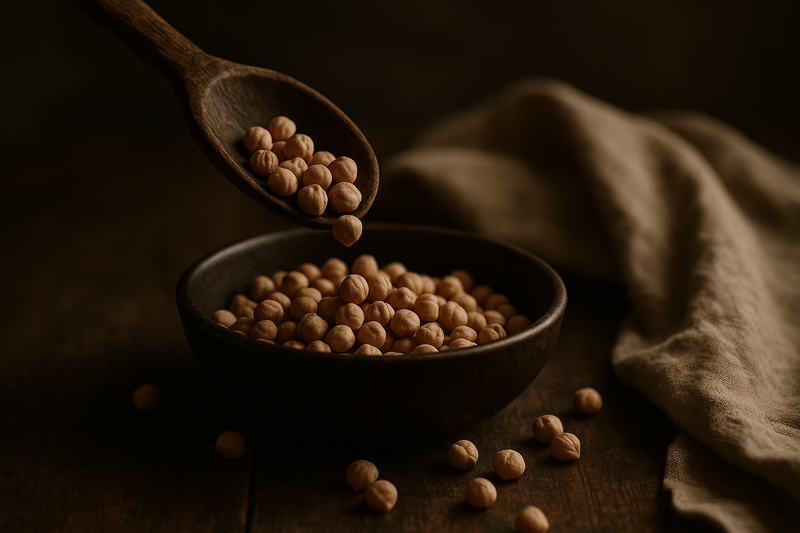
Chickpeas · Photograph
Chickpeas stand out among legumes for their exceptional nutrient density. Unlike many plant proteins, chickpeas provide a substantial amino acid profile while delivering 12.5 grams of fiber per cooked cup—nearly half of the recommended daily intake for most adults.
Key Nutrients
% Daily Value based on 2,000 cal diet
Why Chickpea Health Benefits Matter for Your Well-being
Chickpeas stand out among legumes for their exceptional nutrient density. Unlike many plant proteins, chickpeas provide a substantial amino acid profile while delivering 12.5 grams of fiber per cooked cup—nearly half of the recommended daily intake for most adults.
What makes chickpeas interesting to clinical researchers is their concentration of bioactive peptides. When digested, chickpea proteins break down into smaller fragments that may support cardiovascular function through ACE inhibition—a mechanism similar to certain blood pressure medications, albeit via a natural, dietary pathway.
Key Active Compounds: The Legume Powerhouse
Chickpeas contain an impressive array of bioactive compounds that contribute to their systemic health benefits:
- Polyphenols and Flavonoids: Powerful antioxidants that are even more concentrated in darker-colored chickpea varieties.
- Saponins and Phytosterols: Plant compounds that structurally resemble cholesterol and may help support healthy lipid levels by interfering with cholesterol absorption.
- Ciceritol: A unique oligosaccharide found primarily in chickpeas that acts as a specialized carbohydrate source.
- GABA ($\gamma$-aminobutyric acid): A neurotransmitter that supports nervous system function and relaxation.
- Bioactive Peptides: Protein fragments with potential ACE-inhibitory properties to support vascular health.
Conclusion: A Cornerstone of Longevity
Chickpeas offer impressive nutritional benefits backed by emerging research, particularly for heart health, blood sugar control, and digestive wellness. Their combination of plant-based protein, high-density fiber, and unique bioactive compounds makes them a valuable addition to a longevity-focused diet. While clinical studies on specific peptides are still developing, the high mineral and vitamin content of chickpeas provides a clear, evidence-based reason to include them in your weekly meal rotation. By starting gradually and preparing them properly, you can enjoy one of the world's most sustainable and nutrient-dense "functional foods." Ready to plan balanced meals with chickpeas? Our meal planner helps you create nutritious combinations that work with your health goals.
How Chickpeas Compares
| Compared with | What's different |
|---|---|
| Chickpeas vs. Cannellini Beans | A denser, creamier texture and a distinctively nutty, buttery flavor profile. |
| Chickpeas vs. Green Lentils | Higher in fiber and folate per serving, with a firmer shape that holds up better in salads. |
| Chickpeas vs. Soybeans | Milder flavor and softer skin, whereas chickpeas have a firmer bite and earthy aroma. |
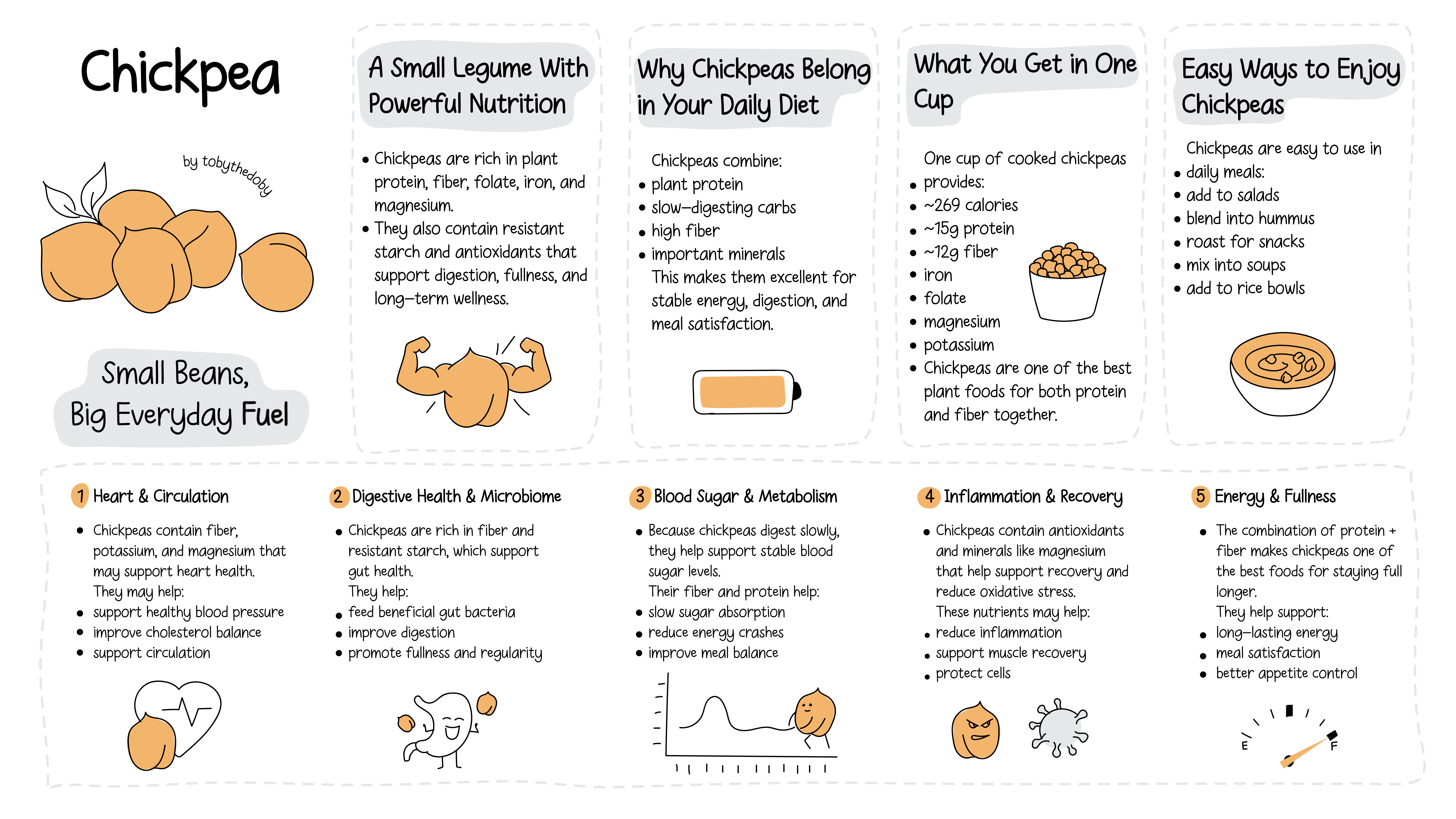
Health Benefits
Things to Know
Digestive Adaptation: If your diet is currently low in fiber, start with small portions (1/4 cup) to avoid gas or bloating.
Antinutrients: Chickpeas contain phytic acid, which can bind to minerals. Soaking dried beans for 8–12 hours significantly reduces these compounds and improves mineral bioavailability.
Canned vs. Dried: Canned chickpeas are convenient, but rinsing them thoroughly can reduce added sodium by up to 40%.
Iron Absorption: To maximize the absorption of non-heme iron in chickpeas, always pair them with a Vitamin C source, such as lemon juice, bell peppers, or tomatoes.

Common Uses
- —Replacing red meat with chickpeas in stews and salads to lower saturated fat intake while maintaining high protein levels.
- —Incorporating hummus or whole chickpeas into the daily diet to increase microbial diversity and butyrate production.
- —Adding chickpeas to high-carbohydrate meals (like rice dishes) to slow the overall glucose response.
- —Pairing chickpeas with lemon juice or bell peppers; the Vitamin C significantly boosts the absorption of the chickpea's non-heme iron.
- —Using the high fiber and protein content of chickpeas to promote long-term satiety and reduce total calorie intake.
- —Consuming roasted chickpeas as a nutrient-dense alternative to processed snacks to access natural GABA and magnesium.
Glossary
Shop This Ingredient
Stock your pantry with quality chickpeas.
Buy on AmazonAs an Amazon Associate, Plantopedia earns from qualifying purchases. This costs you nothing extra and helps us keep the encyclopedia free.
Frequently Asked Questions
One cup of cooked chickpeas provides approximately 15g of protein. While they are not a "complete" protein on their own (as they are low in the amino acid methionine), pairing them with a whole grain like brown rice or quinoa creates a complete amino acid profile, making them an excellent meat substitute for athletes.
For most individuals, eating chickpeas daily is safe and beneficial for heart health. However, if you are not accustomed to a high-fiber diet, daily intake may cause temporary digestive discomfort. Start with smaller portions and ensure you are drinking plenty of water to help the fiber move efficiently through your digestive system.
Yes. Due to their low glycemic impact and high fiber-to-protein ratio, chickpeas slow down the digestion of carbohydrates. This results in a much more stable blood glucose response after meals. Some laboratory studies even suggest that specific chickpea peptides may further support glucose metabolism, though human trials are currently ongoing.
Dried chickpeas are more cost-effective and let you control sodium levels, but they require soaking. Canned chickpeas are a nutritious, time-saving alternative. To maximize the health benefits of canned chickpeas, always rinse them under cold water to significantly reduce excess salt and the metallic taste.
A single cooked cup contains about 12.5g of fiber. This is a massive amount—nearly 50% of your daily requirement. This fiber is split between soluble fiber, which helps lower cholesterol, and insoluble fiber, which adds bulk to the stool and prevents constipation by improving colon transit time.
Quick Answers
Common questions, answered in a line.
Chickpeas contain bioactive peptides that may help support heart health through ACE inhibition, a mechanism similar to certain blood pressure medications. They also contain saponins and phytosterols which may support healthy lipid levels by interfering with cholesterol absorption.
To maximize the absorption of the non-heme iron found in chickpeas, you should always pair them with a Vitamin C source like lemon juice, bell peppers, or tomatoes. This combination helps your body better utilize the mineral content of the legumes.
Chickpeas are unique for containing bioactive peptides, the neurotransmitter GABA, and a specialized carbohydrate called ciceritol. They also provide a substantial amino acid profile and a higher concentration of antioxidants in darker-colored varieties.
Soaking dried chickpeas for 8 to 12 hours significantly reduces phytic acid and other antinutrients while improving mineral bioavailability. For canned versions, rinsing them thoroughly is recommended to reduce added sodium by up to 40%.
If your diet is currently low in fiber, you should start with small portions of about 1/4 cup to avoid gas or bloating. This allows your body to undergo digestive adaptation to the high fiber content found in the beans.
Chickpeas contain GABA (gamma-aminobutyric acid), a neurotransmitter that supports nervous system function and relaxation. Incorporating them into your diet provides a natural source of this compound along with essential minerals like magnesium.
For Readers in the USA
Local context — sourcing, seasonality, and regional notes.
In the United States, chickpeas are primarily grown in the Pacific Northwest and the Northern Plains, specifically in Washington, Idaho, Montana, and North Dakota. These regions provide the cool, temperate climate required for the plants to thrive before being harvested in late summer or early fall.
Most grocery stores in the U.S., such as Kroger, Whole Foods, and Walmart, sell chickpeas labeled as "garbanzo beans" in the canned goods and dry bean aisles. While they are botanically the same, the term "garbanzo" is frequently used in the U.S. due to Spanish linguistic influences.
U.S. consumers can find USDA Organic chickpeas to ensure they are grown without synthetic fertilizers or prohibited pesticides. The USDA Organic seal is a reliable standard for shoppers looking for non-GMO legumes that meet strict federal production and handling guidelines.
While large-seeded Kabuli chickpeas are the most common variety in American supermarkets, smaller, darker Desi chickpeas are often found in U.S.-based specialty Indian or Middle Eastern markets. The Kabuli type is preferred in the U.S. for salad bars and hummus due to its thin skin and creamy texture.
AI Clinical Review
- ACE Inhibition Mechanism: Correctly identifies the emerging research on bioactive peptides and their role in vascular relaxation.
- Butyrate Production: Accurately highlights the link between chickpea fiber fermentation and the production of short-chain fatty acids for colon health.
- Phytosterol Role: Properly explains how saponins and phytosterols interfere with cholesterol absorption.
- Iron Bioavailability: Rightly emphasizes the necessity of Vitamin C for absorbing plant-based iron.
- Preparation Nuance: Correctly advises on soaking dried chickpeas to reduce phytic acid and rinsing canned varieties to lower sodium.
- Peptide Potency: While the ACE-inhibitory properties of chickpea peptides are promising in lab settings, more large-scale human clinical trials are needed to determine their real-world impact compared to medical interventions.
- GABA Absorption: The extent to which dietary GABA from chickpeas crosses the blood-brain barrier to affect mood and relaxation is an area of ongoing neurological research.
- Ciceritol Function: Research into the specific health outcomes of ciceritol is still in its early stages compared to more well-known fibers like pectin.
- Variety Differences: While darker chickpeas have more polyphenols, there is limited clinical data to prove they offer significantly better health outcomes than standard kabuli (tan) varieties.
- Digestive Adaptation: The high fiber and oligosaccharide content can cause significant gas. Advise patients to increase intake slowly and drink plenty of water.
- The "Complete Protein" Myth: Chickpeas are low in methionine. To get a complete amino acid profile in one meal, they should be paired with rice, corn, or wheat (e.g., hummus and pita).
- Antinutrient Management: For patients with mineral deficiencies (like anemia), soaking and sprouting chickpeas is essential to neutralize phytic acid.
- Sodium in Canned Goods: Some canned brands have extremely high salt content; "low sodium" versions or thorough rinsing is a clinical necessity for hypertensive patients.
- Purine Content: Chickpeas contain moderate amounts of purines; individuals with gout should monitor their portions during acute flare-ups.
Mention soaking/cooking tolerance tips where relevant; avoid raw legume prep errors.
References
- USDA FoodData Central - Chickpea Nutritional Composition: The gold standard for mineral and vitamin data.
- Harvard T.H. Chan School of Public Health - Chickpeas Guide: Analysis of chickpeas within the context of heart disease and diabetes prevention.
- PubMed - Chickpea Bioactive Peptides and Health: Clinical research regarding ACE-inhibition and vascular health.
- Journal of Food Science - Chickpea Nutrition Review: A comprehensive review of saponins, phytosterols, and fiber in legumes.
- Mayo Clinic - Dietary Fiber: Essential for Good Health: Evidence-based recommendations for fiber intake and digestive regularity.
Know Your Numbers
Eating healthy is a start. Now get to know your biomarkers.
Food changes bloodwork — inflammation, lipids, blood sugar and nutrient status all respond to what you eat. 59 markers from $59.
- Results in 7–10 days at 2,000+ Quest sites
- Licensed provider reviews every result
- One flat price, no membership, HSA/FSA eligible
Educational information only, not medical advice. Panels are ordered and reviewed through our licensed partner; Plantopedia may earn a commission.
Filed Under
Health Goals This Supports
Related Ingredients
Best Foods for Focus and Memory
A body-systems look at the foods with the most credible human evidence for attention and memory over time, including the trial that found no benefit and why that result matters.
Best Foods for Gut Health
High-fiber plants eaten in variety plus a small daily serving of genuinely fermented food is the combination with the best human evidence behind it. Here is the food list, the dosing, and the cautions.
Best Plant-Based Foods for Constipation
Kiwifruit, prunes, ground flaxseed, legumes, and whole grains have the best trial evidence among plant foods for relieving occasional constipation, mostly by adding bulk, water, and fermentable fiber to stool. Two to three kiwifruit or 50 to 100 grams of prunes (about 5 to 10) daily are the...
Blood Sugar and Nighttime Wake-Ups
Waking up in the middle of the night can sometimes relate to blood sugar swings, either a drop (nocturnal hypoglycemia, mainly relevant for people on insulin or certain diabetes medications) or a rebound rise after a low, but this is one of several possible causes, not the most common one for...
Blood Sugar Balance for Beginners
Blood sugar balance means keeping your blood glucose from swinging too high or crashing too low after meals, largely by pairing carbohydrates with fiber, protein, and fat, moving your body regularly, and favoring whole foods over refined ones. For most people without diabetes, this is about...
Fiber and Cholesterol: A Simple Explanation
Soluble fiber can modestly lower LDL, or "bad," cholesterol by binding bile acids in the gut, which forces the liver to pull more cholesterol out of the blood to make replacement bile acids. Randomized trials show this effect is real but modest, with regular intake of fiber sources like oats,...
Fiber, Prebiotics, and the Gut Microbiome
A step-by-step explanation of how dietary fiber becomes short-chain fatty acids in the colon, what randomized trials and large cohorts actually show, and why a good mechanism is not the same as a proven benefit.
Foods for Steady Blood Sugar and Better Energy
Fatigue has many possible causes, and diet is only one of them, but a common contributor is the energy dip after a sharp rise and fall in blood sugar following a high-glycemic meal. Foods combining fiber, protein, and healthy fat, such as legumes, whole grains, nuts, and seeds, raise blood...
Foods That Help Avoid the Afternoon Crash
The early-afternoon dip is partly circadian and partly postprandial. You cannot delete the first, but meal size, carbohydrate quality and a short walk change how hard the second lands.
Foods That May Help Joint Stiffness
No single food will fix joint stiffness, and anyone who tells you otherwise is overselling it. But a consistent eating pattern built around vegetables, fruit, whole grains, legumes, nuts, seeds, and olive oil is linked in clinical trials to modest reductions in joint pain and morning stiffness,...
Foods That May Help Lower LDL Cholesterol
LDL cholesterol carries cholesterol particles into artery walls, where they contribute to the plaque buildup behind heart attacks and stroke. A specific group of plant foods, oats and barley, ground flaxseed, legumes, soy, walnuts, almonds, and avocado, has randomized controlled trial evidence...
Gut Health and Brain Fog: What's the Connection?
Brain fog, the fuzzy thinking, poor focus, and word-finding trouble many people describe, is linked to gut health through what researchers call the gut-brain axis: a two-way communication system between the digestive tract and the brain involving nerves, immune signaling, and molecules made by...
Gut Microbiome Testing: A Beginner's Guide
At-home gut microbiome tests analyze DNA from a stool sample to estimate which bacteria live in your colon, then compare that mix to reference data to generate a report on diversity, specific microbes, and sometimes diet or supplement suggestions. They can be genuinely interesting to look at,...
High-Fiber Foods for Metabolic Health
An evidence-ranked list of high-fiber foods for metabolic health, with the selection criteria made explicit, realistic serving amounts, and guidance on who should adapt or be cautious.
How Blood Sugar Affects Sleep
Blood sugar swings, both up and down, can disrupt sleep through separate mechanisms. A drop in glucose overnight can trigger a stress-hormone response (adrenaline, cortisol, growth hormone) that wakes the body, causes sweating, or produces vivid dreams. Persistently high blood sugar before bed...
How Much Fiber Do You Need for Regular Bowel Movements?
Most adults need roughly 25 to 38 grams of fiber a day to support regular, comfortable bowel movements, with the target running lower for women (about 25 g under age 50, 21 g after) than for men (about 38 g under age 50, 30 g after), per Mayo Clinic and the Dietary Guidelines for Americans. Most...
How Plant-Based Foods Support Metabolism
What metabolism actually means, how plant-rich eating patterns influence insulin sensitivity and energy intake in trials, a simple starter plate, and the popular claims that do not hold up.
How to Use Food to Improve Your Gut Microbiome
Your gut microbiome is the community of trillions of bacteria, along with smaller numbers of fungi and viruses, that live mainly in your large intestine. What you eat is one of the most modifiable influences on which microbes thrive there, more responsive to diet than to almost anything else you...
Iron-Rich Plant Foods for Low Energy
Low iron intake or low iron stores can contribute to fatigue, and a small group of plant foods, mainly legumes, pumpkin seeds, tofu, and dark leafy greens, are meaningfully rich in iron. But iron is only one of several causes of low energy, plant (non-heme) iron is absorbed less efficiently than...
Plant-Based Foods That May Help Fatigue
If fatigue is related to what you're eating, the most likely culprits in a plant-based pattern are too little iron, too little vitamin B12, or simply too few calories and protein for your needs. Fixing those gaps through food, and through fortified sources for B12 specifically, is linked to...
Prebiotic Foods: What They Are and Why They Matter
A precise, non-hyped explanation of what makes a food component prebiotic, the fermentation chain it sets off in the colon, and the difference between a well-mapped mechanism and a proven health outcome.
What Is the Gut Microbiome?
A beginner's guide to the community of microbes living in your large intestine: what it does, how diet shifts it, and where the science is genuinely uncertain.
Why Beans Cause Gas and How to Make Them Easier to Digest
Beans cause gas mainly because of raffinose-family oligosaccharides, sugars like raffinose and stachyose that your small intestine cannot break down. Humans do not produce the enzyme needed to digest these sugars, so they pass largely intact into the colon, where resident bacteria ferment them....
Why Ultra-Processed Foods Disrupt Metabolism
Ultra-processed foods are industrial formulations, usually made with five or more ingredients, that combine cheap refined starches, sugars, fats, and protein isolates with additives rarely found in a home kitchen, such as emulsifiers, flavor enhancers, colorings, and non-sugar sweeteners,...
Why You Feel Tired After Eating
Feeling sleepy or foggy after a meal (sometimes called a "food coma" or postprandial fatigue) is extremely common and, on its own, usually not a cause for alarm. It typically reflects a mix of normal digestive physiology, meal size and composition, and how well you slept the night before. But...
Zinc-Rich Plant Foods
Where zinc actually comes from on a plant-based plate, why absorption is the harder problem than intake, and what zinc does and does not do for immunity.