Unlock pumpkin seed health benefits. Rich in zinc minerals and arginine, pumpkin seeds are proven to improve circulation, heart health, and
Healthy fats, minerals, and texture; small-amount high-leverage add-in
The Short Answer
Pumpkin seeds are nutrient-dense powerhouses providing 8.5g of protein and 156mg of magnesium per ounce. They are especially valued for their high zinc and arginine content, which support heart health, circulation, and immune function.
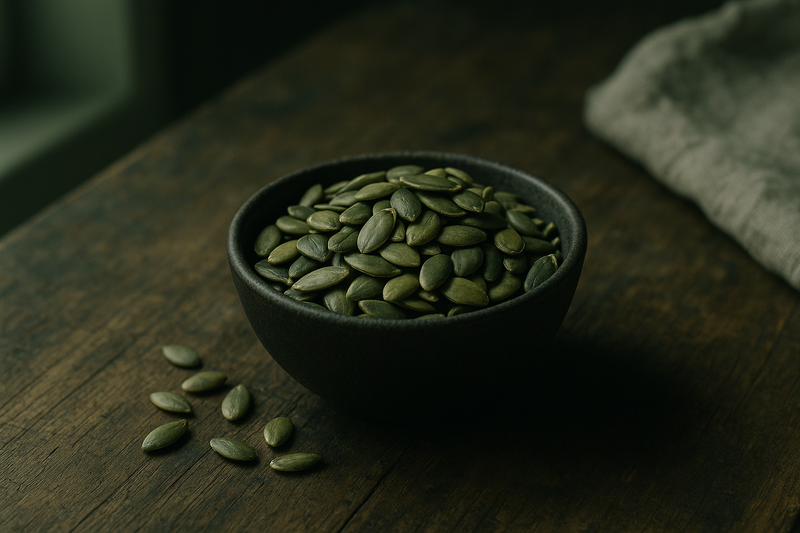
Pumpkin Seeds · Photograph
What sets pepitas apart from other snacks is their exceptional mineral density. Many people suffer from sub-clinical deficiencies in magnesium and zinc minerals, both of which are critical for immune function and heart rhythm. Unlike processed "health bars," pumpkin seeds provide a natural matrix of protein, fiber, and bioactive compounds that work together to improve your systemic health.
Key Nutrients
% Daily Value based on 2,000 cal diet
Key Takeaways
- 1. Provides approximately 37% of the Daily Value (DV) per ounce, a critical mineral for blood pressure regulation, heart rhythm, and over 600 metabolic reactions.
- 2. Rich in arginine, an amino acid that serves as a precursor to nitric oxide, helping blood vessels relax and improving systemic blood flow.
- 3. Delivers 26% of the DV for Zinc, which is essential for T-cell function, immune defense, and skin integrity.
- 4. The high protein and healthy fat content slow the absorption of carbohydrates, making them an ideal snack for maintaining blood sugar stability.
- 5. Contains tryptophan and magnesium, a combination that supports the production of serotonin and melatonin for improved sleep quality.
Why pumpkin seeds' health benefits matter
What sets pepitas apart from other snacks is their exceptional mineral density. Many people suffer from sub-clinical deficiencies in magnesium and zinc minerals, both of which are critical for immune function and heart rhythm. Unlike processed "health bars," pumpkin seeds provide a natural matrix of protein, fiber, and bioactive compounds that work together to improve your systemic health.
Key active compounds in pumpkin seeds
The effectiveness of pumpkin seeds comes from their specific chemical profile:
- Arginine: A critical amino acid that acts as a precursor to nitric oxide, helping your blood vessels relax.
- Magnesium: Involved in over 600 reactions in your body, it is essential for blood pressure control.
- Zinc Minerals: Essential for testosterone production, immune defense, and skin health.
- Phytosterols: Specifically, beta-sitosterol, which helps block the absorption of "bad" cholesterol.
- Tryptophan: Amino acid your body converts into serotonin to support sleep and mood.
Choosing the best form of pumpkin seeds
- Raw Pepitas: These retain the highest levels of heat-sensitive antioxidants and have a mild, nutty flavor.
- Roasted Seeds: Roasting improves the flavor and crunch. While it may slightly reduce some vitamins, the mineral content remains stable.
- Sprouted Seeds: This process increases the bioavailability of the minerals by reducing phytates, making it easier for your gut to absorb the iron and zinc.
- Whole Shell-on: Very high in fiber, but can be irritating to the digestive tract if not chewed thoroughly.
Conclusion
The pumpkin seeds' health benefits are among the most impressive in the seed world, primarily due to their elite mineral profile. They offer a simple, whole-food solution for increasing your intake of magnesium, arginine, and zinc minerals. Whether you are looking for better blood sugar management, heart protection, or improved recovery, adding a handful of pepitas to your daily routine is a science-backed move.
By choosing the right form and monitoring your portions, you can leverage these nutrient-dense seeds to support long-term metabolic and cardiovascular wellness. Ready to make the most of nutrient-dense foods like pumpkin seeds? Explore our meal planner to discover balanced recipes that incorporate these mineral-rich seeds into satisfying, health-supportive meals.
How Pumpkin Seeds Compares
| Compared with | What's different |
|---|---|
| Pumpkin Seeds vs. Sunflower Seeds | Higher in magnesium and zinc, with a flat, green kernel called a pepita. |
| Pumpkin Seeds vs. Whole Pumpkin Seeds (Shell-on) | Significantly higher in fiber when the white outer hull is consumed. |
| Pumpkin Seeds vs. Chia Seeds | Contains more omega-3 fatty acids but lacks the high zinc density of pumpkin seeds. |
Health Benefits
Things to Know
Fiber Intake: Start with small portions (1/2 ounce) to avoid gas or bloating, especially if you have IBS.
Medication Interactions: Because they are so high in magnesium, they can sometimes interfere with blood pressure meds or certain antibiotics. Space them out by at least 2 hours.
Calorie Density: They are small but mighty. It’s easy to overeat them, so stick to the recommended serving size.
Phytates: Like most seeds, they contain phytic acid. Soaking or roasting them can help improve nutrient bioavailability.

Common Uses
- —Added to leafy greens or grain bowls to provide a crunch while significantly boosting the meal's mineral and protein content.
- —Consumed in a small 1-ounce serving before bed to leverage the natural tryptophan and magnesium for relaxation.
- —Integrated into trail mixes or yogurt to provide the zinc and magnesium necessary for muscle repair and inflammatory balance.
- —Paired with fruit or other carbohydrate sources to dampen the glycemic response and prevent energy crashes.
- —Using hulled pepitas (rather than whole-shell seeds) to provide prebiotic fiber without irritating a sensitive gut or IBS.
Active Compounds
A critical amino acid that acts as a precursor to nitric oxide, helping your blood vessels relax.
Involved in over 600 reactions in your body, it is essential for blood pressure control.
Essential for testosterone production, immune defense, and skin health.
Specifically, beta-sitosterol, which helps block the absorption of "bad" cholesterol.
Amino acid your body converts into serotonin to support sleep and mood.
Best Forms
These retain the highest levels of heat-sensitive antioxidants and have a mild, nutty flavor.
Roasting improves the flavor and crunch. While it may slightly reduce some vitamins, the mineral content remains stable.
This process increases the bioavailability of the minerals by reducing phytates, making it easier for your gut to absorb the iron and zinc.
Very high in fiber, but can be irritating to the digestive tract if not chewed thoroughly.
Glossary
Shop This Ingredient
Stock your pantry with quality pumpkin seeds.
Buy on AmazonAs an Amazon Associate, Plantopedia earns from qualifying purchases. This costs you nothing extra and helps us keep the encyclopedia free.
Frequently Asked Questions
Research shows that pumpkin seeds' health benefits include improved heart health through high magnesium and arginine levels. They also support blood sugar management and immune function. Their high concentration of zinc minerals and antioxidants makes them excellent for reducing systemic inflammation and protecting cells from oxidative damage.
A typical daily serving is about 1 ounce (28g), which is roughly 1/4 cup of kernels. This provides a massive hit of zinc minerals and magnesium without overdoing the calories. If you are new to high-fiber foods, start with a smaller amount to avoid any potential digestive upset.
Yes, they are one of the best plant-based sources of magnesium available. One ounce provides about 37% of your daily requirement. This is critical for blood pressure regulation, bone health, and over 600 other metabolic functions, making pepitas a primary food for anyone looking to fix a deficiency.
While the shells are edible and contain extra fiber, they are very tough and can cause digestive irritation for some. Most people prefer hulled pepitas because they are easier to chew and digest. If you have IBS, sticking to the hulled kernels is generally a much safer bet.
Yes, they are safe for daily consumption and offer consistent levels of zinc minerals and healthy fats. However, because they are calorie-dense, you should stick to 1–2 ounces to avoid unwanted weight gain. Always choose unsalted varieties to keep your sodium intake in a heart-healthy range.
They can help because they contain tryptophan, an amino acid that produces serotonin. When combined with the high magnesium content, which helps muscles relax, eating pepitas in the evening may support better sleep quality. It is a natural way to prime your body for a restful night’s sleep.
Quick Answers
Common questions, answered in a line.
Pumpkin seeds are exceptional for heart health because they contain arginine, a precursor to nitric oxide that helps blood vessels relax. They also provide magnesium to assist with blood pressure control and phytosterols like beta-sitosterol, which help block "bad" cholesterol absorption.
Pumpkin seeds contain zinc minerals that are essential for testosterone production, immune defense, and skin health. This high mineral density makes them an ideal whole-food snack for supporting hormonal and systemic wellness.
Sprouted pumpkin seeds are beneficial because the sprouting process reduces phytates, which increases the bioavailability of minerals like iron and zinc. This makes it much easier for your gut to absorb the nutrients compared to raw seeds.
Zinc minerals found in pumpkin seeds are essential for maintaining skin health and supporting immune defense. These seeds also provide a natural matrix of protein and bioactive compounds that work together to improve overall systemic health.
If you have IBS or a sensitive gut, it is recommended to use hulled pepitas rather than whole-shell seeds to provide prebiotic fiber without causing irritation. You should also start with small 1/2 ounce portions to avoid gas or bloating.
Pumpkin seeds can sometimes interfere with blood pressure medications or certain antibiotics due to their high magnesium content. To prevent interactions, it is recommended to space consumption out by at least two hours from your medication.
Pumpkin seeds can help prevent energy crashes when paired with fruit or other carbohydrate sources because they help dampen the glycemic response. The combination of protein, fiber, and healthy fats helps stabilize blood sugar levels.
For Readers in the USA
Local context — sourcing, seasonality, and regional notes.
In the US, raw pumpkin seeds (pepitas) are available year-round at major grocers like Whole Foods, Trader Joe’s, and Kroger. You can find them in the bulk section or the snack aisle, while fresh whole seeds are most abundant at local farmers markets following the autumn harvest.
Most pumpkin seeds in American supermarkets are Styrian or Oilseed varieties, commonly grown in states like Illinois, which produces the majority of the US pumpkin crop. While carving pumpkins have edible seeds, the hull-less "pepita" varieties are specifically cultivated for their tender, dark green kernels.
The USDA Organic seal on pumpkin seeds ensures they were produced without synthetic fertilizers or pesticides, while FDA labeling requires companies to list them as a potential allergen. American consumers should check for "Non-GMO Project Verified" labels if they wish to avoid genetically engineered crops, although most pumpkin varieties are naturally non-GMO.
AI Clinical Review
- Pumpkin seeds are legitimately nutrient-dense, especially for magnesium, zinc, and unsaturated fats; a 1 oz (28 g) serving typically provides roughly a third of daily magnesium needs.
- Including pepitas in meals or snacks can help with satiety and steadier post‑meal blood sugar due to their protein, fat, and fiber.
- The discussion of arginine (a nitric‑oxide precursor), phytosterols, and vitamin E as heart‑supportive nutrients is reasonable when framed as supportive, not therapeutic.
- Practical guidance on portions, forms (raw vs roasted), and flavor uses is accurate and helpful.
- Cardiovascular and blood sugar benefits are promising but come largely from small human trials, animal studies, or research on pumpkin seed oil/extracts rather than whole seeds; real‑world effects from typical servings are likely modest.
- Sleep and mood claims tied to tryptophan and magnesium are biologically plausible, but human evidence for meaningful improvements from pumpkin seeds alone is limited and mixed.
- Anti‑inflammatory and gut microbiome effects are not yet well defined in controlled human studies of whole seeds.
- Arginine content varies by variety and processing; consistent blood‑pressure effects from common dietary amounts are uncertain.
- Portion: 1–2 oz (28–56 g) per day is a practical range (about 160–320 kcal). Choose unsalted products if you’re limiting sodium.
- Medication timing: The magnesium and zinc in seeds can reduce absorption of certain drugs (e.g., levothyroxine, tetracyclines/fluoroquinolones, some osteoporosis meds). Take those medicines 2–4 hours apart from mineral‑rich foods/supplements and confirm with your clinician.
- Bioavailability: Seeds contain phytates (natural compounds that can bind minerals). Light roasting, soaking/sprouting, and pairing with vitamin C–rich foods can modestly improve mineral absorption.
- Who should check in first: People with seed allergies; those with advanced kidney disease or on potassium/phosphorus‑restricted diets; and young children or anyone with chewing/swallowing difficulties (opt for hulled, ground, or butter forms).
Mention allergy context where appropriate; keep serving size realistic.
References
- USDA FoodData Central - Pumpkin seed nutrition data (fdc.nal.usda.gov)
- NIH National Center for Complementary and Integrative Health - Magnesium fact sheet (nccih.nih.gov)
- Nutritional Value, Phytochemical Potential, and Therapeutic Benefits of Pumpkin - PMC review (pmc.ncbi.nlm.nih.gov)
- Top 11 Science-Based Health Benefits of Pumpkin Seeds - Healthline (healthline.com)
- Pumpkin seeds: Benefits, nutrition, uses - Medical News Today (medicalnewstoday.com)
- Comparison of chemical compositions of pumpkin parts - PMC study (pmc.ncbi.nlm.nih.gov)
- Mayo Clinic - Magnesium and heart health (mayoclinic.org)
- WebMD - Pumpkin Seeds Health Benefits (webmd.com)
Know Your Numbers
Eating healthy is a start. Now get to know your biomarkers.
Food changes bloodwork — inflammation, lipids, blood sugar and nutrient status all respond to what you eat. 59 markers from $59.
- Results in 7–10 days at 2,000+ Quest sites
- Licensed provider reviews every result
- One flat price, no membership, HSA/FSA eligible
Educational information only, not medical advice. Panels are ordered and reviewed through our licensed partner; Plantopedia may earn a commission.
Filed Under
Health Goals This Supports
Related Ingredients
Best Plant-Based Foods for Steady Energy
A practical, evidence-checked look at the plant foods most likely to support steady energy through the day, why the overall eating pattern matters more than any single item, and when persistent fatigue needs a clinician rather than a grocery list.
Evening Foods That Are Gentle on Digestion
Why timing, portion size, fat load and texture decide whether an evening meal disturbs your night, plus eight gentle dinners and snacks with substitutions and cautions.
Foods That May Support Better Sleep
Only a few whole foods have been tested directly against human sleep outcomes, and the effects are modest. Here is what the trials show, what rests on mechanism alone, and how to use food sensibly alongside sleep timing, caffeine and alcohol.
Foods That Support Focus and Mental Clarity
An evidence check on the foods people reach for when they need to concentrate, including where the effect is real, where it is small, and where the marketing has run ahead of the research.
Foods That Support Mood and Mental Clarity
People who follow traditional dietary patterns, built around vegetables, legumes, whole grains, olive oil, and fermented foods, have consistently lower rates of depression in large observational studies than people eating a typical Western diet heavy in processed and refined foods. Foods tied to...
Foods That Support Recovery and Resilience
No food or supplement "boosts" immunity on demand, but a consistent pattern of foods rich in vitamin C, zinc, fiber, and plant compounds gives your immune system the raw materials it needs to function normally and supports recovery from everyday illness and physical stress. The strongest...
High-Fiber Foods That Support Better Energy
Fiber contributes almost no calories of its own, but viscous fibers in oats, barley, beans and chia slow glucose absorption and extend fullness. Here are the foods with real human evidence behind them, and the honest limits of what fiber can do for tiredness.
Iron-Rich Plant Foods for Low Energy
Low iron intake or low iron stores can contribute to fatigue, and a small group of plant foods, mainly legumes, pumpkin seeds, tofu, and dark leafy greens, are meaningfully rich in iron. But iron is only one of several causes of low energy, plant (non-heme) iron is absorbed less efficiently than...
Magnesium-Rich Plant Foods for Sleep
The plant foods that deliver the most magnesium per realistic serving, plus a sober read of what magnesium trials actually show for sleep.
Plant-Based Foods That May Help Fatigue
If fatigue is related to what you're eating, the most likely culprits in a plant-based pattern are too little iron, too little vitamin B12, or simply too few calories and protein for your needs. Fixing those gaps through food, and through fortified sources for B12 specifically, is linked to...
Plant-Based Foods That Support Immune Health
Which plant foods genuinely support immune function, judged by nutrient contribution and human evidence rather than marketing, plus how to build them into a week.
What to Eat When You Have Brain Fog
Brain fog (trouble concentrating, mental fatigue, forgetfulness, and a sense of thinking through mud) is not a diagnosis on its own, and no single food fixes it. The dietary pattern most consistently linked to better day-to-day mental clarity emphasizes steady blood sugar, adequate hydration,...
Zinc-Rich Plant Foods
Where zinc actually comes from on a plant-based plate, why absorption is the harder problem than intake, and what zinc does and does not do for immunity.